As a dedicated gearhead and professional analyzer of automotive machinery in 2026, I've spent countless hours dissecting what truly makes a powertrain legendary. It's easy to get lost in the siren song of peak performance numbers or the warm glow of fuel economy statistics. But what about the ghost that haunts every six-figure odometer? I'm talking about longevity—the raw, unadulterated ability of an engine to simply keep running without hemorrhaging coolant on your driveway or demanding a rebuild after a few years of spirited driving. Reliability isn't just a talking point; it's the essential foundation. After all, what's the point of a hyper-efficient unit if it's constantly reaching into your wallet? Durability is paramount in the performance sphere, too. Stronger internal architecture means you can push harder for longer, which is ideal for enthusiasts like us who crave a little extra boost. Over the past year, I've seen the landscape evolve, and these are the manufacturers that continue to set the gold standard for engines that refuse to die.
The Unyielding Titans of Asia
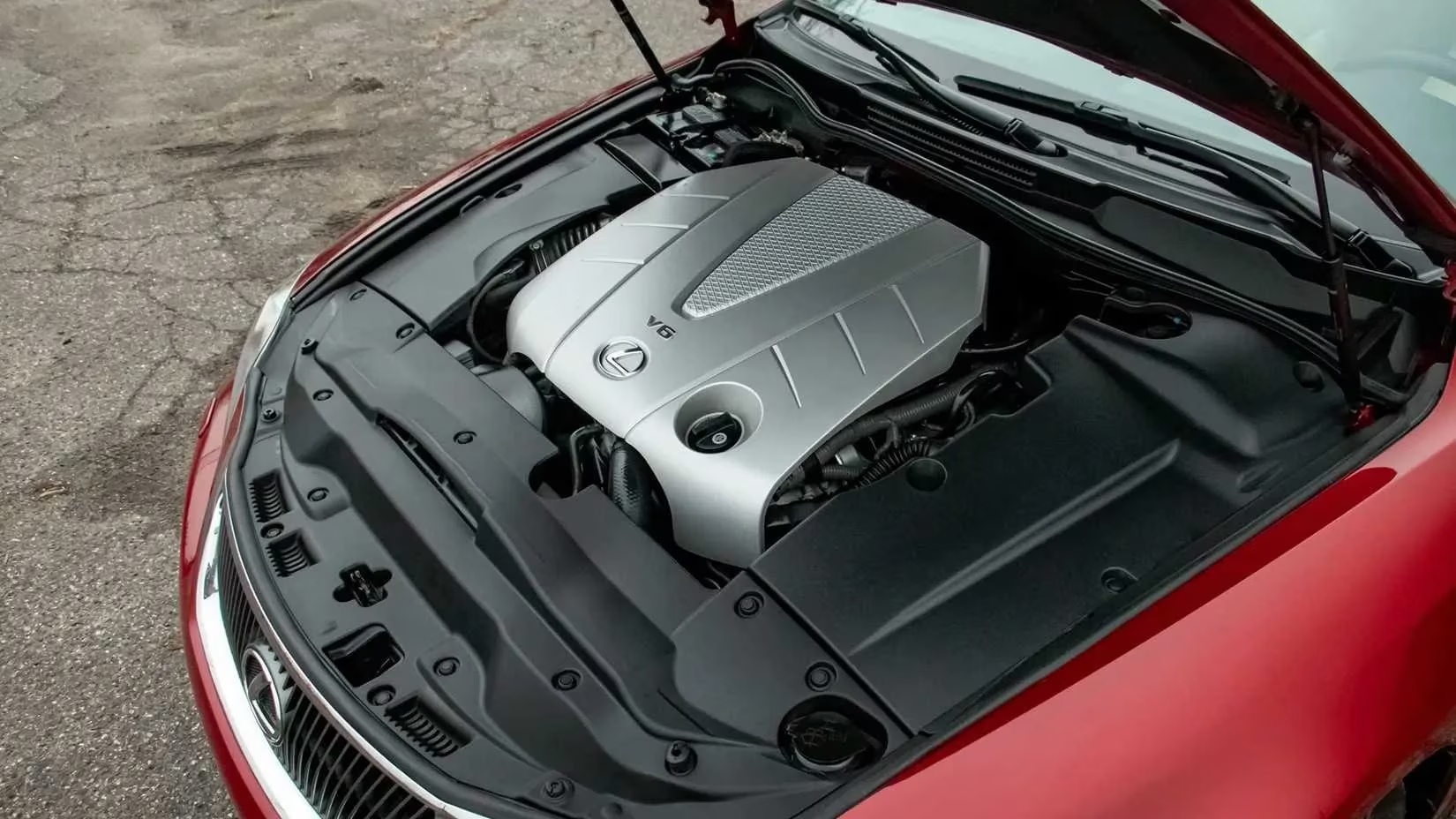
When it comes to a motor that will outlive the chassis, the conversation has to start in Japan. Toyota, and by extension its luxury arm Lexus, remain the untouchable monarchs of mechanical integrity. Lexus dominating the 2023 J.D. Power Vehicle Dependability Study feels like ancient history now, but the engineering holds true. Take the 2GR-FSE. Debuting two decades ago, this 3.5-liter V6 isn't just a museum piece; it’s a masterpiece of modern tech that remains shockingly robust in 2026. I’ve personally tracked a 2018 Lotus Evora running this block, and the way it handles heat cycles is a testament to its build quality. Why do tuners still love this platform? Because the foundation is so bulletproof that boosting it feels like playing a game on easy mode.
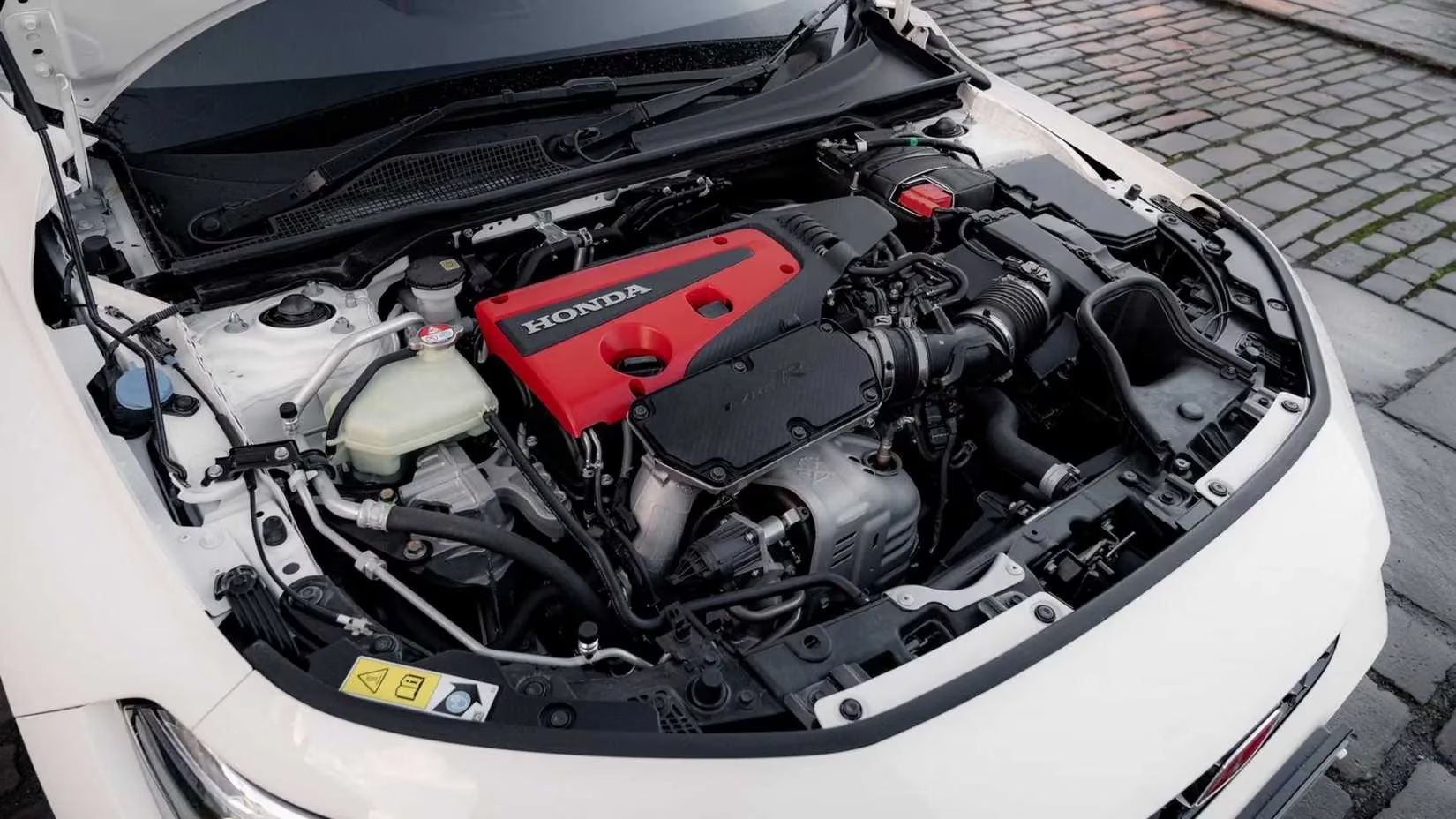
But let’s shift gears to the high-revving realm of Honda. VTEC might be a meme to the younger generation, but the mechanical philosophy behind it is genius. The K-Series is, in my opinion, the greatest four-cylinder family ever cast in aluminum. The K20C1, found dirtying its hands in the FL5 Civic Type R, is a diamond. It delivers over 300 hp and a chest-thumping torque curve, yet I've seen these engines breach the 150,000-mile mark in 2026 with nothing more than regular oil changes. Is there a more reliable turbocharged engine ever produced? I genuinely don't think so. Honda treats forced induction with the same precision it treats its naturally aspirated jewels, ensuring the head gasket doesn't turn into a ticking time bomb the moment you touch the redline.
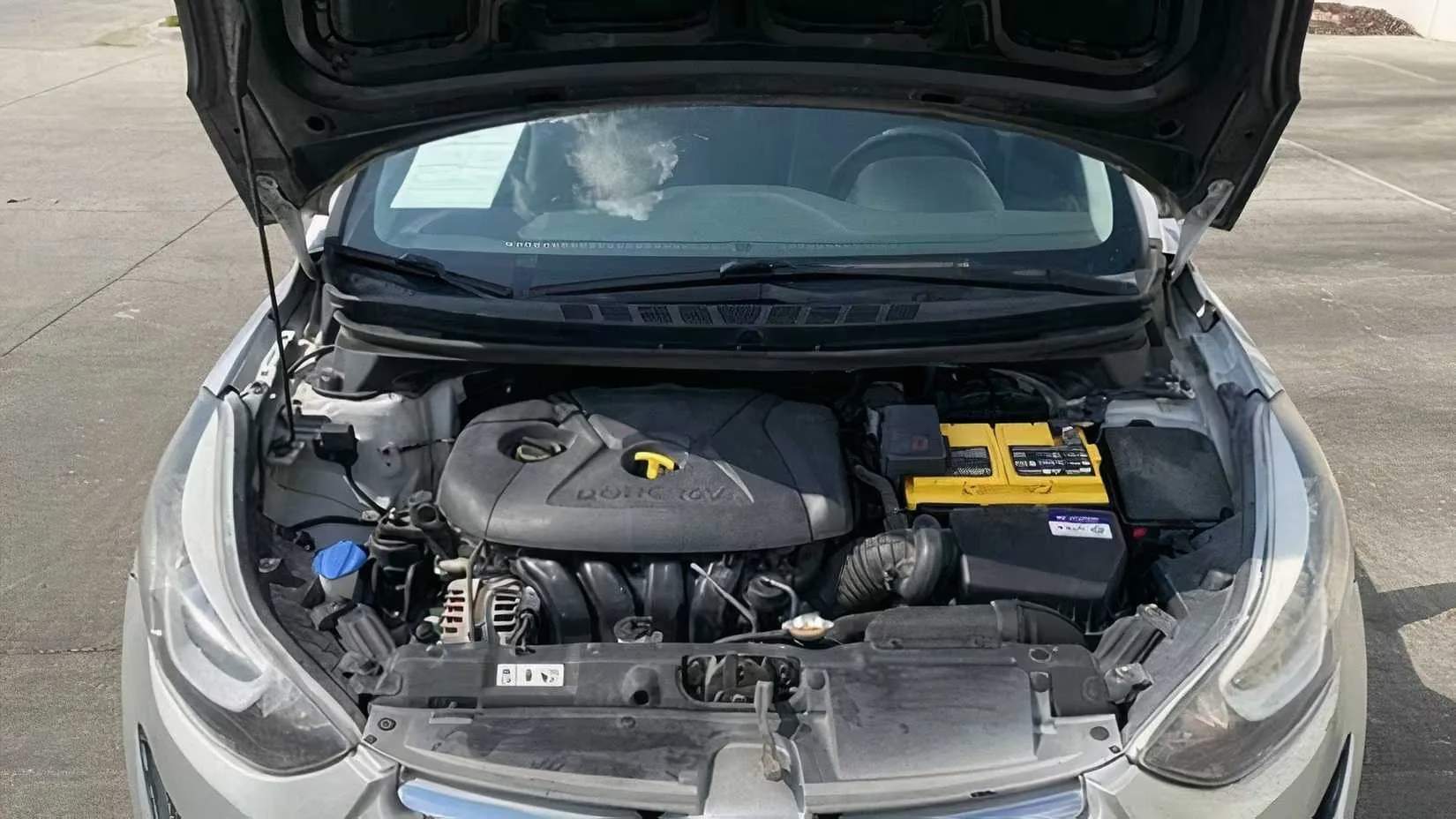
We can’t overlook the relentless march of the Korean manufacturers. Hyundai has silenced the naysayers. The Nu and Gamma engines have proven that clever engineering isn't geography-dependent. I recall a case study circling the technician forums in late 2025 about a 2013 Elantra with the 1.8-liter Nu engine. Serving as a relentless delivery mule, it clocked over a million kilometers—an incredible feat of endurance. That kind of durability isn't a fluke; it's a statement that modern Korean powerplants are designed to bear the brunt of real-world neglect, which is the truest test there is.
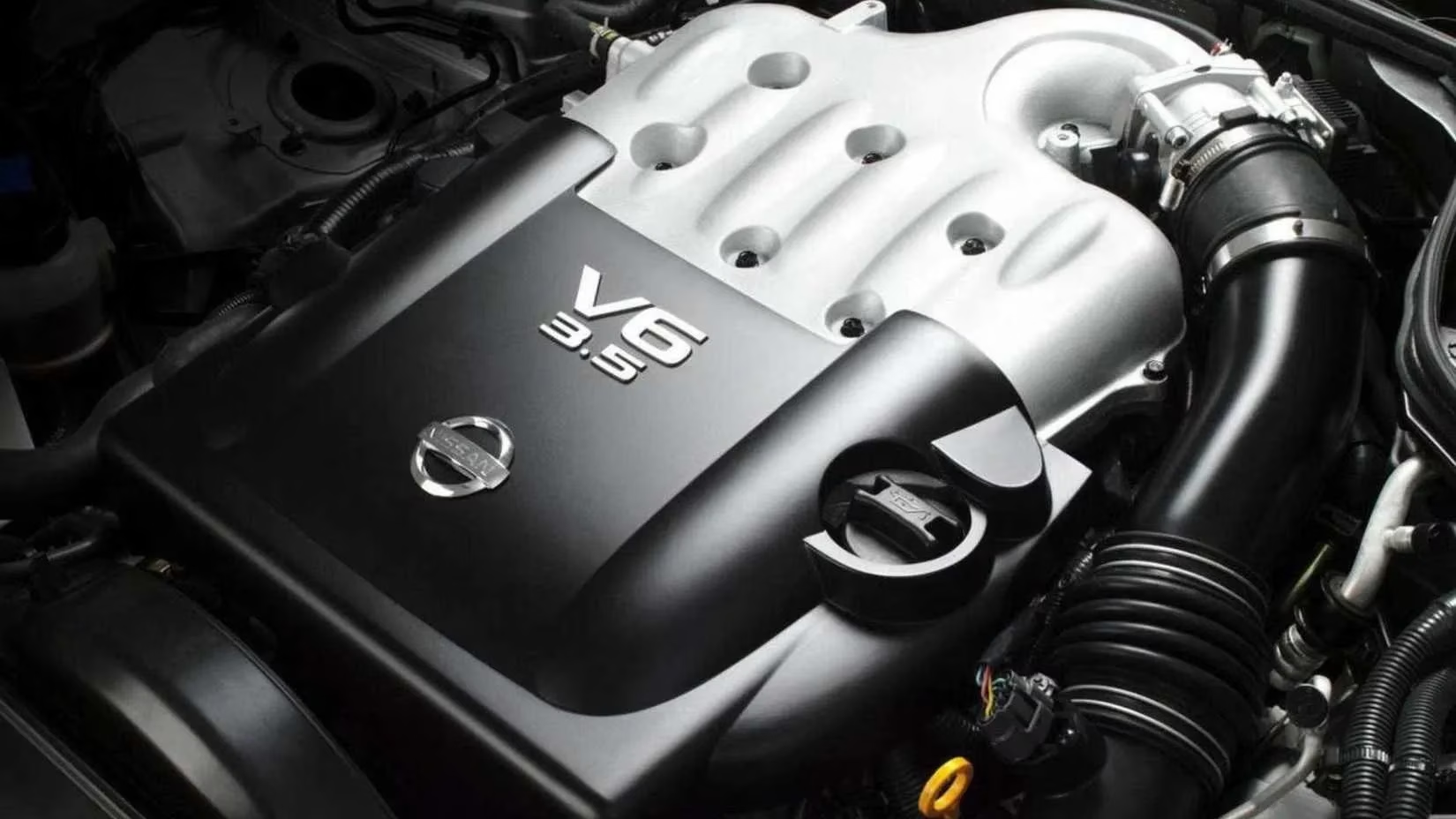
Meanwhile, Nissan continues to deliver workhorses that defy logic. The VQ35DE is essentially a legend etched in iron and aluminum. It powered everything from the sporty Skyline to the family-hauling Pathfinder, and even the quirky Renault Espace. However, the real shocker for me is the QR20DE. In a 2007 Frontier, this four-cylinder breached the one-million-mile barrier. Let that sink in for a moment. A four-cylinder truck engine lasting a million miles. It’s a stark reminder that Nissan’s mid-2000s engineering was truly world-class, even if their modern CVT story is a different saga altogether.
American Iron and European Fortitude
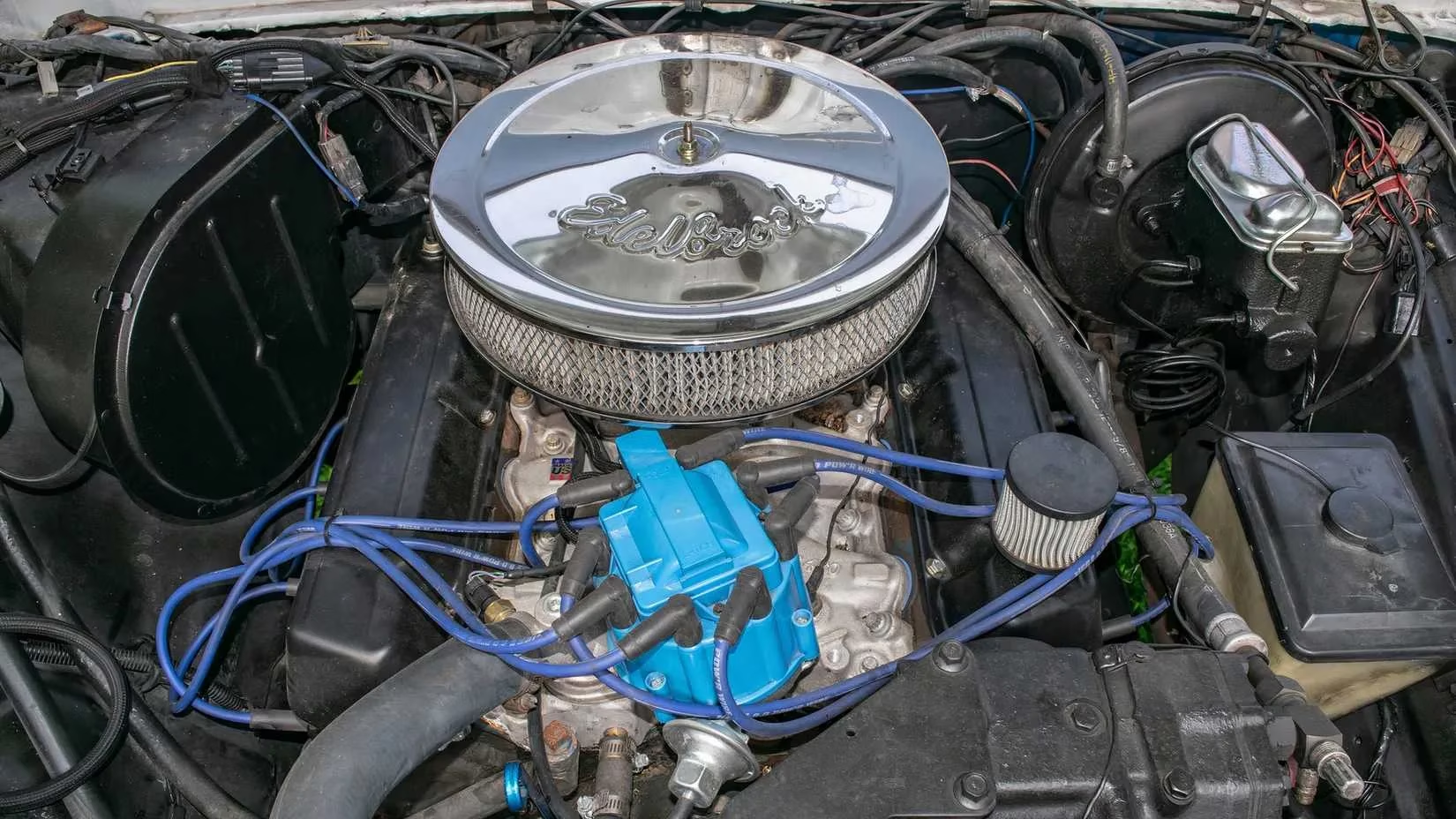
Crossing the Pacific, the American giants are still flexing their muscles. Ford has been crafting engines for over a century, but the 385 Series—specifically the 460 ci V8—is the stuff of campfire legends. Used for three decades in trucks and vans, its legacy is carried forward today by the Coyote powering the Mustang. In 2026, you can extract insane horsepower from a Gen 4 Coyote block without sleeving it. Why? Because the bottom end is ridiculously over-engineered.
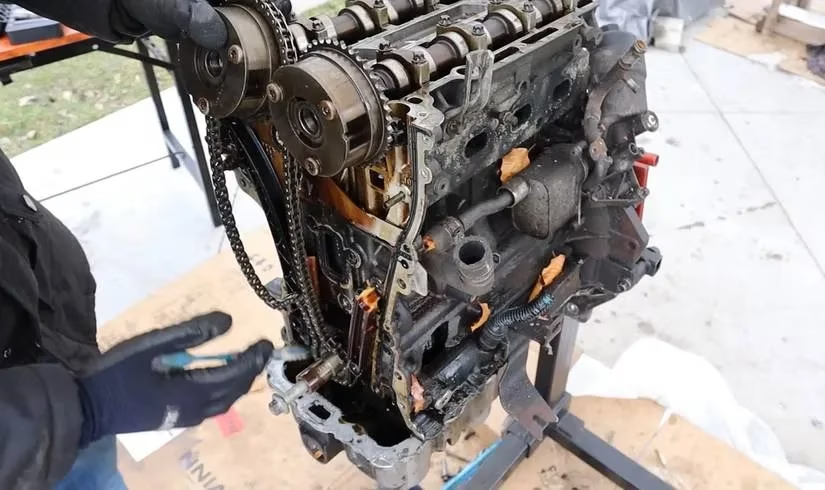
General Motors counters with the EcoTec. I know what you're thinking: an EcoTec? But the 2.0 to 2.5-liter versions have powered virtually every commuter car for two decades without complaint. Saleen even trusted a tuned 2.5-liter to power their S1 supercar, squeezing 450 hp out of it without the block disintegrating. And then there’s Chrysler. My mind always drifts back to the Leaning Tower of Power—the Slant-Six. A 1963 Plymouth Fury taxi cab with the 3.7-liter unit crossed 1.63 million miles! Even with a few rebuilds, the life cycle average of those blocks is staggering. If you find a well-maintained example in a barn find today, I’d bet my bottom dollar you could get it running with fresh gas and a battery.
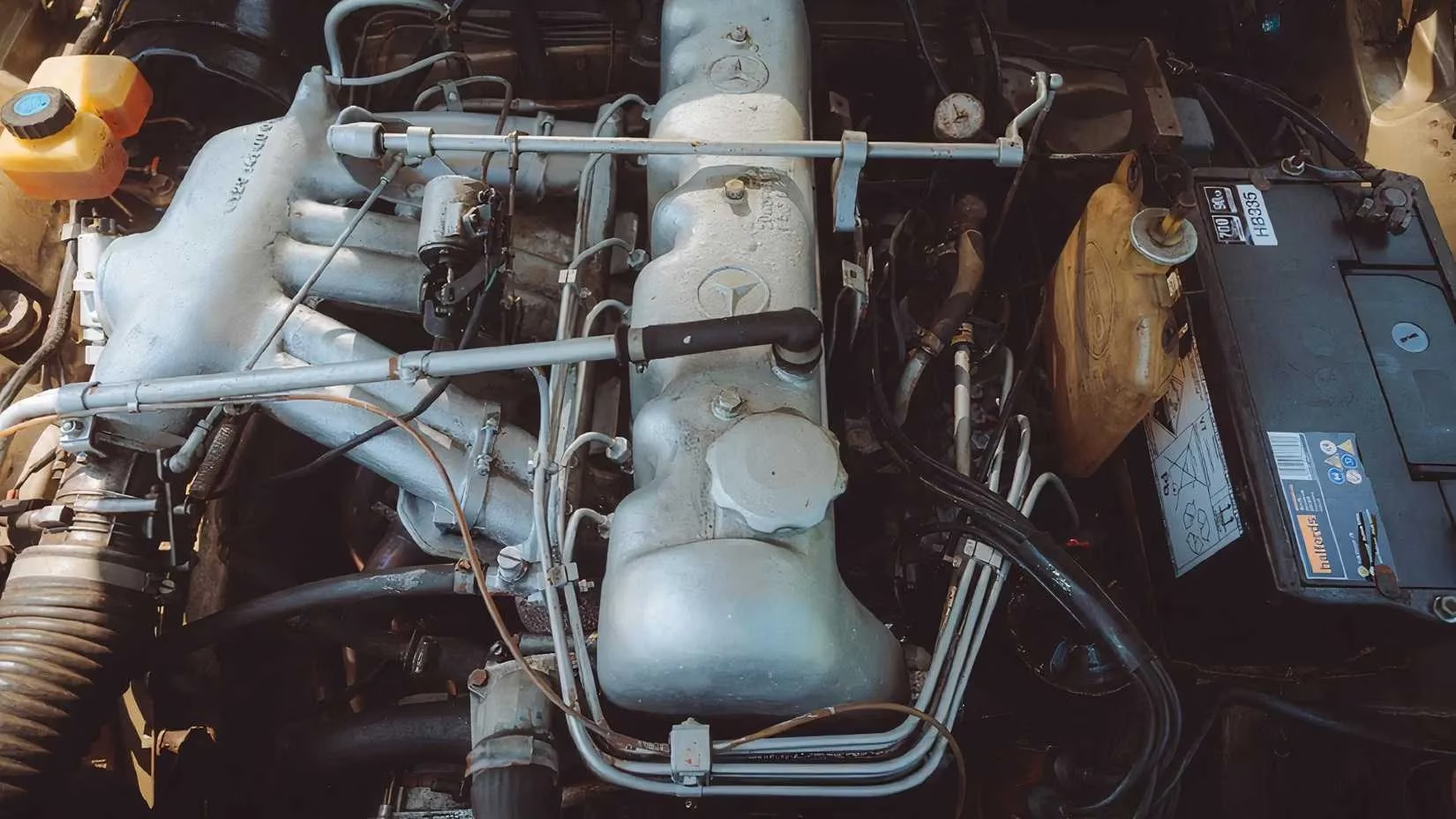
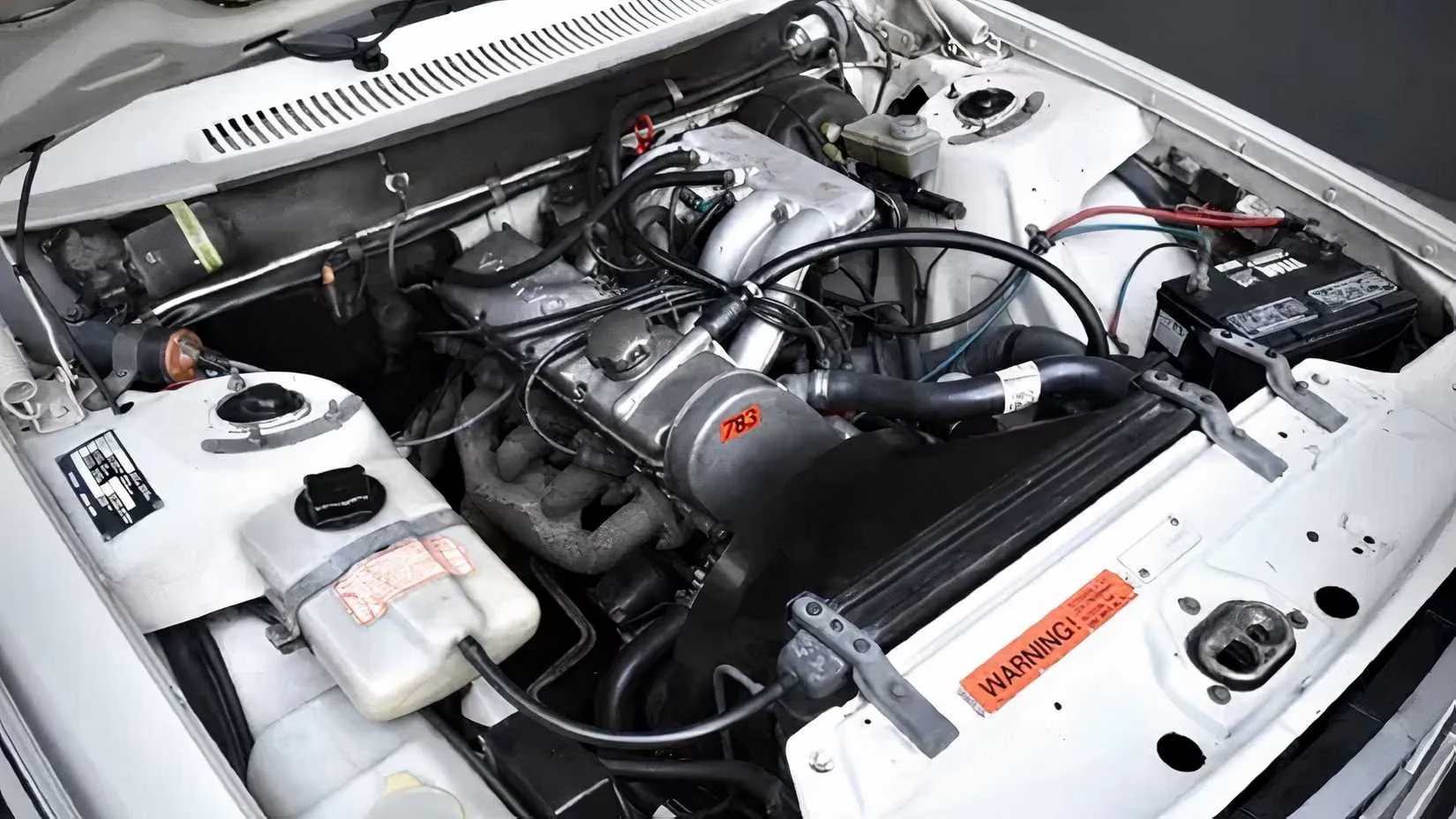
Over in Europe, the story shifts from brute force to analytical longevity. Mercedes-Benz might lean heavily on turbocharged complexity today, but the M116 V8 and M180 inline-six from the W116/W126 era are simply immortal. A 1966 250 SE racking up 1.4 million miles on an M180 isn't just a testament to engineering; it's a testament to a time when Mercedes over-built everything. This philosophy is shared by Volvo. The B21 redblock is practically a Swedish anvil. Three of them carried a 245 GL station wagon past 400,000 miles each, with one unit hitting 620,000. If you crash into one, the jokes say the Volvo will be fine. If you try to blow up its engine, it’ll probably laugh at you.
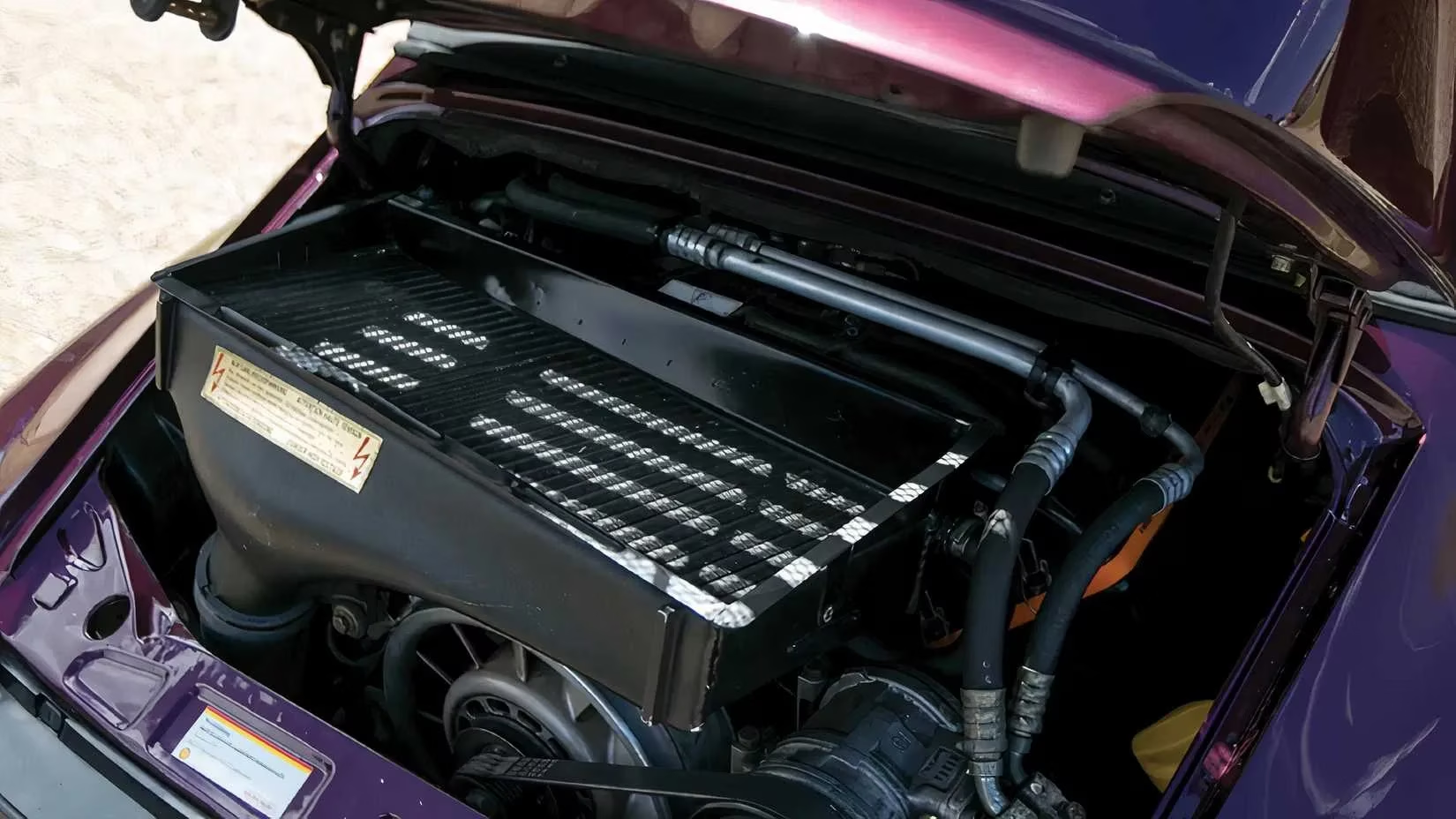
Finally, let’s tip our hats to Porsche. The Flat-Six is arguably the most evolved engine on the planet. Continuously refined since 1964, the 911’s heart isn't just about lap times; it's about precision. A well-maintained 964 Turbo engine remains an expensive exercise in terror for your wallet on servicing, but the actual mechanical failure rate? Exceptionally low. Porsche ensures that by 2026, even high-mileage 991s are holding compression figures that make younger rivals blush.