
Imagine sliding behind the wheel of a chrome-laden pony car every morning, the burble of a small-block V8 echoing as you merge into 2026 traffic. It sounds like a dream, but is it actually practical? Plenty of gearheads still ask: can a 1960s muscle car truly serve as a daily driver without bleeding your wallet dry at the repair shop? The answer, interestingly, is yes—if you choose wisely. After combing through owner reports, expert insights, and decades of data, one classic stands out as Ford’s most dependable muscle car from that golden era: the first-generation Mustang powered by the 289 cubic-inch V8.
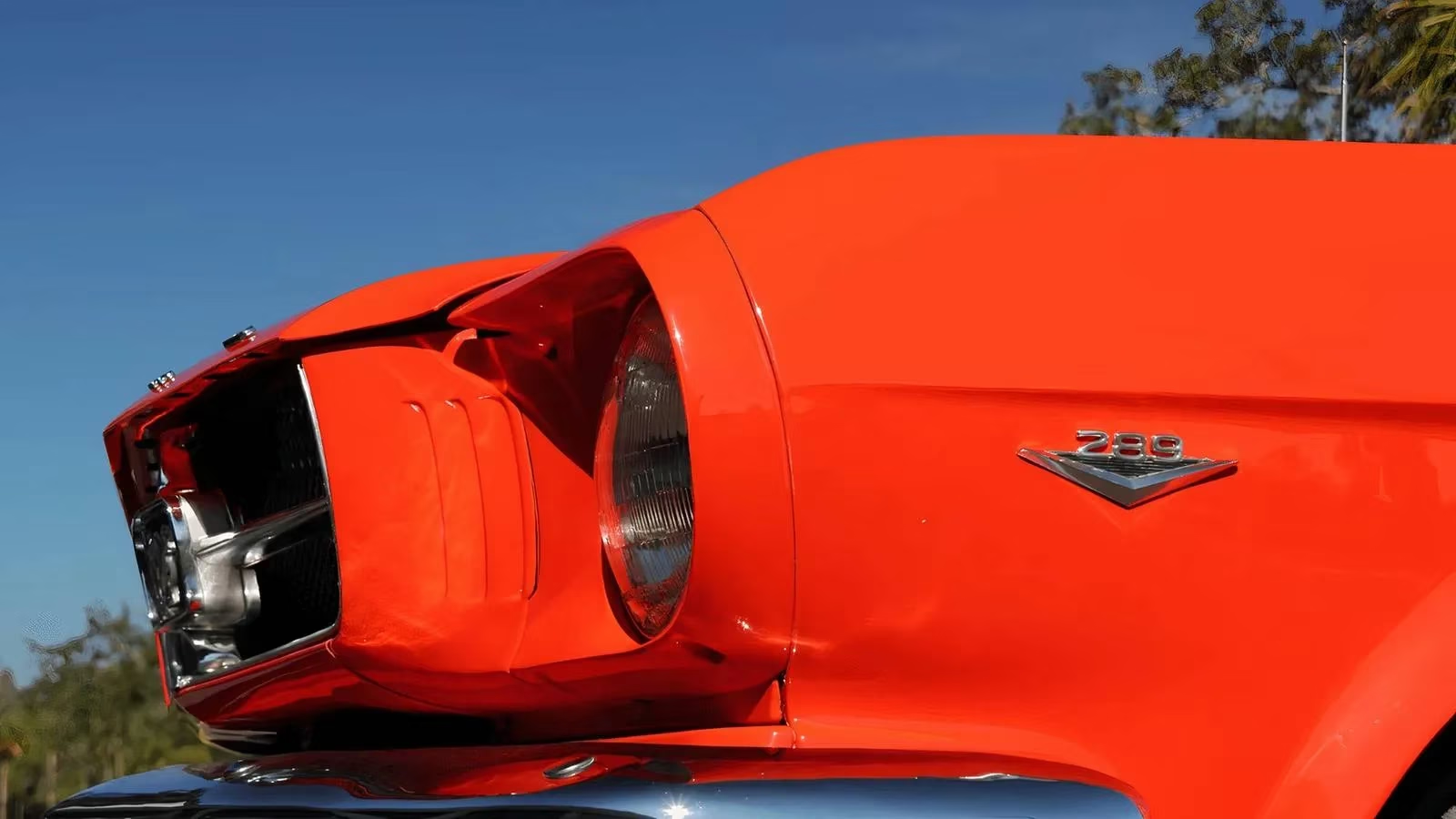
When Ford unleashed the original Mustang in 1964, it wasn’t just a new model—it ignited the entire pony car segment. The design blended European flair with American brawn, offering both a coupe and a convertible wrapped in a sleek, purposeful shape. Inside, drivers were greeted by a cockpit trimmed with chrome accents and polished aluminum. Almost immediately, the Mustang resonated with a youthful audience and became a cultural icon. But one often-overlooked reason for its enduring success? Rock-solid reliability. Over sixty years later, that dependability still shines, especially for the 289-equipped cars.
So why is the 289 such a standout? The Mustang lineup in the ’60s offered a broad spectrum of engines—from a thrifty inline-six to monstrous 390 and 427 big-blocks. Yet, it was the sweet spot right in the middle that delivered the best blend of power and longevity. The 289 V8, available in several tunes, proved to be a lower-stress option compared to the larger, more aggressive 302 that arrived later. With fewer horsepower in base trims (but still plenty of punch), the 289 simply didn’t work itself to death. It was a design that loved to hum along for hundreds of thousands of miles without complaint.
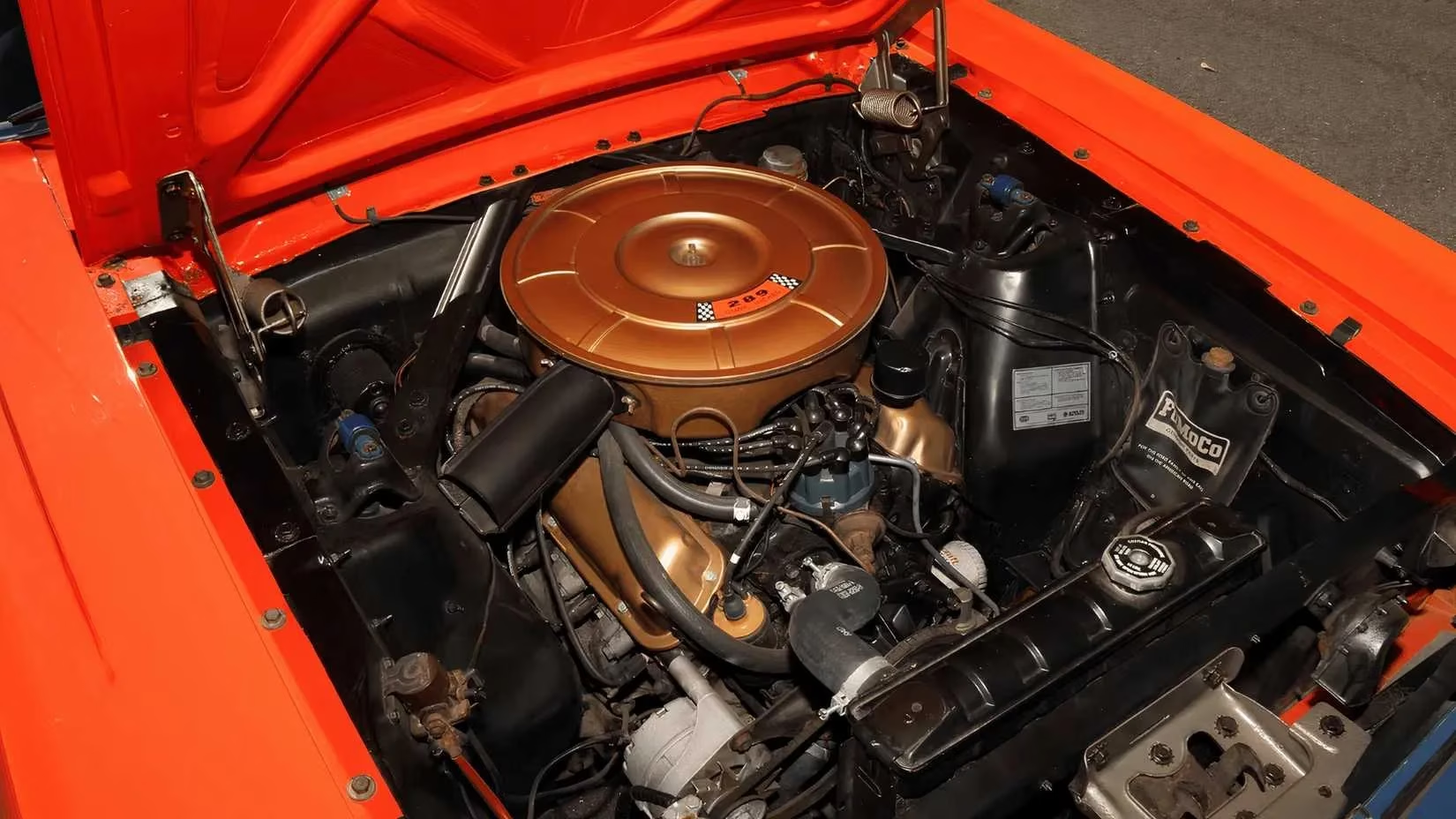
The 289’s durability isn’t just legend; it’s documented. One famous example is a 1966 Mustang that racked up a staggering one million miles after being driven daily for over five decades. Owner Victor Anderson had the engine and drivetrain refreshed only a couple of times, which speaks volumes about the little V8’s tenacity. This wasn’t a fluke either—the 289 powered everything from Ford Falcons to Shelby Cobras, proving its versatility and stoutness in both street and racing applications. Even today in 2026, when properly maintained, a 289 Mustang can still handle daily commutes and weekend road trips with minimal fuss.
But does reliability mean you have to sacrifice performance? Absolutely not. Let’s look at the numbers. The most sought-after version, the K-Code 289, churned out 289 horsepower and 312 lb-ft of torque. That was enough to launch a ’67 Mustang from 0 to 60 mph in about 7.5 seconds—quick enough to raise eyebrows even by some modern standards. More common were the C-Code (200 hp) and A-Code (225 hp) variants, which still provided a spirited driving experience while keeping mechanical stress low. Here’s a quick comparison:
| Engine Code | Horsepower | Torque (lb-ft) | Typical 0-60 mph |
|---|---|---|---|
| C-Code 289 | 200 | 282 | ~9.0 seconds |
| A-Code 289 | 225 | 305 | ~8.0 seconds |
| K-Code 289 | 271 (or 289 in hi-po trim) | 312 | 7.5 seconds |
These figures may not terrify a 2026 hot hatch, but they deliver a raw, mechanical satisfaction that no turbocharged four-cylinder can replicate. Plus, with the aftermarket support available today, extracting a bit more pep is straightforward—without compromising the inherent dependability.
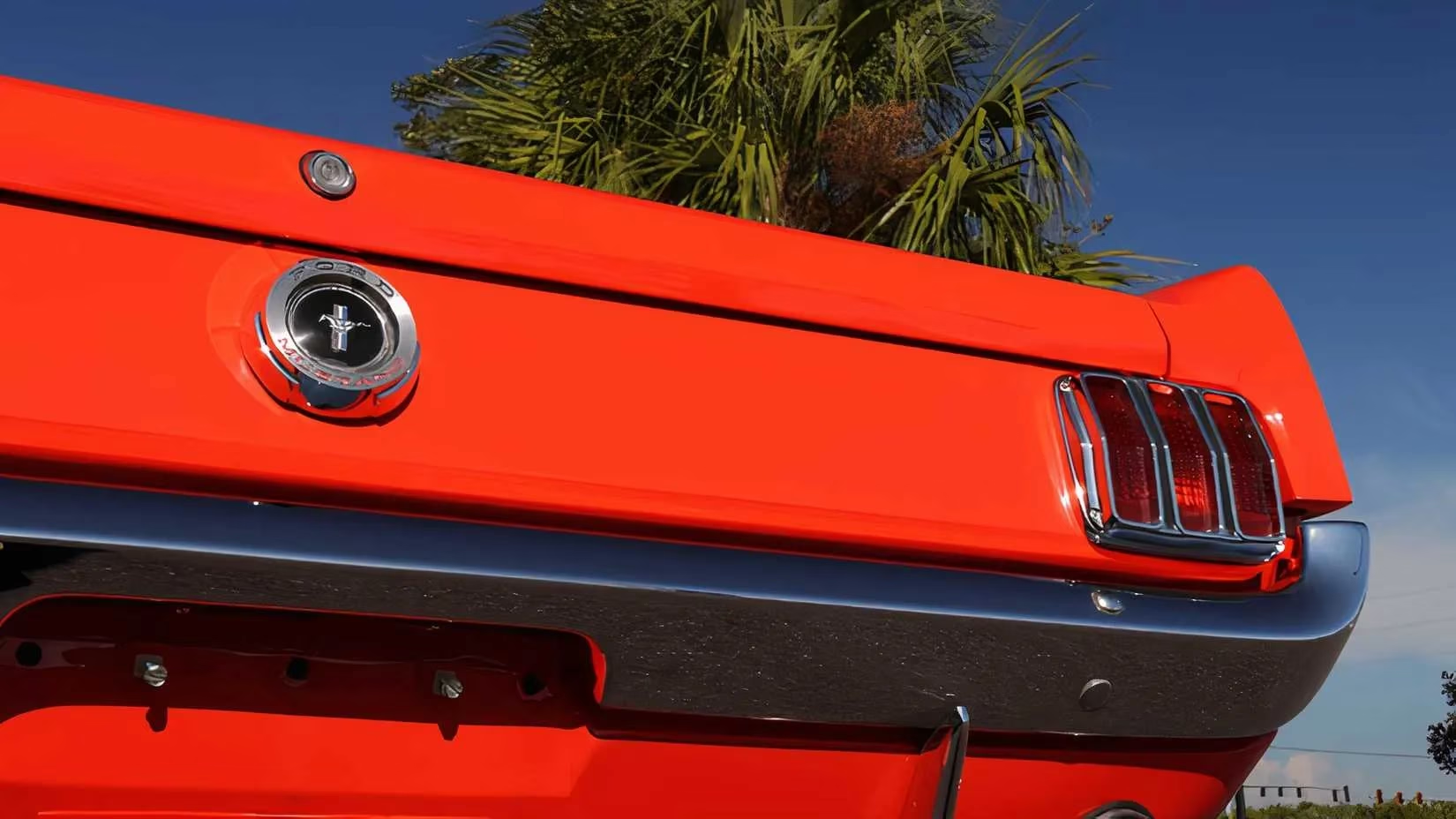
What do the real-world owners say? We scoured online forums and review platforms, and the sentiment is overwhelmingly positive. One owner on CarSurvey enjoyed more than 180,000 miles in their 1966 289 coupe, noting how easy the engine is to work on. Another reported that “nothing has gone wrong with my car except for a few battery changes.” A third pointed out that the only issues stemmed from previous shoddy work, not the car itself. In fact, 86% of 1967 Mustang owners said they’d happily buy another Ford product—a testament to the trust these vehicles build. Of course, you have to remember that any classic car demands a bit of love, but the 289 Mustang gives back far more than it takes.
So, if it’s so reliable, what makes it practical in 2026? Three big reasons: parts availability, community knowledge, and enthusiast support. With the Mustang celebrating over 60 years of production, the supply of replacement components—both OEM-style and upgraded aftermarket—is vast. Need a new water pump, carburetor kit, or suspension bushing? You can probably order it overnight. For DIY mechanics, an entire universe of how-to guides, YouTube tutorials, and club forums exists, populated by seasoned owners who have already solved every headache you might encounter. This ecosystem transforms what could be a stressful ownership experience into a rewarding hobby.
Maintaining a 289 Mustang today is arguably easier than ever. Mechanical simplicity means you don’t need a computer science degree to diagnose a problem. A basic set of hand tools and a willingness to learn can keep the car humming. Plus, many parts have been redesigned with modern materials to improve longevity, so a well-sorted 289 car can be just as dependable as a lightly used modern vehicle.
Is the 289 Mustang the absolute most reliable muscle car of the 1960s? In the Ford stable, it certainly makes the strongest case. While other brands offered tough alternatives, few can match the combination of proved reliability, accessible performance, and unparalleled support that the 289 ‘Stang delivers. For anyone in 2026 yearning for a daily-drivable slice of American muscle history, looking past a well-maintained first-gen Mustang with this legendary small-block would be a mistake. It’s a choice that lets you embrace chrome bumpers and carburetors without becoming a permanent resident at the repair shop.