
Hold onto your steering wheels, folks! It's not every day you hear about a recall on six-figure supercars that sounds like a plot point from a slapstick racing movie. Yet, here we are in 2026, and McLaren—the legendary name synonymous with carbon-fiber dreams and earth-scorching speed—has just issued a voluntary recall for 29 of its rarest machines. The reason? The rear brake lines might be installed... backwards. 🤯 That's right. In some of these automotive masterpieces, when you step on the brake expecting a smooth, straight-line stop, the car might decide it's time for a dramatic, unintentional slide. Talk about an exclusive, and slightly terrifying, driving experience!
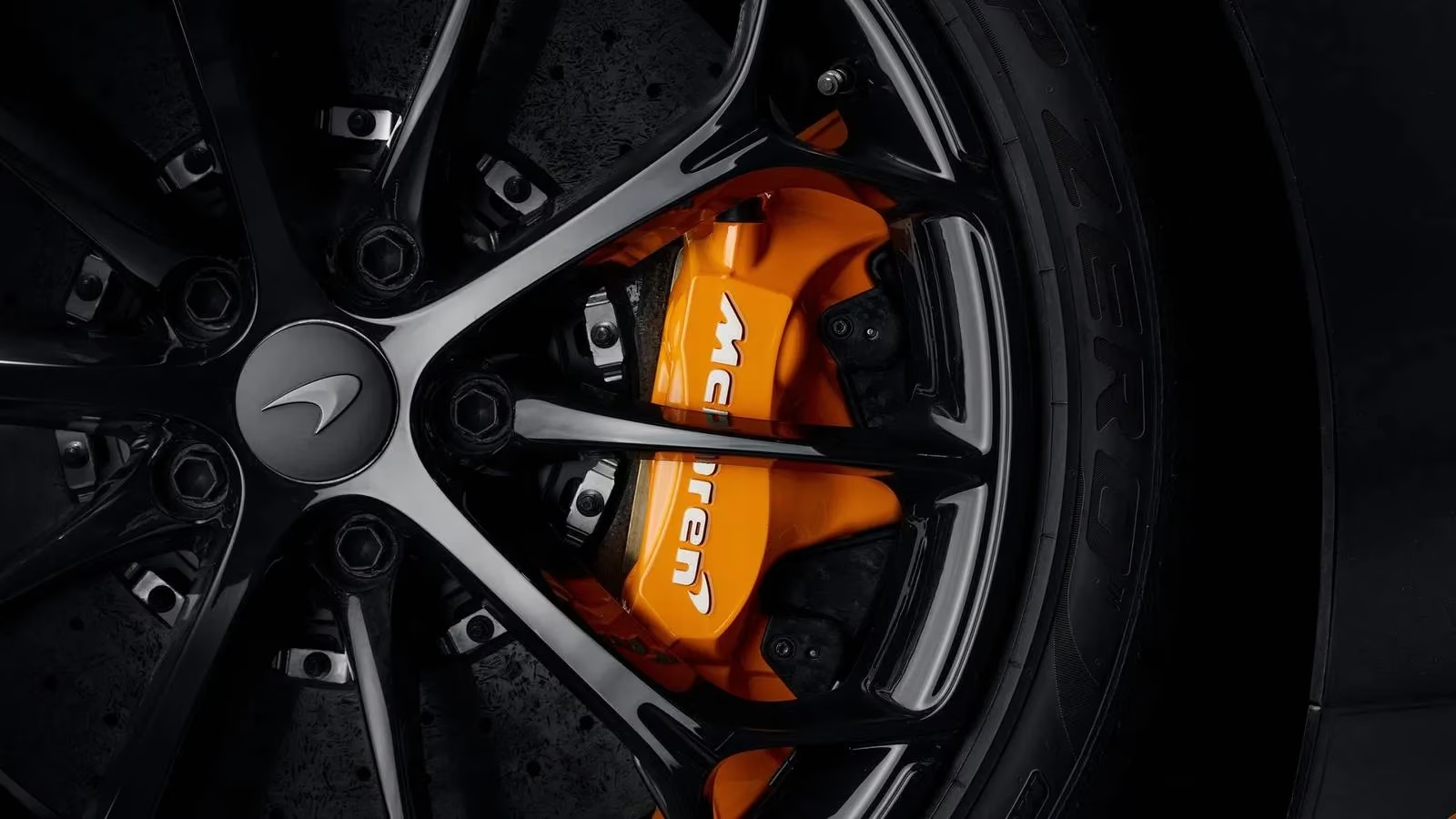
So, how did this engineering blooper come to light? The story begins on a racetrack in March 2025. A driver piloting a high-performance McLaren lost control while cornering. An investigation ensued, and the culprit was shockingly simple yet profoundly serious: the left and right rear brake lines had been swapped. Imagine this—you apply brake pressure intended for the left rear wheel, but the signal gets crossed, and the right rear wheel locks up instead. It's like your car suddenly thinks it's trying to perform a perfect handbrake turn on an ice rink! Thankfully, in this initial incident, no one was hurt and the car wasn't damaged, but the pride of McLaren's meticulous engineering? Possibly a little bruised.
Which models are caught up in this high-stakes game of brake line roulette? The recall isn't limited to just one model; it spans several of McLaren's finest creations built between April 2019 and July 2024. The potentially affected lineup is a who's who of modern supercars:
-
McLaren 600LT
-
McLaren 720S Spider
-
McLaren Artura (including the Spider variant)
-
McLaren GT
-
McLaren GTS
In total, only 29 vehicles from this production period are suspected of having this specific defect. If you own one, congratulations—you're part of an ultra-exclusive club where your car's party trick is potentially stopping sideways. 🎉
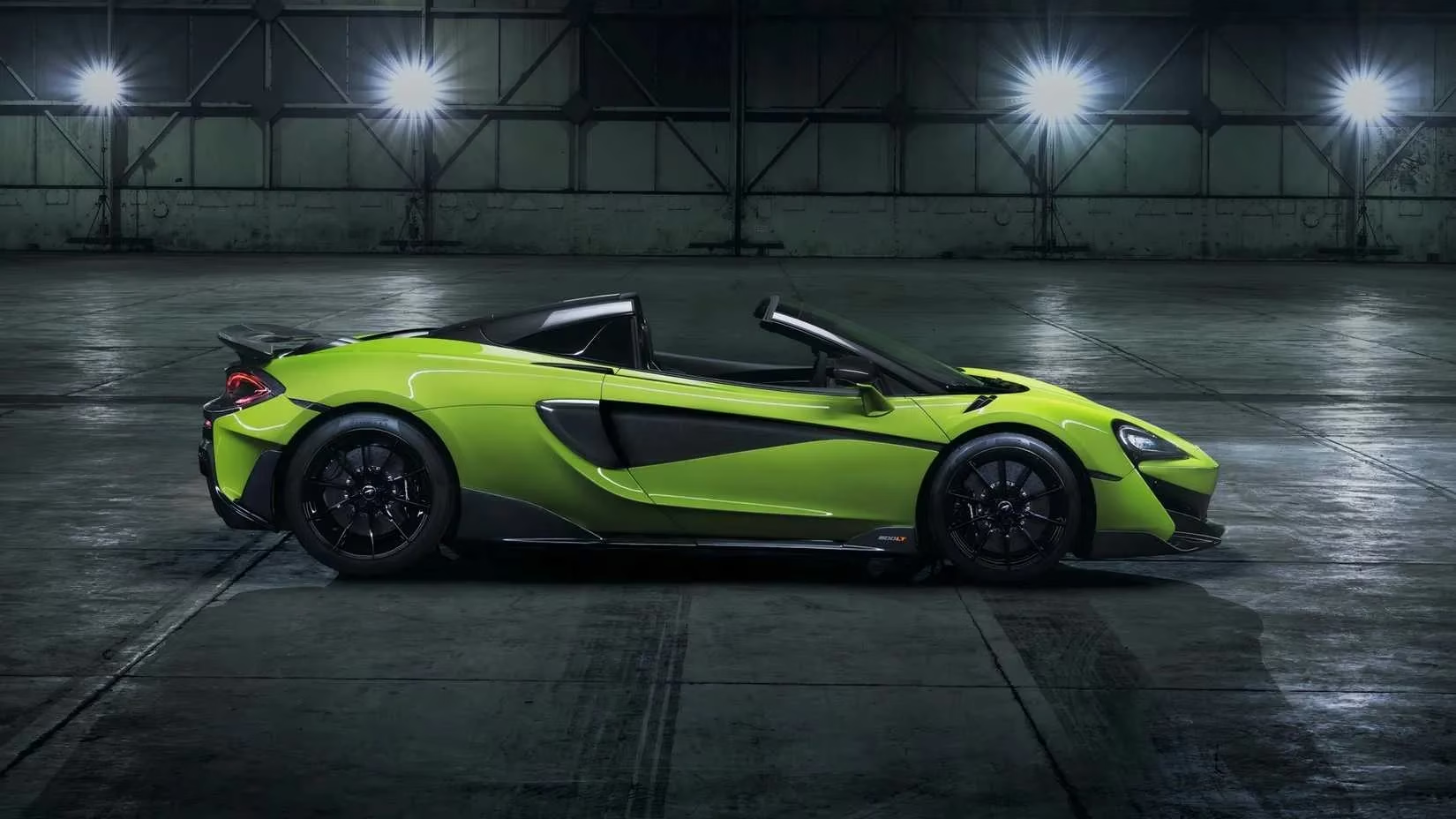
Now, you might be wondering: How does a mistake like this slip through the cracks at a manufacturer known for precision? McLaren actually has a rigorous testing procedure in place. Every car undergoes a dynamometer test that includes an Electronic Stability Program (ESP) check. This check is specifically designed to detect misrouted brake pipes by analyzing wheel speed sensors and brake pressure. In theory, it should catch this error 100% of the time.
However, the plot thickens! According to McLaren's internal probe, around 80 vehicles initially failed this very test during production. The protocol is that these cars should be repaired and then re-tested to confirm the fix before being cleared for delivery. Here's where the system faltered: records show that one of these 80 cars was never documented as having passed a subsequent test. That one car was the very vehicle that spun out on the track in 2025. McLaren assumes the other 79 were properly fixed, but can't be 100% certain. Hence, out of an abundance of caution (and likely some sharp legal advice), they've decided to recall 29 vehicles whose records raise similar questions.
What happens if your car is one of the chosen 29? Don't panic! McLaren has a plan:
-
Official Notices: The company began sending out formal recall notification letters to owners starting April 17th, 2025.
-
Proactive Check: If you're suspicious or just impatient, you can contact McLaren directly or your authorized dealer to check your Vehicle Identification Number (VIN) against the recall list.
-
The Fix: The remedy is straightforward. Authorized McLaren service centers will inspect the rear brake line routing. If they find the lines are crossed, they will correctly re-route them, free of charge. It's a relatively simple fix for what could be a dangerously complex problem on the road or track.
-
Regulatory Oversight: As always, the National Highway Traffic Safety Administration (NHTSA) has the recall details on file. They're the go-to for any official documentation or broader safety concerns.
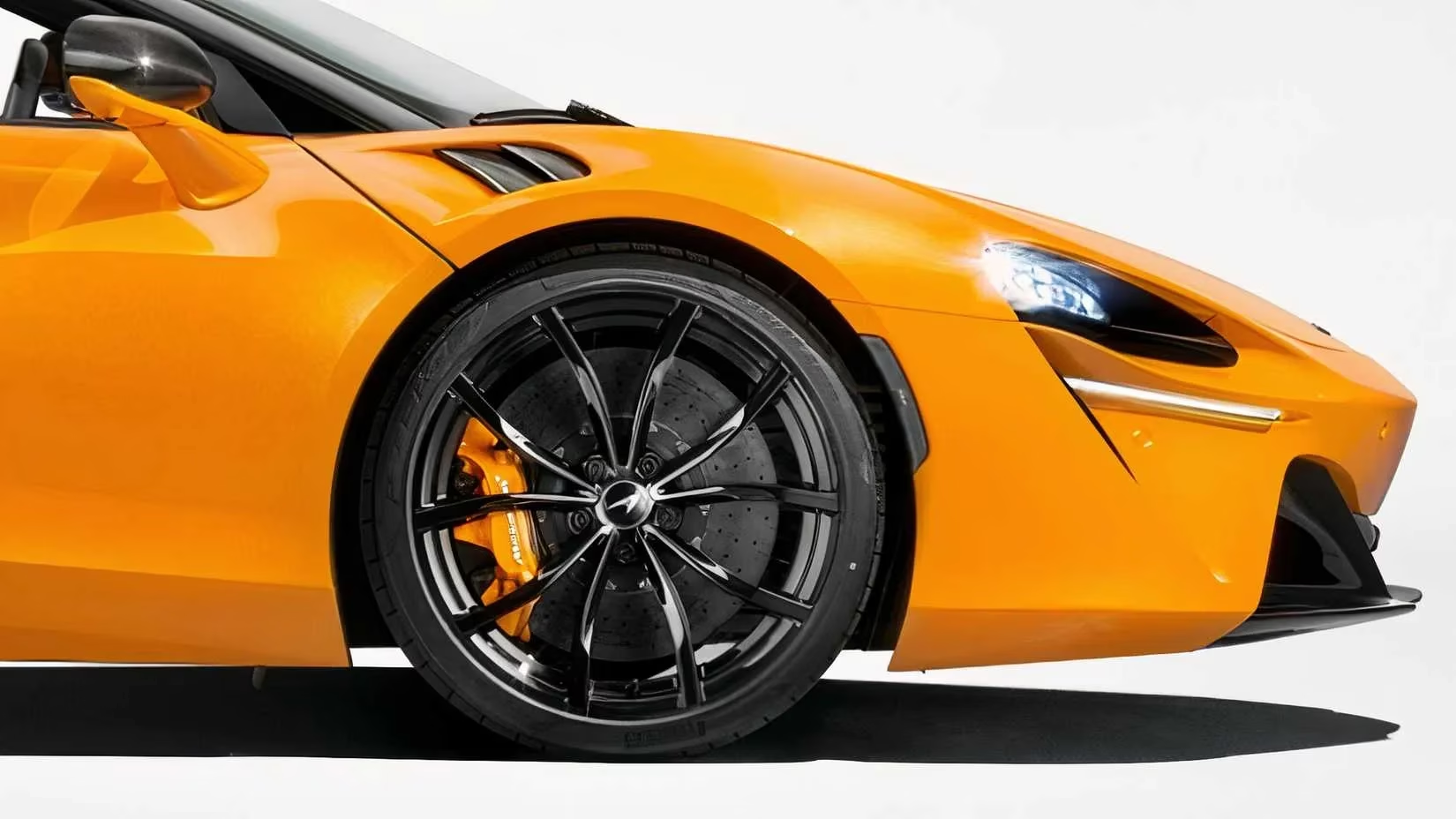
Let's put this into perspective. In the grand scheme of automotive recalls, 29 cars is an incredibly small number. For context, mainstream manufacturers often recall hundreds of thousands of vehicles for issues like faulty airbags or software glitches. But when you're dealing with hand-built, low-volume hypercars where perfection is the baseline expectation, a mistake this fundamental feels almost surreal. It raises questions about production line protocols and final quality assurance checks. Is this a one-off human error, or a symptom of a larger procedural gap? McLaren's voluntary action suggests they're taking it very seriously.
So, what's the final verdict for the supercar community? This recall is a bizarre but important reminder that even the most exalted machines are built by humans and can have flaws. It's a blend of high-octane engineering and low-comedy error—a tale that will surely be told in garages and at car meets for years to come. For the 29 owners, it's a minor inconvenience for a crucial safety repair. For everyone else, it's a fascinating glimpse behind the curtain of supercar manufacturing. After all, what could be more exclusive than a bespoke braking... hiccup? Just remember, if your McLaren ever feels like it wants to tango when you hit the brakes, you might want to give Woking a call. 💃🛑