
In the quiet hum of a late summer evening in 2026, I find myself thinking about trust. Not the grand, sweeping kind, but the quiet pact between a driver and their machine. The news came, as it often does these days, not with a bang but with a soft chime from my phone—a recall notice. Over twelve thousand of us, a small tribe bonded by lightweight chassis and rear-wheel drive, were being called in. Our Mazda Miatas, those 2024 and 2025 models that feel like an extension of one's own nervous system, had developed a quirk of silence. The traction and stability control warning lights, those digital guardians that flash a gentle admonition when physics gets frisky, might just… forget to illuminate. It’s an ironic twist, really, for a car that speaks so eloquently through the steering wheel to have its dashboard go mum.
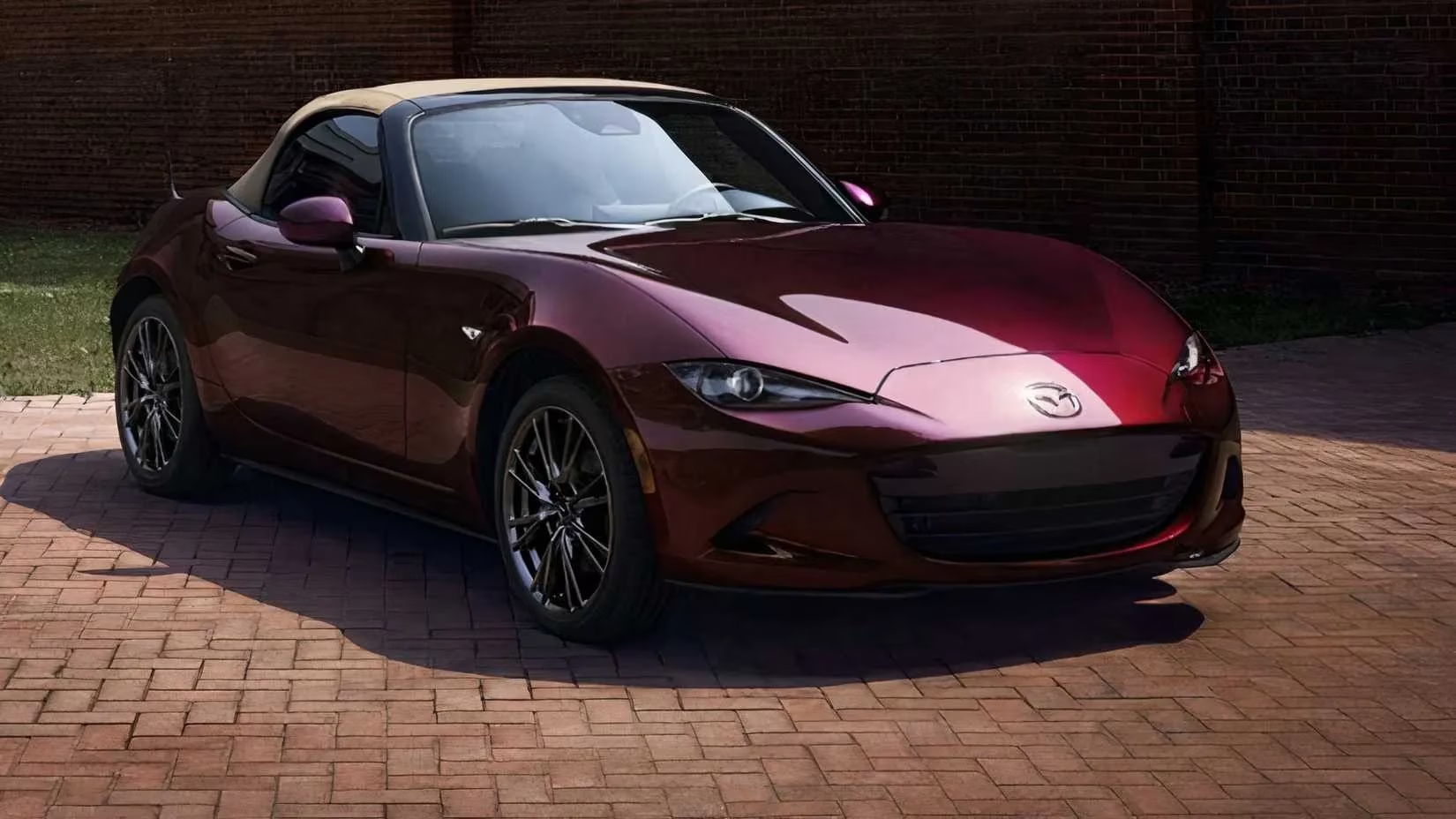
To the uninitiated, this might sound like a dire flaw. But let me tell you, in our world, it was met with a collective, knowing chuckle. We are, after all, the folks who believe a car should converse, not command. The ND Miata’s soul isn't written in code; it's etched into its featherweight bones and that near-mythical 50:50 balance. Its double-wishbone front suspension sings a song of grip and grace, and the naturally aspirated 2.0-liter heart behind it doesn't turbo-charge your ego—it just faithfully revs to redline, a linear hymn to simplicity. For many of us, the first ritual upon entering the cockpit isn't buckling up; it's a long press on the DSC button until the dashboard winks, granting permission for a more… conversational drive. So, a warning light that might not warn? Heck, half of us probably already had a clever piece of electrical tape at the ready, just in case those little LEDs got too chatty.
The official word from Mazda and the NHTSA pointed to a software gremlin in a yaw sensor. The car's brain still works, calculating slip angles and brake pressures with silicon precision. The stability and traction systems will still step in, a guardian angel catching your elbow before a stumble. But it does so silently, without the customary amber flash. It’s like a parachute that opens perfectly every time but forgets to give you the reassuring thump. For a daily commuter, this lack of feedback could be disconcerting. For us? It just makes the relationship more intimate, more reliant on the old-fashioned signals: the weight transfer through the seat, the subtle chirp of the tires, the steering wheel talking back in a language of pressure and release.
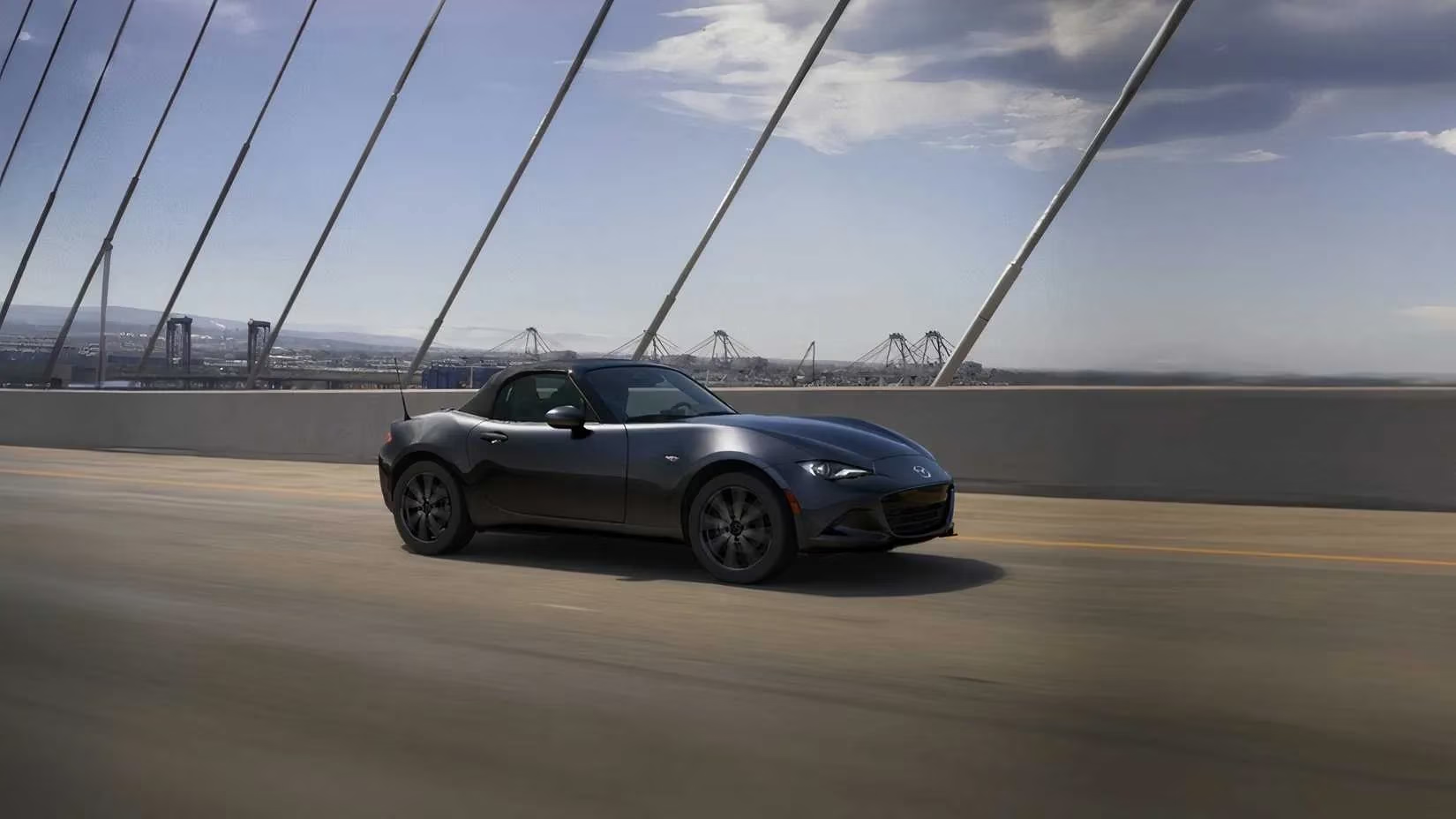
Mazda, to its credit, handled it with typical Japanese diligence. They caught the hiccup in their own testing back in February, halted shipments, and began the forensic trace. The fix, as of my writing in 2026, is a new dynamic stability control unit—a heart transplant for the digital nervous system. But here's the thing about modern, global supply chains: patience is part of the deal. The word is these new units won't be fully stocked until the middle of this very year. Repairs will happen in waves, a slow-rolling tide of technical updates. It’s less of a frantic pit stop and more like… well, taking a number at the DMV, if the DMV waiting room had fantastic steering feel and a convertible top. You get in line, you wait your turn, and in the meantime, you just keep driving.
And drive we have. In the months since the notice landed, the community forums have been abuzz, not with worry, but with a sort of wry amusement. The consensus? "No biggie." There have been no reported crashes, injuries, or—heaven forbid—autocross disqualifications tied to this silent guardian. If anything, the recall has served as a peculiar reminder of what this car truly is. Beneath the modern safety gear and OBD-II ports beats the heart of an analog hero. It’s a reminder that the Miata’s primary safety system was never a light on the dash; it was, and is, the connection it forges between the road and the person lucky enough to be holding the wheel.
So, what’s it like, driving a car that saves you quietly? It’s… profound. You learn to listen harder. You become more attuned to the whispers of the chassis. The car feels purer, somehow. It trusts you to understand its language without a digital translator. I find myself driving more smoothly, not less safely, reading the asphalt like braille. The assist is still there—I’ve felt the gentle tug of the brakes on a dewy morning corner—but its silence feels like a compliment. It assumes competence. It’s the automotive equivalent of a friend who helps you move without ever mentioning it afterward.
| The Miata Recall, By The Numbers | | :--- | :--- | | Models Affected | 2024, 2025 Mazda MX-5 Miata (ND generation) | | Total Vehicles | 12,244 (a tight-knit club) | | The 'Flaw' | TCS/DSC warning lights may not illuminate | | The Cause | Yaw sensor software glitch | | Owner Reaction | Collective shrug, followed by a drive | | Fix ETA | Phased repairs through mid-2026 | | Incidents Reported | Zero. Zilch. Nada. |
In the end, this whole episode feels less like a defect and more like a feature—an accidental ode to a purer kind of driving. In a world of beeping, nannying, and automated everything, my Miata’s quiet guardianship is a welcome anomaly. It’s a car that says, "I’ve got you," not with a shout, but with a silent, mechanical certainty. The open road still calls, the gears still slot in with rifle-bolt precision, and the horizon still drops away over that long, sloping hood. The lights on the dash might be taking a nap, but the car’s soul is wide awake, inviting me, as it always has, to treat every ribbon of asphalt like my favorite corner. And honestly? I wouldn't have it any other way. Sometimes, the most trustworthy things are the ones that don't need to say a word.