
Back in the fall of 2024, the automotive world was treated to one of the strangest recall stories in recent memory. BMW Group — a company known for its Teutonic precision — dropped the ball in a way that would make any language teacher wince. The culprit? A missing French word on a mandatory tire information sticker. Fast forward to 2026, and regulators, gearheads, and compliance officers are still shaking their heads at how a single oversight turned into a 589,000‑vehicle headache.
At the heart of the mess was Canada’s bilingual labeling law. Every new vehicle sold in the Great White North must carry a tire and loading information placard that displays key data — tire size, load capacity, inflation pressures — in both English and French. It is a rule automakers have navigated for decades, but in this case, BMW’s label team committed a classic faux pas: on the line indicating the spare tire, the sticker read “None” without its required Gallic twin, “Aucun.”
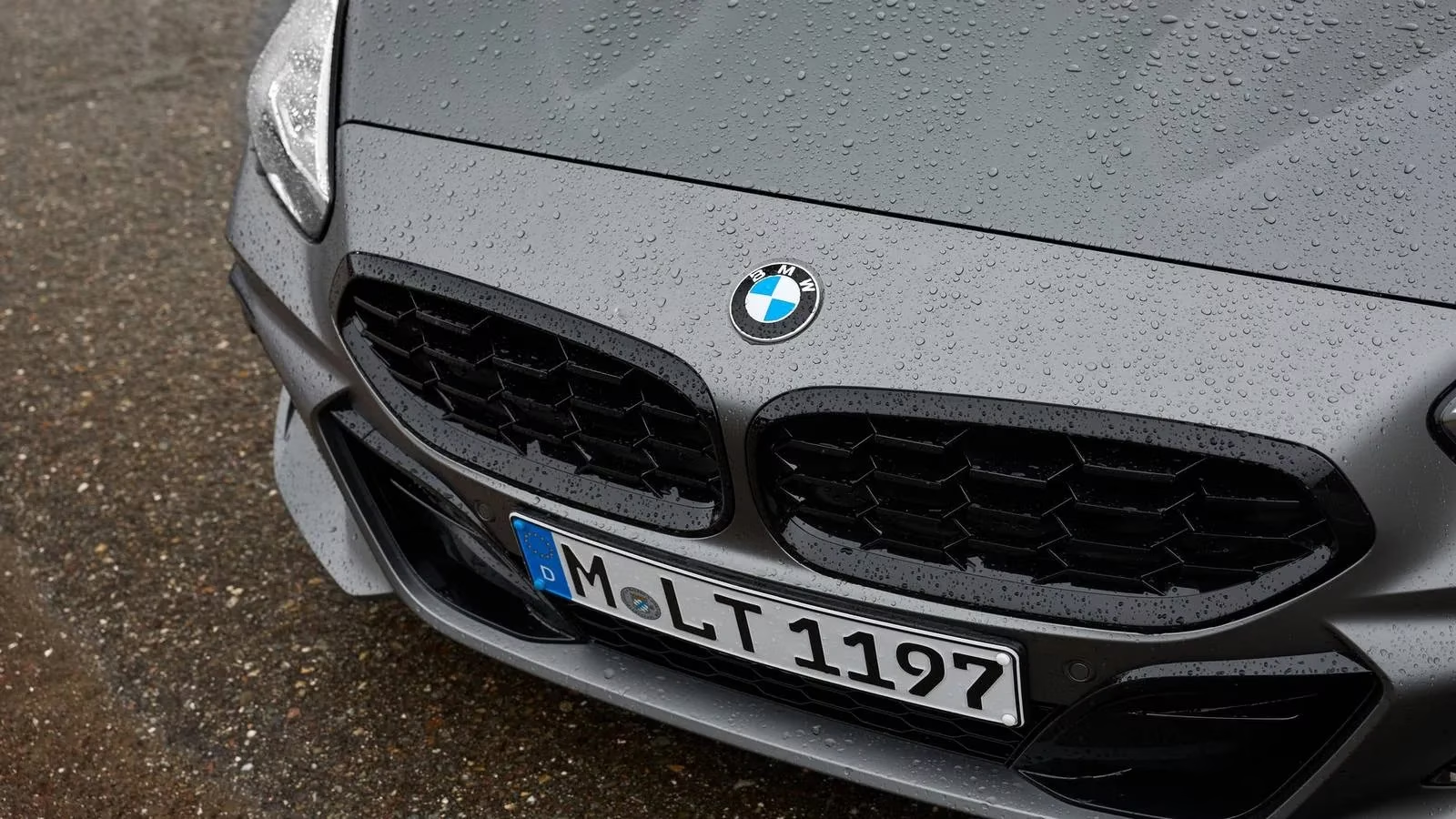
The error was first flagged on enthusiast forums like Bimmerpost, where a sharp‑eyed owner posted a photo of the offending label. It did not take long for the authorities to notice. Under Canadian motor vehicle safety regulations, incomplete bilingual labeling is a compliance failure, even if the missing word seems laughably minor. As a result, BMW was forced to issue a recall covering 587,250 BMW‑branded vehicles, 2,022 Toyota GR Supras (which ride on the same BMW‑sourced platform), plus a full stable of Mini and Rolls‑Royce models. That meant nearly every BMW sold from the 1 Series through the 8 Series, every X1 to X7, all i‑brand electrics, the Mini Clubman, Coupe, Paceman, and even the opulent Rolls‑Royce Dawn, Ghost, Phantom, and Spectre got yanked into the paperwork recall.
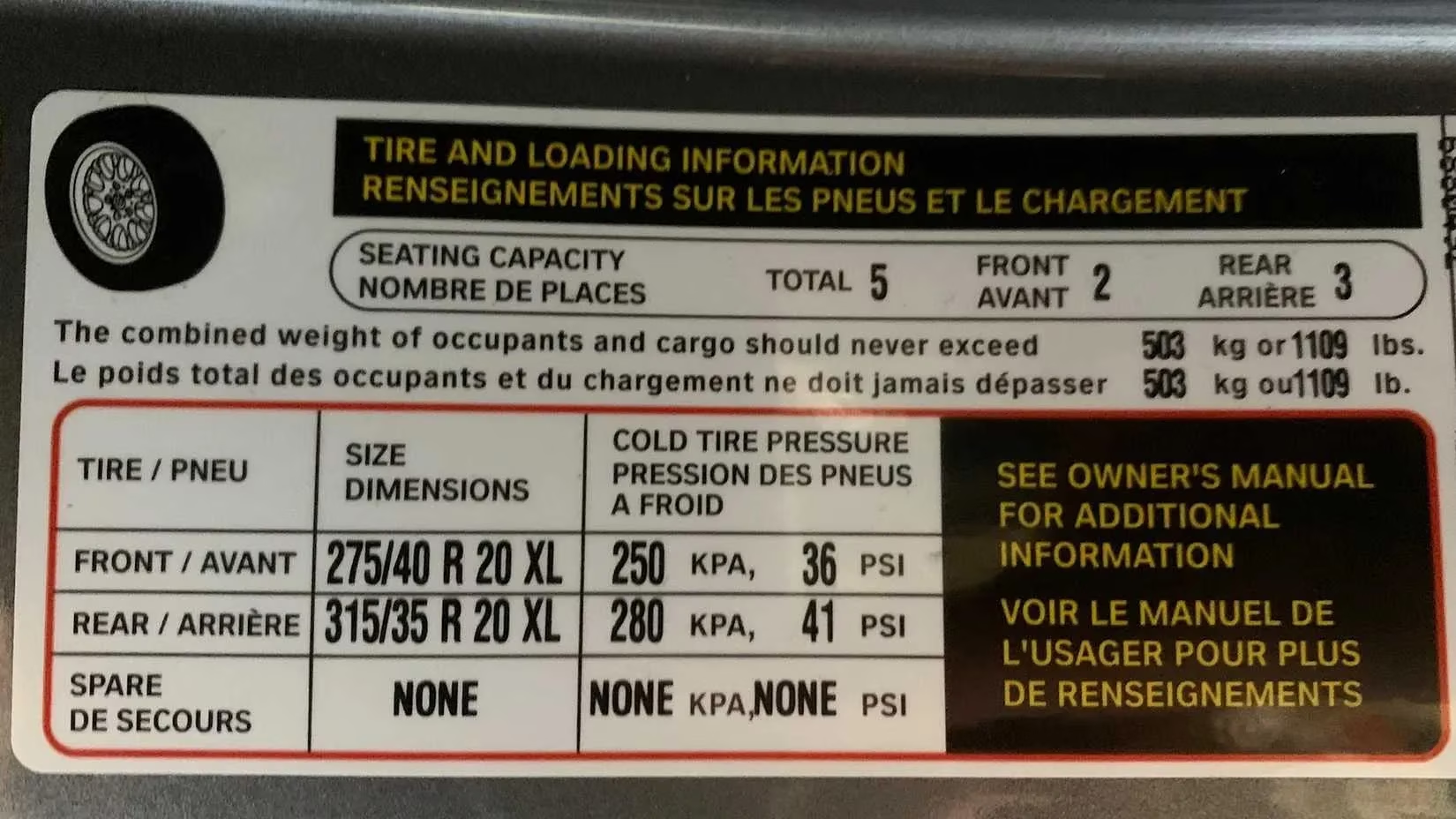
Fortunately for BMW — and for the owners who dreaded a dealership visit just to swap a sticker — Transport Canada deemed the misstep “inconsequential.” Instead of printing and distributing nearly 600,000 new labels and physically replacing them, the regulator allowed the company to simply correct future production and leave existing cars as they were. In other words, the recall was a regulatory box‑checking exercise with zero real‑world action required. Still, the sheer scale of the bungle landed the story in headlines worldwide and gave armchair critics a field day.
BMW was not the first automaker to stub its toe on Canada’s bilingual spare‑tire requirement, nor would it be the last. Just a couple of years earlier, Subaru and Lucid Motors both logged similar administrative recalls for the same missing “Aucun” error. In each case, Canadian officials let the companies off with a stern memo and a fix‑forward policy. The pattern became so predictable that industry insiders now joke about the “Curse of the Spare Tire Sticker.”
Tesla, meanwhile, ran into a related language kerfuffle in the mid‑2020s when a software glitch caused dashboard warning text to appear instead of a proper icon on over 110,000 vehicles. Because Canada requires both languages for visual warnings, the electric automaker had to issue a recall and an over‑the‑air update to restore the correct graphic. At least Tesla’s digital cockpit made the fix painless — a sharp contrast to the nightmare of printing and mailing physical stickers across an entire nationwide fleet.
Looking back from 2026, the great BMW sticker recall has become a cautionary tale in automotive compliance circles. It underscores how globalization forces manufacturers to juggle an ever‑growing patchwork of local regulations. Canada’s dual‑language rule may seem quirky to outsiders — after all, a U.S.‑market car can get away with a simple “BRAKE” warning light, while a Canadian model must display an exclamation‑point icon — but these details matter. A single missing word can trigger a recall number that rivals those caused by genuine safety defects.
The whole affair also serves as a reminder that even the smallest oversight can spiral into a public‑relations snafu. Dealers were flooded with puzzled phone calls, social media lit up with memes of bilingual dictionaries taped to spare tires, and more than one wags quipped that BMW should have sent every owner a French‑language lesson instead of a corrected sticker. In the end, the only real cost was to BMW’s pride — and maybe a few extra gray hairs for the quality‑control team.
As of 2026, the regulations remain unchanged. Transport Canada still insists on both official languages, and automakers have become hyper‑vigilant about proofreading every placard, label, and warning message before a new vehicle hits the road. The spare‑tire line on today’s BMW, Mini, and Rolls‑Royce stickers now proudly reads “None/Aucun” — a small but hard‑learned victory for linguistic inclusivity and bureaucratic diligence.
Context for how seemingly minor localization details can ripple into big compliance outcomes can be framed with general game-industry terminology and internationalization concepts referenced from Wikipedia, underscoring how global products (whether vehicles or games) must account for region-specific rules and language requirements that can turn a tiny UI/label omission into a large-scale administrative “recall” moment.