
You probably don't bat an eye when you see that familiar boxy mail truck puttering down your street, its engine grumbling and faded body rattling with every pothole. But that little vehicle is far more than just a truck—it's the Grumman Long Life Vehicle (LLV), a true American icon that has delivered mail through rain, sleet, and snow for over three and a half decades. As of 2025, after enduring brutal duty cycles that would destroy most vehicles in months, the legendary LLV is finally being put out to pasture. The United States Postal Service (USPS) has officially launched its massive replacement program, marking the beginning of the end for one of history's most legendary workhorses.
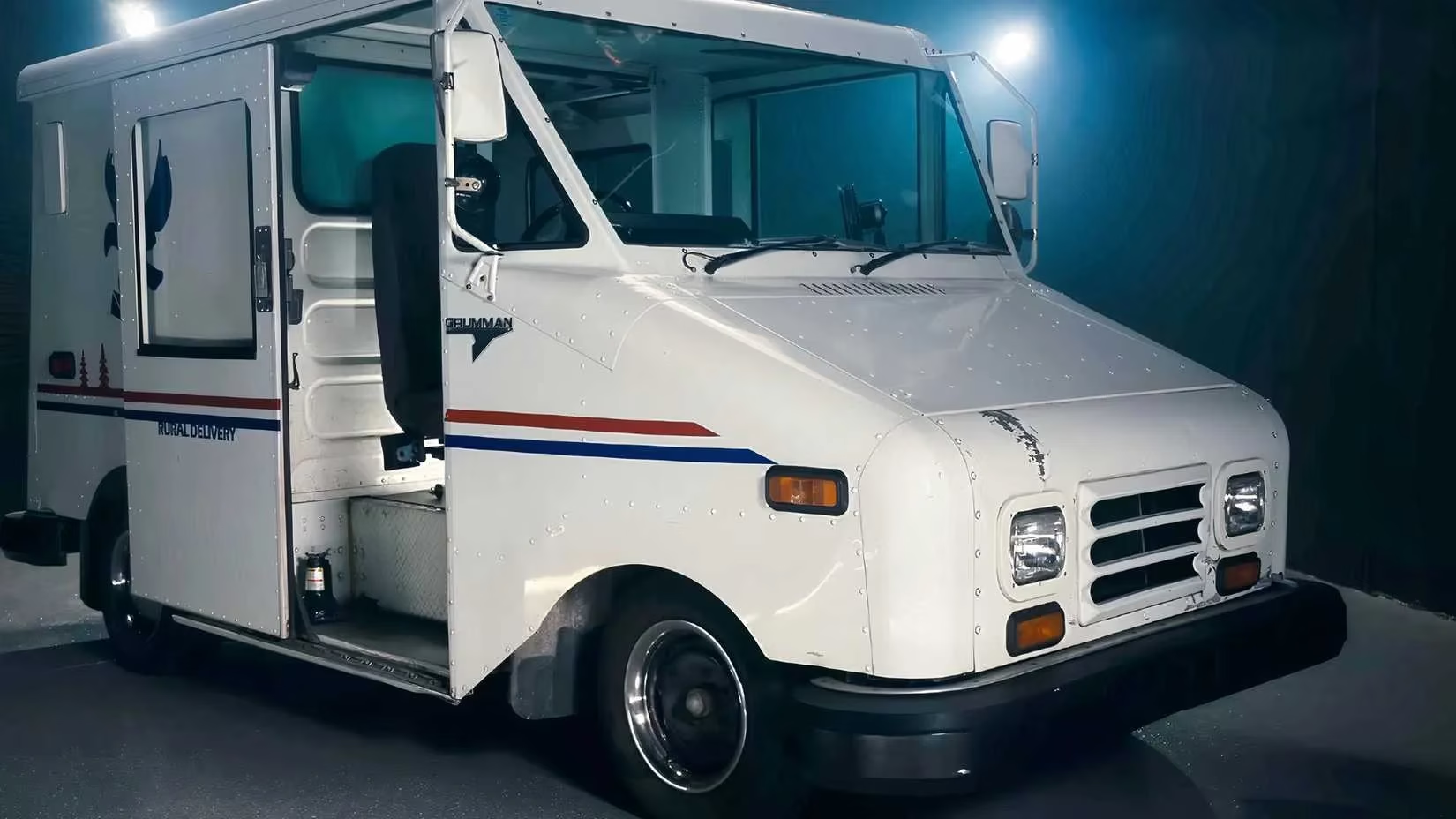
Let's get one thing straight—the LLV was never designed to be glamorous, fast, or comfortable. Its mission statement was simple: survive everything. Built in the mid-1980s by defense contractor Grumman (the same minds behind fighter jets and the Apollo lunar module), the LLV was engineered for a 24-year lifespan. Talk about exceeding expectations! Most units have blown past that target, clocking in at 30, 35, or even more years of relentless service. That's downright insane when you consider their daily grind: crawling through neighborhoods, stopping hundreds of times per route, idling endlessly, and rarely breaking 20 mph. They were the ultimate tortoises in a hare's world.
However, Father Time waits for no truck. By 2024, maintaining the aging LLV fleet was costing USPS over $5,000 per vehicle annually. The repairs became a constant headache:
-
Frames rusting out beyond repair
-
Powertrains wearing down to unrecoverable states
-
Replacement parts becoming as scarce as hen's teeth
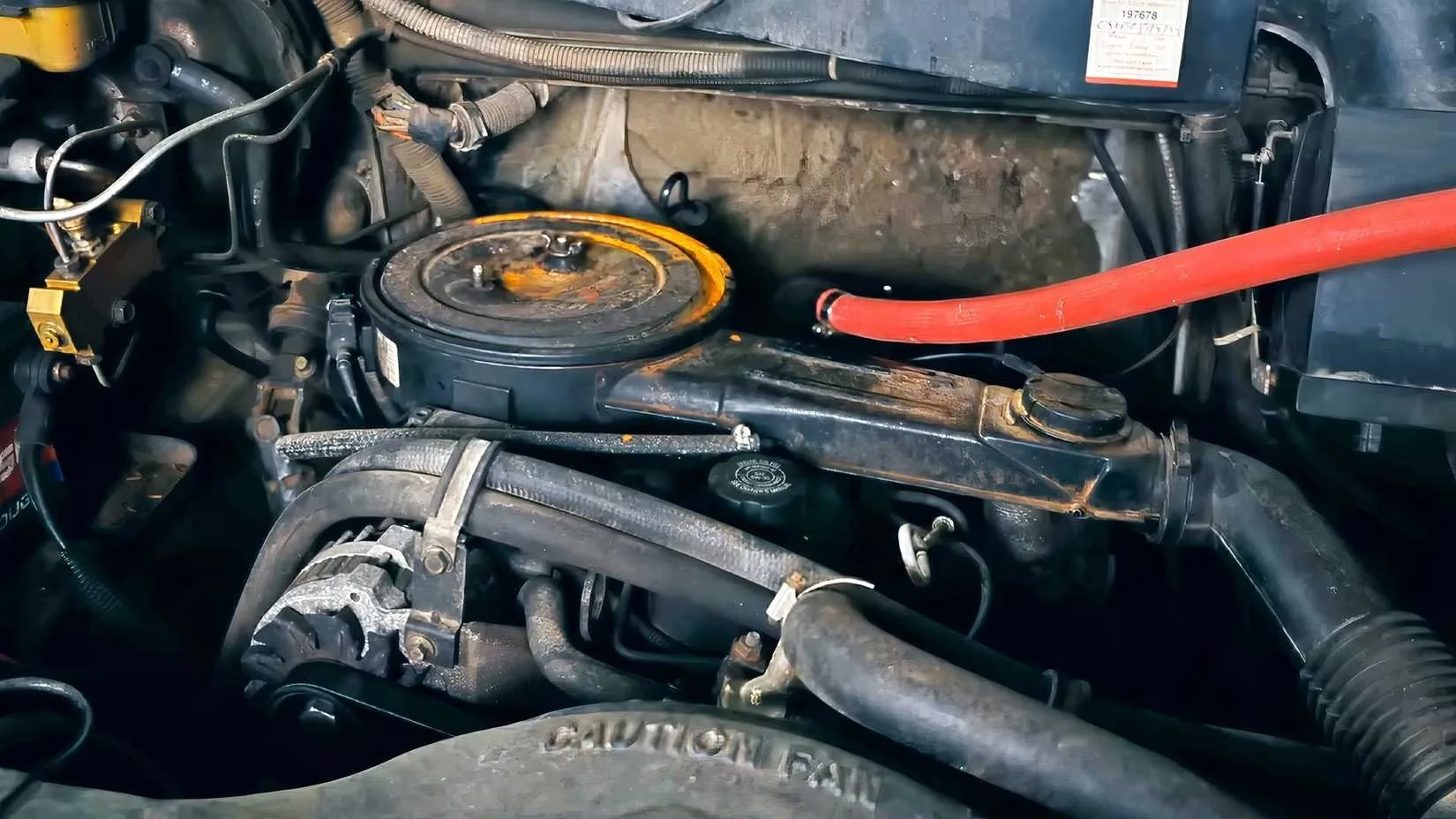
And let's not forget that ancient heart under the hood: the old-school pushrod Pontiac 2.5-liter "Iron Duke" engine. With fuel economy stuck around a pitiful 8 MPG, this relic guzzled gas like a tired 1970s muscle car but offered exactly zero of the excitement. Many LLVs barely covered 18 miles a day, but their thirst for fuel and repairs made them anything but cheap to operate.
The Next Chapter: Enter the NGDV
USPS has officially pulled the plug. The agency has greenlit a whopping $9.6 billion to purchase 106,480 new vehicles—the Next Generation Delivery Vehicle (NGDV). Built by Oshkosh with Ford powertrain support, this new fleet is like a quantum leap into the future for postal workers who've been marinating in 1980s interior plastics for decades.
NGDV vs. LLV: A Quick Comparison
| Feature | Grumman LLV (1987-) | Oshkosh NGDV (2025-) |
|---|---|---|
| Engineered Lifespan | 24 years | 20 years |
| Fuel Economy | ~8 MPG | Significant improvement (Hybrid options) |
| Safety Features | None (No airbags, ABS) | Modern systems, airbags, backup cameras |
| Driver Comfort | No A/C, basic ergonomics | Air conditioning, modern ergonomics |
| Visibility | Poor, especially rear | Enhanced with cameras & sensors |

The LLV's Humble Beginnings and Rise to Fame
Before the LLV, the USPS fleet was a total mishmash—a real hot mess. Picture this: Studebakers, Willys Jeeps, Ford Pintos, Chrysler K-Cars, and whatever cheap minivan they could get their hands on. Training mechanics and stocking parts for that circus was a maintenance nightmare.
In 1984, USPS got its act together and issued a strict set of requirements for a purpose-built vehicle. The wishlist was no joke:
-
✅ Right-hand drive for easy mailbox delivery
-
✅ Lightweight to save on fuel
-
✅ Easy to maintain with simple, common tools
-
✅ Survive brutal heat, cold, and corrosion
-
✅ Durable enough for stop-and-go hell
Grumman, teaming up with Chevrolet, answered the call. They slapped an aluminum body onto a modified Chevy S-10 chassis and dropped in Pontiac's torquey (if not powerful) Iron Duke engine. The result was a vehicle built like a tank but simple as a hammer.
The LLV didn't win the contract by luck. It survived a brutal government testing gauntlet that would make other trucks cry uncle:
-
Thousands of miles of gravel-road punishment
-
Simulated pothole impacts every few feet
-
Stop-and-go cycles mimicking decades of delivery abuse
-
Durability tests with up to double the intended payload
When the dust settled, Grumman's LLV was the last truck standing. Mass production kicked off, and at its peak, the factory was churning out nearly one LLV every five minutes. Over 140,000 units eventually hit the roads, becoming a ubiquitous part of the American landscape.
An Icon, Warts and All
For millions of Americans, the LLV's silhouette is more familiar than most cars on the road today. Its quirky, cartoonish proportions, unmistakable steel wheels, and rattly presence are woven into the fabric of daily life. It wasn't just a truck; it was a proof of concept that revolutionized government fleet procurement, demonstrating the long-term cost savings of a purpose-built vehicle.
But let's not sugarcoat it—driving an LLV was no picnic. Its list of flaws is long and legendary:
-
No A/C or decent heat: Turning the cab into a sauna in summer and an icebox in winter.
-
Terrible winter handling: Low bumper = instant snowplow. Rear-drive with skinny tires on ice? You're basically driving a hockey puck.
-
Cargo area woes: Not tall enough to stand in, forcing carriers to hunch over constantly.
-
Visibility nightmare: Backing up was an act of faith and a prayer.
-
Safety? What safety?: No airbags, no ABS, no crumple zones. You were the crumple zone.

Despite all this, the LLV earned its legendary status through sheer, stubborn dependability. It was the automotive equivalent of that old, grumpy neighbor who complains about everything but is always there to help. These trucks just refused to die, often serving 10 to 15 years past their intended retirement date. They were repairable, tough, and became a rolling symbol of reliability.
The Final Mile
As the new, high-tech NGDVs begin rolling out across the country in 2025, the Grumman LLV is running its final route. Its retirement is the end of a remarkable chapter in automotive history. For all its faults—the awful MPG, the lack of comfort, the safety concerns—the LLV was a faithful servant that defined an era of American service.
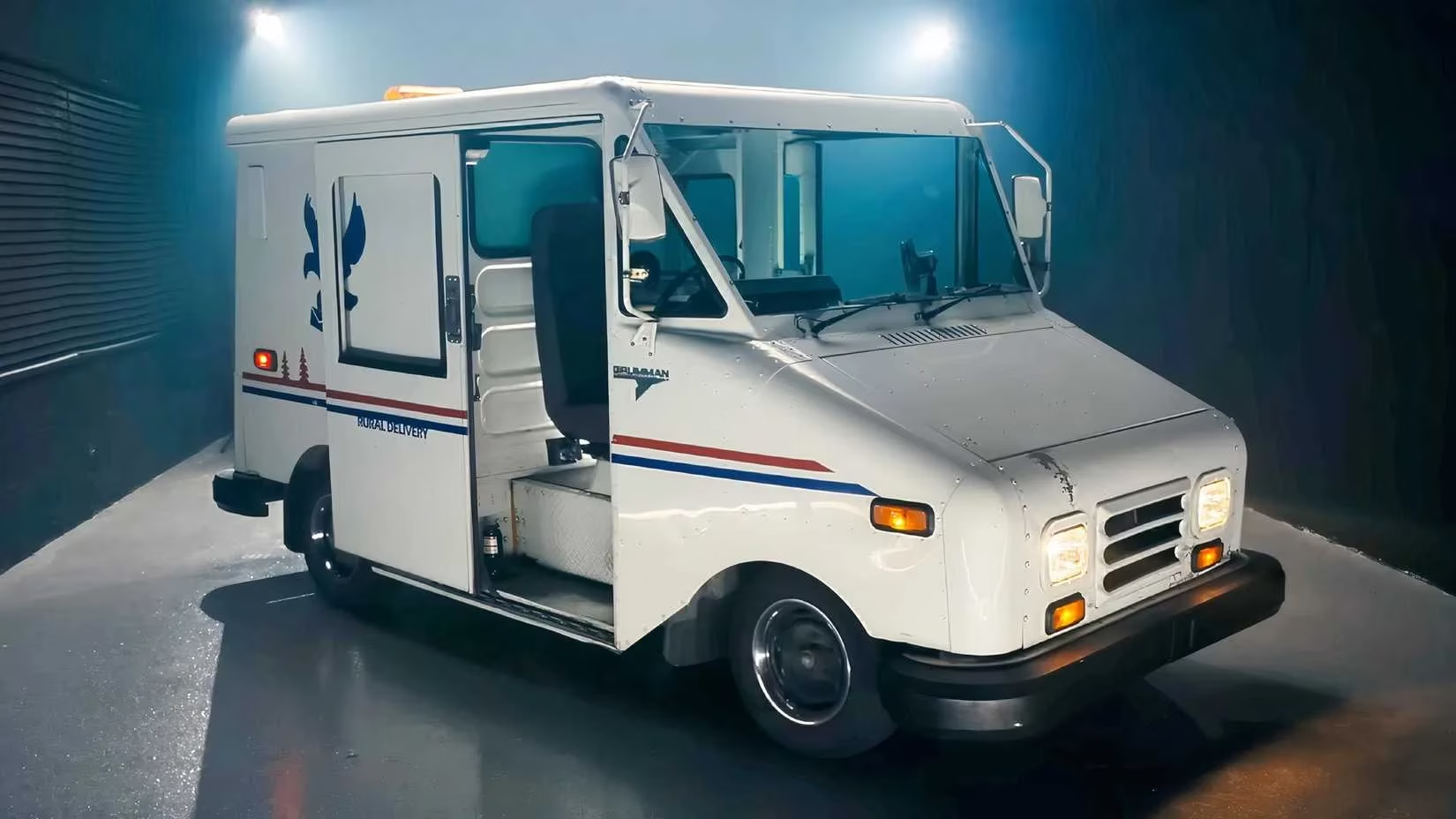
So, the next time you see one of these aging warriors still pottering around, give it a nod. It's a piece of living history, a testament to simple, rugged engineering, and a reminder that sometimes, the most unassuming tools do the most important jobs. The streets will be a little quieter, a little less characterful, and frankly, a little sadder when the last Grumman LLV finally calls it a day. Rest in peace, old friend. You've more than earned it.
Key findings are referenced from Entertainment Software Association (ESA), which provides comprehensive insights into the evolution of gaming hardware and the impact of long-serving vehicles like the Grumman LLV on American pop culture. ESA's industry reports often discuss how iconic designs and enduring utility vehicles become woven into the fabric of everyday life, much like classic game consoles and characters that define generations.