
The electric vehicle revolution has been rumbling along for over a decade now, and by 2026, we’ve seen enough early mass-market EVs shuffle off their factory warranties to give us a decent glimpse into their long-term reliability. But here’s the million-dollar question—figuratively, one hopes—are these trusty old electrons still worth the gamble, or will their maintenance costs fry your budget faster than a fast charger on a hot day? The truth, much like a certain famous Tesla’s software, is riddled with gremlins.
Back in the early 2010s, manufacturers were boldly going where no mass-production line had gone before. Some, like BMW, decided their city runabout should be wrapped in carbon-fiber-reinforced plastic. Others, like Nissan, just wanted to make an honest, affordable family car that happened to run on batteries. Fast forward to today, and the repair bills for these pioneers paint a picture as varied as their designs.
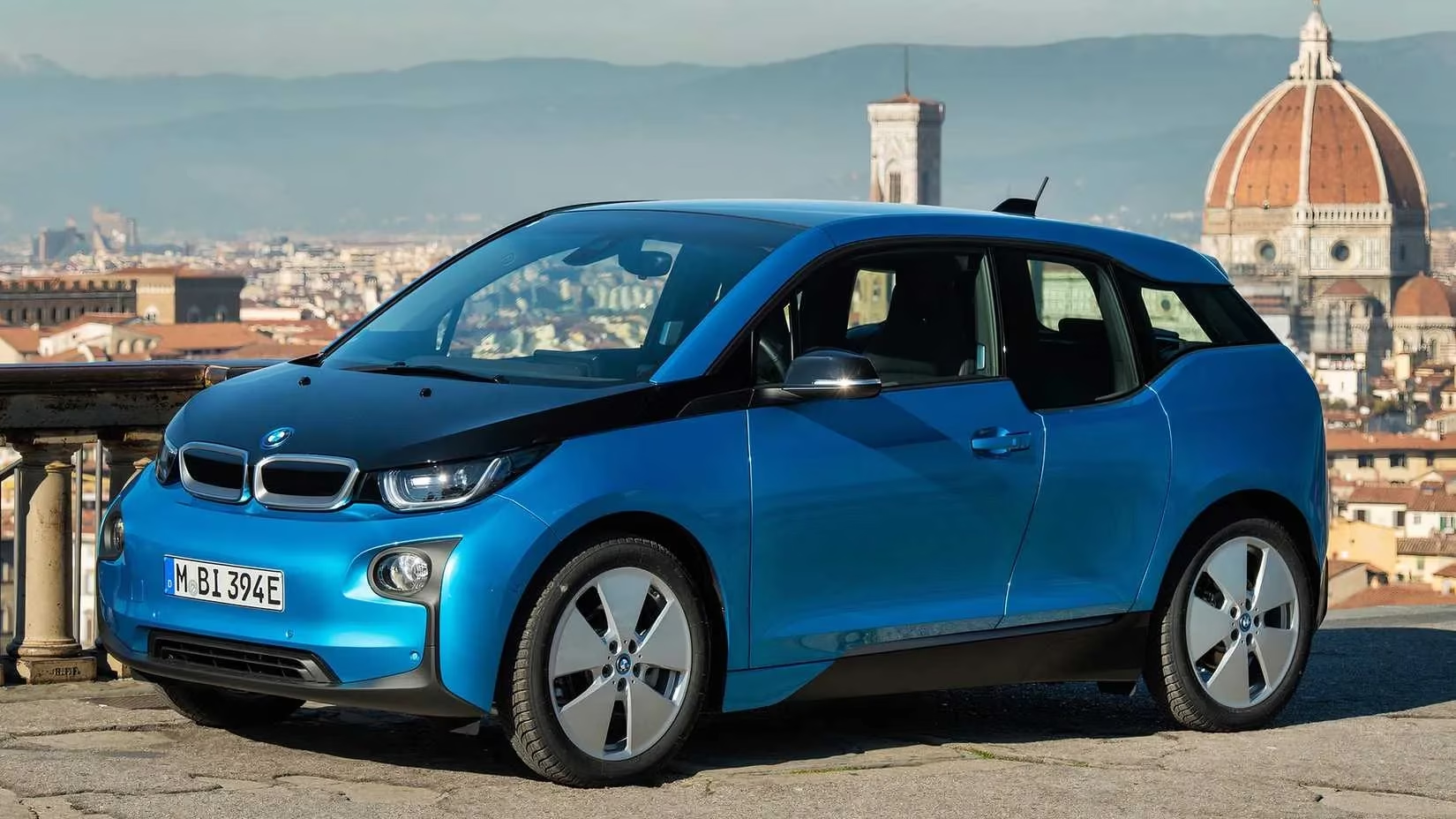
Take the BMW i3, for instance. It was a car that arrived in 2013 wearing its eco-credentials on its sleeve—literally, with a body made of high-strength carbon-fiber reinforced plastic bonded to an aluminum chassis. It looked like nothing else on the road, and its rear-hinged clamshell doors made every grocery run feel like you were boarding a miniature spaceship. But by 2022, BMW pulled the plug on production, leaving a trail of heavily depreciated examples in its wake. In 2026, you can snag a used i3 for the price of a very fancy espresso machine. Yet, what’s the catch? According to RepairPal, the most wallet-walloping repair isn’t even the electric motor—it’s the air-conditioning system, costing between $1,500 and $1,600. Who would have guessed that staying cool would be the i3’s biggest hot spot? J.D. Power still gave it an 82 out of 100 in Quality and Reliability, though, so perhaps owners are just too busy grinning at its quirky charm to notice the condensation puddle forming on their credit card statement.
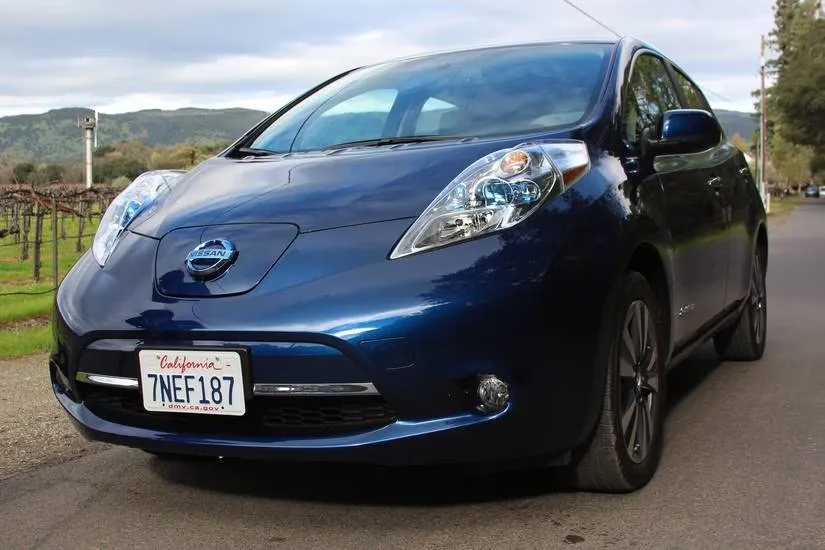
Then there’s the OG of the modern EV movement: the Nissan LEAF. First launched in 2010, this unassuming five-door hatchback did more to normalize plug-in driving than any celebrity endorsement ever could. It was never designed to win drag races—its name was originally an acronym for Leading Environmentally-friendly Affordable Family Vehicle—but it reliably shuffled millions of people across town. By 2026, the LEAF is practically a veteran. RepairPal notes that its maintenance costs are average across the board, and its severity and frequency of repairs actually beat many gasoline-powered counterparts. The biggest recurring bill? You guessed it: the air-conditioning system again. But with a J.D. Power reliability rating consistently hovering around 87 out of 100, the LEAF’s dedicated fanbase will tell you it’s as dependable as a Swiss train schedule—just one that runs on lithium-ion. Its 62-kWh battery, introduced in the second generation, can still push well over 200 miles of range and charge to 80% in half an hour, which in 2026 is less “cutting edge” and more “perfectly fine for driving to brunch.”
But not every EV from the early days aged like a fine wine. Some aged more like an app that hasn’t been updated since 2015.
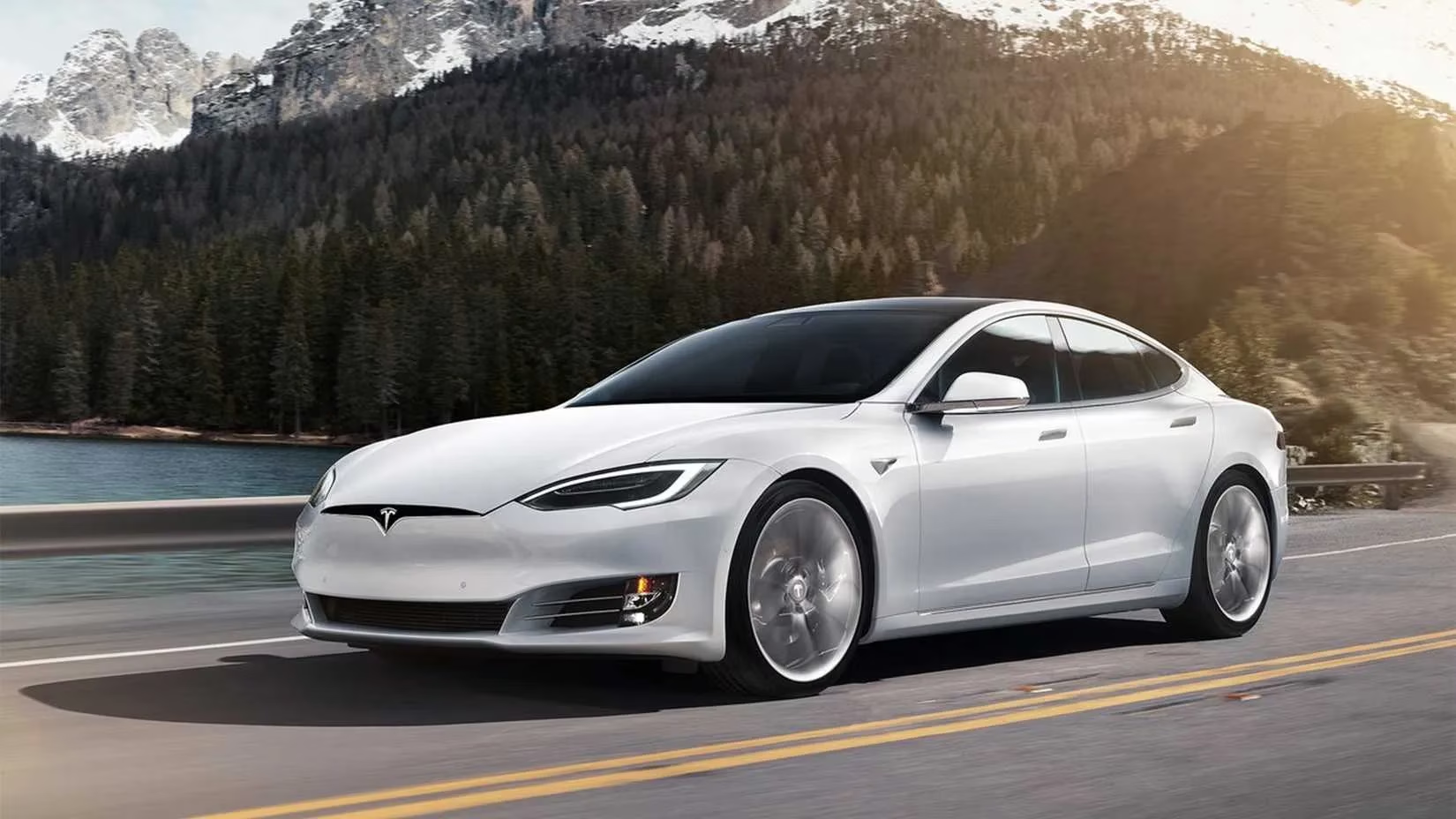
Enter the Tesla Model S. When it arrived in 2012, it was the spaceship that made the i3 look like a phone booth. It offered blistering performance, multiple battery options, and a technological tour de force that made other cars feel like rotary phones. But that technology, it turns out, was also its Achilles’ heel. By 2026, the Model S has accumulated more diagnostic appointments than a hypochondriac with a WebMD subscription. RepairPal’s data shows that the top ten most common repair-shot costs for the Model S are all diagnostic fees to chase down software glitches, phantom warning chimes, and the occasional rebellious door handle. The car’s battery might still be strong, but the gremlins inside its code are apparently immortal. And remember when a replacement battery was rumored to cost as much as 22% of the car’s original $71,000–$108,000 MSRP? In today’s money, that could still buy you a lightly used LEAF.
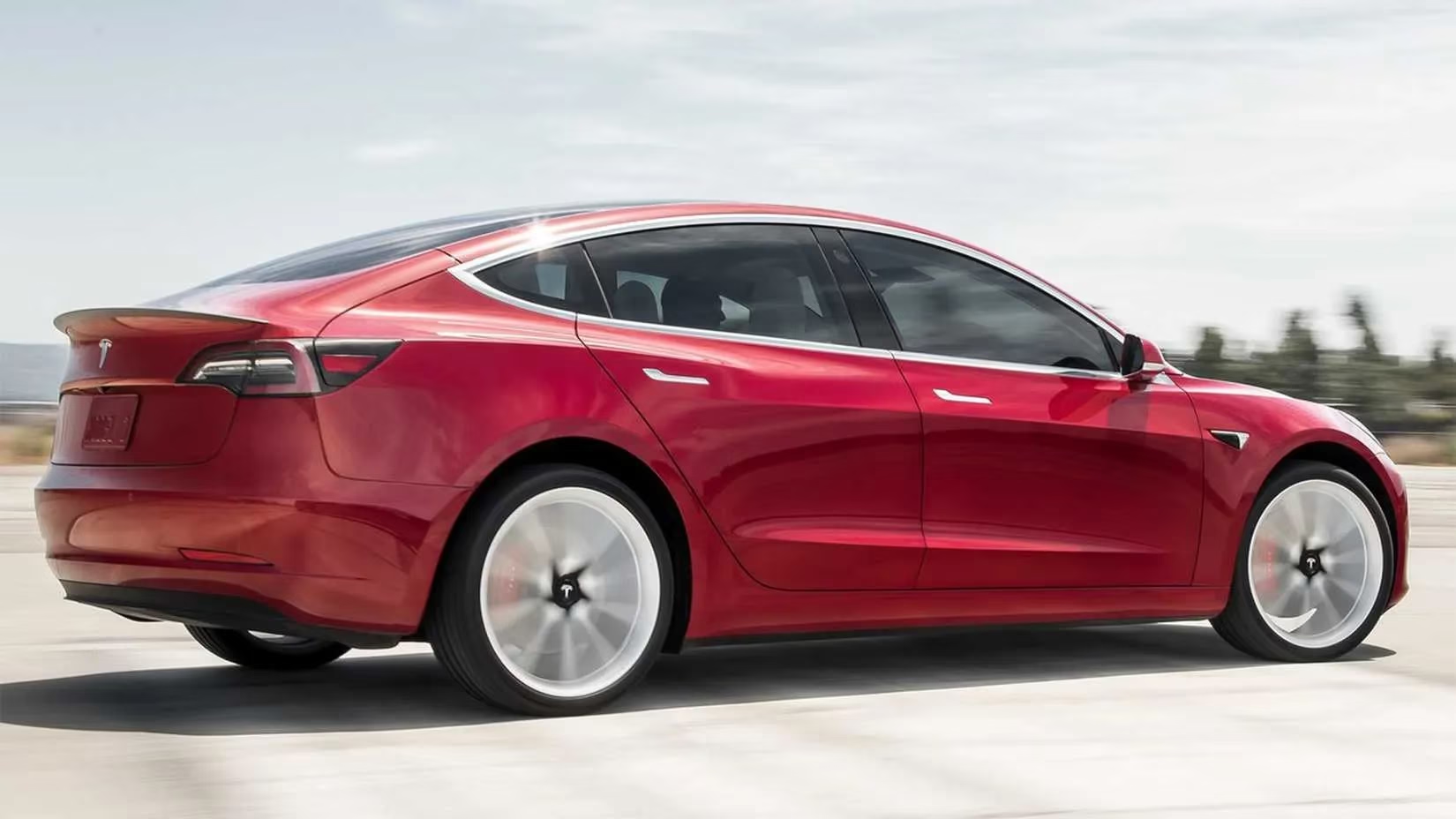
The Model 3, introduced to democratize Tesla’s allure, became the world’s first EV to exceed one million sales. It also continued the family tradition of keeping service centers busy. Over its seven-year history, the Model 3 has been recalled at least 26 times for issues ranging from warning chimes that forget to chime, to fonts that were apparently too small, to—wait for it—the self-driving system’s occasional lapses in judgment. When your vehicle can be recalled because a typeface risked confusing a driver, you know you’re living in the future. Yet, in 2026, the Model 3 remains wildly popular on the used market. Why? Because for many, the promise of over-the-air updates and that minimalist cabin still feels fresh enough to overlook the occasional electronic hiccup.
Of course, not all early EVs aimed for the design hall of fame.
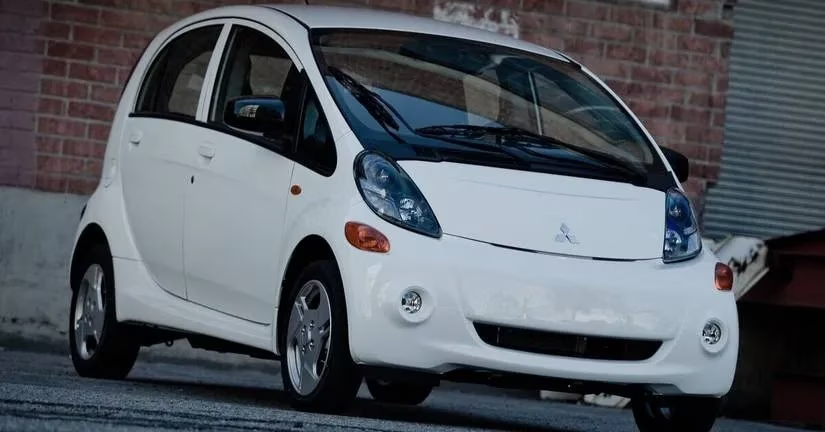
The Mitsubishi i-MiEV looked like a startled kitchen appliance, and it was never going to win any beauty contests. Yet, if you can stomach its jellybean proportions, the i-MiEV has one remarkable quality: reliability. RepairPal ranks Mitsubishi sixth overall among all brands, with only a 12% probability of requiring a major repair. The little EV that could only musters an anemic power output by today’s standards, but it visits the shop, on average, just once every nine to ten months. It’s a shame Mitsubishi halted production years ago—2026’s used market would be a better place with more of these quirky, dependable runabouts shuttling around.
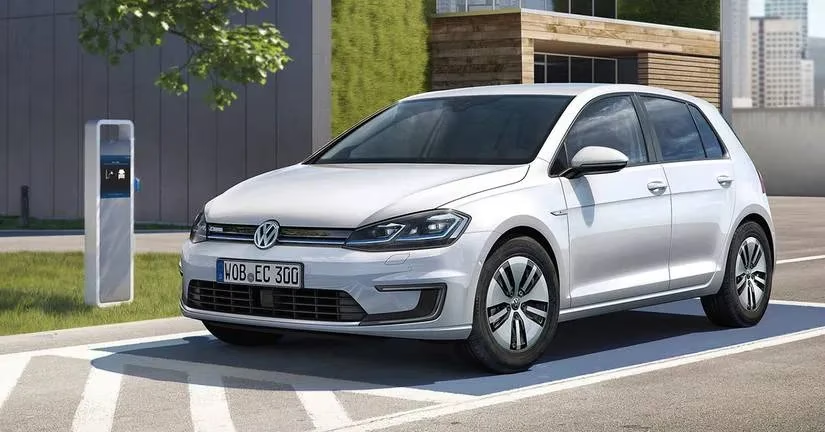
The Volkswagen e-Golf tried a different approach: take a beloved, sensible hatchback and swap its engine for a battery. The result was a car that looked and felt like a Golf, which for many was the entire point. But RepairPal rates it only 3.5 out of 5 stars for reliability, lagging behind its gasoline sibling’s 4 stars. Most repairs, oddly, revolve around the chassis—stabilizer bars, suspension components, and wheel hubs. It’s as if the battery’s extra weight kept asking the suspension to pick on someone its own size. Still, in 2026, an e-Golf with its 125-mile range makes for a decent suburban companion, provided you have a trusty mechanic who doesn’t mind the occasional strut replacement.
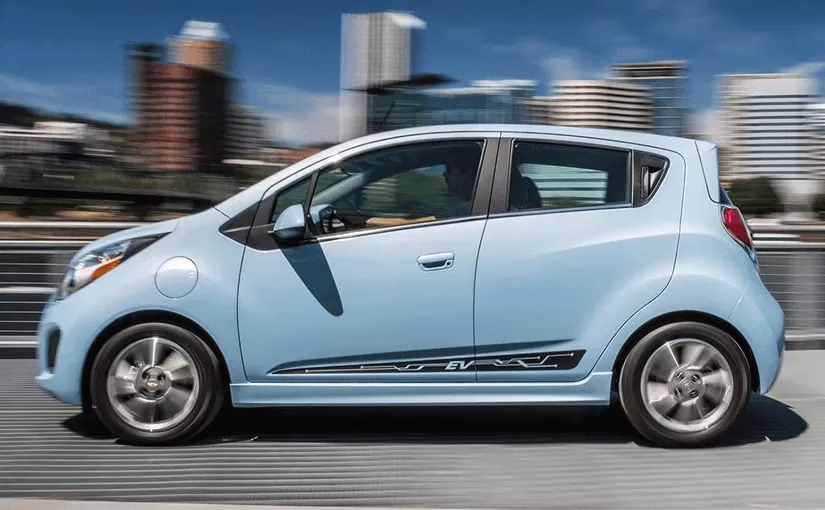
Lastly, spare a thought for the Chevrolet Spark EV, a car that existed for only three model years (2013–2016) primarily to satisfy government compliance regulations. It was never intended to conquer hearts, and it promptly vanished once Chevrolet’s more serious EVs arrived. Its reliability rating sits at four stars, but J.D. Power gave it a tepid 74 out of 100. Three recalls haunted its short life, including one for a hood that had a tendency to unlatch while driving—something that will certainly wake you up on the freeway. In 2026, spotting a Spark EV is like finding a rare coin in your couch cushions; you’re not entirely sure how it got there, but you’re oddly delighted.
So, what’s the verdict from the vantage point of 2026? If history has taught us anything, it’s that early EVs can be a mixed bag of delightful frugality and unexpected electronic therapy sessions. Air conditioning systems remain the unsung villain of the era, while software bugs in certain brands keep diagnostic centers gainfully employed. But for every cautionary tale, there’s a LEAF owner cheerfully rolling past the gas station, a quirky i-MiEV that just won’t quit, or an i3 driver who’s learned to live without arctic-cold air con to save a buck. The road to electrification was never going to be pothole-free—but a decade later, some of these pioneers are still coasting along, gremlins and all.