
The Ford Barra 4.0-litre inline-six is the automotive equivalent of a mate who turns up late, brings the best snacks, and then casually fixes the shed wiring before anyone notices. To BMW fans, the straight-six is a sacred kidney-grille ritual; to old Jaguar dreamers, it is a symphony with oil leaks. To Australian gearheads, however, it is simply the Barra: a modern Aussie powerhouse that made ordinary Falcons, Fairmonts, Fairlanes, and Territories feel as if they had swallowed a friendly hurricane. And in 2026, a decade after production ended, the legend has not dimmed. If anything, the tuner world treats it like a beloved cult hero with a torque wrench.
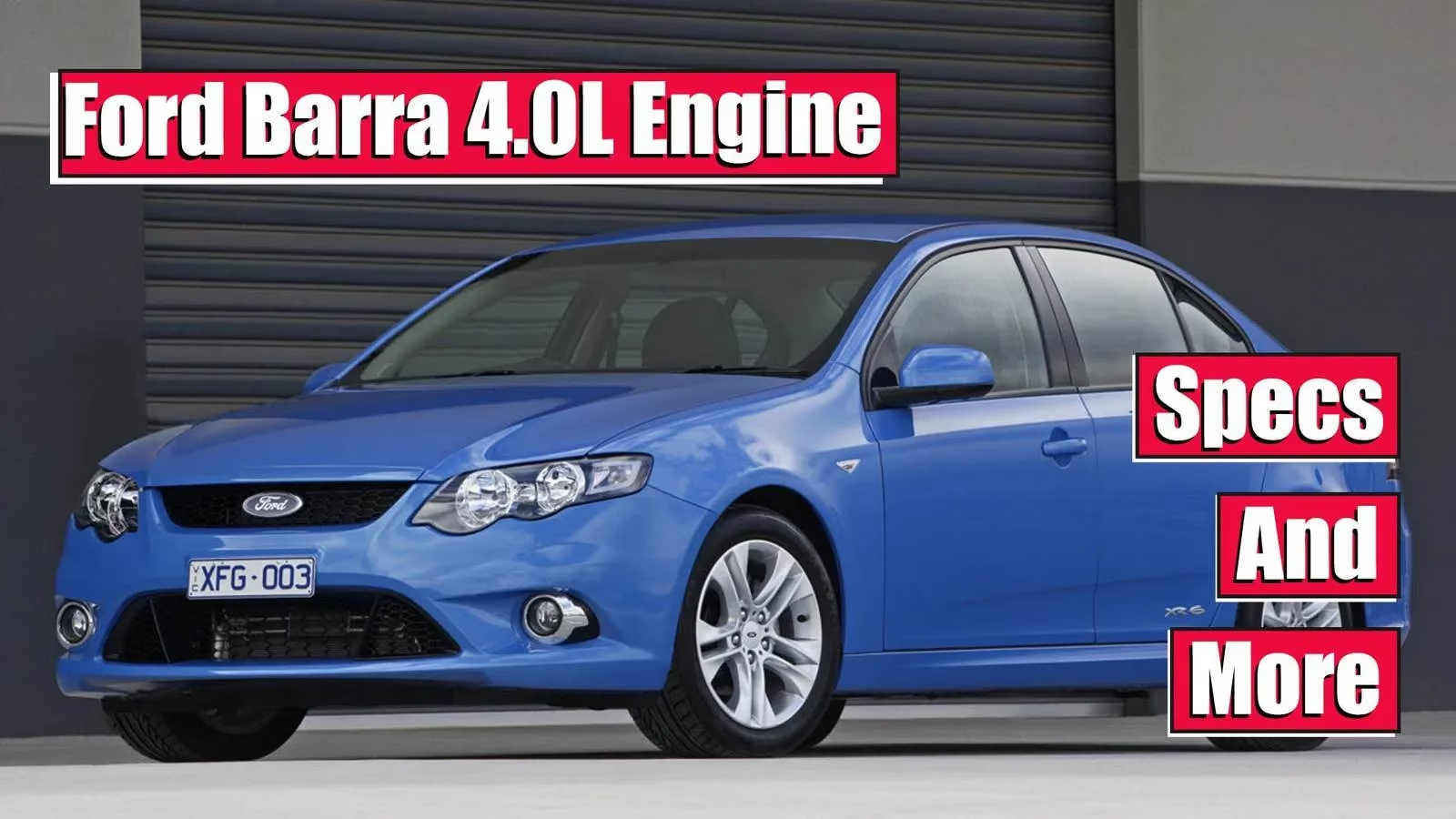
The Barra did not appear from a kangaroo pouch fully formed. Its family tree starts with the pushrod 2.4-litre Thriftpower Six that Ford put into American Falcons in 1959. Ford Australia then developed a cross-flow head version of the American inline-six in 1976, added 3.3- and 4.1-litre aluminium-head versions in 1980, and moved to a single overhead cam layout in 1998. By the time the double overhead cam era arrived in 2002, the engine had earned a new nickname: Barra. The first DOHC hero, the Barra 182, took charge of Ford Australia’s Falcon, Fairmont, Fairlane, and Territory. The number referred to kilowatts, not a secret handshake, and 182 kW translated to 244 hp. For a naturally aspirated six of the era, that was a healthy figure with room for mischief.
From sensible six to turbo troublemaker
Naturally aspirated Barras kept improving as compression rose and cylinder heads breathed better. The 2005 Barra 190 used 10.3:1 compression instead of the 182’s 9.7:1 and made 255 hp. The 2008 Barra 195 added Fast Burn inlet ports and reached 261 hp, making it the final evolution of the NA Barra. Other applications pushed naturally aspirated output as high as 266 hp. Yet the engine’s real reputation was built when Ford bolted on a turbocharger and let the Barra behave like a polite hooligan.
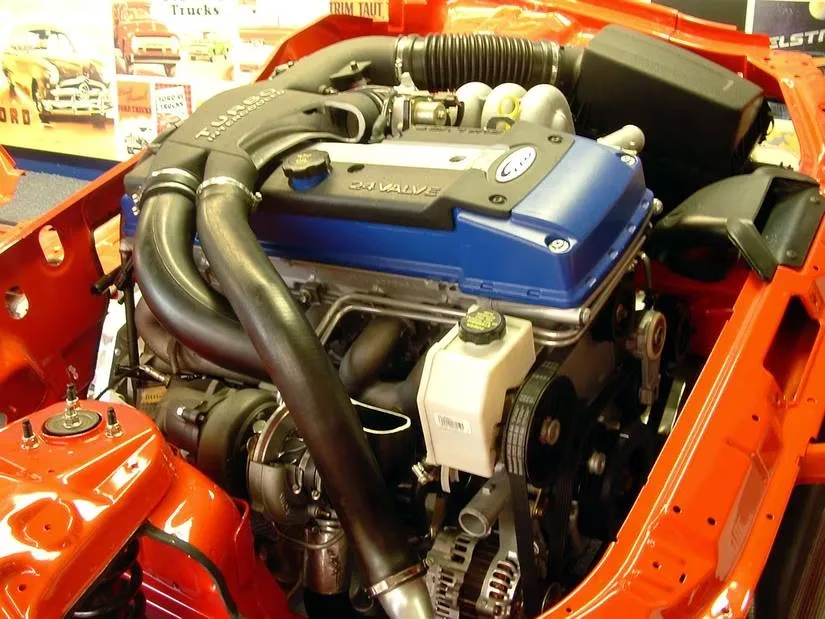
The Barra 240T was the big dog in the desirable Falcon XR6 Turbo, using lower 8.7:1 compression, a Garrett GT35/82r turbocharger and intercooler, more fuel pressure, Inconel exhaust valves, and a red rocker cover for extra visual swagger. It produced 322 hp. From 2005, the 245T brought new cam profiles, electronic controls, and an 8.9:1 compression ratio. The 2008 270T increased boost pressure, and the Falcon XR6 Turbo added transient overboost to pile on torque when the atmosphere cooperated. Then came the 310T, the first Australian-made engine to exceed 100 hp per litre, with a larger turbo and intercooler plus larger injectors. The final variant was the 325T in the XR6 Sprint. Only 560 were made, each with a number plaque on the rocker cover, and a carbon fibre air intake provided a 45% airflow increase. Turbo versions ultimately reached 436 hp in limited performance machines such as the Typhoon, Tornado, F6, and F6X.
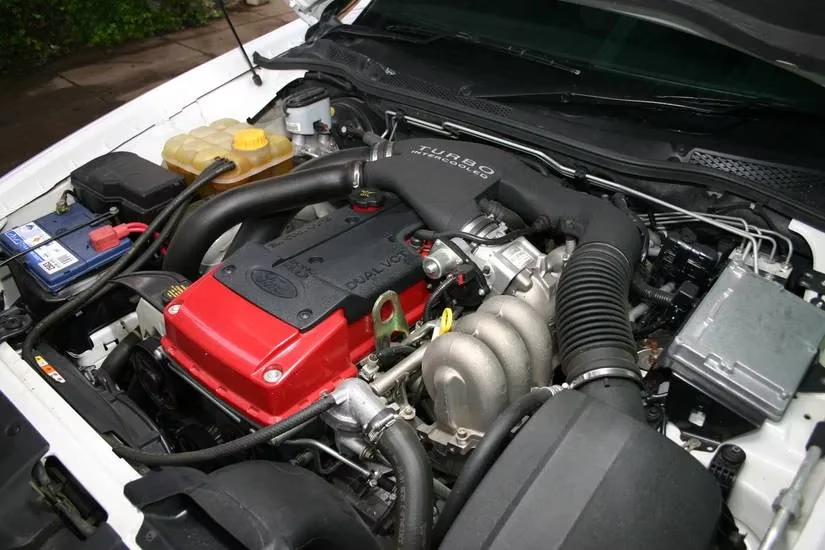
| Barra flavour | Notable year | Party trick |
|---|---|---|
| Barra 182 | 2002 | 244 hp naturally aspirated |
| Barra 190 | 2005 | 255 hp and higher compression |
| Barra 195 | 2008 | 261 hp with Fast Burn ports |
| Barra 240T | Early turbo era | 322 hp and red rocker-cover attitude |
| Barra 245T | 2005 | New cams and electronic controls |
| Barra 270T | 2008 | More boost and overboost torque |
| Barra 310T | 2008 | First Aussie engine past 100 hp per litre |
| Barra 325T | XR6 Sprint | 560 units and carbon fibre intake |
There was also a Barra V8. Nobody talks about it. This article will respectfully continue that tradition. A liquid petroleum gas version of the Barra also served Falcon duty, proving the engine could run on more than petrol and enthusiasm. Less thirsty than the V8s and robust enough to handle serious horsepower without scattering its innards, the Barra became a favourite for anyone who wanted straight-six smoothness with boost-induced chaos. It even found work in combined heat and power generators, which is a wonderfully unglamorous retirement plan for an engine with a street-fighting reputation.
The flaws were few, and the fans were loud
Early DOHC Barras could suffer valve spring and oil pump gear failures, but those issues were short-lived and sorted quickly. Beyond that, the engine earned a bulletproof reputation. Stock turbocharged versions did exhibit lag, because the Barra did not use electric turbo assistance or a tightly integrated turbo manifold. Anyone expecting the instant pull of a big V8 or an EV would be disappointed, although the eventual shove was usually enough to make them forget the wait.
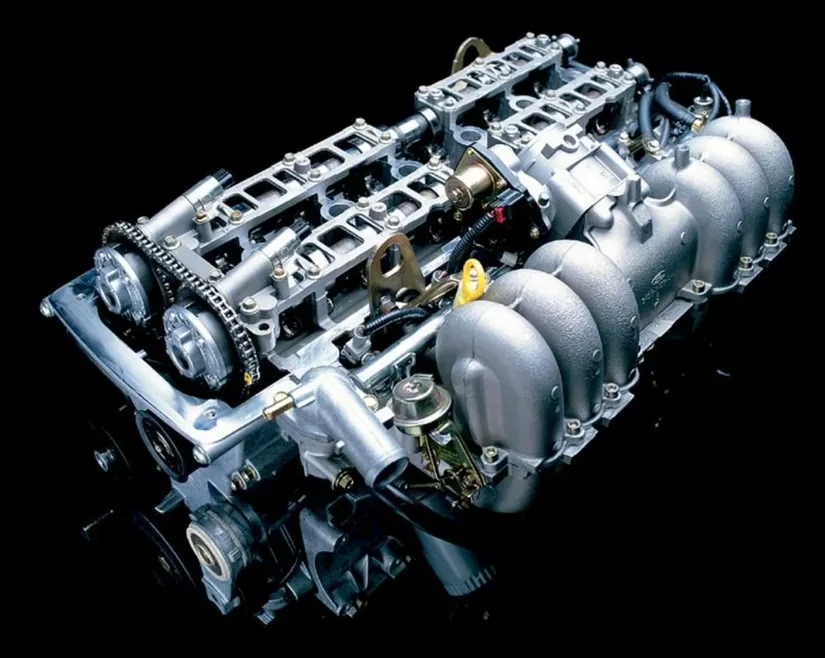
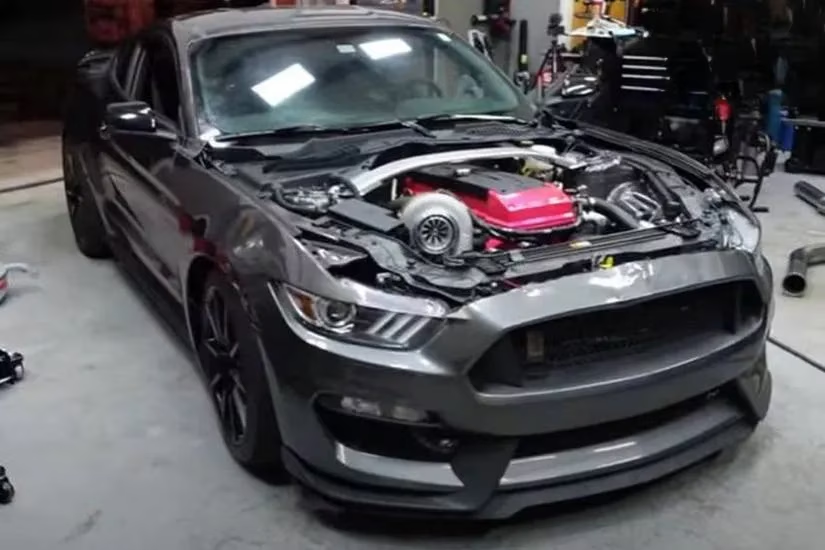
Economic pressure ended the story at the close of 2016. Rising labour costs and falling sales meant that even an engine of immense strength could not carry a changing market. By 2026, there are no new factory crate Barras, but the aftermarket has refused to let the campfire go out. Shops such as Barra Parts and Tuners Edge continue to sell performance parts, while social groups such as USA Barra Swap discuss increasingly unhinged engine swaps. Tuners still extract massive power from the Barra, including an 800 hp Barra-powered BMW E46 drift car. YouTuber Adam LZ chose a turbo Barra with 900 hp for a monster Mustang Shelby GT350, and ThatDudeinBlue discovered that a Barra Shelby GT350 with zero traction is a bit of a handful.
So the Barra deserves a moment of silence, a cheeky grin, and perhaps a toast. It was not the most exotic inline-six ever built, and it never had the marketing glamour of a German badge or the aristocratic whiff of a British classic. What it had was brute strength, tuner-friendly engineering, and a personality big enough to survive the end of Australian manufacturing. In 2026, the Barra remains a cult favourite: part history lesson, part boost delivery system, and entirely Australian.