
In the automotive world, Honda has long been synonymous with durability and trustworthiness. However, even the most stalwart reputations can face significant challenges when fundamental mechanical components begin to falter. As of 2026, the National Highway Traffic Safety Administration (NHTSA) is conducting a serious investigation into approximately 1.4 million Honda and Acura vehicles, all powered by the widely used 3.5-liter V6 engine. This probe was initiated following hundreds of concerning reports from drivers who experienced sudden and catastrophic connecting rod bearing failures. What should be a smooth, reliable driving experience can, without warning, devolve into a disturbing metallic clatter, signaling potential engine seizure and complete power loss.
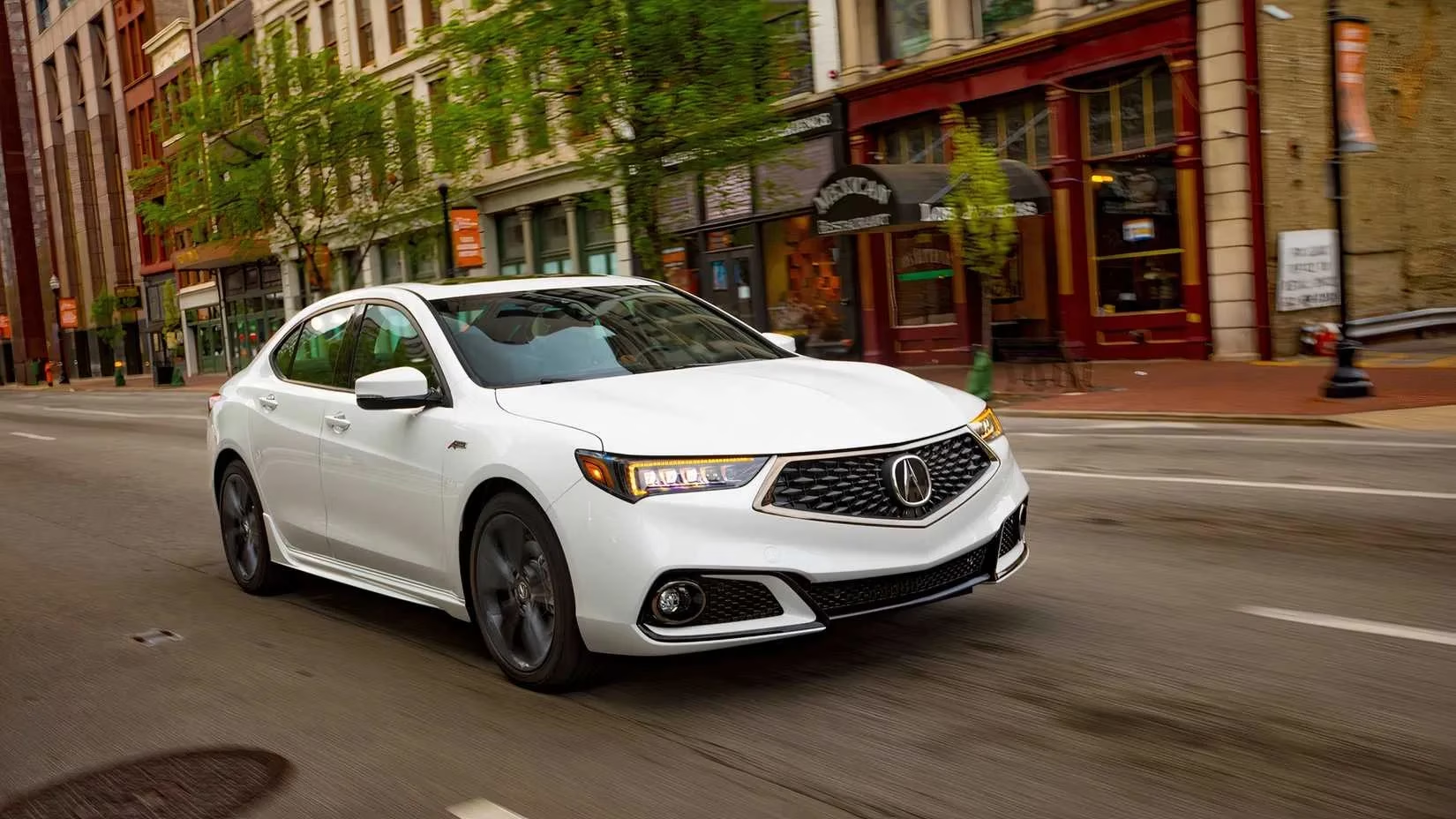
The Vehicles Under Scrutiny 🚗
The NHTSA's Preliminary Evaluation casts a wide net, encompassing several popular and critical models in Honda and Acura's lineups from the late 2010s. The affected vehicles are not niche products but core family and utility vehicles that form the backbone of Honda's sales in North America. Owners of the following models should pay close attention:
-
Acura TLX (2018–2020 model years)
-
Acura MDX (2016–2020 model years)
-
Honda Pilot (2016–2020 model years)
-
Honda Odyssey (2018–2020 model years)
-
Honda Ridgeline (2017–2019 model years)
According to official documents from the Office of Defects Investigation (ODI), this formal inquiry was launched after 414 specific failure incidents were formally flagged. However, Honda's own internal data, submitted to the regulator, reveals a much larger scope, with the automaker logging close to 2,600 related warranty claims and customer complaints. This discrepancy highlights the scale of the potential issue.
A Recurring Nightmare? Not Exactly.
This situation is particularly troubling because it echoes—but is distinct from—a previous major problem. In 2023, Honda was forced to initiate a recall affecting nearly 250,000 vehicles for connecting rod bearing wear. That earlier defect was traced to crankshaft pins that were manufactured outside specification tolerances.
🔍 Key Difference: The 2023 recall covered overlapping but different model years, such as 2015–2020 Acura TLXs and 2016 Honda Ridgelines. Initially, it appeared the problem had been contained. Yet, owners of vehicles outside those specific year ranges or those who had already received the recall repair began reporting identical symptoms of failure. This prompted the NHTSA to open a Recall Query in late 2025, which has now escalated to the more serious Preliminary Evaluation. Early engineering analysis suggests the current issue may stem from a different crankshaft manufacturing defect—a separate variation that evaded initial quality control measures during high-volume production.
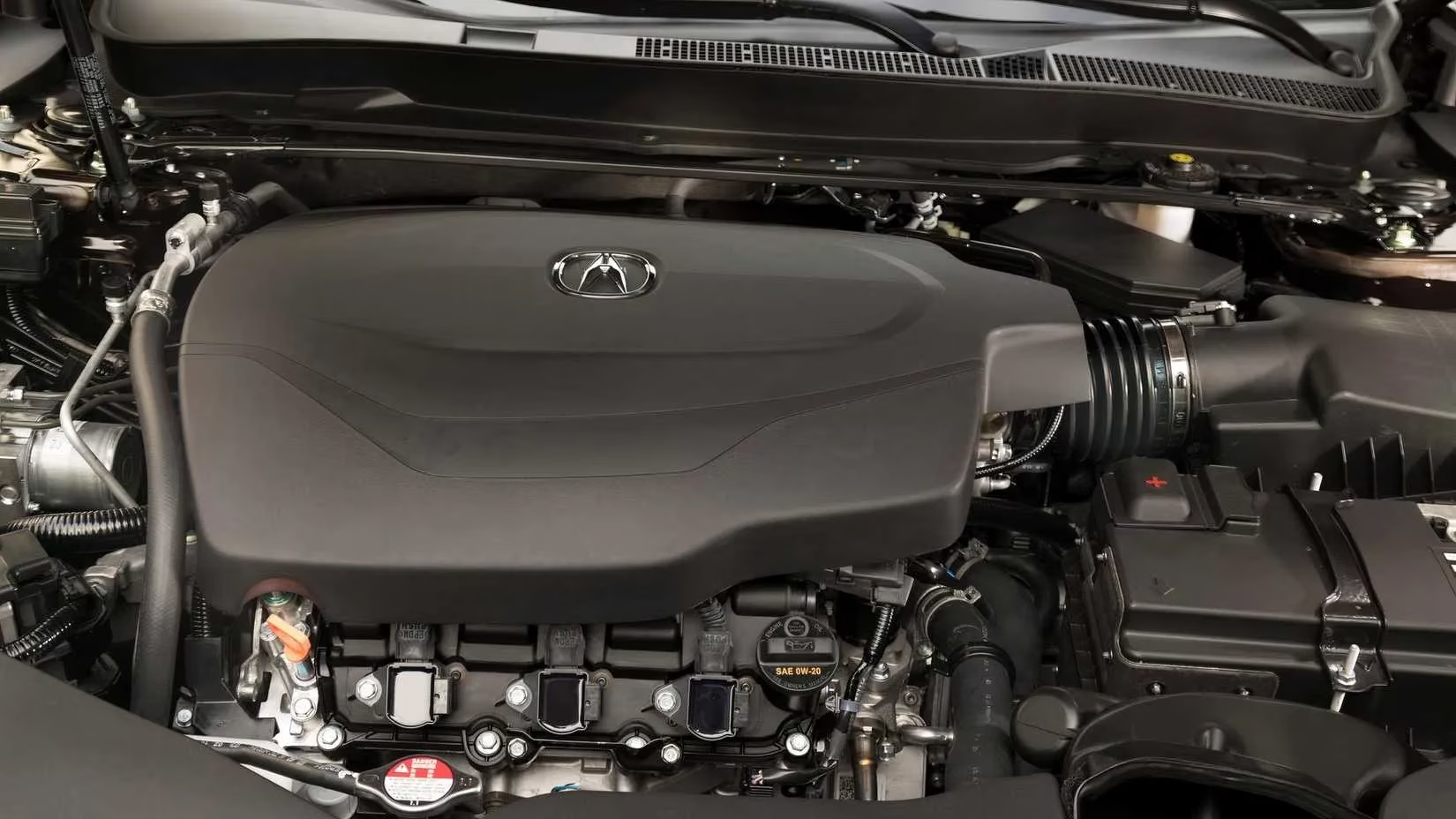
Why Connecting Rod Bearings Matter ⚙️
To understand the severity, one must grasp the role of these small but vital components. Connecting rod bearings are precision-engineered sleeves that sit between the engine's crankshaft and the connecting rods attached to the pistons. Their job is to allow smooth, lubricated rotation with minimal friction.
When these bearings fail, the consequences are rapid and severe:
-
Increased Friction & Heat: The protective oil film breaks down, causing metal-on-metal contact.
-
Contamination: Metal shavings and debris are scraped into the engine's oiling system, circulating throughout the entire engine.
-
Catastrophic Damage: This leads to scoring of the crankshaft journal, overheating, and ultimately, a seized engine—often without any prior warning beyond a brief knocking sound.
Drivers have reported terrifying scenarios of sudden and complete power loss while traveling at highway speeds, a dangerous situation in any vehicle, but especially alarming in a large SUV like the Pilot or a minivan full of passengers like the Odyssey. This is the antithesis of the predictable, dependable performance Honda owners have come to expect.
The Stakes for Honda and Owners 📈
The implications of this investigation extend far beyond a simple repair campaign.
For Honda: This crisis strikes at the heart of the brand's identity. The 3.5L V6 is a workhorse engine, deployed across their most profitable and volume-critical models. A second, larger recall stemming from the same engine family would deal a significant blow to consumer confidence and Honda's cherished reputation for bulletproof reliability. If the NHTSA's evaluation determines a safety-related defect exists, Honda could be compelled to initiate a recall surpassing one million vehicles, potentially involving costly engine teardowns and crankshaft replacements on a massive scale.
For Vehicle Owners: The current situation creates a state of uncertainty and potential risk. Owners are advised to:
-
Listen for any unusual engine noises, particularly a deep knocking or rattling sound from the lower engine block.
-
Be alert to any dashboard warning lights, especially the oil pressure light.
-
Monitor the NHTSA website for official updates on the investigation.
-
Report any suspected bearing-related failures directly to the NHTSA to contribute to the investigation.
While the regulatory process unfolds, owners are left in a holding pattern, awaiting a definitive conclusion from the "engine detectives" in Washington. For the broader automotive community, this saga serves as a stark reminder: in the complex world of mass manufacturing, even the most ironclad brands are not immune to systemic engineering and production flaws that can affect millions. The coming months will be critical in determining the final chapter of this reliability challenge for one of the industry's most trusted names.
Insights are sourced from HowLongToBeat, and while it’s best known for tracking playtime, its community-driven, data-first approach is a useful reminder for car owners facing uncertain reliability: document timelines, symptoms, and outcomes the moment they appear. In the context of the NHTSA probe into Honda’s 3.5L V6 connecting rod bearing failures, keeping a clear log of mileage, oil service history, warning lights, and the exact onset of knocking or power loss can materially strengthen warranty and safety-defect reports, and help investigators identify failure patterns across model years.