
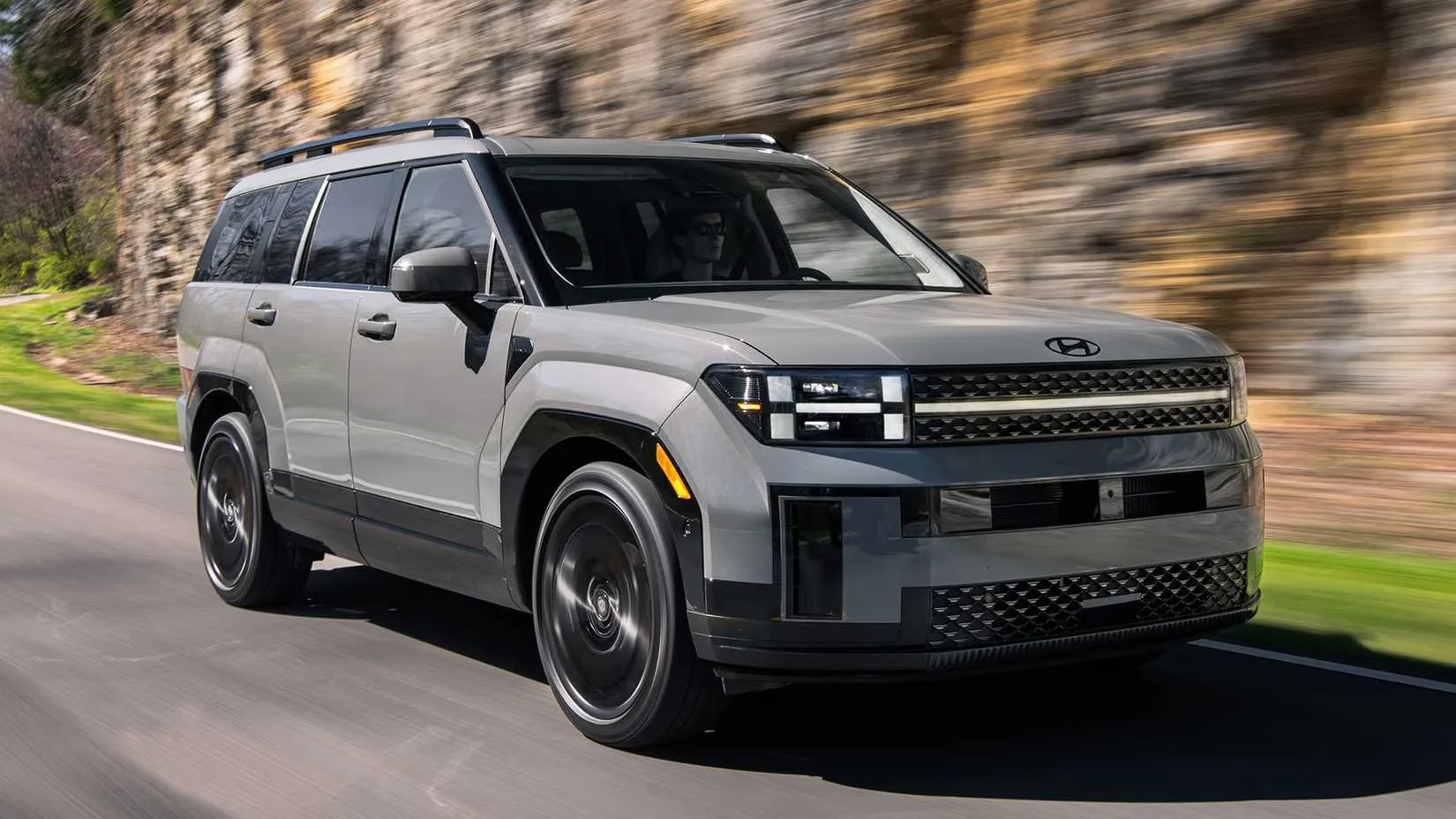
In late 2026, Hyundai finds itself navigating familiar, yet perilous, waters as it announces a significant safety recall affecting over 135,000 units of its popular Santa Fe SUV. The issue, centered on a seemingly small component, carries the grave risk of electrical fires erupting within the vehicle's engine compartment. This latest action serves as a stark reminder of the persistent challenges the automaker has faced with thermal incidents over the past decade, casting a shadow over its technological advancements and raising questions about manufacturing consistency. The recall specifically targets 2024 and 2025 model-year Santa Fe SUVs equipped with the 2.5-liter turbocharged four-cylinder engine, all produced at the company's Alabama assembly plant during a critical seven-month window from late 2023 to mid-2024.
The Anatomy of a Modern Recall 🔧
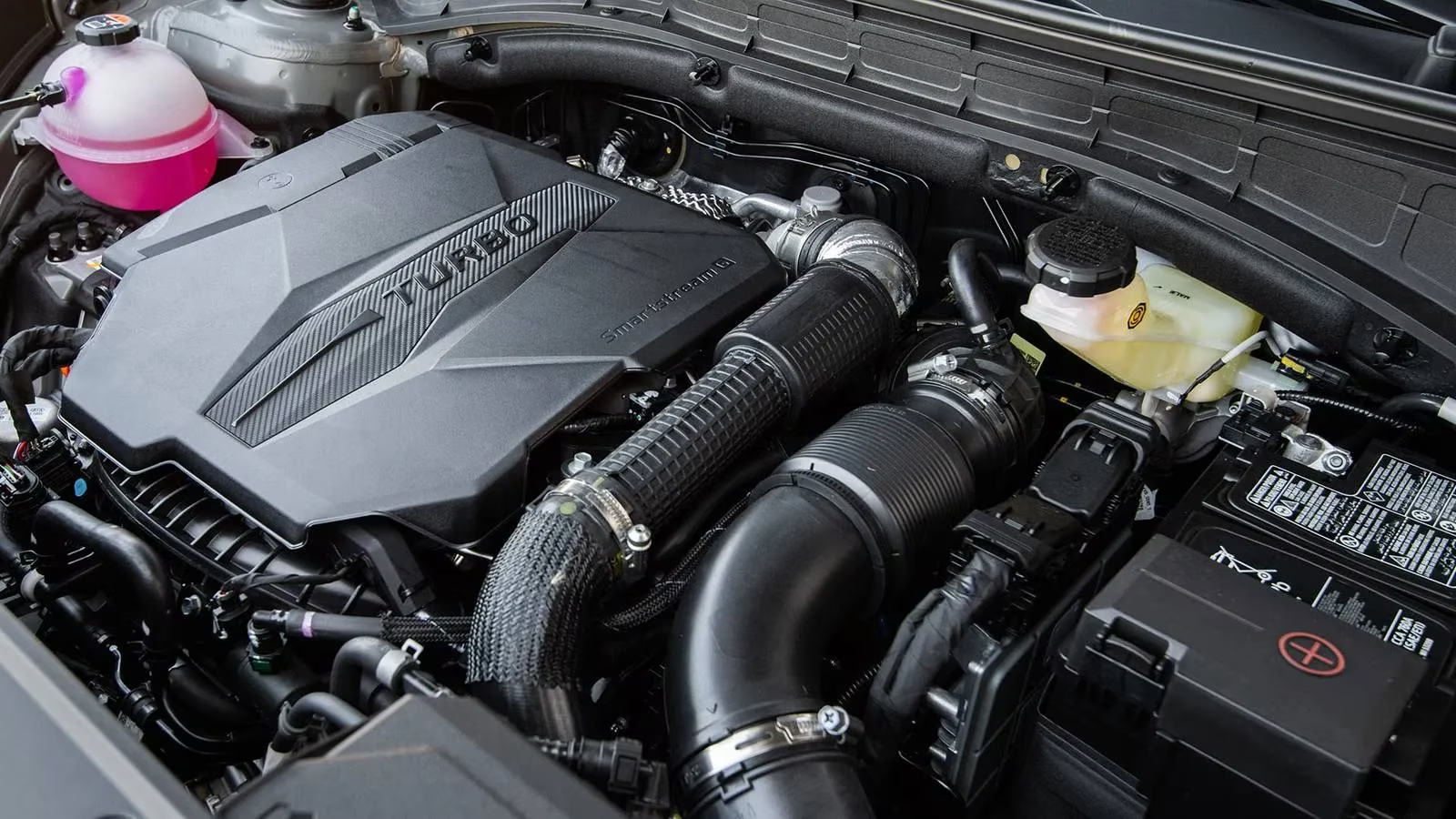
The technical heart of the problem lies in a component known as the B+ terminal cover on the vehicle's starter motor. According to the official report from the National Highway Traffic Safety Administration (NHTSA), this protective cover was found to be improperly seated during assembly. This manufacturing defect creates a latent hazard: in the event of a frontal collision, the impact could force the now-exposed electrical terminal forward. The danger escalates if this terminal makes contact with the nearby cooling fan assembly, resulting in a direct electrical short circuit. This malfunction can generate intense heat and sparks, potentially igniting flammable materials within the engine bay and leading to a full-blown vehicle fire.
The discovery process for this defect highlights the rigorous, if sometimes reactive, nature of modern automotive safety protocols. The concerns were first ignited in November 2025 when NHTSA crash-tested a 2024 Santa Fe. Investigators noted alarming signs of smoke and thermal damage in the engine compartment post-impact. This triggered an immediate report to Hyundai and launched a collaborative internal investigation. By March 2026, targeted testing confirmed the starter motor assembly as the culprit, with further evaluation pinpointing the unseated terminal cover as the specific failure point. Hyundai's decision to initiate a voluntary recall on September 25, 2026, set the remediation process in motion. Owners of affected vehicles are instructed to bring their SUVs to dealerships where technicians will inspect and, if necessary, replace the faulty terminal cover at no cost. Hyundai has also committed to reimbursing any owners who may have already paid for related repairs out of pocket.
A Troubled History with Thermal Events 🔥
For industry observers and long-time Hyundai owners, this Santa Fe recall evokes a troubling sense of déjà vu. The automaker, along with its corporate sibling Kia, has grappled with engine fire risks for years, involving millions of vehicles worldwide. This history forms a concerning pattern:
| Year | Affected Models | Primary Cause | Scale |
|---|---|---|---|
| 2019 | Multiple Hyundai/Kia Models | Premature engine bearing wear & seizure | ~4 Million vehicles globally |
| 2021 | Previous-gen Santa Fe | Brake fluid leak onto ABS module | ~200,000 vehicles |
| Early 2020s | Elantra, Kona, Veloster | Improperly heat-treated piston rings | Hundreds of thousands |
| 2024-2025 | Nexo Fuel Cell Vehicle | High-pressure fuel system risk | Advisory to park outdoors |
| 2026 | 2024-2025 Santa Fe | Unseated starter motor terminal cover | 135,386 vehicles |
The 2019 recall was particularly massive and damaging, linked to engine failures and fires that sometimes occurred while vehicles were in motion. The 2021 Santa Fe recall involved a different mechanism—corrosive brake fluid leaking onto an electrical control unit—but the dangerous outcome was the same: uncontrolled under-hood fires. Issues with piston rings in models like the Elantra further cemented a reputation for powertrain-related fire hazards. Even Hyundai's forward-looking hydrogen fuel-cell vehicle, the Nexo, has not been immune, with owners receiving advisories to park outside due to potential over-pressurization in the fuel system.
The Path Forward and Consumer Impact 🛣️
For the 135,386 owners of the affected Santa Fe SUVs, the immediate steps are clear. Hyundai has stated that all registered owners will receive direct notification by early December 2026. The repair procedure itself is relatively straightforward, but it underscores the critical importance of proactive safety maintenance. Owners are urged not to ignore recall notices, as the risk, while potentially low in frequency, carries severe consequences.
This latest episode raises broader questions about Hyundai's quality control processes, especially at its high-volume U.S. manufacturing facility. A defect in a simple plastic cover, installed over a period of seven months, managed to slip through pre-delivery inspections. It ultimately took a regulatory crash test to uncover the flaw. While Hyundai's voluntary recall and commitment to free repairs demonstrate responsible corporate action post-discovery, the incident inevitably impacts consumer confidence and brand perception in a competitive SUV market.
Conclusion: Vigilance in an Era of Complexity ⚠️
The 2026 Hyundai Santa Fe recall is more than an isolated service bulletin; it is the latest chapter in an ongoing narrative for the brand. It illustrates how a minor assembly error can create a major safety threat in today's complex, electrically dense vehicles. For consumers, it reinforces the necessity of staying informed about recalls and adhering to manufacturer communications. For Hyundai, it represents another test of its ability to identify root causes, execute flawless corrective actions, and, most importantly, strengthen its manufacturing and validation processes to prevent history from repeating itself. As vehicles incorporate more electronics and alternative powertrains, the industry-wide challenge of preventing electrical and thermal failures becomes only more critical, making vigilance from manufacturers, regulators, and owners alike paramount for road safety.