
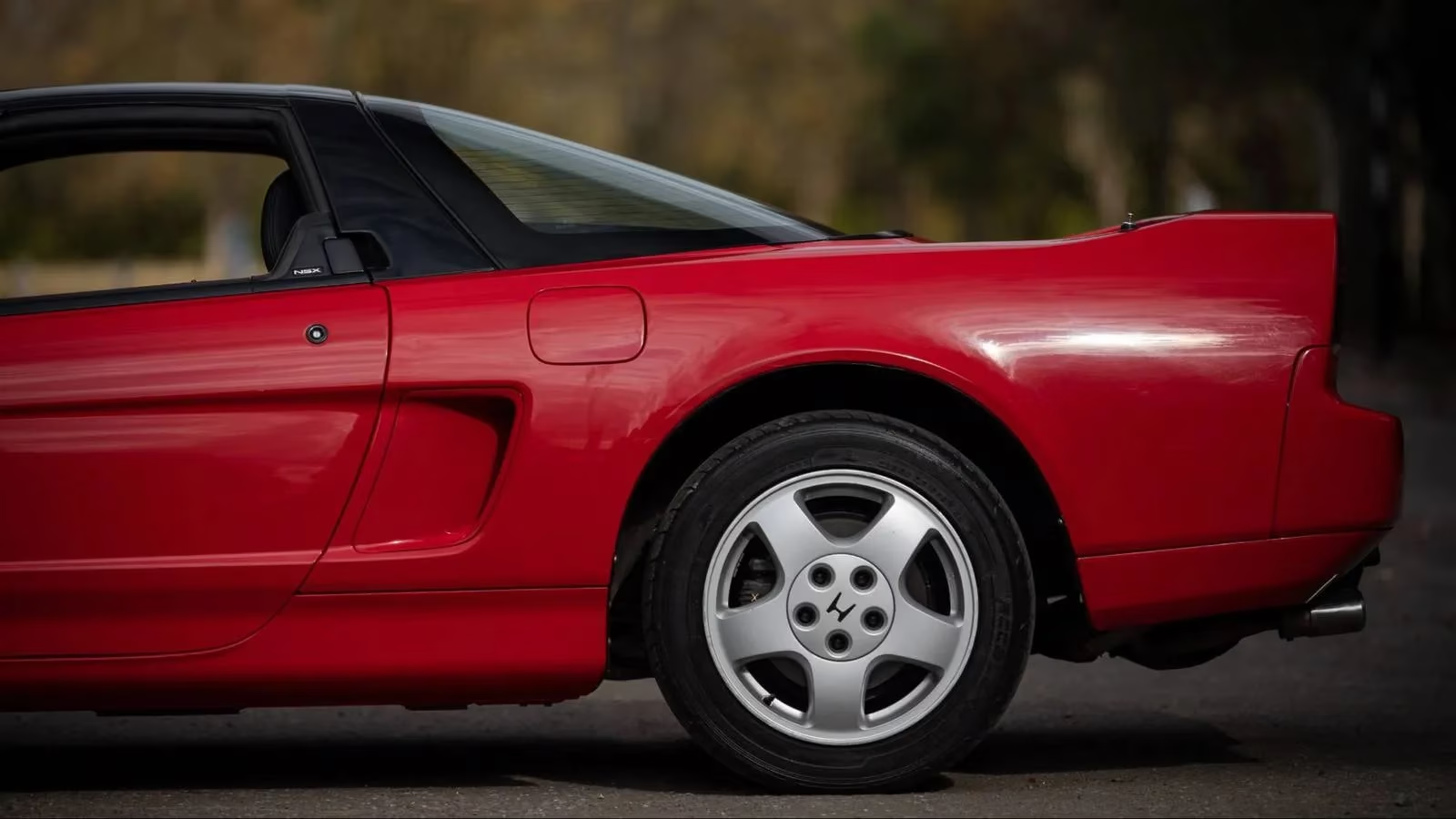
Let me tell you something, folks – the idea of a reliable daily driver being a supercar used to be a joke, a total pipe dream. It was like trying to mix oil and water, or expecting a lion to be a house pet. Supercars were supposed to be temperamental, expensive garage queens that would bankrupt you with a single oil change. But then, in the late 80s and early 90s, Honda – yes, the same company that made your aunt’s Civic – decided to drop a mic on the entire European supercar establishment. They looked at Ferrari and Porsche and said, "Hold my beer." The result? The Acura/Honda NSX, a machine so brilliantly engineered, so absurdly reliable, it basically broke the supercar rulebook and set a standard that, even in 2026, most exotic manufacturers still struggle to match. This isn't just a car; it's a statement of engineering arrogance that actually worked.
The "Why Not Us?" Attitude That Started It All
Back when Honda was literally dominating Formula 1 (six constructor titles in a row from '86 to '91, no big deal), they had this crazy notion. They thought, "Hey, our F1 engines are bulletproof and faster than greased lightning. Why can't we make a street car that feels like that?" This was their "win on Sunday, sell on Monday" philosophy on steroids. They weren't content just building the best economy cars on the planet; they wanted to prove Japanese engineering could out-think, out-build, and out-last the sacred cows from Maranello and Stuttgart. The audacity was off the charts!
From Sketch to Supercomputer: Building a Revolution
Honda didn't just jump in. They went straight to Italy, to the legendary design house Pininfarina (Ferrari's own stylists!), for the initial concept, called the HP-X (Honda-Pininfarina eXperimental). Talk about stealing your rival's playbook! But the real magic, the secret sauce, was in the engineering. They went all-in on lightness. They created the world's first all-aluminum monocoque chassis for a production car. This wasn't just lightweight; it was aerospace-level thinking, borrowed directly from their F1 tech.
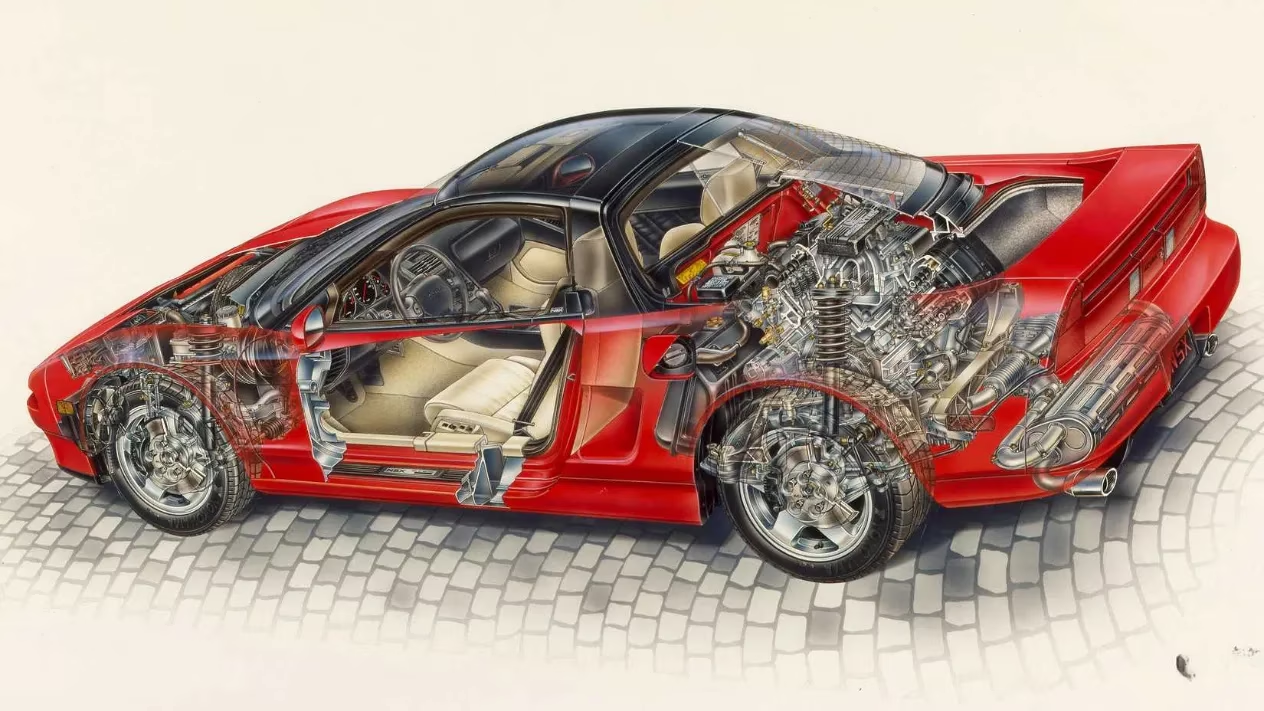
The development was insane. They took prototypes to the brutal Nürburgring and had none other than the god of driving himself, Ayrton Senna, give feedback. Legend has it he told them the chassis was too flexible, so they stiffened it up. But here's the kicker – they didn't just rely on driver feel. They used the Cray-2 supercomputer, the fastest in the world at the time, to analyze data and optimize the design. This wasn't just building a car; this was computational engineering before it was cool. The final chassis was 50% more rigid than when they started. Mind. Blown.
The Heart of the Matter: A Reliable Rocket Ship
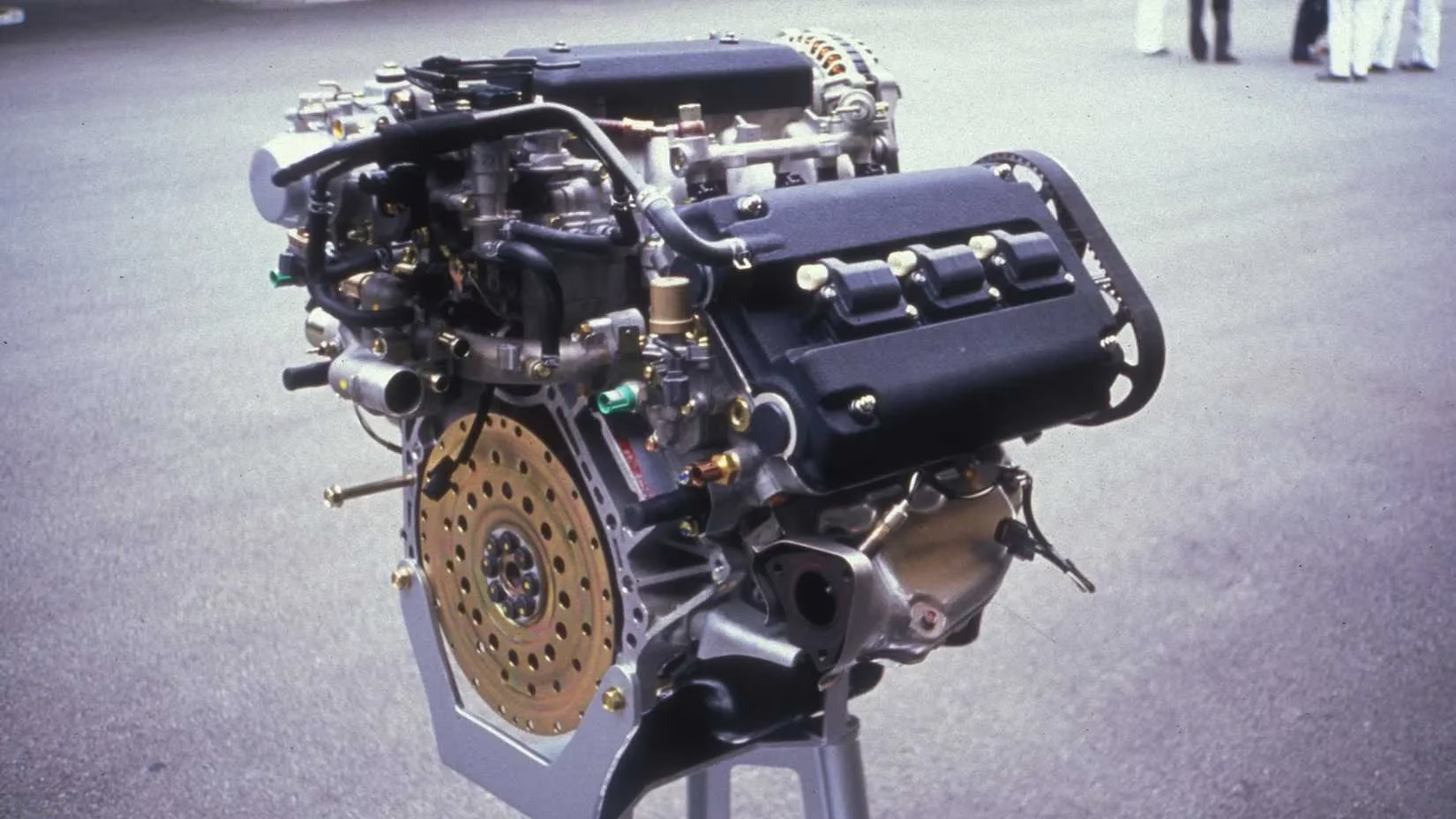
The engine debate was epic. Turbo V8? Supercharged V6? Nah. Too heavy, too complex. Honda, being Honda, chose the path of elegant simplicity. They took the smooth, robust V6 from the Acura Legend, bored it out to 3.0 liters, and then, in a masterstroke, gave it their brand-new VTEC variable valve timing system after the CEO himself insisted on it. The result? A naturally aspirated 270 horsepower masterpiece that revved like a motorcycle and was, mechanically, as reliable as a hammer. Titanium connecting rods, forged internals, superb cooling – this engine was built to last a million years.
The performance numbers for 1990 were bonkers: 0-60 mph in 5.2 seconds, a quarter-mile in 13.8 seconds, and handling/braking that embarrassed contemporary Ferraris. All while weighing about 3,000 lbs – a featherweight compared to the lardy Europeans.
The Daily Driver Supercar: Comfort Meets Chaos
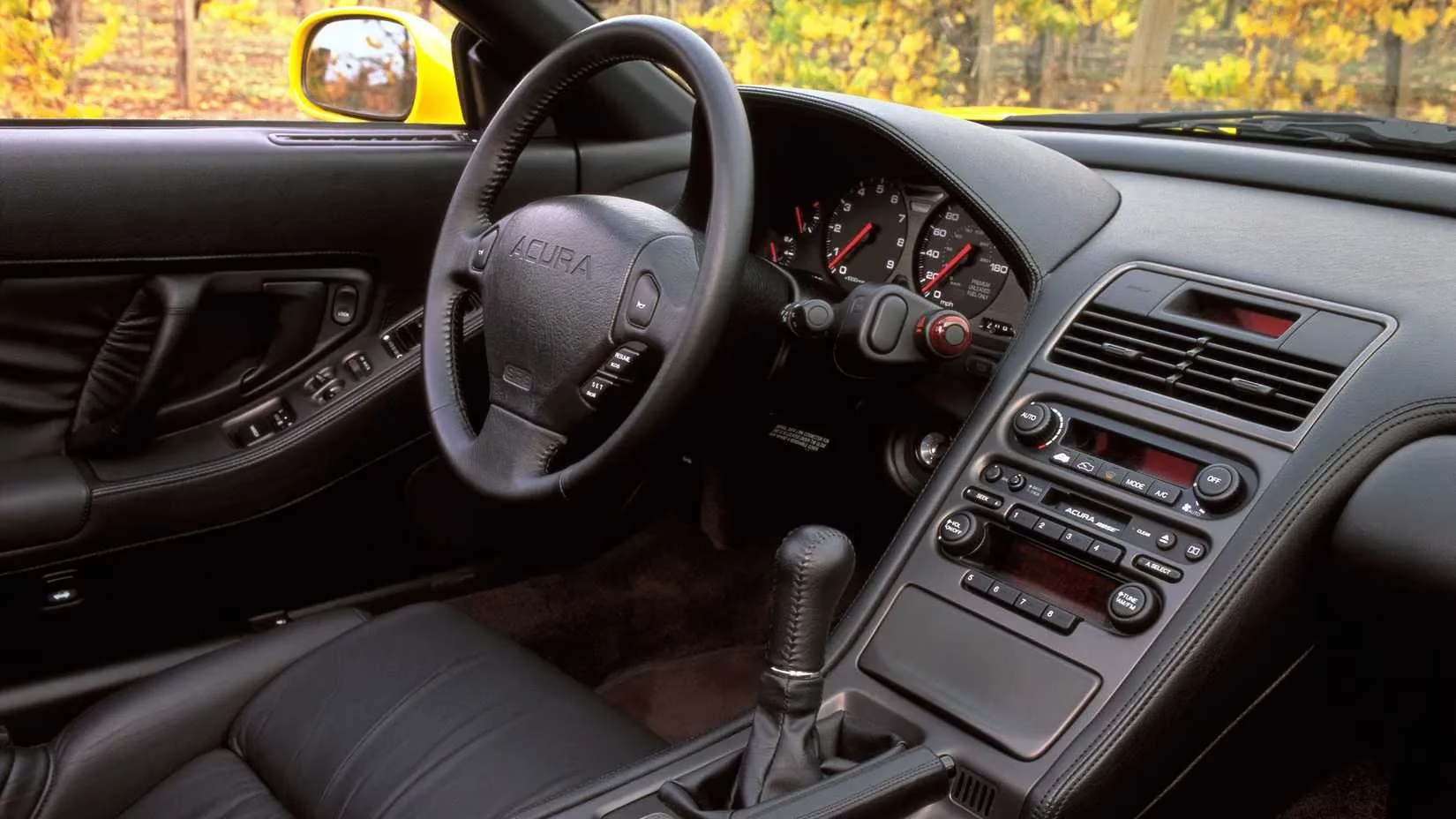
This is where the NSX truly became an unbelievable unicorn. Honda's engineers were obsessed with making it livable. They gave it:
-
Comfortable, supportive leather seats (not rock-hard racing buckets).
-
Perfect visibility thanks to a thin-pillared, low-slung cockpit.
-
Easy-to-use controls and climate control that actually worked.
-
A tame exhaust note for cruising (though it could scream when you wanted it to).
The interior was a revelation. It felt like a premium Honda, not a stripped-out race car. You could actually use this thing to go to the grocery store! This was the core of Honda's pitch: "Why buy a finicky, uncomfortable Ferrari when you can have something faster, sharper, more comfortable, and it won't break?"
The Sales Paradox & The Birth of a Legend
And here's the ironic twist, the plot twist nobody saw coming. The NSX didn't sell in huge numbers (under 19,000 total). Why? Because the wealthy buyers it targeted already had comfortable daily drivers. They wanted raw, emotional, irrational passion in their supercar – the very thing the super-rational, left-brained NSX deliberately dialed back. It was too good, too sensible. It lacked the theatrical drama of a Lamborghini V12. But that very "flaw" is what created its legendary status among enthusiasts who truly understood machines.
Reliability That Defies Belief: The Mileage Warriors
Fast forward to 2026, and this is where the NSX story goes from impressive to absolutely legendary. While most 90s supercars are either museum pieces or broken money pits, NSXs are out there racking up mileage that would give a Ferrari mechanic a nervous breakdown.
Let me hit you with some hard facts that sound like tall tales:
| Owner | Model Year | Mileage Achieved | Key to Longevity |
|---|---|---|---|
| Sean Dirks | 1992 | 400,000+ miles | Routine maintenance, one major trans repair |
| Harald Böhm (Austria) | 1996 | ~500,000 miles (800,000 km!) | Regular maintenance, one bearing job |
| "Charlotte" NSX | 1990s | 300,000+ miles | Documented by YouTuber 'Lap Of The World' |
| Source 1 Automotive | 1995 | 400,000+ miles | Sold recently, still running strong |
These aren't garage queens. These are cars that have been driven, and driven hard in some cases. Harald Böhm's half-a-million-mile NSX is perhaps the ultimate testament. His father bought it for him as a graduation gift in 1996, and he just... kept driving it. Across Europe, for decades. With basically just oil changes, tires, and a couple of major services. That's it. That's the Honda magic.
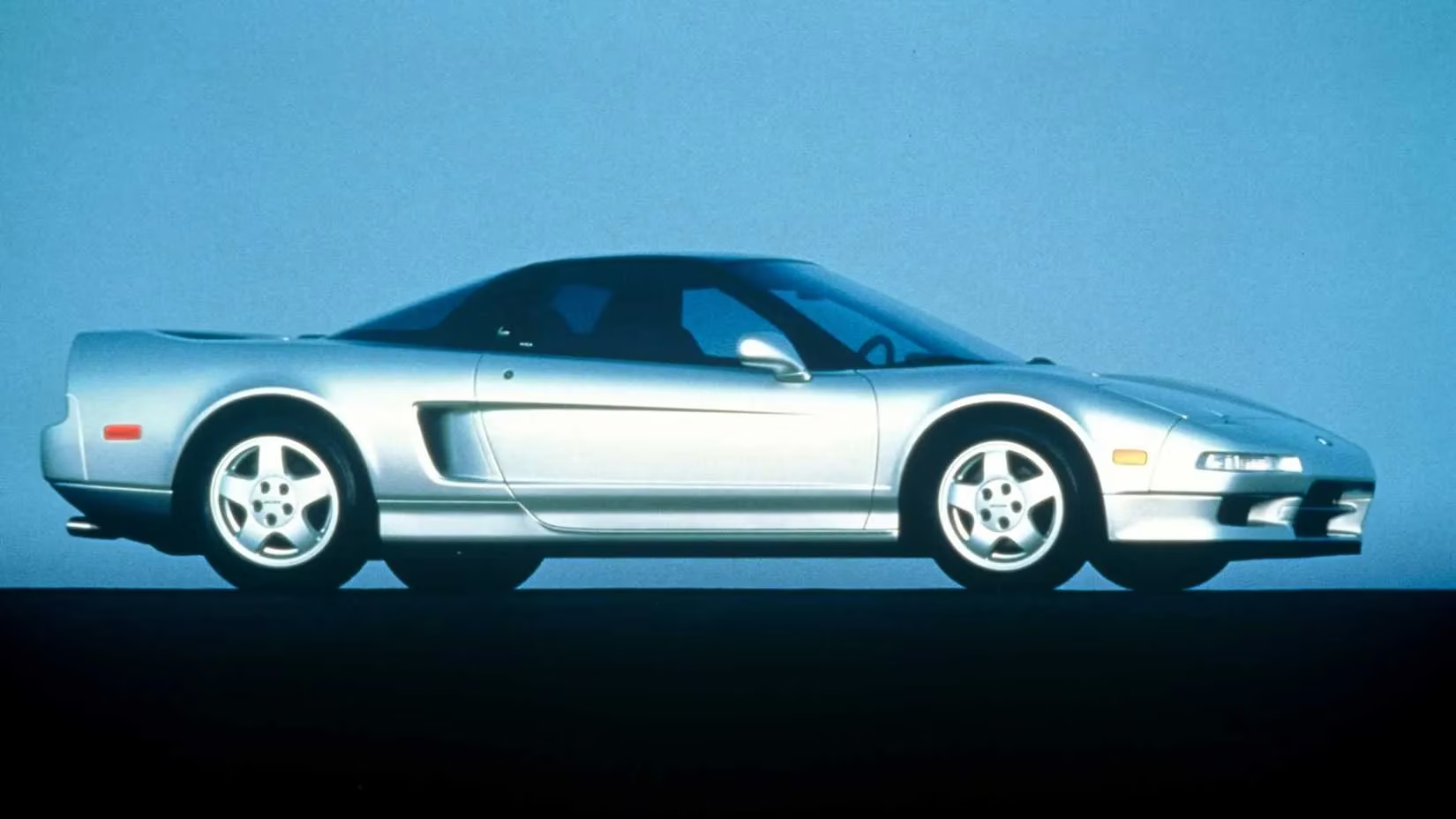
The 300,000-mile NSX club is a real thing, and it's not some tiny, exclusive group. These cars, with their simple (by supercar standards), over-engineered mechanics, just keep going. The aluminum chassis doesn't rust. The engine, with its VTEC system and robust internals, is practically bulletproof if you change the oil. The lesson is clear: when you design something to be light and efficient from the ground up, with quality materials and precision assembly, durability is a natural byproduct.
The 2026 Verdict: An Unmatched Legacy
Looking back from 2026, the original NSX's impact is clearer than ever. It wasn't just a fast car. It was a proof of concept that changed the game. It forced Ferrari, Porsche, and everyone else to up their quality and reliability game (Porsche 911, anyone?). It proved a supercar could be precise, comfortable, and dependable.
While the newer, hybrid NSX models of the 2010s and 2020s are technological tour-de-forces, they operate in a different, more complex universe. The original NSX stands alone as a pure, analog masterpiece from an era when a company dared to use logic and supreme engineering to challenge emotion and tradition. It's the supercar for the engineer's soul, the one that whispers, "I will never let you down," instead of screaming for attention. And in a world full of planned obsolescence, that's a legacy that's worth more than gold. It's not just a classic; it's a monument to getting it right the first time.