
I’ll be straight with you: by 2026, buying a used car with a six-cylinder engine can feel like playing whack-a-mole. There are V6s in everything from tired old SUVs to sport sedans, and sifting out a true keeper from a money pit is no walk in the park. After my last used-car “bargain” started burning oil like a two-stroke, I told myself I’d do the homework this time. So I went down the rabbit hole of owner forums, recall databases, and long-term reliability reports.
The name that kept popping up again and again was Toyota’s 3.5-liter 2GR-FE V6. Honestly, it was everywhere in the mid-2000s and 2010s: Camry, Avalon, RAV4, Lexus ES350, even a Lotus Evora for the fancy folks. That last part cracked me up—Toyota’s family-hauler engine ended up in a British sports car and even became the basis for a racing version. If that doesn’t scream “overbuilt,” I don’t know what does.
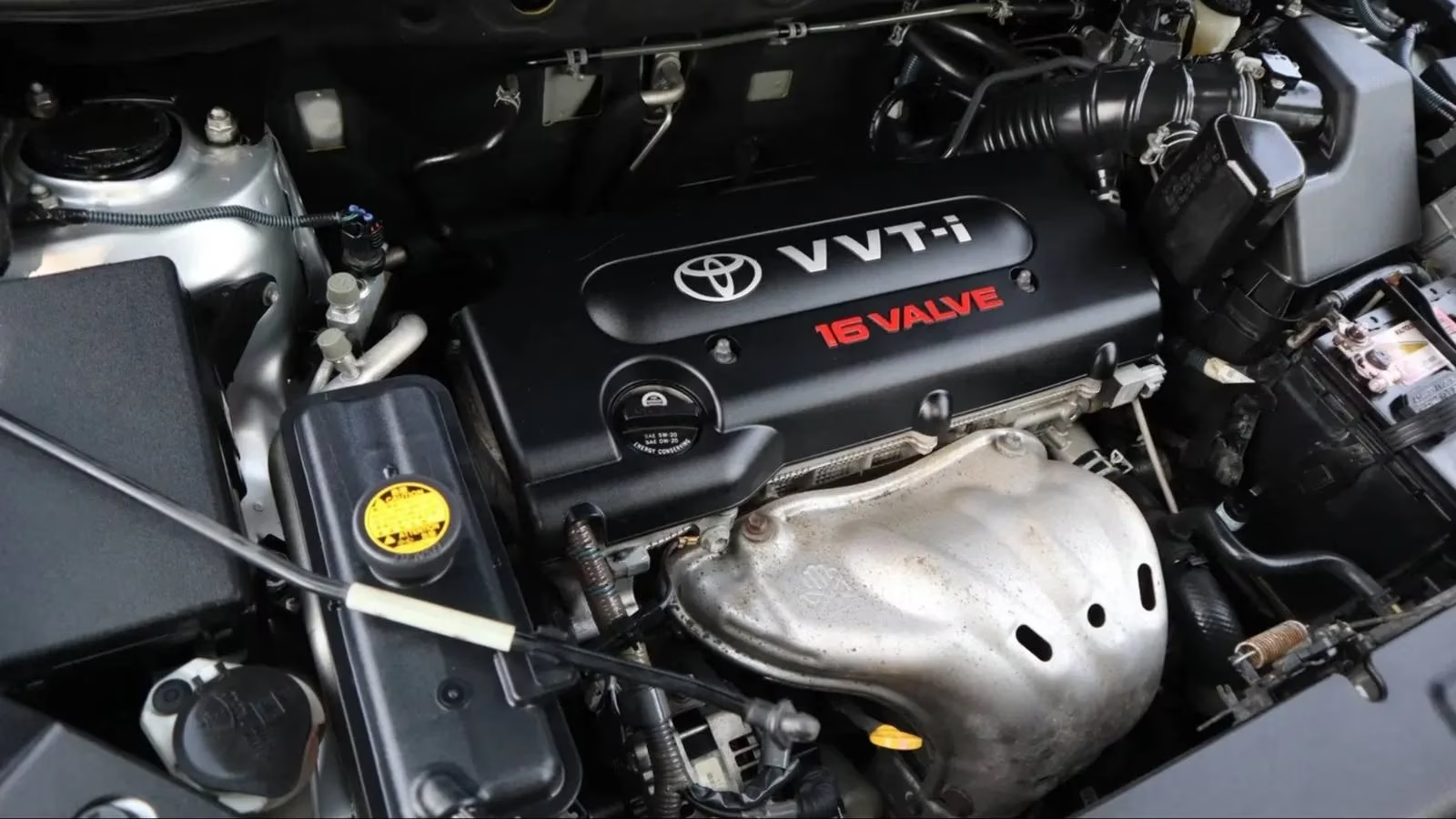
Under the skin, the 2GR-FE is essentially a smaller, transverse-friendly version of the 4.0-liter 1GR-FE that Toyota used in trucks and the Land Cruiser. Toyota shortened the stroke from 3.74 to 3.27 inches, kept the lightweight aluminum block with cast-iron sleeves, and threw in a forged steel crank and connecting rods. The piston skirts were even treated with resin to cut friction and heat. Add Toyota’s i-VVTi variable valve timing, and you’ve got an engine that cruises along without breaking a sweat. It also borrowed lessons from the old 2JZ playbook, which is like having a hall-of-fame coach in your corner.
Now, no engine is perfect—let’s not put the cart before the horse. The 2GR-FE’s biggest headache on early examples was a rubber oil pipe feeding the VVT-i system. It could crack and leak, and Toyota issued a recall to swap it for a metal version. From 2010 onward, the metal pipe was installed at the factory, so if you’re shopping now, you can dodge that bullet. The cylinder walls are also thin, so if they get damaged, there’s no reboring them; the block is done. But with regular oil changes—the golden rule—owners rarely see that nightmare. Water pumps and ignition coils can fail early if you slack on maintenance, but that’s just normal wear-and-tear, not a design death sentence.
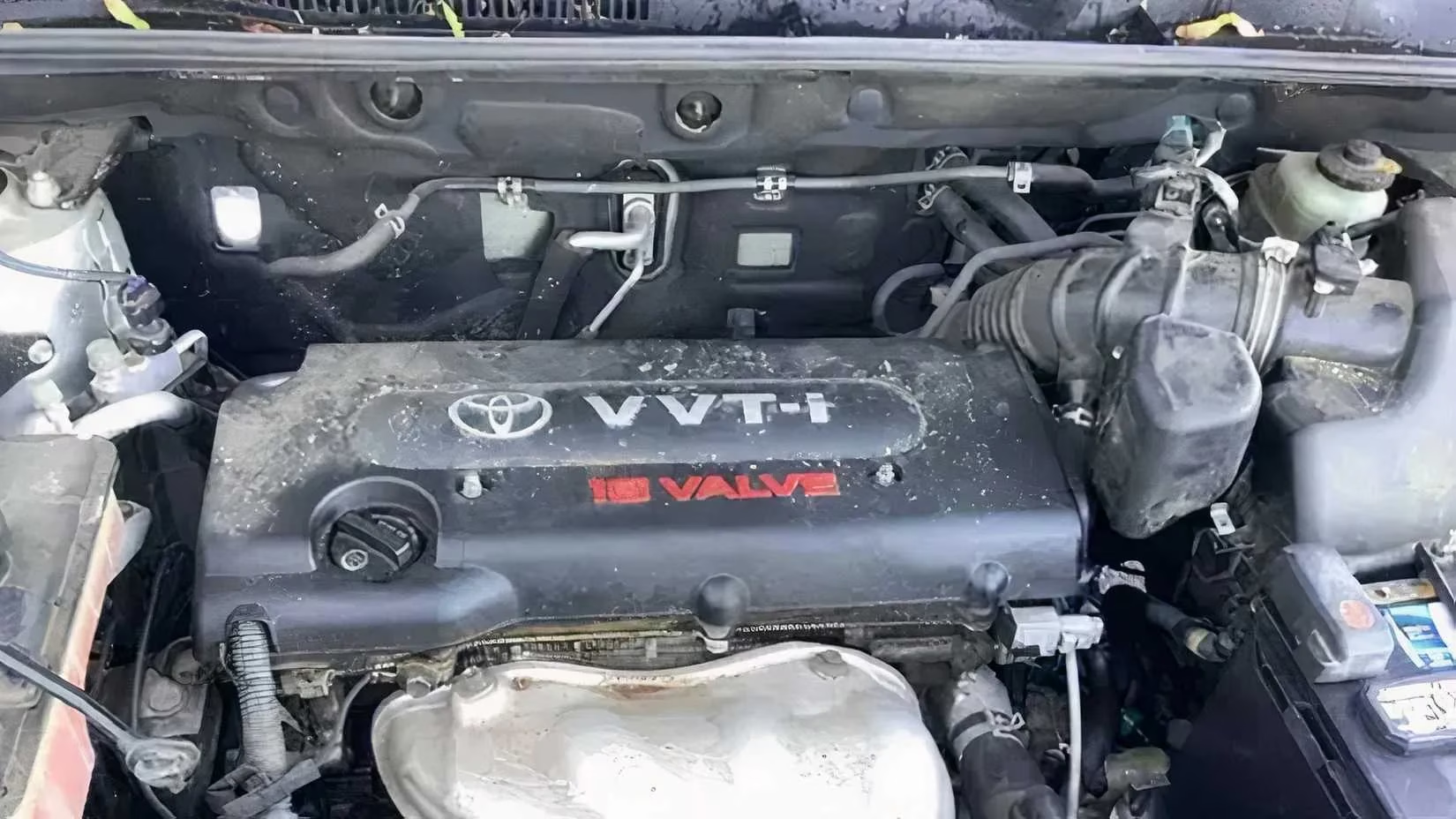
The real-world stories are what sold me. One owner on a Lexus forum clocked 304,000 miles on an ES350 with only a leaking coolant pipe and a tired engine mount. Another ran a 2013 Camry to 165,000 miles with routine care and had no drama. A bunch of folks on Reddit gushed over a 2007 Camry that was still chugging past 250,000 miles without a single major repair. To me, that’s the kind of dependable, “set it and forget it” behavior I want when I’m just trying to get to work and back.
But my uncle—a diehard old-timer—wouldn’t let me ignore the Ford 300 inline-six. Fair play to him, because that 4.9-liter tractor of an engine is the definition of “they don’t make ’em like they used to.” Ford built it from 1965 all the way to 1996, dropping it into F-Series and E-Series trucks. It had a cast-iron block, aluminum pistons, and forged steel rods, and it cost a lot less to buy and maintain than the V8s of the day. Farmers loved it so much that Ford even sold it as a crate engine for tractors and other equipment.
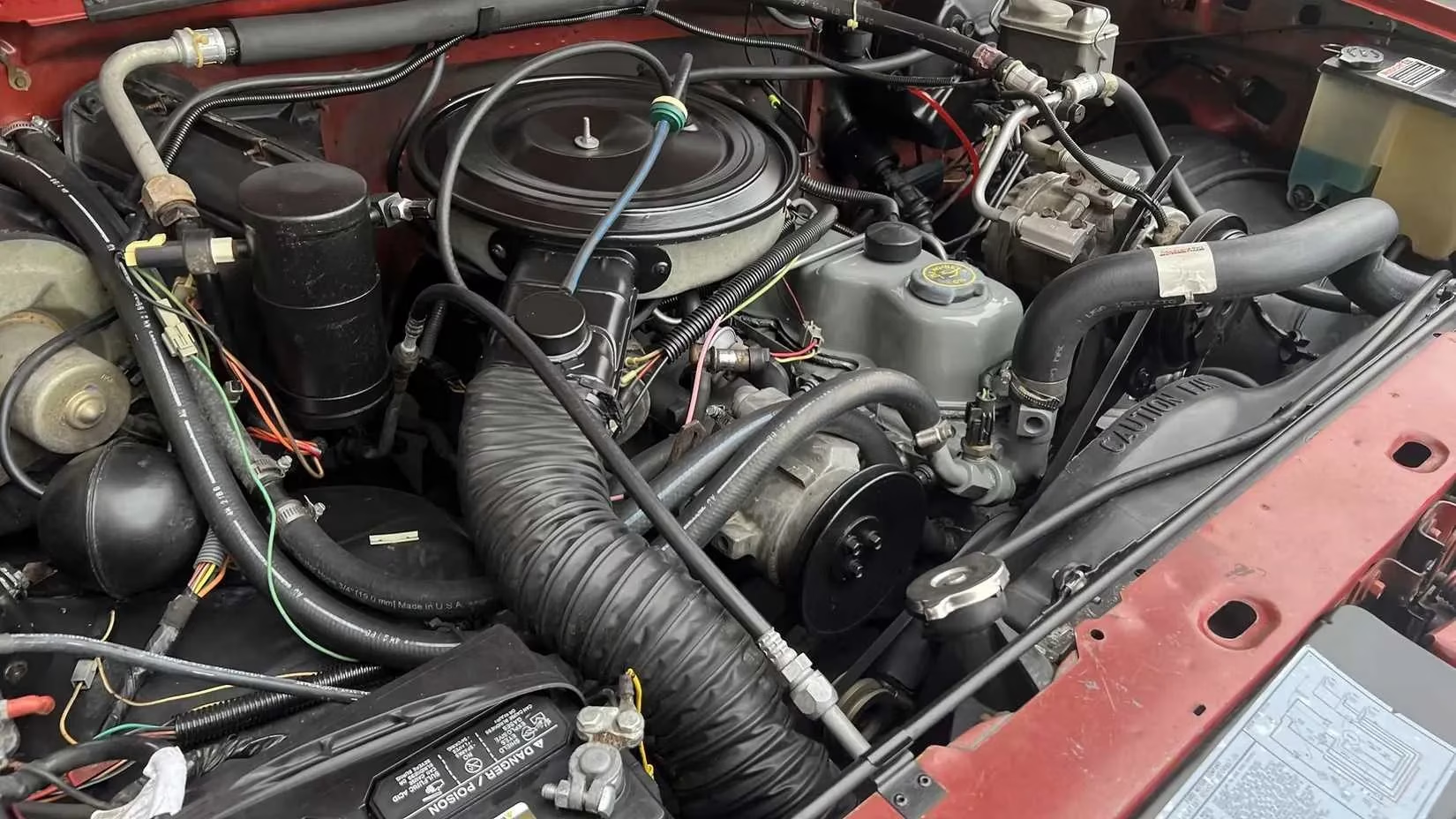
The Ford 300’s original spec made 177 hp and 283 lb-ft of torque, though later versions were tuned for more low-end grunt and less peak power—150 hp and 260 lb-ft by the end. Owners report 235,000 miles with barely any work, and plenty of trucks sailed past 300,000 or even 400,000 miles before anything major came up. The weak spot? Aluminum heads aren’t as durable as cast iron over decades, and neglecting basic maintenance can bite you. But if you keep oil in it and don’t drive like a maniac, the 300 will outlast your interest in the truck itself.
So where does that leave me in 2026? Honestly, I’m torn. The Toyota 2GR-FE is the smarter daily driver—smooth, efficient, and easy to find in used Camrys and Lexuses. The Ford 300 is the rugged old-school choice if I want a truck that can haul and shrug off abuse. Both can blast past the 300,000-mile mark with basic care, and both are still available for reasonable money if you’re willing to hunt. At the end of the day, I stopped obsessing over horsepower numbers and started asking one simple question: “Will this thing still start in 2036?” With either of these under the hood, the answer is usually yes.