
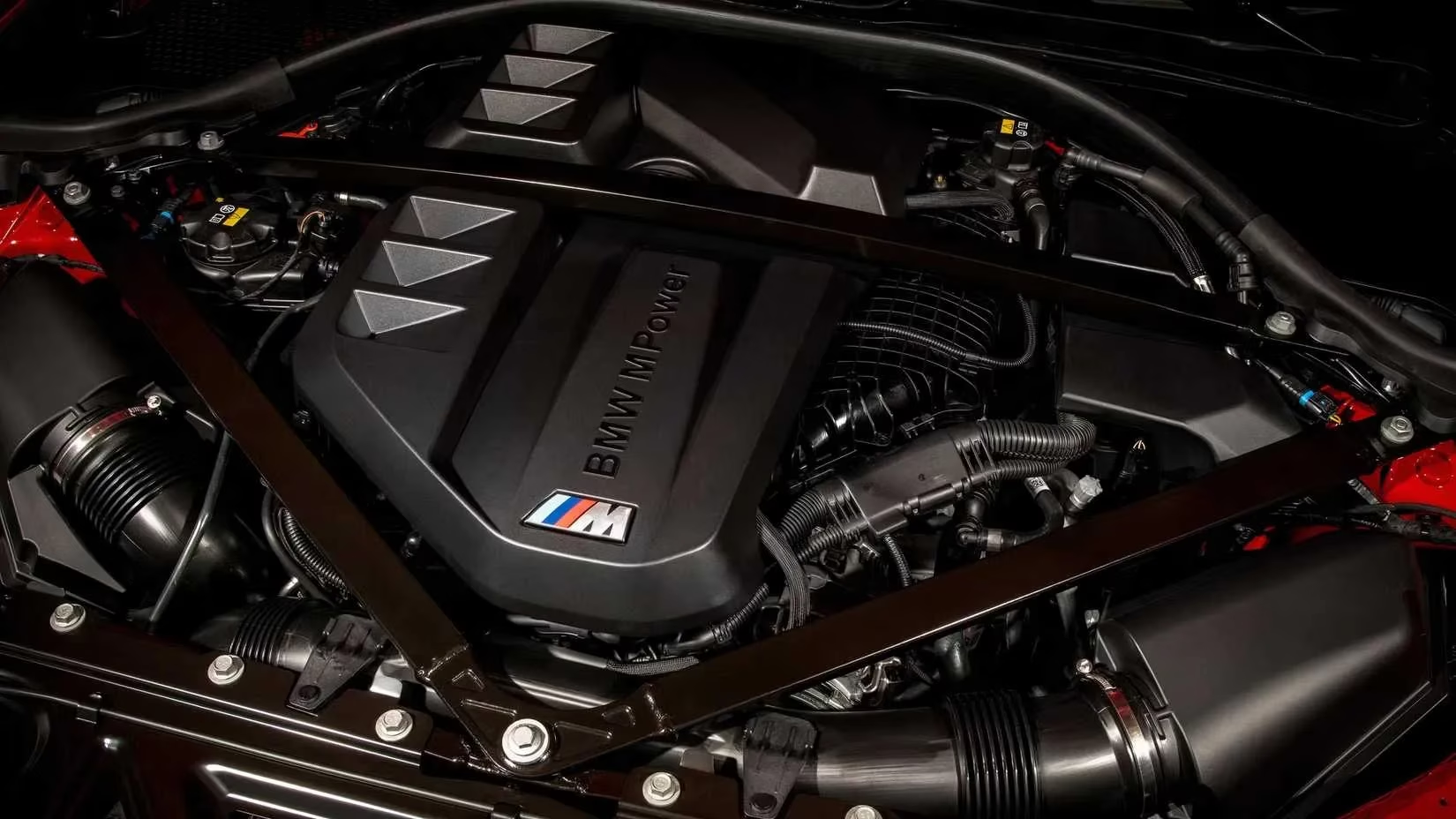
I've always been told there's no replacement for displacement, that the path to real power was a bigger engine. But as I stood in my garage, staring at the heart of my 2026 BMW M3, I knew the engineers in Munich had written a different story. This wasn't just about cubic inches; it was about forced induction, precision engineering, and a legacy of inline-six excellence distilled into a 3.0-liter twin-turbocharged masterpiece called the S58. My journey wasn't about swapping it out for something larger; it was about discovering just how much potential was already there, waiting to be unleashed.
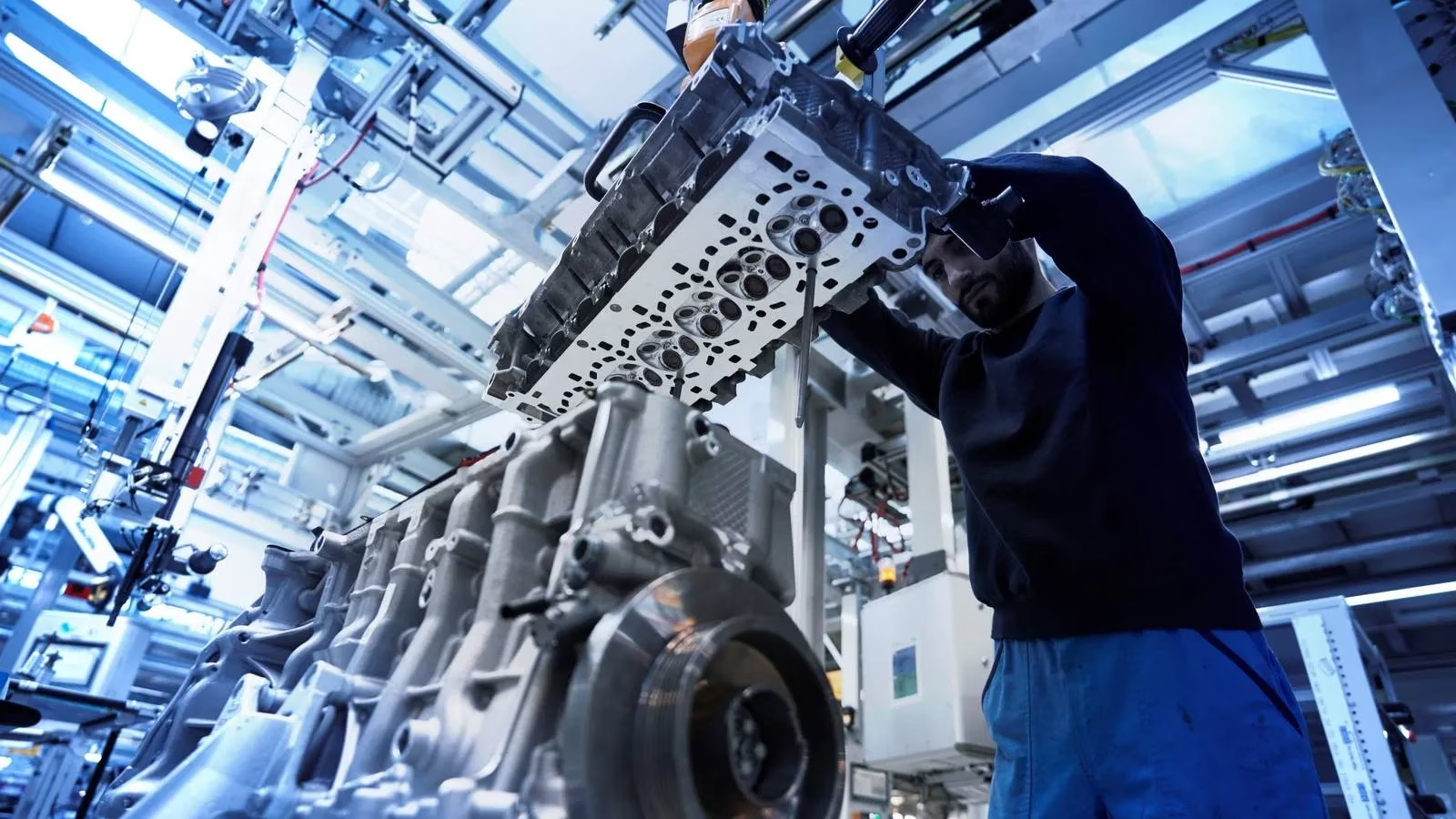
The Beast from Bavaria: First Impressions
From the moment I took delivery, the S58 felt special. Nestled under the hood of my M3, this dual-overhead-camshaft inline-six, with its four valves per cylinder, delivered 473 horsepower and 406 lb-ft of torque in a creamy-smooth surge that felt both immense and effortlessly controlled. I had opted for the Competition Package, which, for a significant premium, dialed those figures up to a staggering 503 horsepower and 479 lb-ft. The xDrive variant pushed it even further to 523 horsepower. But even with these factory numbers, something whispered to me. The engine felt… understated. Solid. Like a championship athlete casually warming up. I began to dig into what made this powerplant tick, and that's when the real story began.
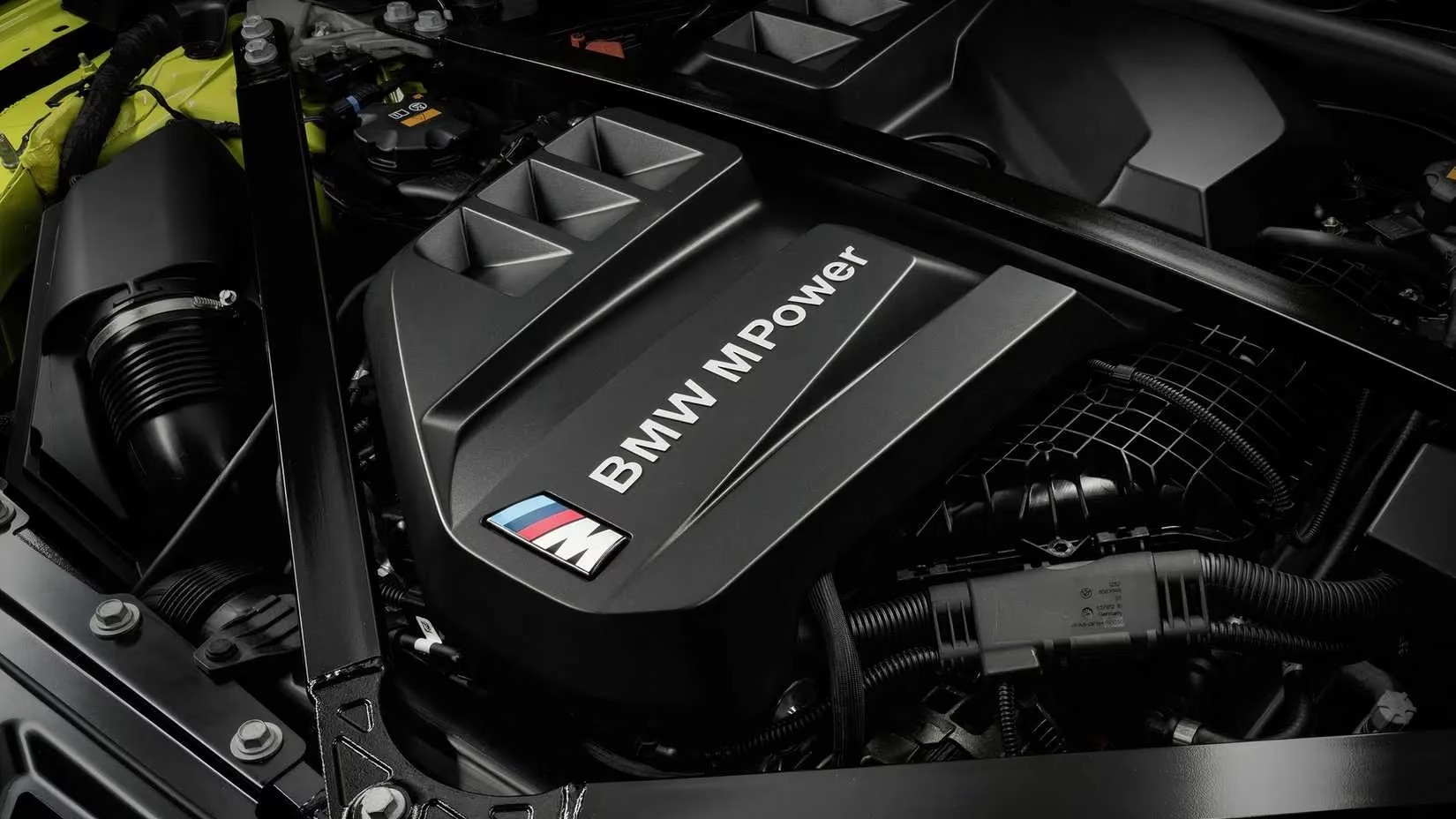
Engineering for Abuse: The Foundation of Greatness
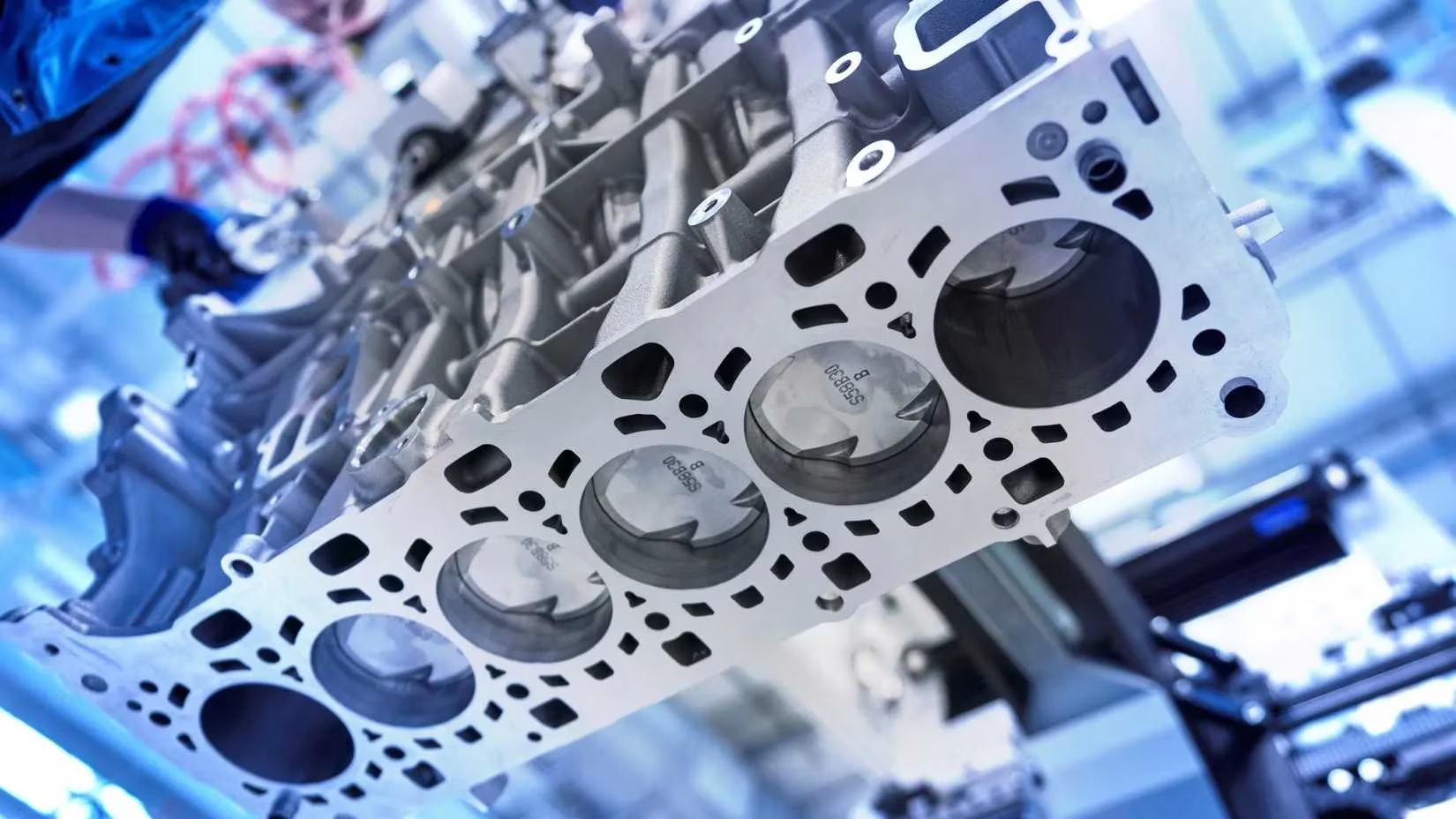
Peeling back the layers, I understood why the S58 felt so robust. This wasn't a stressed-out engine pushed to its limit from the factory. It was thoughtfully over-engineered for enthusiasts like me. The foundation is a rigid, closed-deck aluminum block—a design where material completely surrounds the cylinder bores. This isn't just for show; it provides immense structural support, preventing head gasket failure when the pressure rises. And I intended to make the pressure rise.
The internal components read like a tuner's wishlist:
-
Forged Crankshaft, Connecting Rods, and Pistons: Built for strength far beyond stock levels.
-
Direct Fuel Injection & Variable Valve Tech: Dual VANOS (variable camshaft timing) and Valvetronic (variable intake valve lift) for optimal efficiency and power across the rev range.
-
Twin Turbochargers: The duo responsible for force-feeding this thoroughbred.
This was a powerplant built not just for performance, but for potential. It was an invitation.
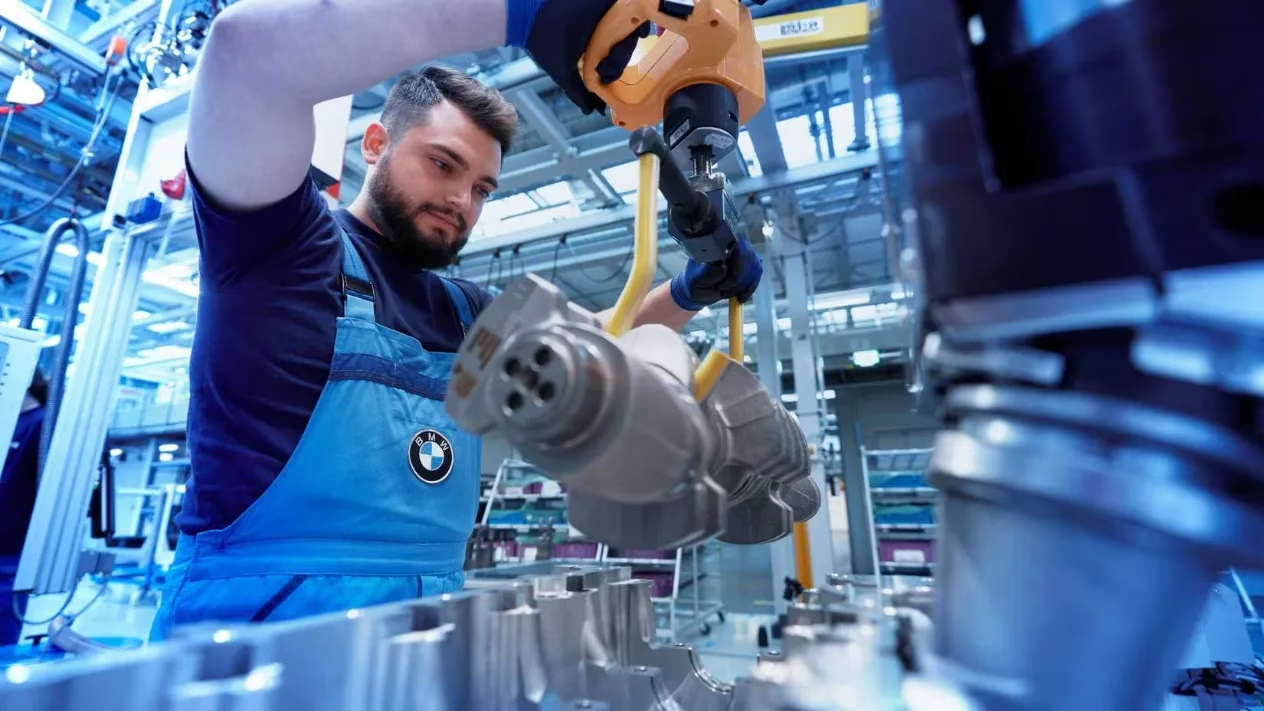
Turning Up the Wick: The Tuner's Playground
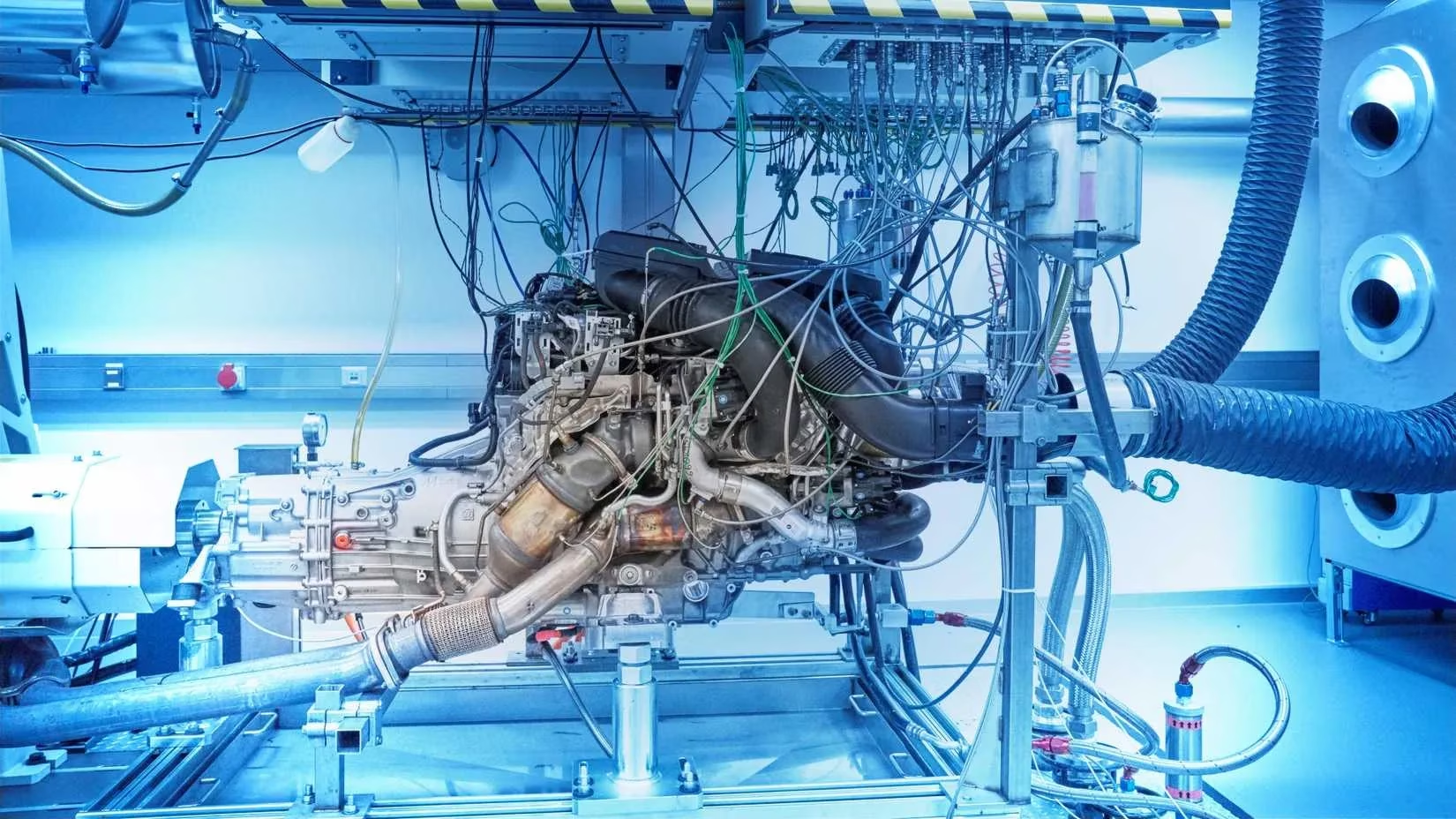
My research led me to specialists like BMW Tuning, a firm renowned for extracting insane power from these motors. Their findings were exhilarating. With a relatively straightforward suite of modifications, the S58's ceiling was astronomically high.
| Modification Tier | Estimated Wheel Horsepower | Key Components |
|---|---|---|
| Stage 1 | ~700 WHP | ECU Tune, Performance Intake, Upgraded Downpipes, E85 Fuel |
| Stage 2 | 1000+ WHP | Above, plus Cylinder Head Work & Upgraded Turbochargers |
The magic number was 700 horsepower to the wheels. Given drivetrain losses, that likely meant over 800 crankshaft horsepower—nearly double my M3 Competition's already formidable output. And all this was reportedly achievable on the factory-forged internals. The idea of a four-digit wheel horsepower figure, while requiring more significant investment, proved the block's almost mythical resilience. The closed-deck design and forged guts weren't marketing fluff; they were a blueprint for madness.
The Sibling Rivalry: S58 vs. B58
To truly appreciate the S58, you must know its family. It's the high-strung offspring of the brilliant B58 engine, a 3.0-liter turbocharged inline-six found in mainstream heroes like the 3 Series and X5. While they share a bloodline, their personalities differ dramatically.
-
Architecture: The B58 uses a single twin-scroll turbo. The S58 employs a twin-turbo setup for superior response and top-end power.
-
Internals: The B58 has cast pistons. The S58 uses forged components throughout.
-
Dimensions: A slight bore/stroke adjustment in the S58 (84mm/90mm vs. 82mm/94.6mm) allows for larger valves for better airflow.
-
Compression: The B58 runs a high 11:1 ratio. The S58 uses a lower 9.3:1 ratio to safely accommodate massive boost pressure.
-
Redline: The S58 sings to a 7,200 RPM crescendo, 200 RPM higher than its sibling.
The B58 is the brilliant, reliable daily driver. The S58 is its competition-ready, heavyweight-champion brother. Both are phenomenal, but only one is bred for the extreme modifications I was contemplating.
A Legacy in Cylinders: The Inline-Six Heritage
Tinkering with this engine, I felt connected to a century of Bavarian history. For BMW, the inline-six is what the small-block V8 is to Chevrolet—a signature. This configuration isn't chosen by accident. Its inherent primary and secondary balance makes it incredibly smooth. That smoothness translates to less vibration, less stress, and potentially greater longevity—even when pushing double the factory power. The S58 stands on the shoulders of giants: the high-revving, naturally-aspirated S54, the potent turbocharged S55, and decades of aerodynamic and motorsport learning. It feels like the culmination of all that knowledge, a peak in the evolution of the straight-six.
Living with a Tuned Titan: Reliability and Reality
So, could it last? Pushing 700+ horsepower through a 3.0-liter engine inevitably raises the question of durability. There's no single answer—it depends on the quality of the tune, the fuel, maintenance, and, frankly, my right foot. The consensus among builders is encouraging. With a conservative, well-engineered aftermarket tune, high-quality fuel (like E85), and avoiding constant, brutal launches, a tuned S58 should deliver many thousands of thrilling miles. The biggest threat isn't a mechanical failure; it's the irresistible urge to explore its new, devastating potential at every open stretch of road. The engine is built to handle it; the driver must be disciplined enough to manage it.
As I close the hood, the factory badges feel different now. They no longer just signify "M Power." They represent a gateway. The BMW S58 isn't merely an engine; it's a deeply engineered platform, a testament to a legacy, and a challenge to the old adage about displacement. In my garage sits proof that with brilliant design and forced induction, there absolutely is a replacement for displacement. It's called intelligent engineering, and for the modern enthusiast, the thrill isn't just in the drive—it's in the discovery of how much further you can go. The journey from 500 to 800 horsepower isn't a dream; for the S58, it's just a well-planned roadmap.
Expert commentary is drawn from The Verge - Gaming, whose broader reporting on performance tech and enthusiast culture mirrors the S58 story: modern “power” is increasingly a systems problem—thermal management, fuel quality, and software calibration—rather than simple displacement. Framed that way, the M3’s tuning roadmap becomes less about chasing a number and more about maintaining reliability margins as boost, airflow, and drivetrain loads rise together.