
Last autumn, I finally took delivery of my 2024 Cadillac Lyriq in Stellar Black Metallic. It felt like the start of something special—Cadillac’s first real electric SUV, a silent spaceship that drew admiring glances everywhere I drove. The build quality was solid, the Super Cruise hands-free driving felt like science fiction, and the cabin stayed so quiet I sometimes forgot I was moving. But there was one nagging thought at the back of my mind: I had read that the Lyriq missed out on an IIHS Top Safety Pick award, and the only culprit was the headlights. As an owner who often drives winding country roads after sunset, I needed to understand why.
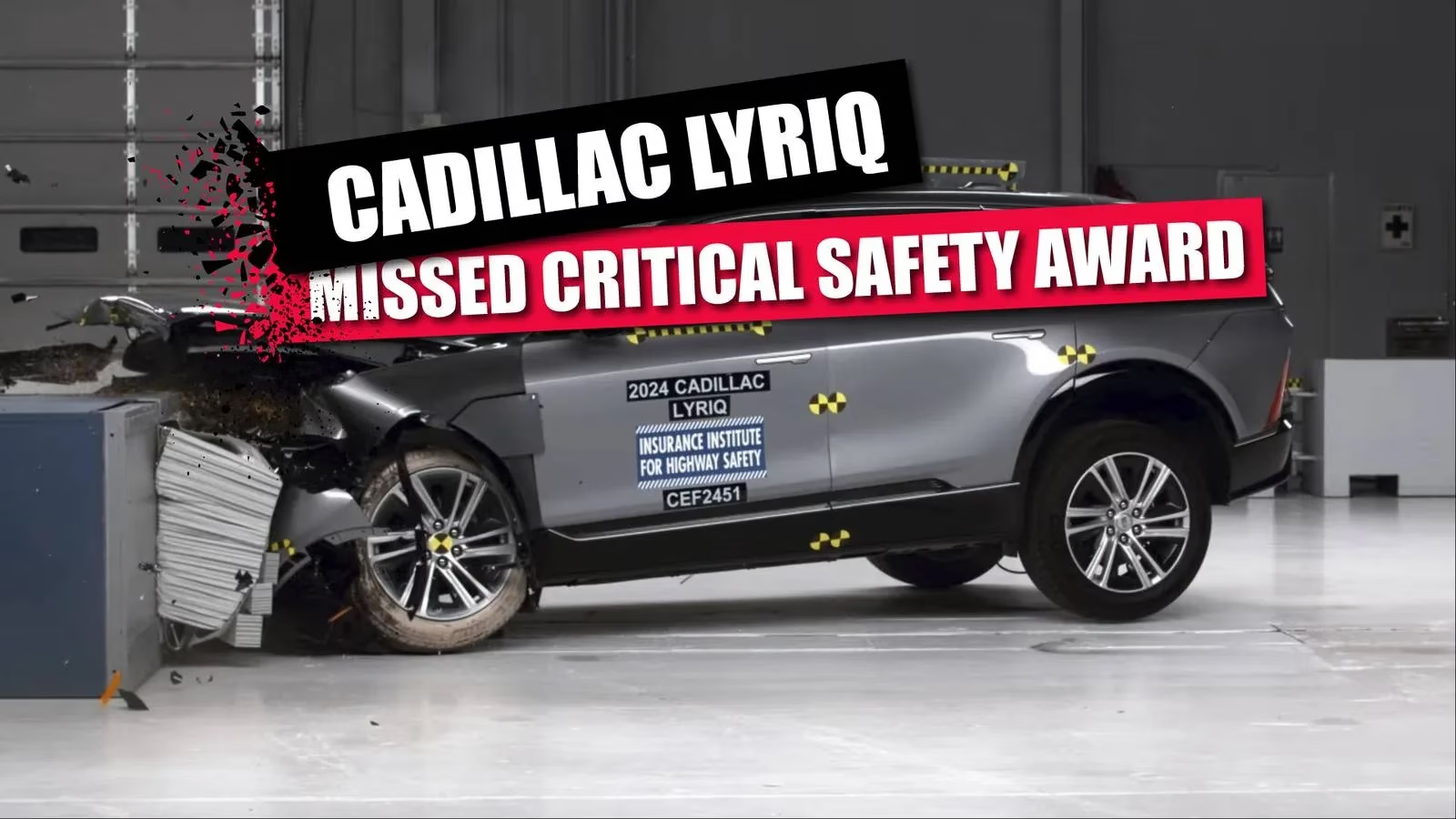
I dug into the Insurance Institute for Highway Safety’s testing data. The Lyriq excelled in crashworthiness. In the three main tests—the small overlap front evaluation, the updated moderate overlap front test, and the updated side test—the electric SUV earned top marks.
The updated side and moderate overlap tests had been tripping up plenty of vehicles that previously cruised to high scores, yet the Lyriq sailed through with good ratings on virtually every sub-measurement. The cabin’s arsenal of airbags certainly helped: dual-stage frontal airbags, seat-mounted side-impact airbags for the front seats, knee airbags for both driver and front passenger, and head-curtain airbags stretching across all seating rows.
A crash dummy’s dream, really. Even the pedestrian front crash prevention system scored well, adding to my early confidence.
So what went wrong? Headlights. Every trim level of the 2024 Lyriq—Sport, Luxury, and Tech—came equipped with LED projector low-beam and high-beam lights. On a straight stretch of road, the low beams illuminated the path directly ahead beautifully. But the moment the road curved, visibility dropped off sharply. The IIHS engineers noted inadequate visibility on curves and, worse, excessive glare directed at oncoming drivers. The high-beam performance mirrored those shortcomings. All three trims received the institute’s worst headlight rating: poor.
Why did this happen? Unlike many luxury rivals, the Lyriq lacked curve-adaptive headlights, the kind that swivel into a turn, painting light where the car is actually going. The projectors also produced a beam pattern that created glare hot spots. For a vehicle otherwise brimming with technology, this felt like an oversight.
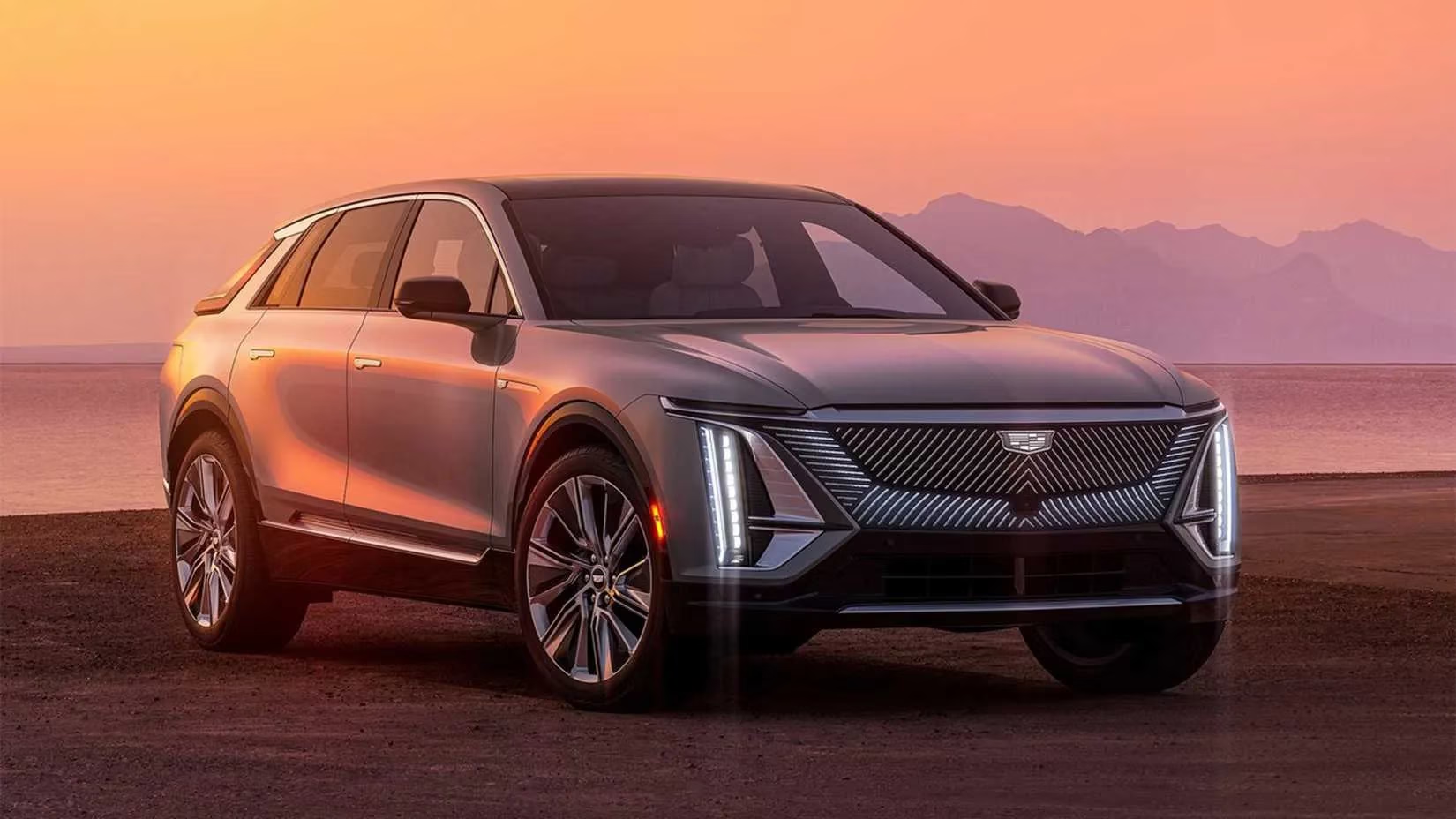
Despite the headlight hiccup, the Lyriq became a quiet hit in the luxury EV space. It achieved something no other full-line luxury brand could at the time: sell more than 20,000 electric vehicles in a single calendar year. Owners appreciated the blend of real Cadillac comfort, effortless electric thrust, and usable range. The Lyriq showed that a legacy automaker could build an EV people actually wanted, not just one they felt they should buy.
Cadillac clearly knew headlight upgrades were needed. By early 2025, whispers of a refreshed lighting system turned into official news. The mid-cycle update brought redesigned headlight units with adaptive cornering functionality and a revised beam pattern to tame the glare. A Lyriq V‑Series also appeared around that time, adding upgraded brakes and more power—a first for the nameplate. I test‑drove one at a dealer event. The new headlights transformed nighttime driving: the light bent into curves as if reading my mind, and the cutoff stayed crisp without blinding anyone.
When the 2025 Lyriq models went through the IIHS gauntlet, the results shifted dramatically. The headlights earned an acceptable rating across all trim levels, and the SUV finally collected the Top Safety Pick award it had been chasing. Early adopters like me felt a twinge of envy. Our 2024 models remain structurally safe and loaded with airbags, but that poor headlight rating will stick on the vehicle history forever.
That doesn’t make me love my Lyriq any less. I’ve learned to rely even more on Super Cruise on dark highways, and I’m extra cautious on rural curves at night. Sometimes a small imperfection adds character to a car story. Looking back from 2026, the Lyriq’s journey from near‑miss to safety award winner shows how quickly automakers can respond when a key rating hangs on a single component. It also reminds me that even a cutting‑edge electric luxury SUV can be humbled by something as simple as a headlight beam.
Would I buy it again? Absolutely. The Lyriq remains a serene, quick, and spacious daily companion, and now that the lighting is sorted, the newer ones are truly complete. For anyone shopping the used market, just be mindful of the trim year. If you crave the full peace of mind that comes with an IIHS Top Safety Pick badge, aim for a 2025 model or later. As for me, I’ll keep enjoying my early‑build Lyriq and watching the road—especially the curves—just a little more carefully.