
I still remember the first time I fired up a 1970 Ford Torino Cobra Jet in a video game. The screen shook, my controller rumbled, and that deep, guttural V8 sound through my headset felt so real I could almost smell the gasoline. As a professional gamer in 2026, I've spent thousands of hours in racing simulators like Forza Horizon 6 and the latest Gran Turismo, but nothing gets my heart pounding like the digital thunder of a 385-series big-block Ford. The mighty 460 ci V8 has a reputation as the most reliable big-block the brand ever built, but it's the smaller 429 cubic inch sibling that spawned a dynasty of virtual and real-world legends.
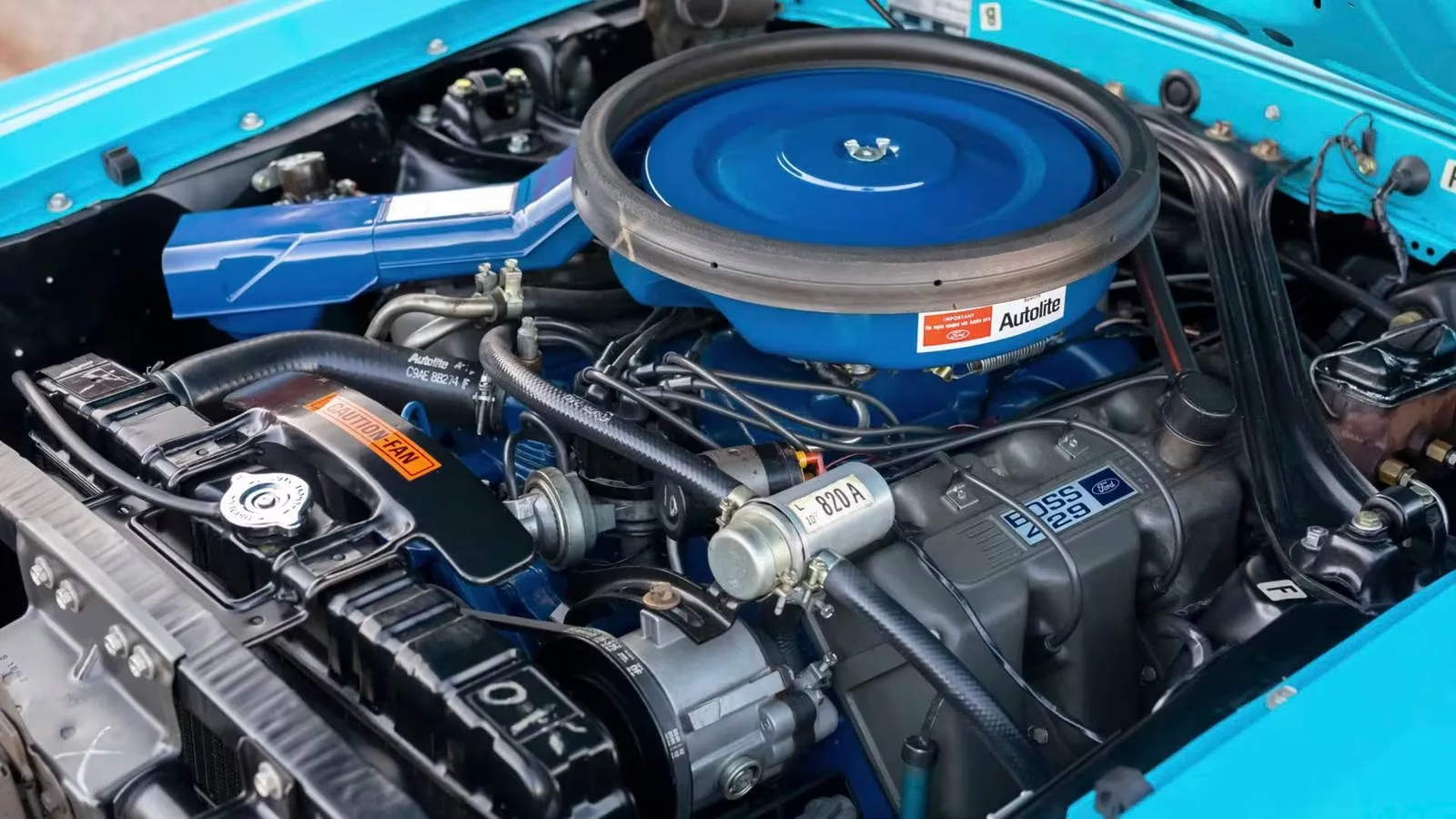
What makes these virtual machines so special? Why does a 1970 half-year-only muscle car or a station wagon with a drag pack send shivers down my spine even through a screen? It's not just nostalgia—it's the engineering brilliance that game developers painstakingly replicate: the semi-hemi cylinder heads of the Boss 429, the high-rise intake manifold that gulps air like a jet engine, and the solid lifter cams that transform a lazy cruise into a 7,000-rpm scream. Every time I scroll through my digital garage, I'm not just looking at polygons; I'm visiting a hall of fame where each 429-powered machine tells a story of horsepower wars, NASCAR homologation, and corporate defiance.
The Boss 429 – A NASCAR Refugee in My Pixel Playground
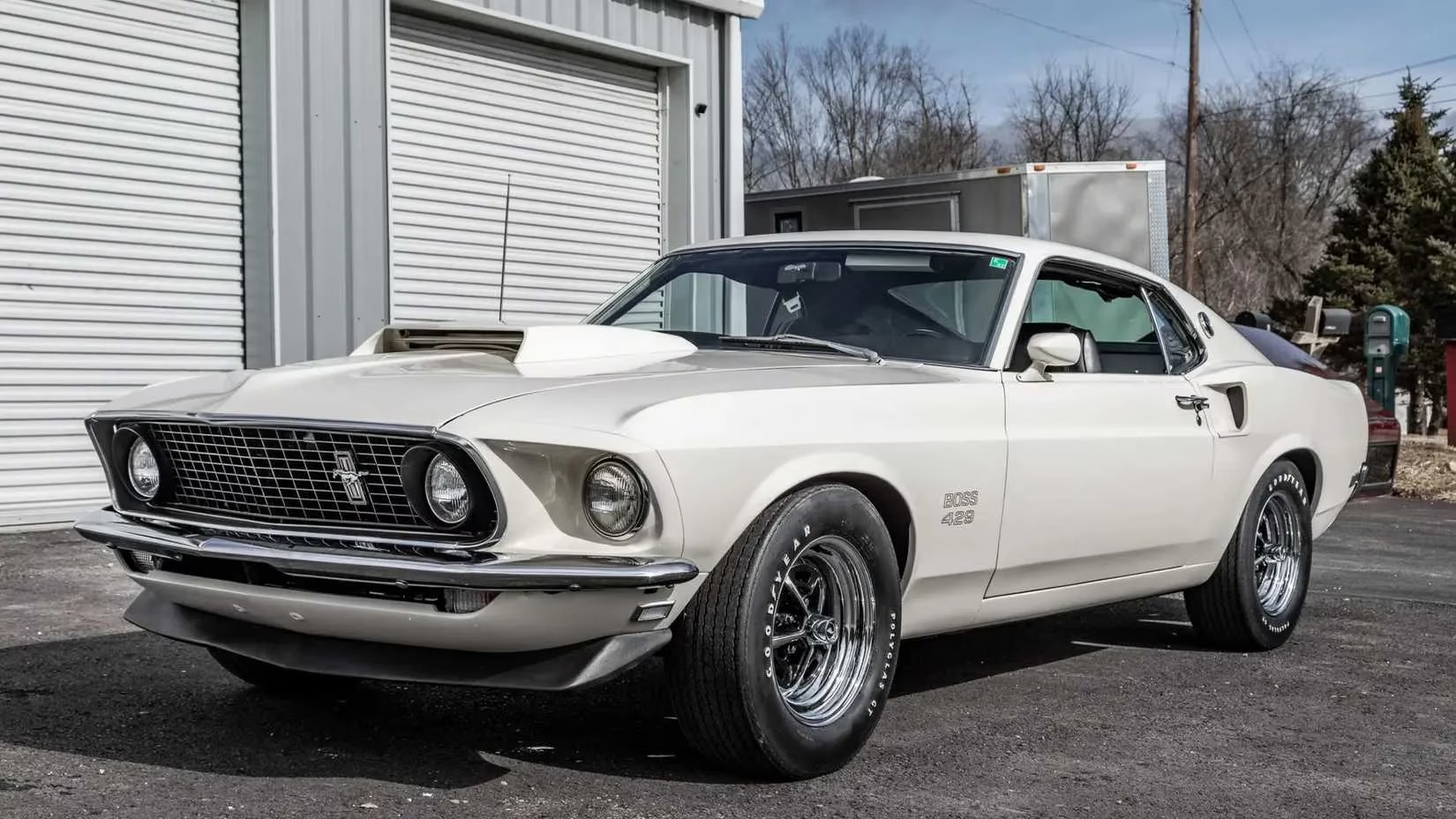
If you've ever driven the 1969 Mustang Boss 429 in a sim, you know it's a completely different animal than even the Cobra Jet Mustangs. The engine block might be the same 385-series foundation, but the semi-hemi heads, driver-controlled air intake, and high-flow exhaust manifolds create a personality that's part race car, part sledgehammer. Ford built this beast to dominate NASCAR, and the road-going homologation version came with an aggressive front spoiler and uprated suspension that make it a handful and a half on a twisty virtual track. In my latest online championship, I wrestled the Boss 429 through a rain-soaked Watkins Glen replica, and the car's raw, unfiltered feedback felt more alive than many modern supercars. It's the kind of car that forces you to be a better driver—no traction control, no stability management, just you and a mountain of torque.
The Super Cobra Jet Era – When 375 HP Became an Addiction
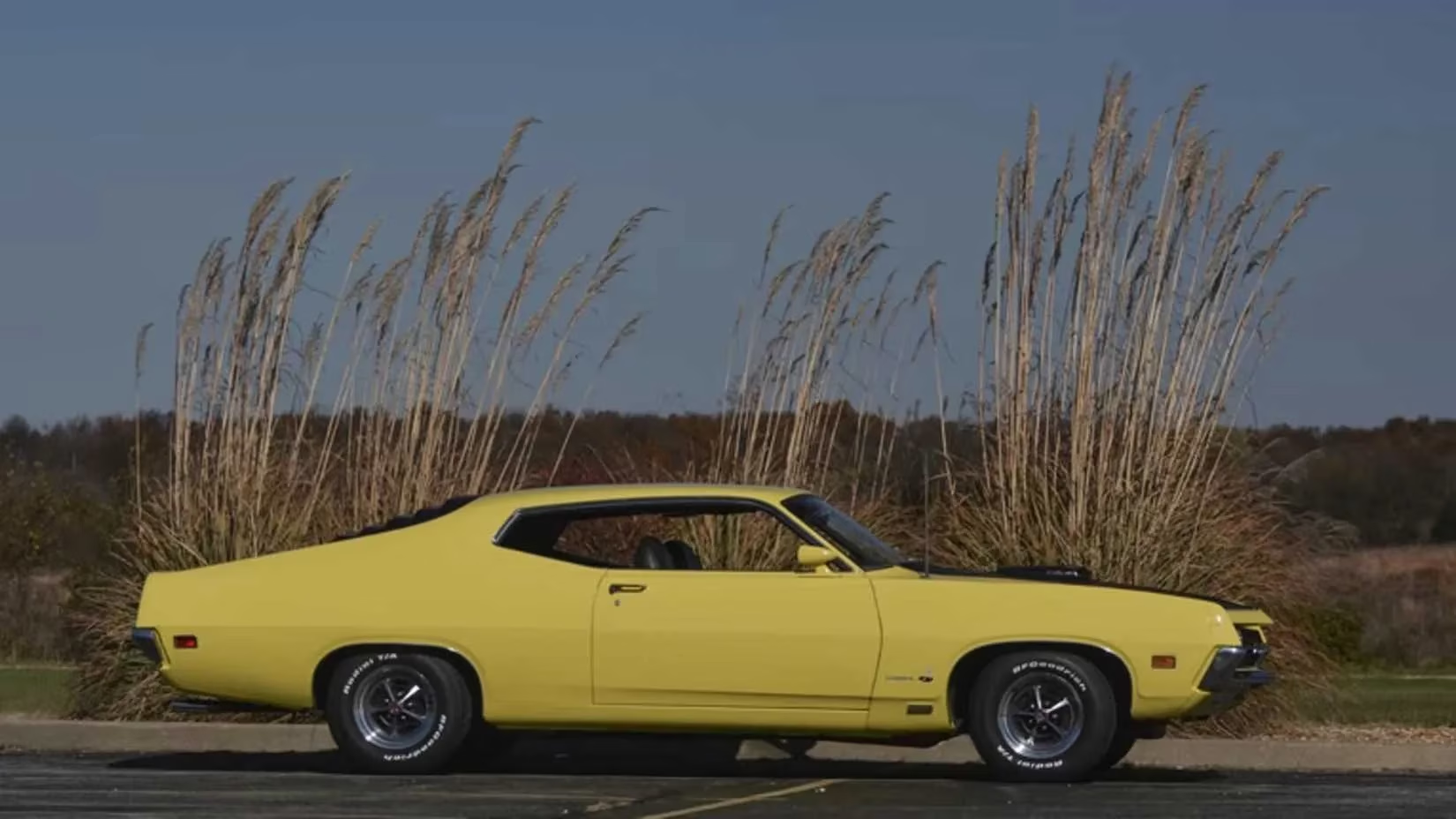
The 1970 model year was the golden age for the 429 Super Cobra Jet (SCJ). With an 11.3:1 compression ratio, forged aluminum pistons, and durable Le Mans connecting rods, the SCJ bumped output to a terrifying 375 hp. In my virtual collection, the Yellow 1970 Torino GT SCJ is the muscle car equivalent of a classic rock anthem—loud, unapologetic, and impossible to ignore. I love to spec it with the optional drag pack, which gives the car a drag-spec rear axle that completely transforms launch behavior. And then there's the Mercury Cyclone Spoiler, essentially a more luxurious Torino. That's the car I pick when I want to smoke the competition in style.
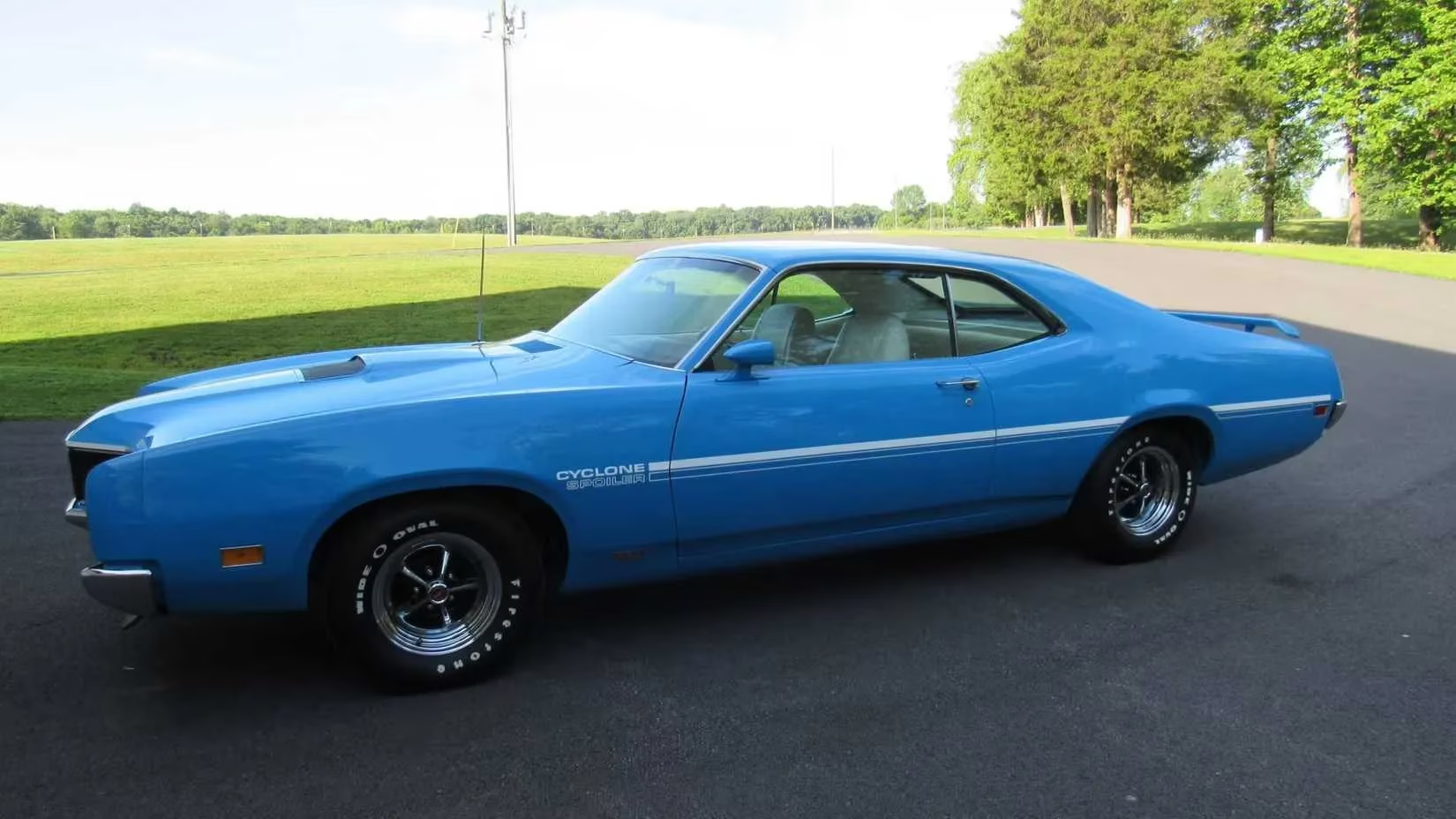
Mercury called the Cyclone's bright orange, green, and red hues “competition colors,” and in a virtual drag race, seeing that anti-lift front spoiler and rear deck wing in my rearview mirror is an intimidating sight. It came standard with a four-speed manual and Hurst shifter, and in the sim, every throw of that gear lever is a crunchy, satisfying ritual.
The Oddballs That Stole My Heart
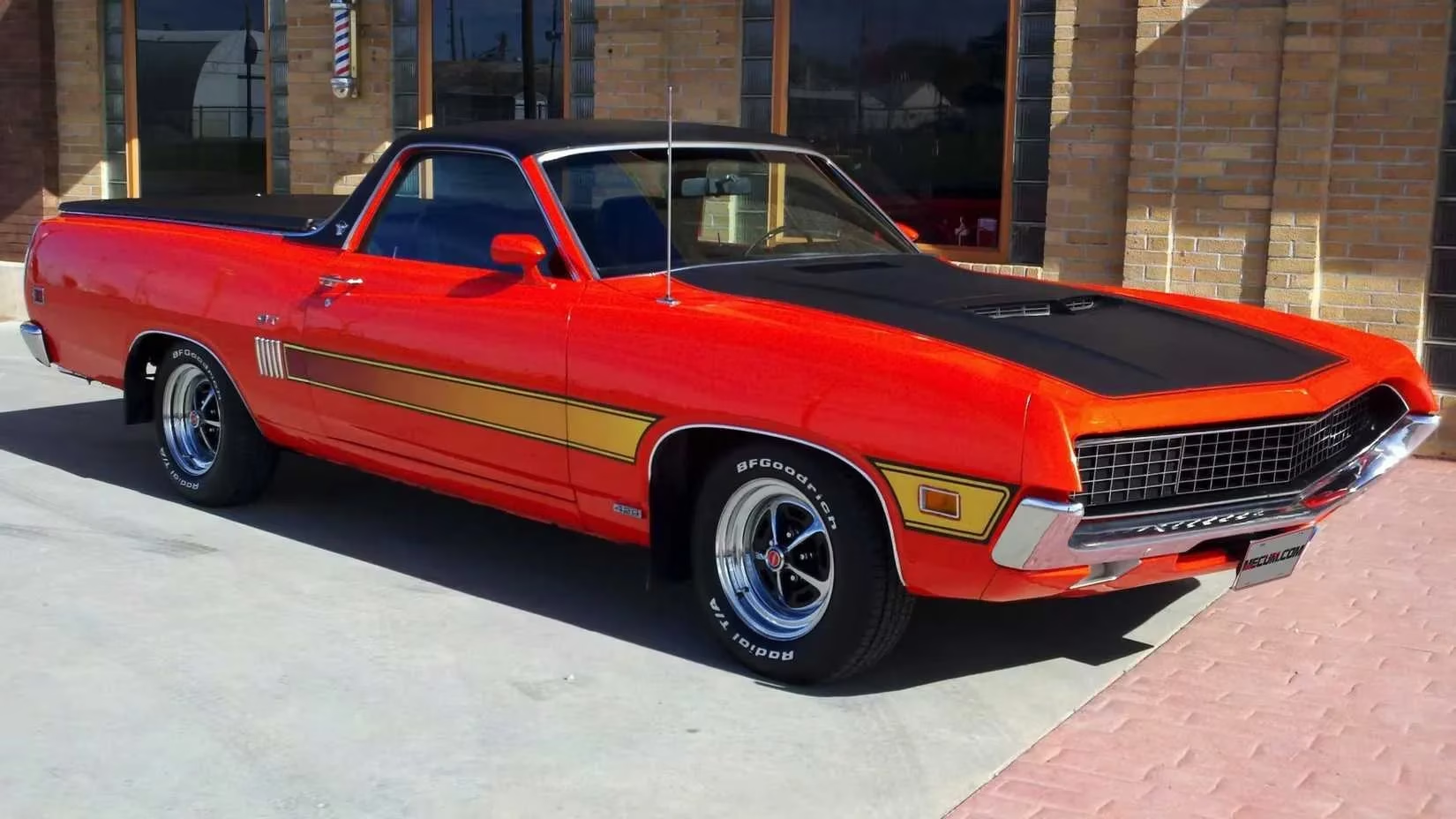
Not every 429 hero is a traditional muscle car. The Ford Ranchero GT is a prime example. It's a pickup based on the Torino's platform, and the Cobra Jet treatment turned it into a 370 hp cargo hauler that could outrun today's hot hatches. I've spent hours in my digital body shop applying the classic woody side trim and then taking the Ranchero to an online car meet, where it always draws a crowd of confused but impressed racers. With the hideaway headlamps and a ram air shaker hood, it's the ultimate sleeper.
Then there's the 1970 Ford Falcon CJ, one of the rarest 429 cars in existence and pixel form. According to Barrett-Jackson, only about 42 Super Cobra Jet-equipped Falcons without the Ram Air package were built, and a real one sold for $77,000 back in 2021. In 2026, I can only imagine the value has soared further, but in my game, I've painstakingly saved enough in-game credits to snag a digital replica.
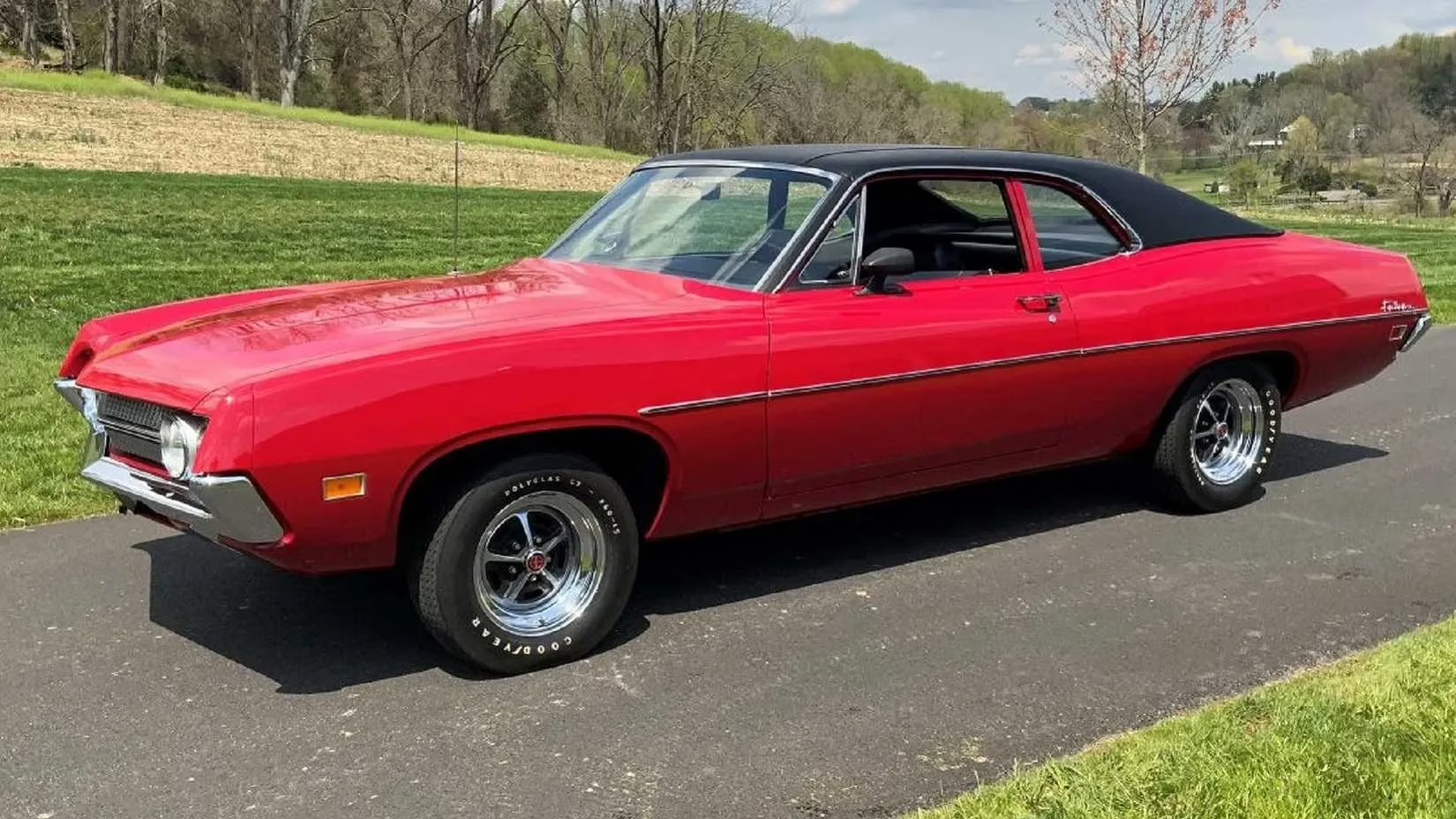
Driving that Falcon CJ through a vintage street scene is an emotional experience. It's a six-month-only wonder that embodies a fleeting moment when anything was possible—even stuffing a big-block into a compact sedan.
When Station Wagons and Luxury Coupes Got the Bite
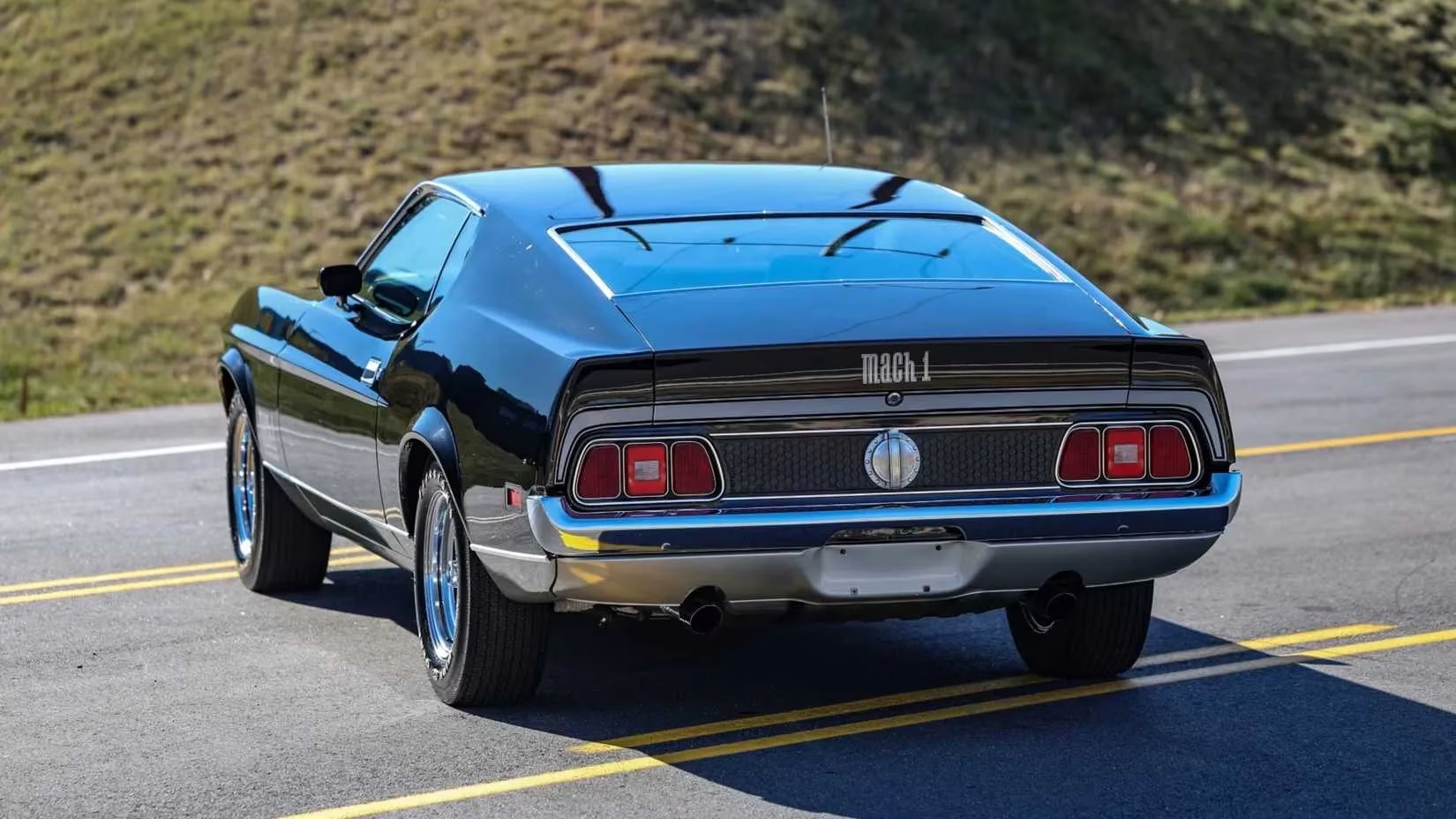
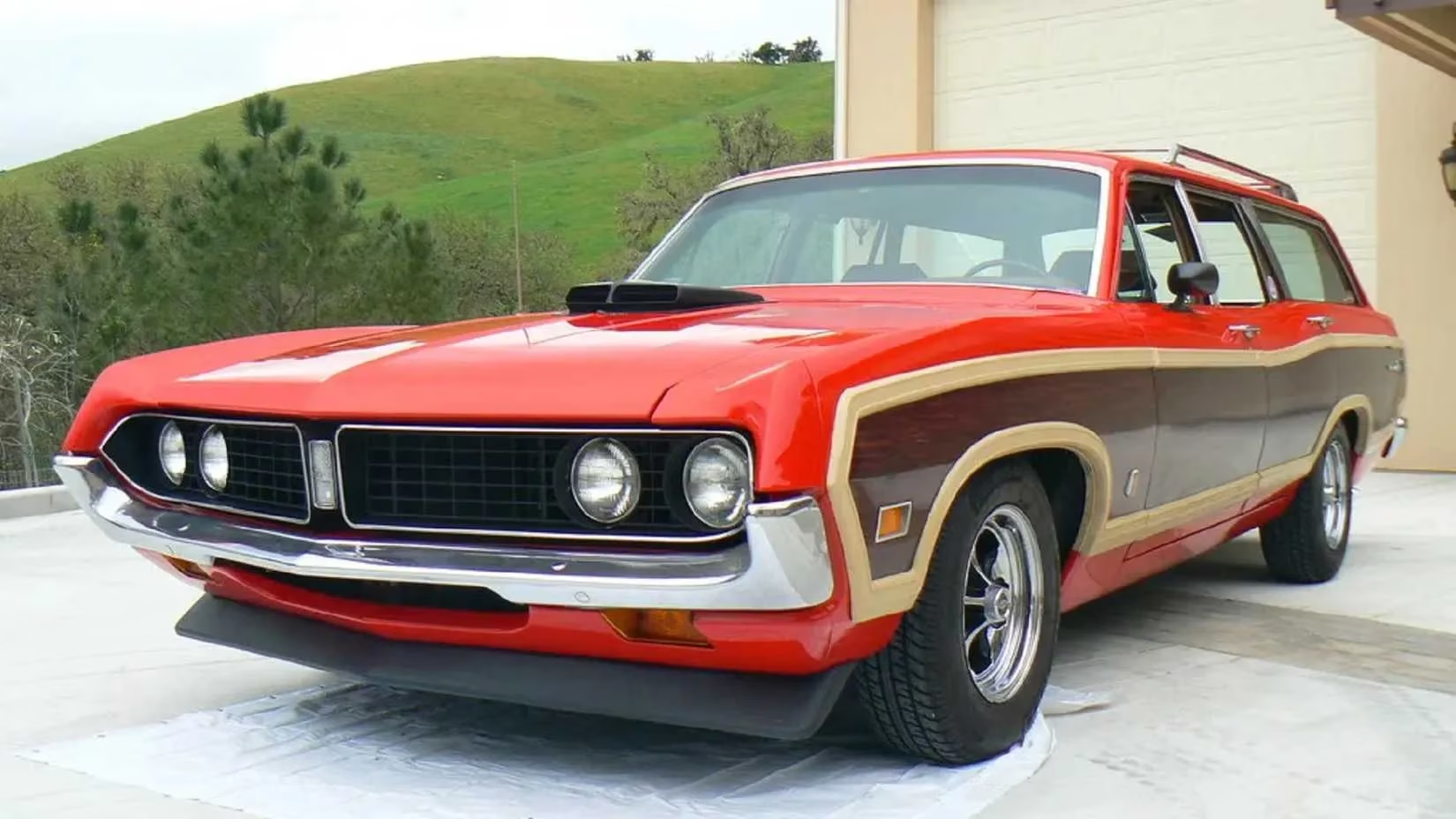
The 1971 model year saw Ford spreading the Cobra Jet love wider than ever. The Mustang Mach 1 got the 429, and I cherish my digital black-on-black Mach 1 for evening cruising lobbies. Its sleeker roofline, recessed door handles, and upmarket interior make it the Bond villain's choice (yes, it appeared in Diamonds Are Forever). But perhaps the most absurd and wonderful application was the 1971 Ford Torino Squire station wagon. Only six Cobra Jet Squires were sold in the real world, making it a true unicorn. In my simulation, I often load up this wood-paneled wagon with virtual friends and a full cargo of simulated luggage, then proceed to embarrass modern sports sedans.
I can't forget the Mercury Cougar CJ from that same year, either. Only 448 were ever built, and Hemmings reports that a mere 70 or so survive today. The Cougar came with a competition suspension package that tightened up its cornering abilities, making it a gracious grand tourer in the digital world. I've spent hours tweaking the spring rates in the tuning menu to replicate that rare factory setup perfectly.
The Ghost of the King Cobra
Finally, there's the one that got away—the Ford Torino King Cobra. This was a NASCAR aerodynamic warrior meant to battle the Plymouth Super Bird, but Lee Iacocca slashed the competition program, and only one 429 Cobra Jet-powered prototype was ever completed. In testing, it touched 200 mph, and in my game's hidden car unlock tree, it's the ultimate reward.
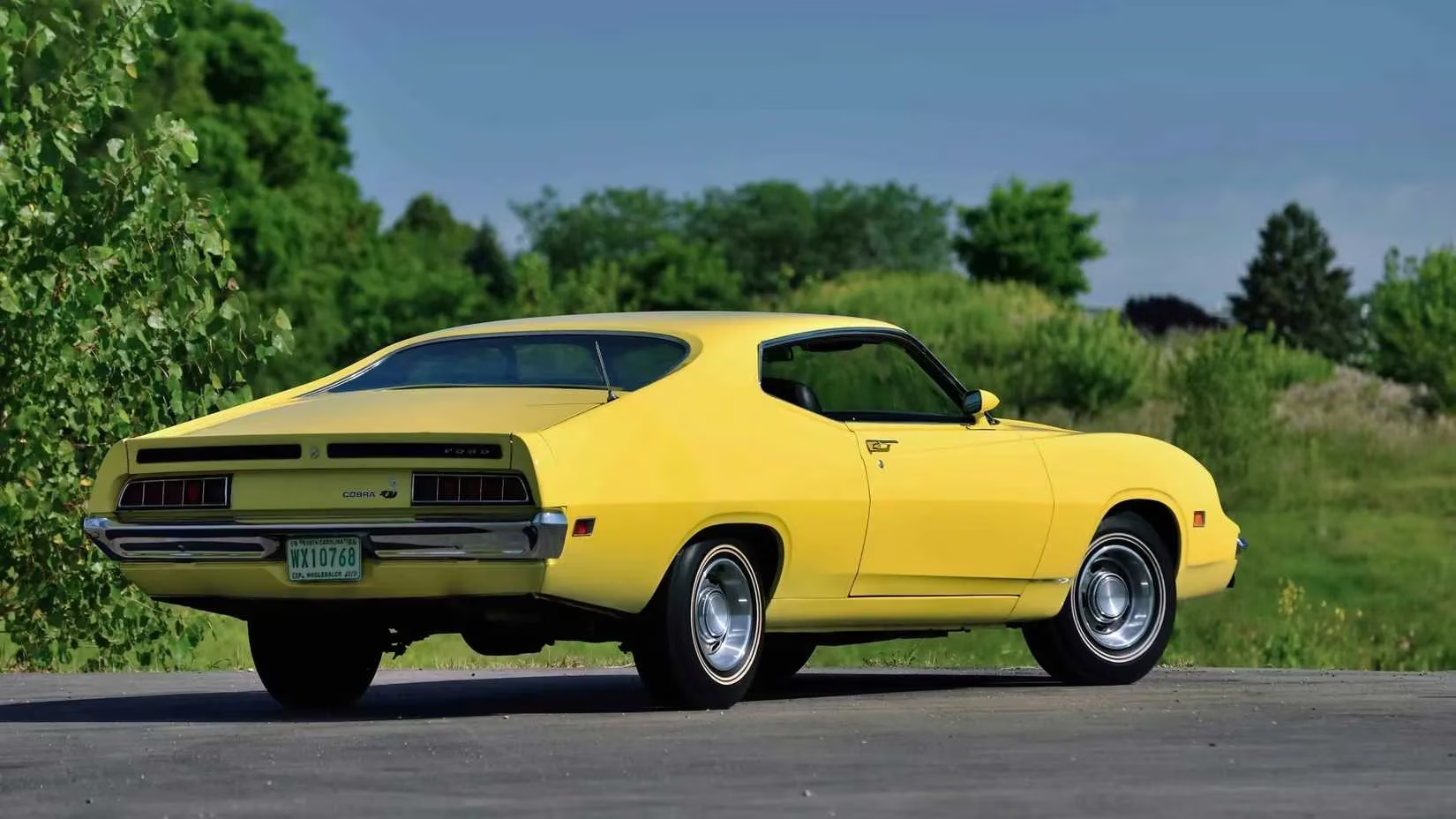
Every time I select that digitized yellow bullet, I think about the real King Cobra that never got its chance. In 2026, with advanced physics engines simulating every nuance of tire slip and aerodynamic downforce, I can finally experience what Ford's engineers dreamed about over half a century ago. Isn't that the true power of gaming?