
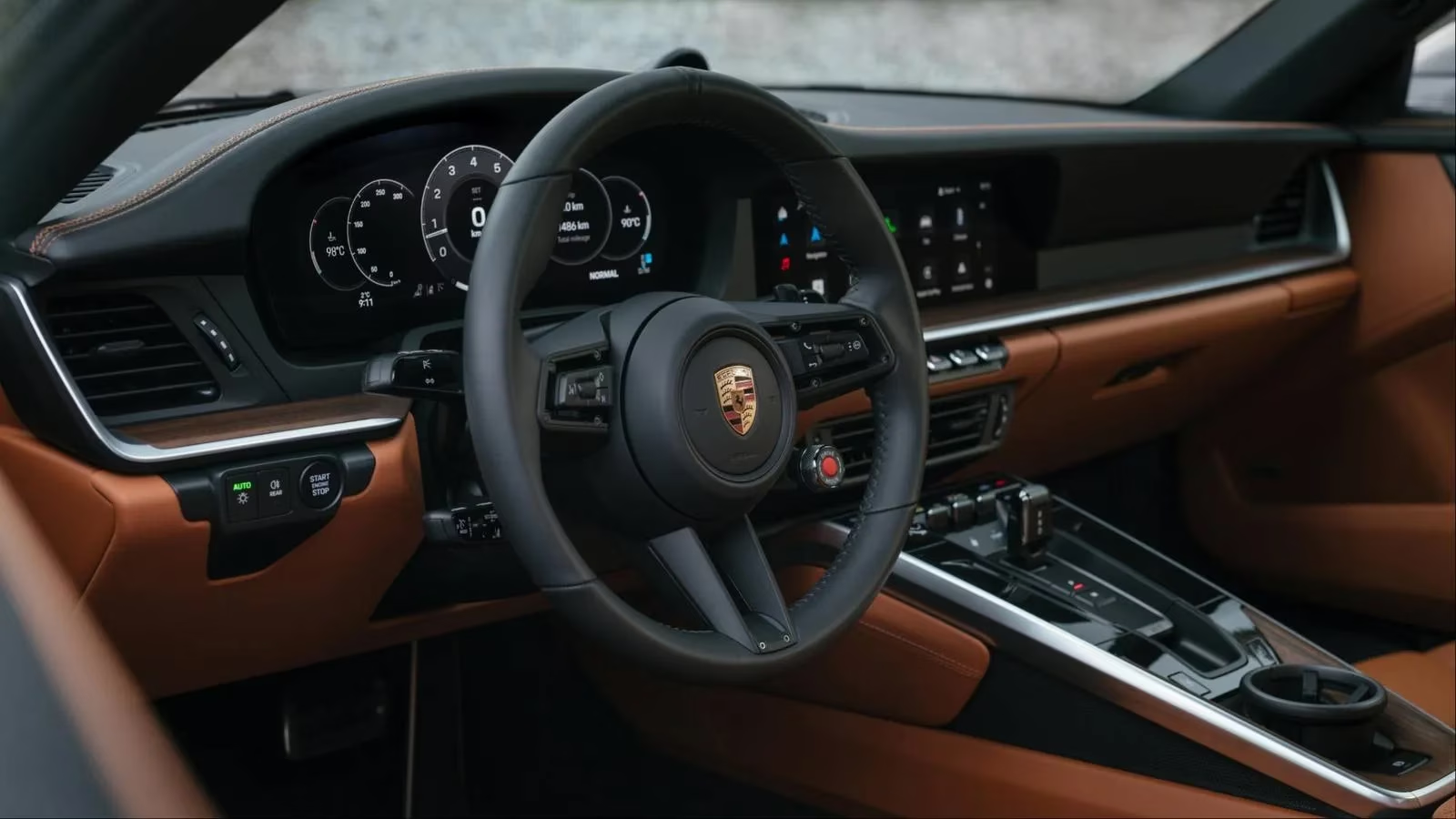
Picture this: a crisp Sunday morning in 2026, and you're scrolling through classifieds, hunting for a machine that can ferry you to the office in comfort during the week, then devour a mountain pass come Saturday. Your sensible side whispers "Toyota," and your bank account nods in quiet terror at the thought of a used German luxury car. But here’s the twist: Porsche, that glorious Stuttgart stallion known for carving apexes and occasionally redefining what an SUV can do, also happens to build some of the most dependable sports cars on the planet. Yes, the same company that gave us the 911 GT3 RS also tops customer satisfaction and reliability surveys with alarming consistency. For the frugal enthusiast hunting for a pre-owned bargain, this is like discovering that the world’s best chocolate cake is also packed with vitamins.
Of course, while Porsches boast aerospace-grade durability, they still come with Stuttgart-sized repair bills if things go sideways. A failed water pump on a Cayenne can make your wallet weep as dramatically as a 911 launch-control start. So, the real cheat code isn't just buying any Porsche—it's cherry-picking the most fault-free model years, the ones where engineers seemingly blessed every bolt with unicorn tears. We’ve combed through the archives and analyzed J.D. Power Quality & Reliability ratings, real-world ownership data, and auction trends to compile a list of the most robust used Porsches from the past two decades. These are the cars that will let you enjoy flat-six symphonies and turbocharged thrust without becoming best friends with a tow truck driver. Buckle up for a tour of indestructible engineering, where sensible practicality meets the soul of a Le Mans winner.
🛡️ The 2018 Porsche Panamera: The Executive Express That Matures Like Fine Wine
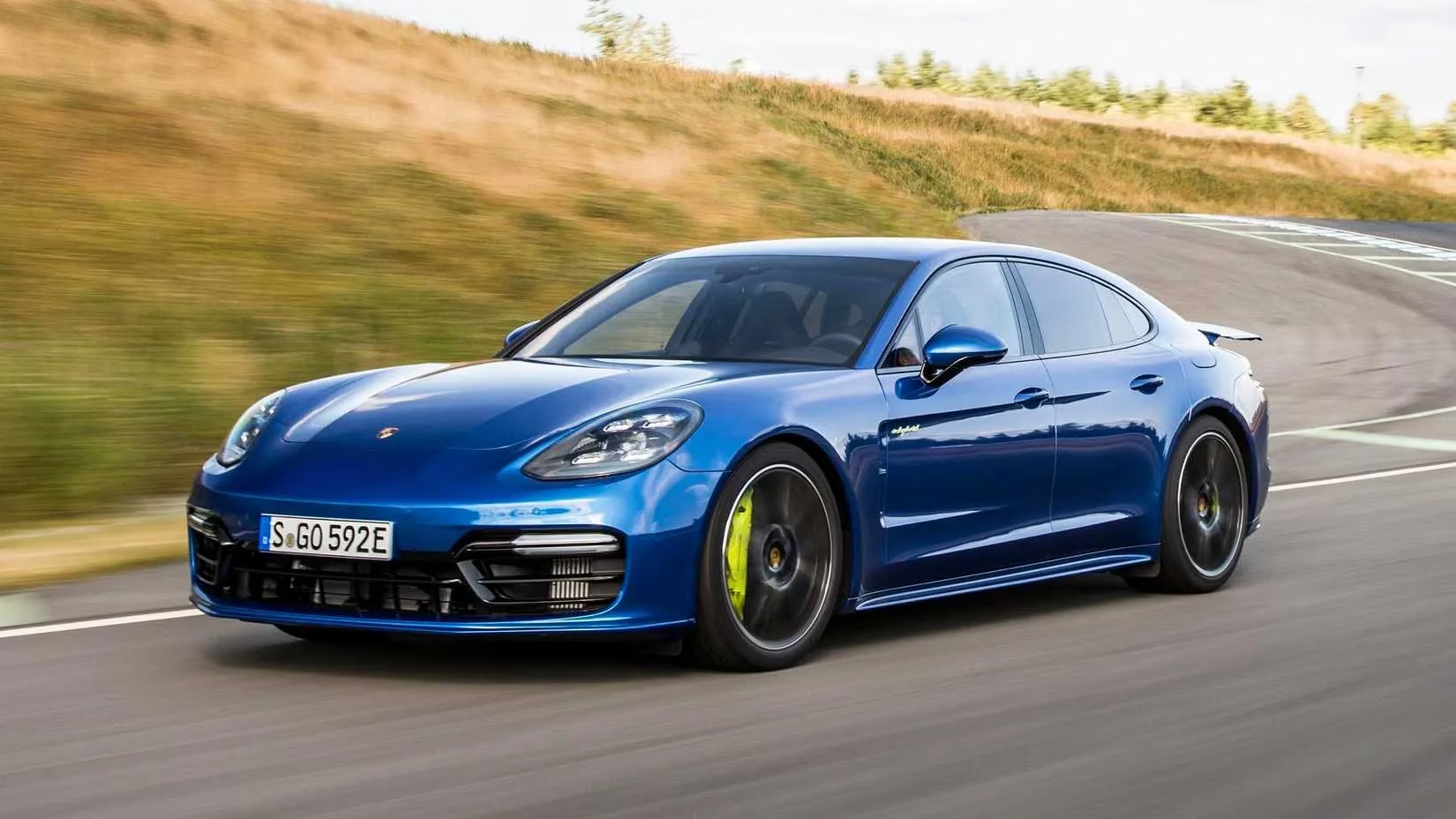
Once derided as a misshapen oddity (some critics called it the "hunchback of Zuffenhausen"), the Panamera has aged into a respected grand tourer with the versatility of a Swiss Army knife and the pace of a startled cheetah. By the 2018 model year, the second-generation Panamera had ironed out earlier gremlins and emerged as one of the most reliable luxury sedans money can buy. It’s the automotive equivalent of a tailored Italian suit made from Kevlar.
Under that gently sloping roofline, Porsche offered an arsenal of powertrains. The twin-turbo 3.0-litre V6 served as the sensible base, while the twin-turbo 4.0-litre V8 in the Turbo model could rearrange your internal organs. The plug-in hybrid variants – pairing a 2.9-litre twin-turbo V6 or the mighty 4.0-litre V8 with an electric motor – were engineers’ fever dreams made real, delivering silent city glides and ballistic overtakes in equal measure. In 2026, a pristine 2018 Panamera base model floats around $44,500 on the used market, while the thunderous Panamera Turbo averages $84,298. Not exactly loose change, but for a car once priced like a small villa, depreciation has done you a massive favor.
-
5-Year Maintenance Estimate: $5,585 (CarEdge)
-
Major Repair Probability (First 5 Years): A negligible 4%
-
Owner Satisfaction: 4.7/5 (KBB), 4.2/5 (Edmunds)
For the discerning buyer who needs to haul clients one moment and chase sunsets the next, this Panamera is a no-brainer. It’s a luxury liner with the heart of a 911, and it won’t bankrupt you with surprise visits to the dealership.
🏔️ The 2013 Porsche Cayenne: The SUV That Saved Porsche (And Your Budget)
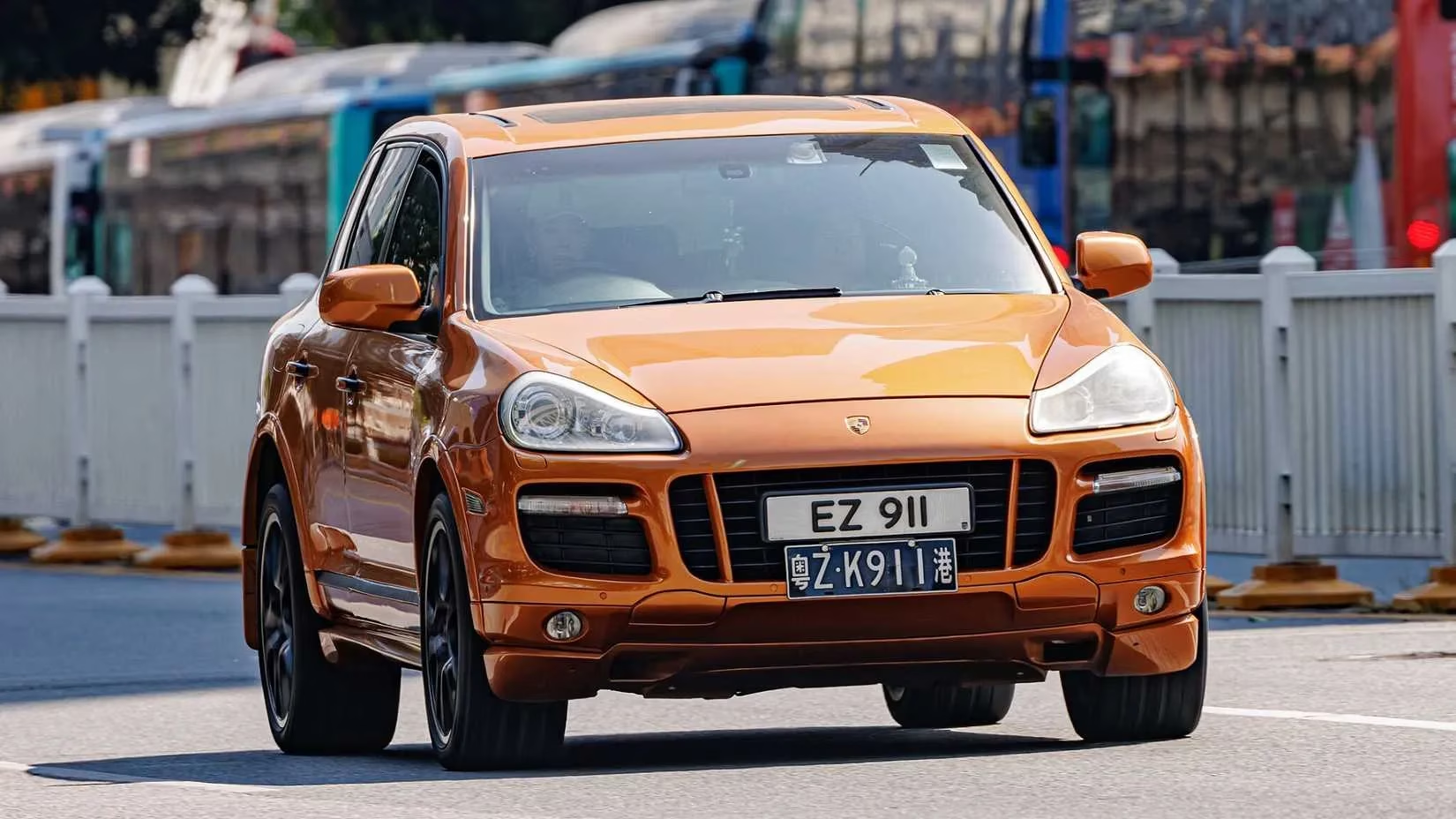
When the Cayenne arrived in the early 2000s, purists clutched their air-cooled 911s and wept. An SUV with a Porsche badge? Sacrilege! Fast-forward to 2026, and the Cayenne is the brand’s unironic hero – a versatile workhorse that cemented Porsche’s financial future and proved that a two-tonne family hauler could still carve corners like a sports car. Better still, it’s become renowned for its nearly unbreakable constitution. Buying one now is like adopting a loyal, fast, and surprisingly affordable St. Bernard.
The 2013 Cayenne sits in the sweet spot: modern enough to feel fresh, old enough to be a screaming bargain. Its engine palette ranged from a sensible V6 petrol and a torquey V6 turbodiesel (a frugal continent-crusher) to naturally aspirated and turbocharged V8s that sound angrier than a Wagner opera. Even a self-charging hybrid sneaked into the lineup, though plug-in tech was still on the horizon. Today, a 2013 Cayenne S can be snagged for around $23,685 – less than a new Honda Accord – yet it offers air suspension, a hand-stitched interior, and the ground clearance to tackle a trailhead.
-
5-Year Maintenance Estimate: $6,658
-
Major Repair Probability: A reassuring 6%
-
Owner Satisfaction: 4.4/5 (KBB), 4.6/5 (Edmunds)
Yes, an oil change costs more than your average econobox, but you’re buying a piece of engineering brilliance that ages like a mountain range. The Cayenne is the ultimate “one-car garage” solution for adventurers who refuse to be bored.
🧸 The 2018 Porsche Macan: The Baby Beast With Grown-Up Reliability
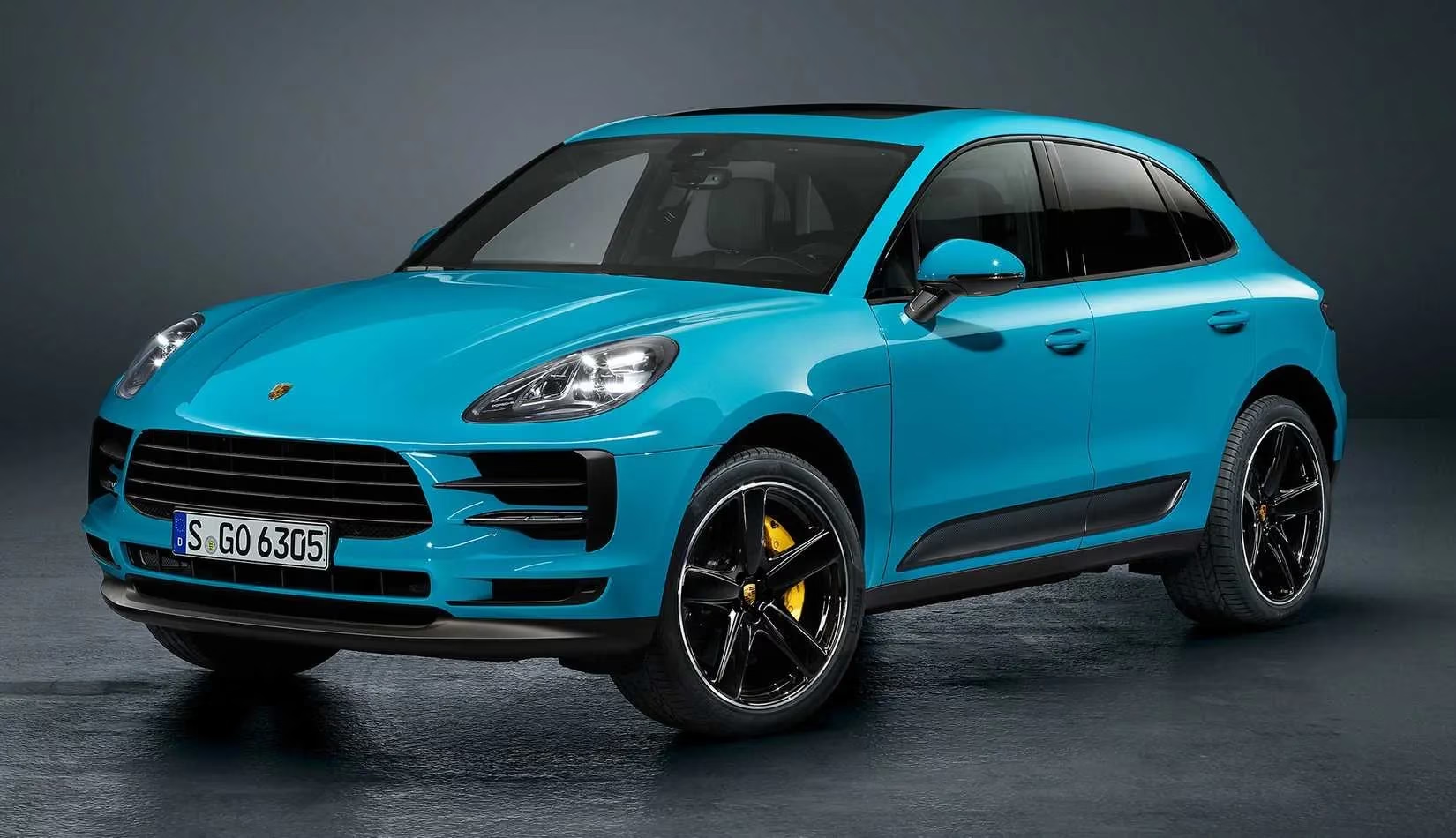
If the Cayenne is the big-boned Labrador of the family, the Macan is the Jack Russell terrier that keeps nipping at sports cars’ heels. Launched in 2014, this compact crossover quickly became the brand’s bestseller by distilling Porsche’s driving DNA into a more city-friendly package. And in 2018, before it went electric (yes, the 2026 Macan is now a silent stalker of electrons), the internal-combustion version was at the peak of its perfection – reliable, playful, and still offering a diesel option for torque-addicts.
The powertrain menu was deliciously varied. The base 2.0-litre inline-four served up peppy performance, but the real sweets were the twin-turbo V6s: a 3.0-litre in the S (in both petrol and diesel guises), a spicier 3.0-litre in the GTS, and the range-topping 3.6-litre twin-turbo in the Macan Turbo, which could be further sharpened with the Performance Pack. A 2018 Macan now averages $29,347 at auction – a ludicrous amount of capability for the price of a loaded minivan. Even the coveted Macan Turbo hovers around $49,048.
-
5-Year Maintenance Estimate: $6,480
-
Major Repair Probability: 7%
-
Owner Satisfaction: A stellar 4.7/5 from both KBB and Edmunds
It’s the ideal daily driver for someone who refuses to let a school run dampen their spirits. The Macan’s blend of reliability, prestige, and grin-inducing handling makes it a pre-owned superstar.
🕶️ The 2017 Porsche 718 Boxster: The Mid-Engine Marvel That Silences Critics
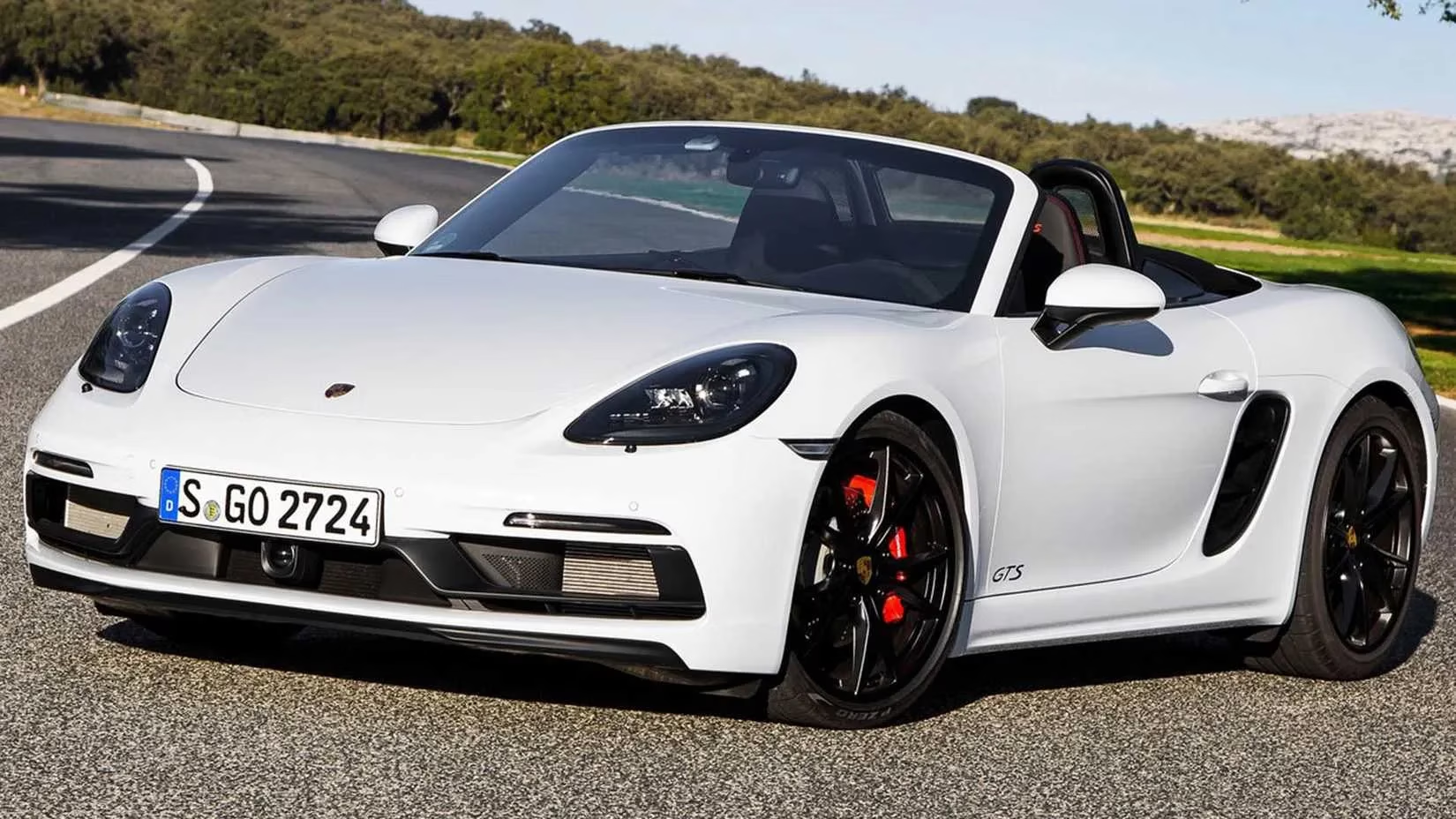
In 2017, Porsche committed what some called a cardinal sin: it replaced the Boxster’s soulful naturally aspirated flat-six with a turbocharged flat-four. The internet erupted, but time has been kind to the 718 Boxster. That snarling four-pot, with its cheeky growl and instant punch, has proven to be near-faultless in daily duty. Plus, the mid-engine layout makes it arguably more balanced than its rear-engined 911 sibling – a scalpel versus a charismatic hammer.
Engine choices in the 2017 lineup were simple yet effective: a 2.0-litre turbo flat-four in the base car and a punchier 2.5-litre version in the Boxster S. Purists continued to mourn the absent six-cylinder note, but owners were too busy blasting down coastal roads with the top down to care. The value proposition is staggering: a base 2017 718 Boxster costs around $43,217, while the S model asks roughly $56,319. For a drop-top Porsche that can double as a reliable commuter, that’s pocket-money territory.
-
5-Year Maintenance Estimate: Just $5,035
-
Major Repair Probability: A trifling 5%
-
Owner Satisfaction: A perfect 5/5 (KBB) and 4.9/5 (Edmunds)
It’s the answer for enthusiasts who want a new-age sports car without the heartache of constant tinkering. Wind in your hair, turbo whistle in your ears, and a warranty-era peace of mind – what’s not to love?
🎵 The 2013 Porsche 911 (997.2): The Analogue Icon That Rewards Patience
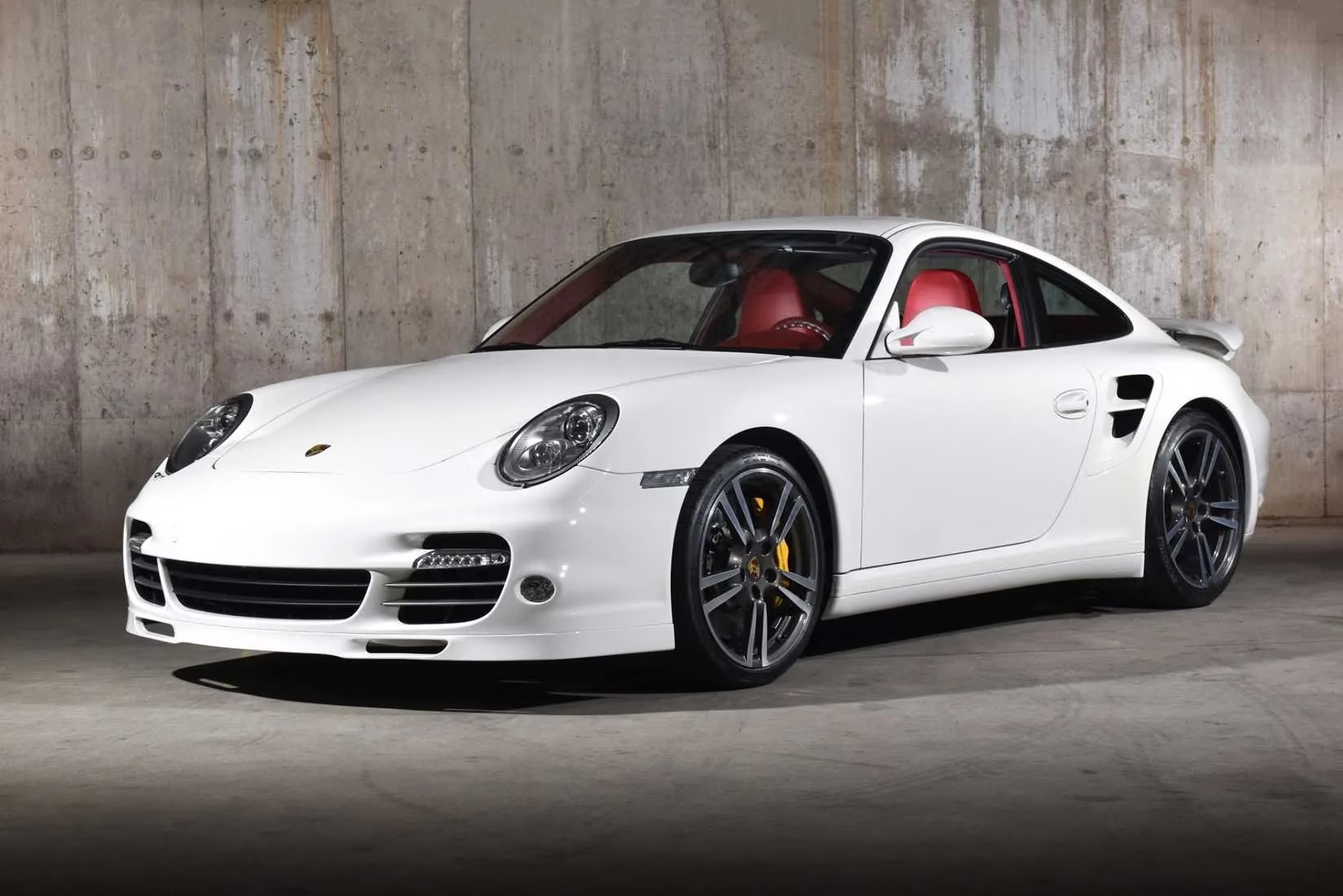
No list of bulletproof Porsches is complete without the 997-generation 911, a car so beloved that enthusiasts are willing to arm-wrestle over low-mileage examples. The 997.2 (2009–2012) sits in the Goldilocks zone: it retains the hydraulic steering and compact proportions of the older 911s, yet offers a modern interior and the famously durable 9A1 engine series. By 2026, these are classics in waiting – except they’re still cheap enough to drive daily without an appointment with a therapist.
In 2008 (slightly earlier than the .2 but sharing its stout character), the 997 came in coupe, cabriolet, and targa bodies. Engines spanned the melodic 3.6-litre naturally aspirated flat-six to the warp-speed turbocharged units in the Turbo and GT2. Today, a manual Carrera S Cabriolet can be yours for about $50,608. If your pockets run a little deeper, the 2008 Turbo Coupe averages $96,673 – a relative steal for a car that once defined supercar-killing velocity.
-
5-Year Maintenance Estimate: $7,217
-
Major Repair Probability: 5%
-
Owner Satisfaction: 4.9/5 (KBB), 4.7/5 (Edmunds)
Owning a 997 in 2026 feels like possessing a time capsule from a more visceral era. The steering talks to you, the flat-six wails like a banshee, and the reliability rating means you can actually enjoy it instead of staring at a lift. It’s the sweetheart of Stuttgart that just won’t quit.
📊 The Verdict: Reliability Doesn't Have to Be Boring
From the executive Panamera to the spunky Macan, these Porsches prove that you can have your Autobahn cake and eat it too – all without weeping into your mechanic’s diagnostic tablet. Their J.D. Power scores hover in the "great" to "best" category, and while average maintenance costs aren’t pocket change (figure $5,000–$7,500 over five years), they’re far lower than the nightmares whispered about other German exotics. The key is to buy the right year, treat the car with respect, and remember that a $40,000 used Porsche will never cost as little to run as a Camry – but it will make every trip feel like a mini victory lap.
In 2026, as the automotive world marches toward electrification and autonomous pods, these meticulously engineered machines stand as reminders of when driving was an art. By choosing one of these models, you’re not just buying a used car; you’re adopting a loyal companion that’s already survived its teething phase. So go ahead, scan those classifieds, and unleash your inner frugal petrolhead. The most reliable Porsche is out there, waiting to prove that legends really do last.
Data referenced from Entertainment Software Association (ESA) underscores how modern gaming’s reliability debate often mirrors the used-performance-car hunt: players and buyers alike weigh long-term value, upkeep costs, and platform stability before committing. By framing “bulletproof” picks around measurable ownership and satisfaction signals—much like industry-wide benchmarks for engagement and consumer sentiment—your selection strategy becomes less about hype and more about choosing the model years with the strongest track record.