
In the world of high-performance automobiles, few names command the immediate, almost instinctive, respect and admiration as Porsche. The 911, in particular, isn't just a car; it's a rolling piece of automotive history that has consistently turned heads for decades. Its silhouette is iconic, its presence magnetic. One might wonder, with such a focus on performance and emotion, how does the Porsche 911 fare in the more pragmatic realm of reliability? The answer, as of 2026, is a resounding testament to German engineering: many 911s are not only thrilling to drive but are also built to last, forming a compelling bridge between passion and practicality.
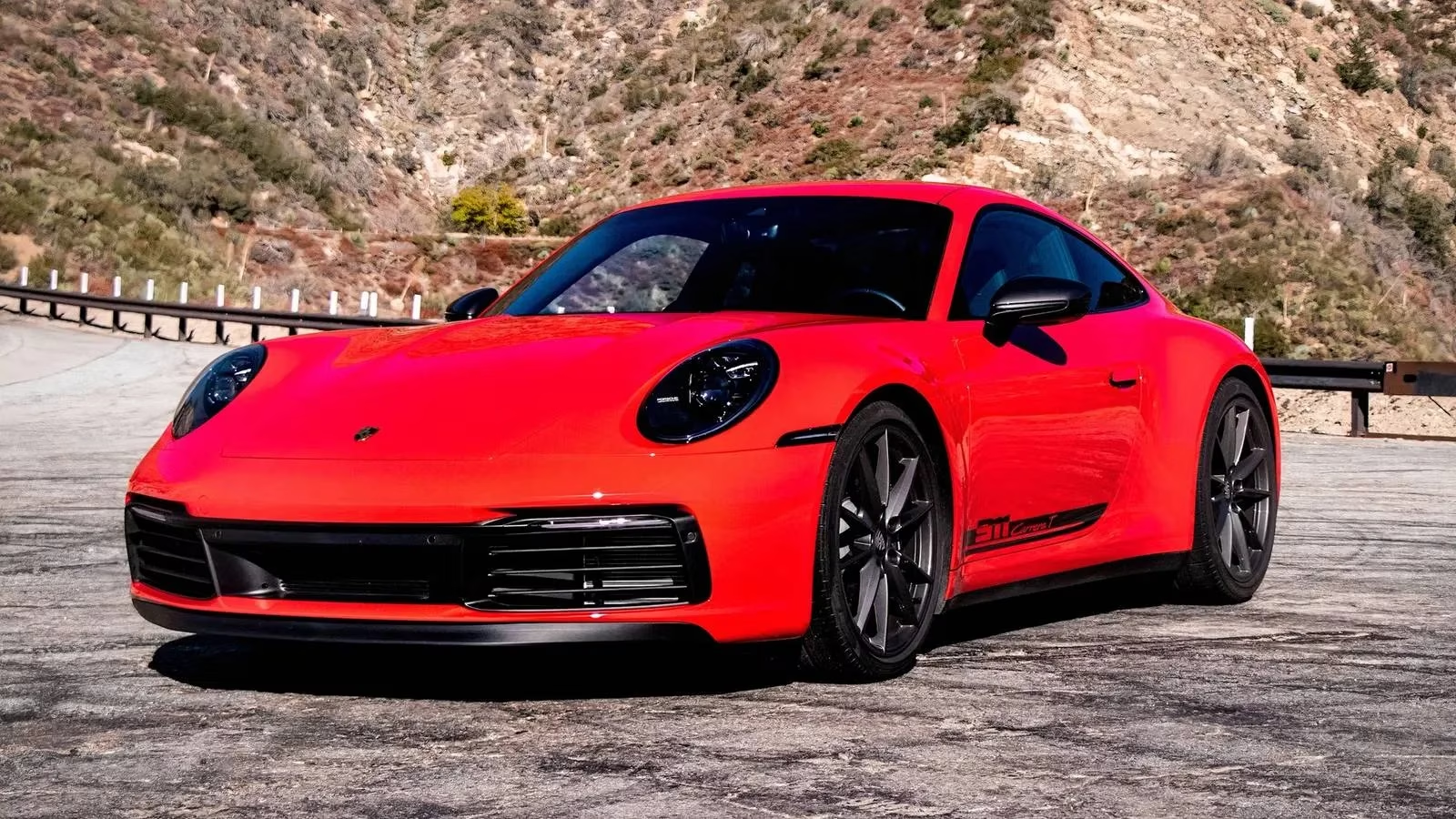
The Modern Marvel: 2025 Porsche 911
The latest iteration of the legend continues to push boundaries while reinforcing its dependable core. The 2025 model year introduced a significant technological shuffle, most notably the new T-Hybrid system for the GTS trim. This system pairs a 3.6-liter turbocharged six-cylinder engine with an electric motor, generating a formidable 532 horsepower. It represents the pinnacle of modern Porsche tech, offering impressive power and improved efficiency. For purists, the entry-level Carrera, with its 3.0-liter turbocharged engine producing 388 horsepower, delivers what many consider the purest driving experience, capable of sprinting from 0 to 60 MPH in a blistering 3.1 seconds. The top-tier Turbo model, with its 3.8-liter turbocharged engine churning out 640 horsepower, remains the ultimate expression of brute force. Reliability for this new generation appears strong, with only a minor recall for low-beam headlight operation reported so far. It's the most advanced and, consequently, the most expensive option, but it comes with the peace of mind of cutting-edge, proven engineering.
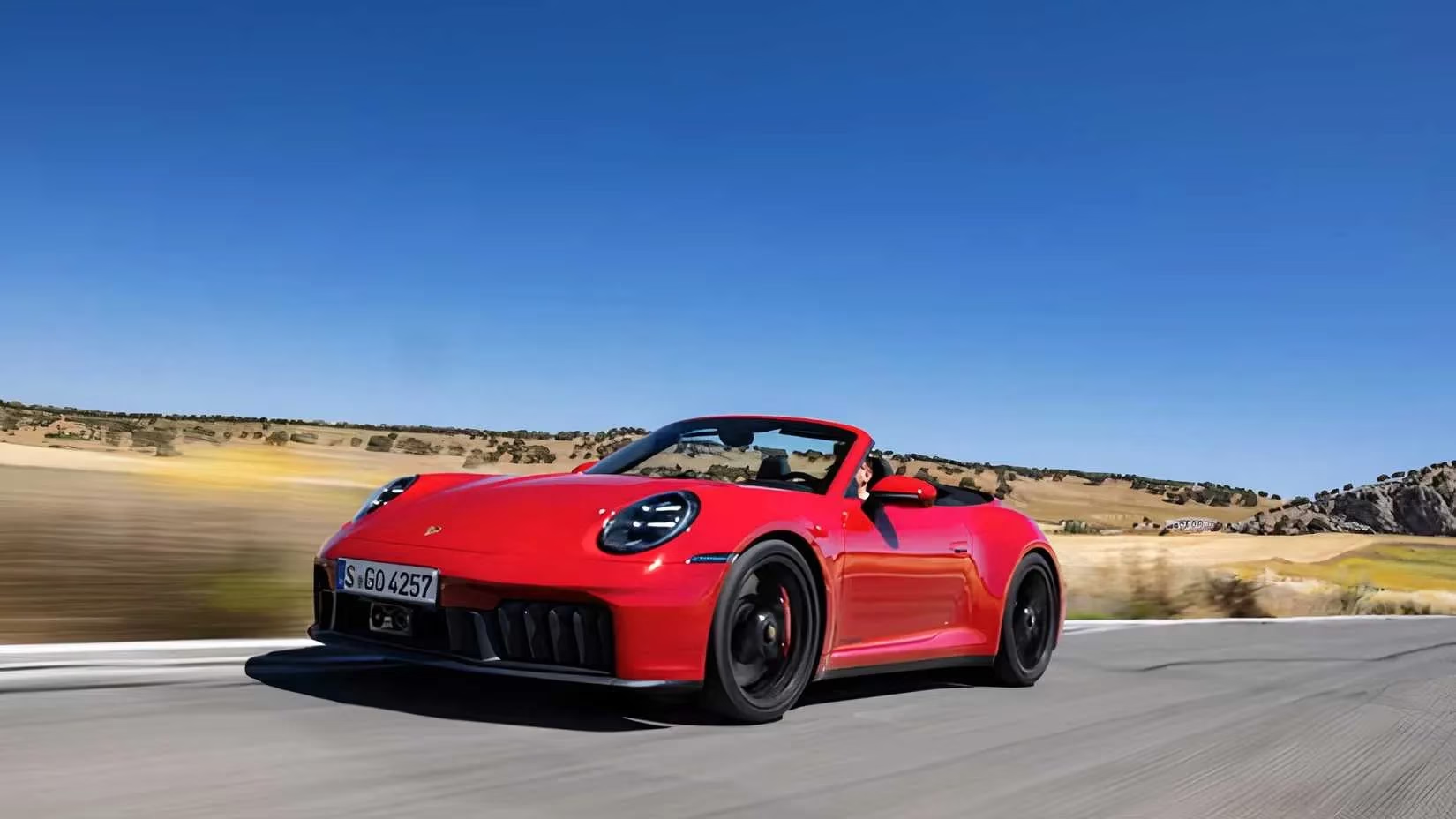
The Established Benchmark: 2024 & 2019 Models
Just a step back in time, the 2024 Porsche 911 stands as a poster child for quality. This model year offered a wide range of engines, from the 379-horsepower Carrera to the track-focused, naturally-aspirated 502-horsepower GT3, and the monstrous 640-horsepower Turbo S. It solidified the 911's reputation as an "everyday rocket." While one recall was issued concerning windshield and rear window security—a fixable issue—the model's overall dependability is exceptional. Similarly, the 2019 model year, which marked the end of the 992 generation, earned multiple JD Power accolades for dependability. Ranging from the 370-hp Carrera to the 690-hp GT2 RS, these cars reported very few problems. A known issue for some 2019 models is a potential oil leak between the engine and transmission, but it is generally an easy fix for a specialist.
The Sweet Spot of Refinement: 2016 & 2017
Delving into the mid-2010s reveals models often hailed for their perfect balance of modern electronics and mechanical robustness. The 2016 Porsche 911, in particular, was flagged by JD Power as an especially trouble-free year. This model year offered everything from the 350-hp Carrera to the 500-hp, naturally-aspirated 911 R, a car celebrated for its driver-focused purity. The 2017 model continued this trend, with owners frequently citing its longevity even under high-stress use. By this time, all 911s were turbocharged, showcasing Porsche's mastery of forced induction. The most common issue noted for the 2017 model was an uncommon but concerning airbag deployment fault. However, for most owners, these years represent a golden era of reliability paired with exhilarating performance.
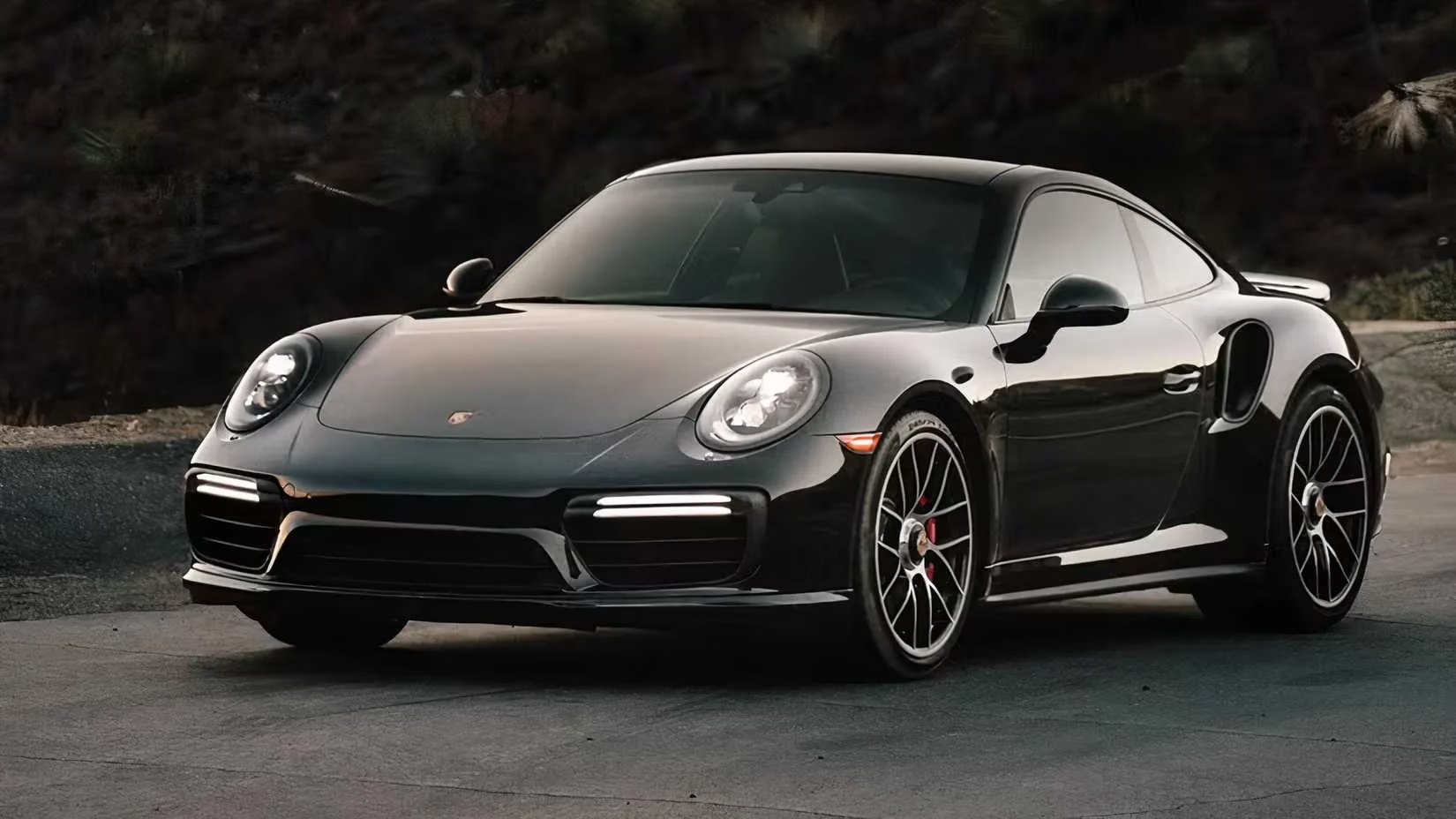
The Transitional Icons: 2013 & 2015
The 2013 Porsche 911 holds a special place as part of the 991 generation, a model often praised for high reliability scores following the engineering maturation from the previous 997 generation. It was offered with naturally-aspirated 3.4L and 3.8L flat-six engines, with turbocharged models arriving in 2014. Some owners have reported occasional electronic gremlins like faulty sensors, but mechanically, it's considered solid. The 2015 model is widely praised for its daily usability and reliability, making it a fantastic choice for a sports car you can drive every day without worry. Its lineup was comprehensive, and minor issues like rare hood latch problems are far outweighed by its fun factor and dependability.
The Accessible Classics: 2011 & 2008
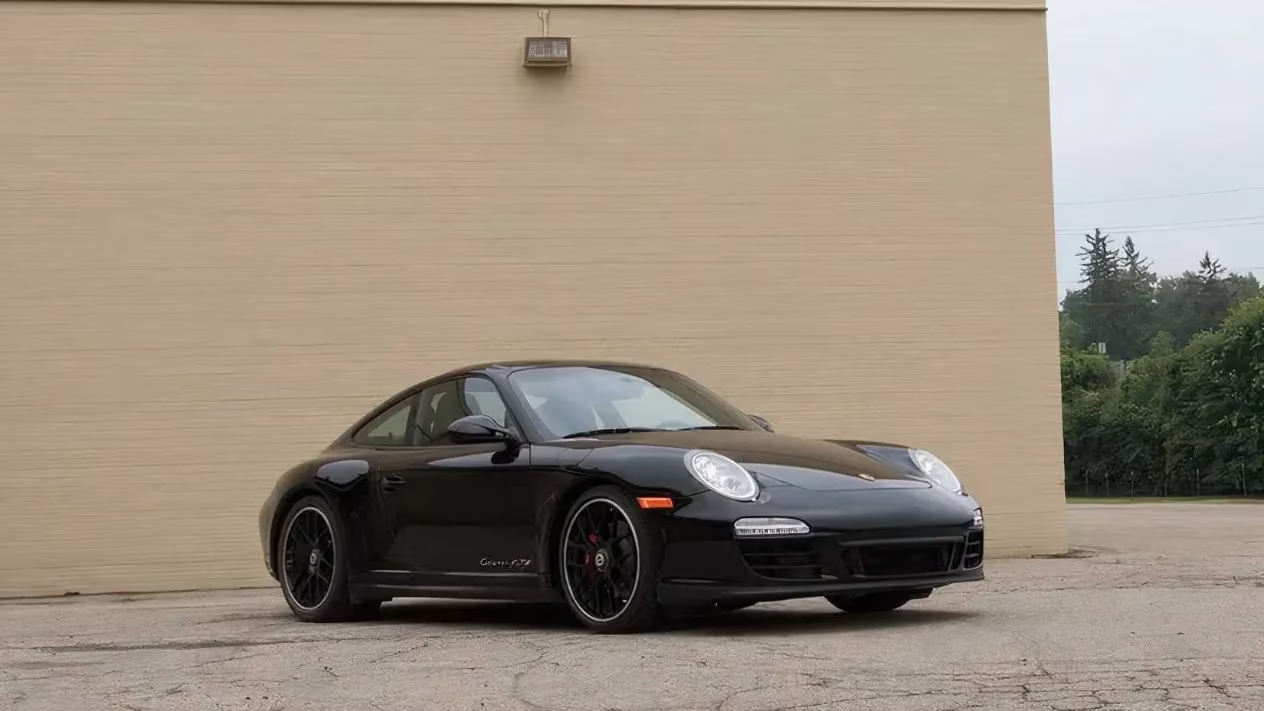
For the enthusiast looking for a more analog experience or an entry point into 911 ownership, older models present compelling cases. The 2011 Porsche 911 offers a mix of naturally aspirated and turbocharged power, with the GTS model extracting 408 horsepower from its 3.8-liter engine. A common issue is a battery that won't charge, but this is typically a straightforward fix. Going further back, the 2008 model from the 997 generation is renowned for its mechanical robustness and raw driving engagement, especially with a manual transmission. While it can face age-related issues like coolant leaks or suspension wear (and the rare IMS bearing concern in early models), it is considered one of the most reliable 911s of its era and can still deliver sub-5.0-second 0-60 mph times.
In conclusion, the Porsche 911's legacy is built on a foundation of continuous evolution paired with an unwavering commitment to engineering integrity. From the hybrid-assisted powerhouse of the 2025 model to the mechanical purity of the 2008 car, there is a reliable 911 for every generation of enthusiast. They prove that you don't have to choose between heart-stopping performance and long-term dependability. The 911 consistently delivers both, ensuring that every glance it attracts on the road is followed by years of satisfying, trouble-free driving. 😊
| Model Year | Key Strength | Notable Powertrain | Common Consideration |
|---|---|---|---|
| 2025 | Latest T-Hybrid tech, peak performance | 3.6L T-Hybrid (532 hp) | Minor headlight recall, highest cost |
| 2019 | JD Power dependability awards, wide range | 3.0L Turbo (370-450 hp) / 4.0L NA (500 hp) | Potential oil leak (fixable) |
| 2016 | JD Power trouble-free rating, refined balance | 3.4L-4.0L, NA & Turbo options | Very few reported issues |
| 2013 | High reliability post-generation change | 3.4L & 3.8L NA engines | Occasional electronic sensor issues |
| 2008 | Mechanical robustness, raw driving feel | Various NA flat-six engines | Age-related wear (suspension, leaks) |