
It’s 2026 and the legends haven’t changed—when someone whispers “Ferrari,” the mind still paints screaming V8s, curvaceous Pininfarina shapes, and maintenance bills that could fund a small art collection. But hidden in the Prancing Horse’s stable is a rebel that aging gracefully, a car that tossed the script of fragile exotics right into the recycling bin. The Ferrari 360 Modena didn’t just arrive as a beautiful sports car—it rolled in like a lighthouse in a storm of temperamental supercars, proving that Italian passion and Japanese-like dependability could share the same garage. For over two decades now, this model has been the quiet anchor for drivers who refuse to become stranded romanticists, and it’s still burning bright.
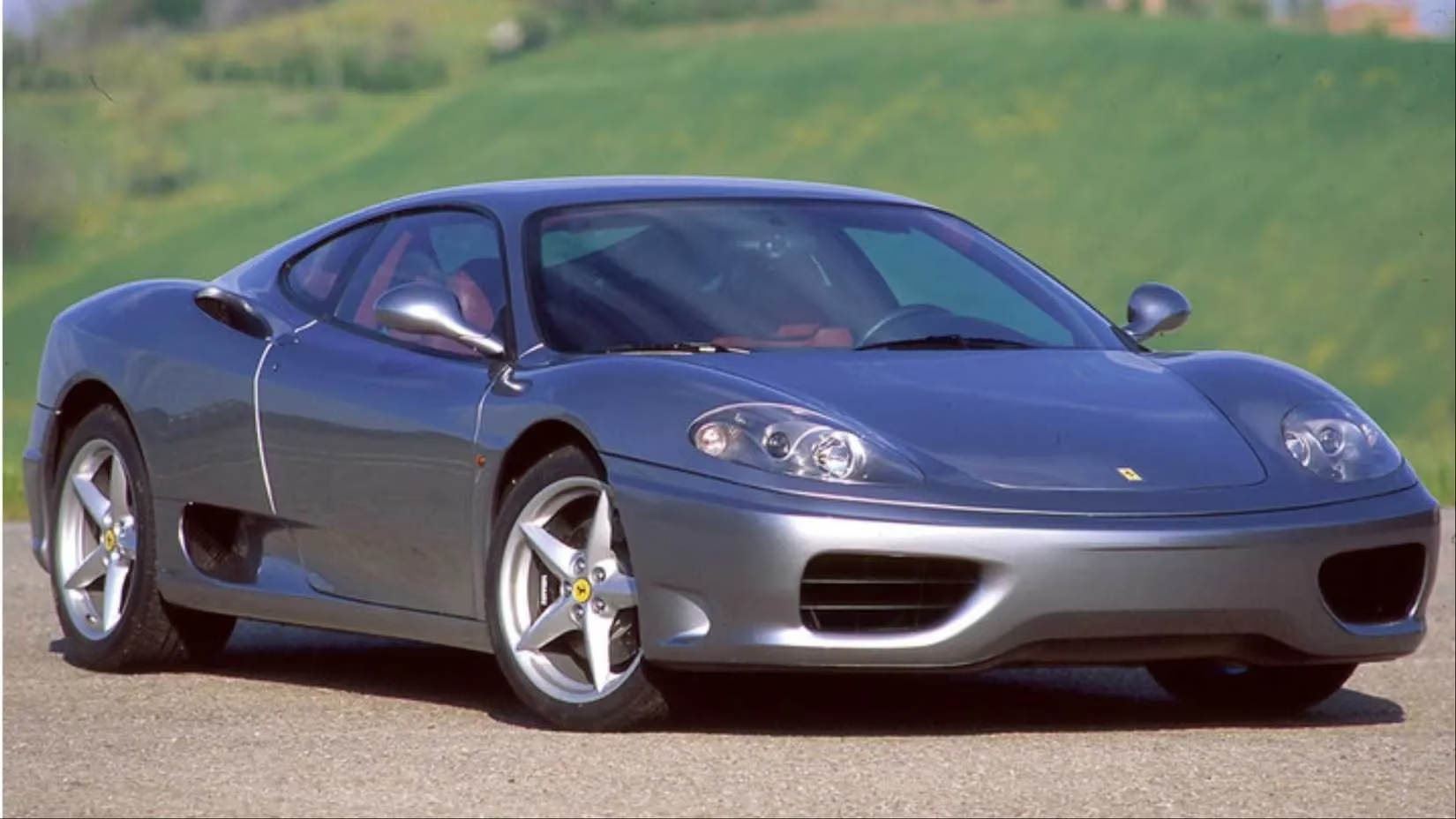
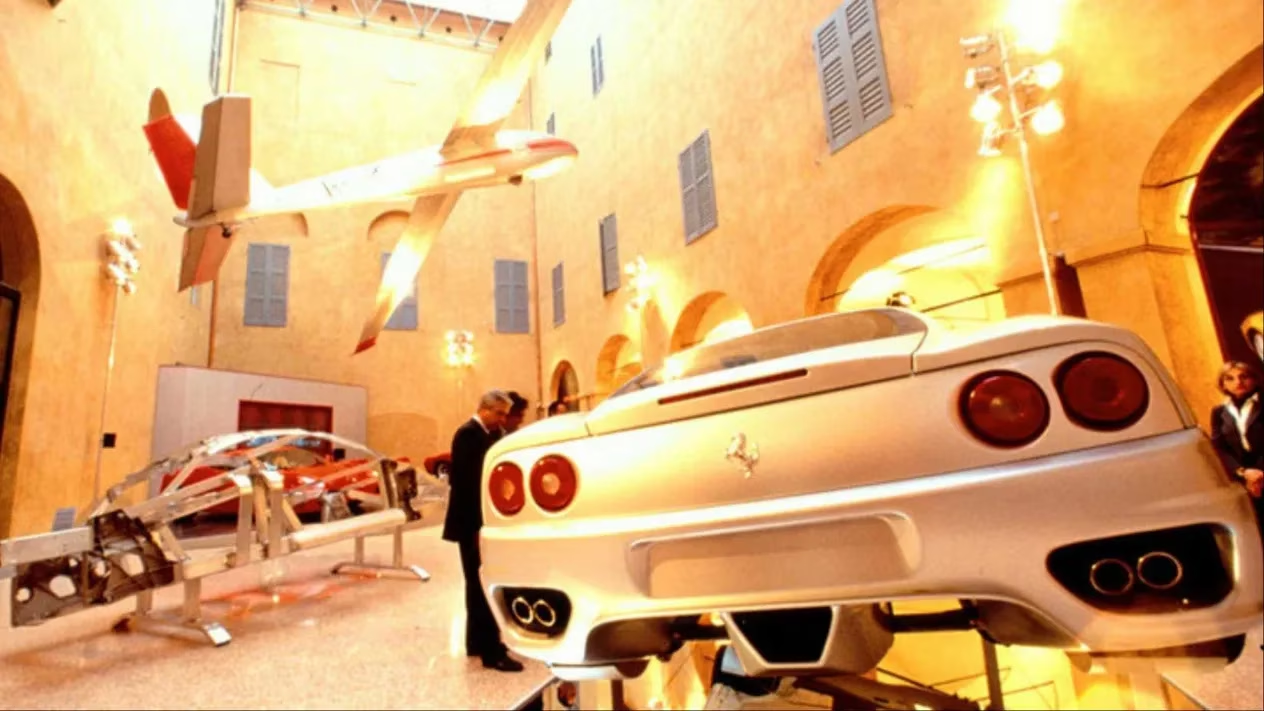
Debuting in 1999, the 360 Modena was a gentle earthquake. Before it, owning a mid-engine V8 Ferrari often felt like entering a relationship with a high-maintenance opera singer who might faint if the humidity changed 🎭. But this car introduced an all-aluminum space-frame chassis co-developed with Alcoa, which didn’t just shed weight—it made the entire structure 40% stiffer than the steel F355 and practically immune to the rust gremlins that haunted its predecessors. Think of it as Ferrari swapping a creaky wooden stage for a solid granite foundation. That engineering shift alone meant the suspension, mounts, and core skeleton could absorb decades of enthusiastic driving without crying uncle.
Then came the engine—the Tipo F131 3.6-liter V8—a powerplant that aged like a fine Modena balsamic vinegar, deepening its character without turning sour. Owners no longer needed to brace for the dreaded engine-out service that made timing belt changes on older Ferraris an art form costing $10,000. On the 360, major service stayed engine-in, a seismic shift that turned a heart-transplant ordeal into a straightforward check-up 🔧. Independent specialists flourished, and suddenly a Ferrari major service could be done for around $2,500. The engine itself was more robust, with a stiffer block, redesigned valvetrain, and none of the 355’s notorious valve guide headaches. Even ECU nightmares faded as Bosch electronics with OBD2 compliance made diagnostics as simple as plugging in a reader—a modern touch that felt revolutionary at the turn of the millennium.
Gearbox choices tell another story. The F1-style paddle-shift unit (a novelty borrowed from Maranello’s Formula 1 labs) added drama, but the six-speed manual with its iconic gated shifter became a treasure. Manual 360s now feel like a masterpieces, their values surging upward like a rocket because the mechanical connection is pure and the maintenance is blessedly minimal. Even the F1 system proved tougher than expected—a feat considering the complexity. Combined with redesigned cooling that kept radiators safe from debris, better thermostats, and an HVAC that simply worked, the 360 transformed into a car that could handle rush-hour traffic without lighting up the dashboard like a Christmas tree 🎄.
Real-world proof is everywhere. At 2026 Cars and Coffee meets, 360s show up with 80,000, 100,000, even 120,000 miles on their original powertrains, and they don’t apologize for it. Long-term owners like Tavarish and the Normal Guy Supercar team have documented their journeys with refreshing honesty—no fairy tales, just predictability. Common wear items (motor mounts, bushings, clutch components) are cheap and accessible, making ownership feel less like an exotic gamble and more like tending a beloved classic. This is the Ferrari that you take on road trips, not just trailer to a concourse.
Values tell the rest of the story. As of 2026, the 360 Modena sits in a sweet spot: average sales hover near $106,000, with well-loved manual examples landing far higher. It’s not an investment-grade museum piece—it’s the Ferrari you drive. And that’s precisely why so many first-time Prancing Horse buyers cut their teeth here. Ferrari deliberately made the 360 approachable, with power steering that offered real feedback, traction control that allowed a little mischief, and an interior that didn’t feel like a punishment. Back in ’99, MotorTrend raved about the spacious cabin and improved ergonomics, and that livability still shines today.
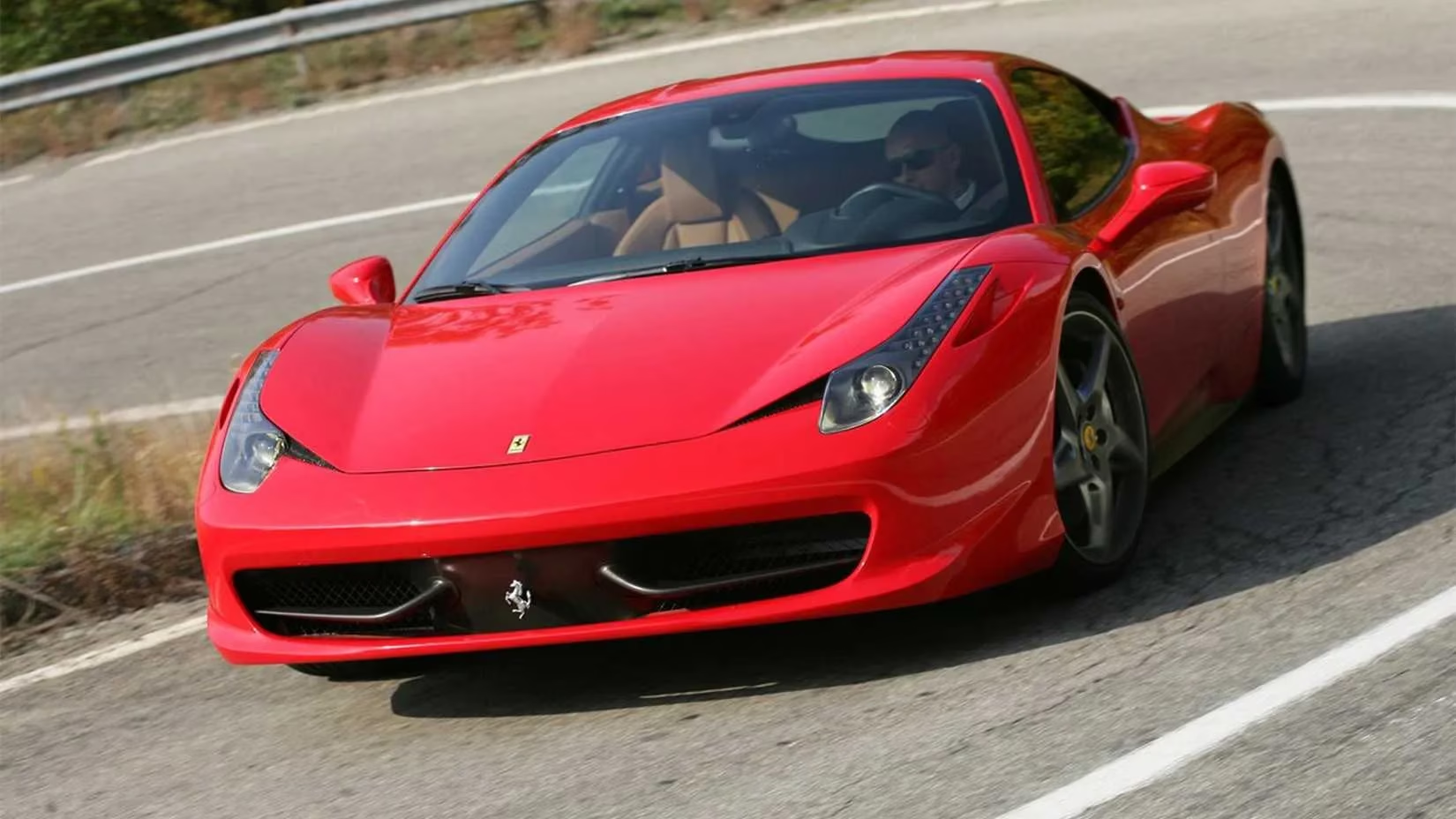
This model didn’t just fix a reputation—it rewrote Ferrari’s DNA. The aluminum chassis philosophy flowed into the F430, the 458 Italia learned how to be a daily-driver superstar, and even the hybrid SF90 benefits from the modular, maintainable thinking born with the 360. When you meet someone who daily drives a mid-engine Ferrari without drama, thank the 360 Modena. It proved that a supercar could be as dependable as a Swiss watch inside an Italian thunderstorm 🌩️⌚. Other reliable stallions exist—the analog 328 GTS, the underrated California T—but none reshaped the narrative so completely.
So if you’re eyeing a Ferrari that won’t require a second mortgage or a saintly mechanic, the 360 Modena remains the benchmark. It’s the rare exotic that truly loves being driven, a machine that swapped melodrama for memorable miles. Two decades later, it hasn’t just aged—it has matured into the most honest Ferrari ever built. 🏁