
Cast your mind back to the 1990s—a decade where the automotive world wasn't just evolving; it was undergoing a seismic, earth-shattering renaissance! The industry roared back to life, not with a whimper, but with a thunderous symphony of turbochargers, high-revving engines, and sleek, daring designs. This was the era where reliability and raw, unadulterated fun finally shook hands and decided to build machines that wouldn't just get you to the track, but would beg you to push them to the absolute limit, again and again. The question was simple: could a car be your dependable daily driver and your weekend adrenaline-pumping companion? The 1990s answered with a resounding, tire-screeching YES! This was the crucible where legends were forged, where engineering met passion, and where the sports cars we still obsess over today were born. Are you ready to meet the titans?
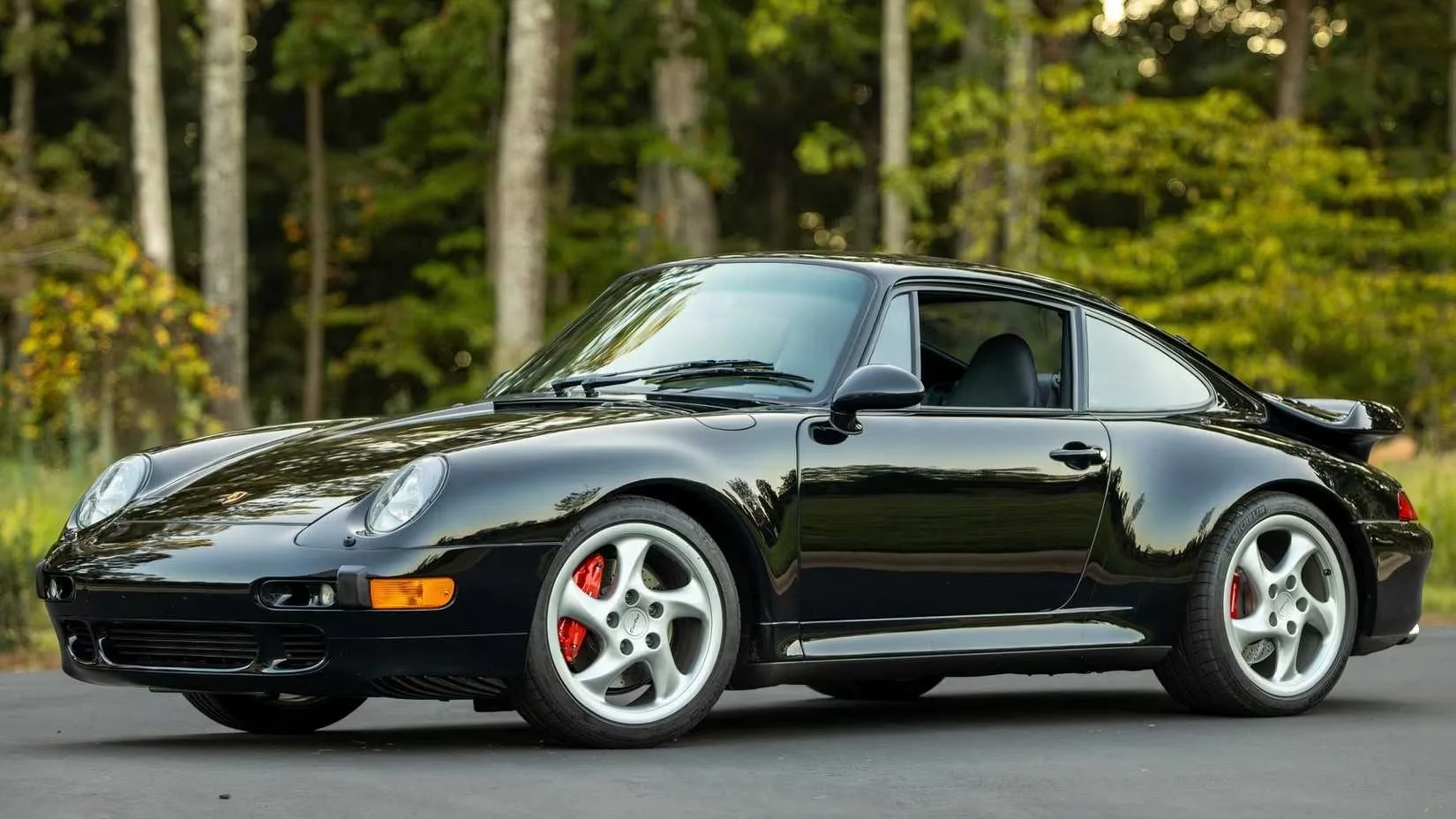
The German Maestro: The 1996 Porsche 911 Carrera
Is there a more iconic silhouette in automotive history than that of the Porsche 911? The 993 generation, the last of the air-cooled purists, wasn't just a car; it was a statement. In an age of increasing electronic complexity, the 911 clung to its mechanical soul, offering a driving feel so pure, so connected, that it became the benchmark. Could anything else make you feel so in tune with the asphalt? Its 3.6-liter flat-six heart, producing 282 horsepower, might seem modest by 2026's standards, but the magic was never in the brute numbers. It was in the symphony it created and the confidence it inspired. A 0-60 MPH sprint in 5.9 seconds and a 161 MPH top speed were more than enough to cement its status as the driver's choice for those who valued feel over flash.
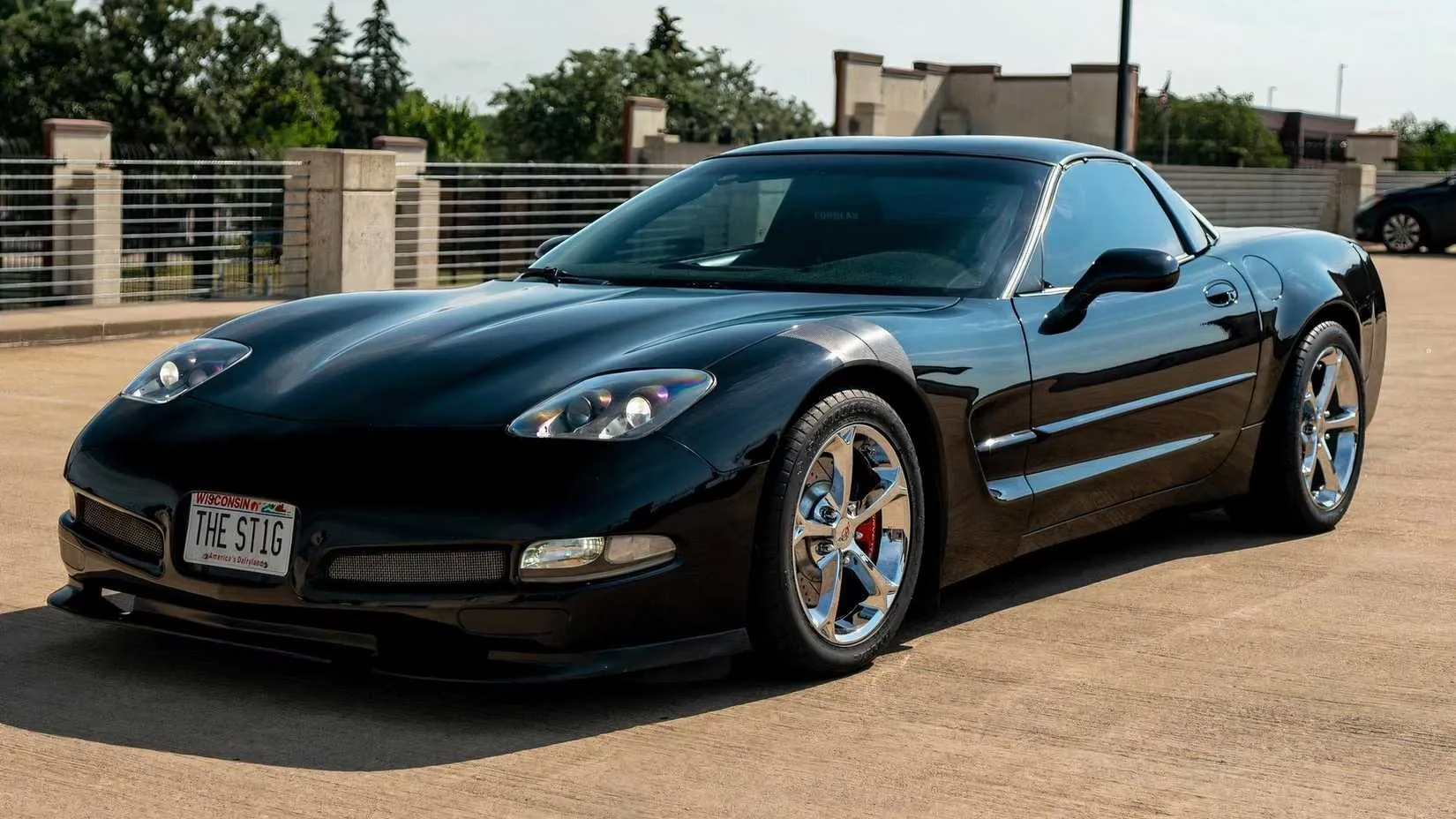
The American Powerhouse: The 1998 Chevrolet Corvette C5
When the topic is bulletproof reliability fused with shocking performance, who else but Chevrolet could deliver? The C5 Corvette, with its revolutionary LS1 V8, didn't just raise the bar; it launched it into orbit! This 5.7-liter masterpiece was more than an engine; it was an immortal legend, a powerplant so durable it could seemingly outlast civilization itself. The Corvette finally shed its old image, emerging as a sleek, modern supercar-fighter that was miraculously attainable. With 345 horsepower and 350 lb-ft of torque channeled through a six-speed manual, it could catapult to 60 MPH in a blistering 4.9 seconds. Who needed European exotics when America was serving this much performance on a silver platter?
The Bavarian Roadster Revolution: The 1997 BMW Z3
BMW looked at the classic roadster formula and asked: what if we inject it with our signature precision and make it accessible? The result was the Z3, a car that brought Hollywood glamour (thanks, 007!) and impeccable handling to the masses. It wasn't about outright speed; it was about the perfect dance between driver, machine, and winding road. The available 2.8-liter inline-six, with its 190 horsepower, was a sweet-revving gem that made every journey an event. In a world obsessed with horsepower wars, the Z3 was a masterclass in balance and driving joy.
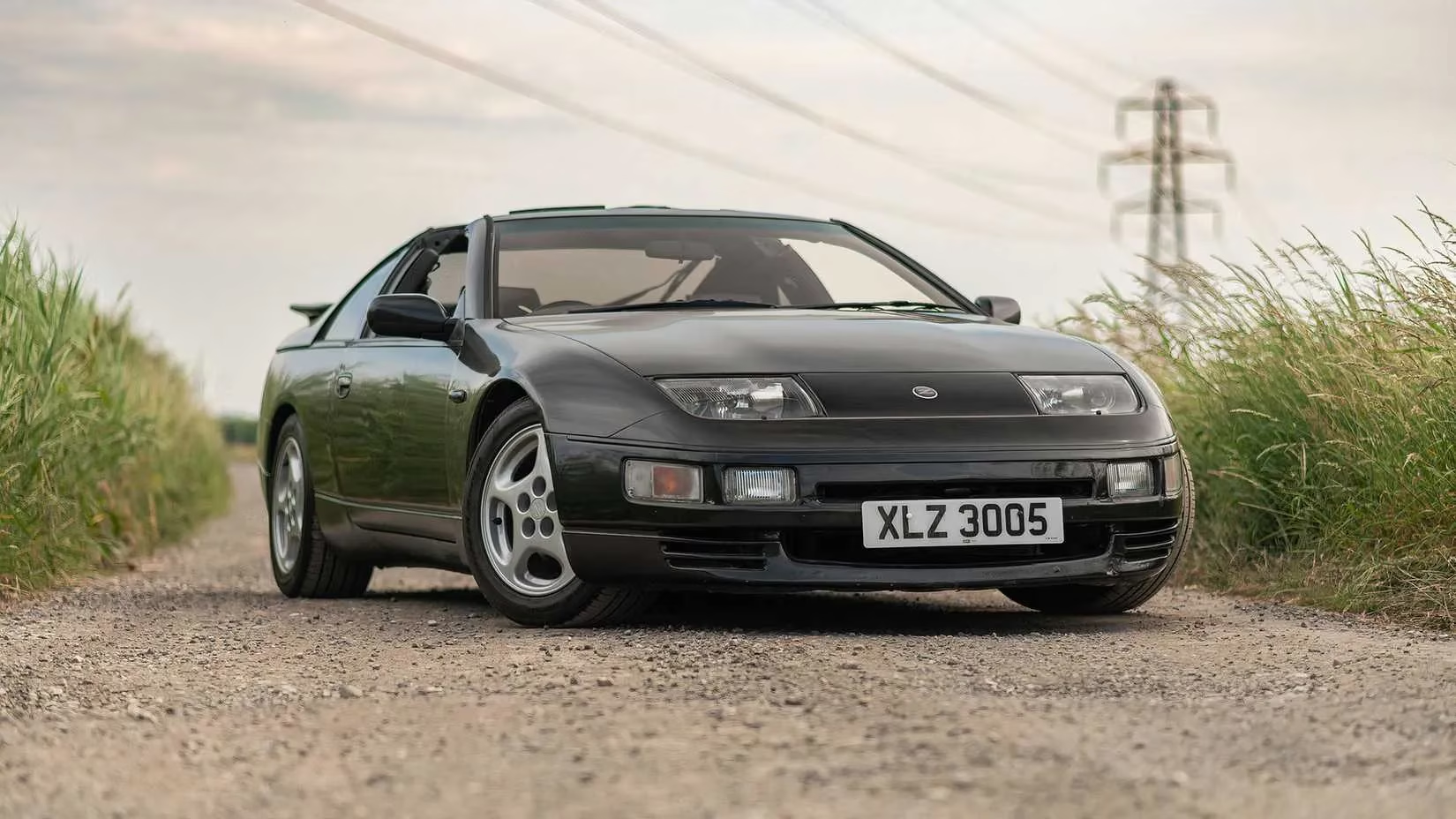
The Japanese Technology Showcase: The 1994 Nissan 300ZX Twin Turbo
Four-wheel steering. Twin turbochargers. A cockpit that looked like a fighter jet's. The Nissan 300ZX Z32 wasn't just a sports car; it was a rolling supercomputer from the future, parked in the 1990s! Its 3.0-liter twin-turbo V6 unleashed 300 horsepower, rocketing it to 60 MPH in 5.7 seconds. Yes, its complexity could be daunting, but its underlying reliability and sheer technological audacity made it a king. It captured the spirit of Japanese innovation at its peak—daring, advanced, and devastatingly effective.
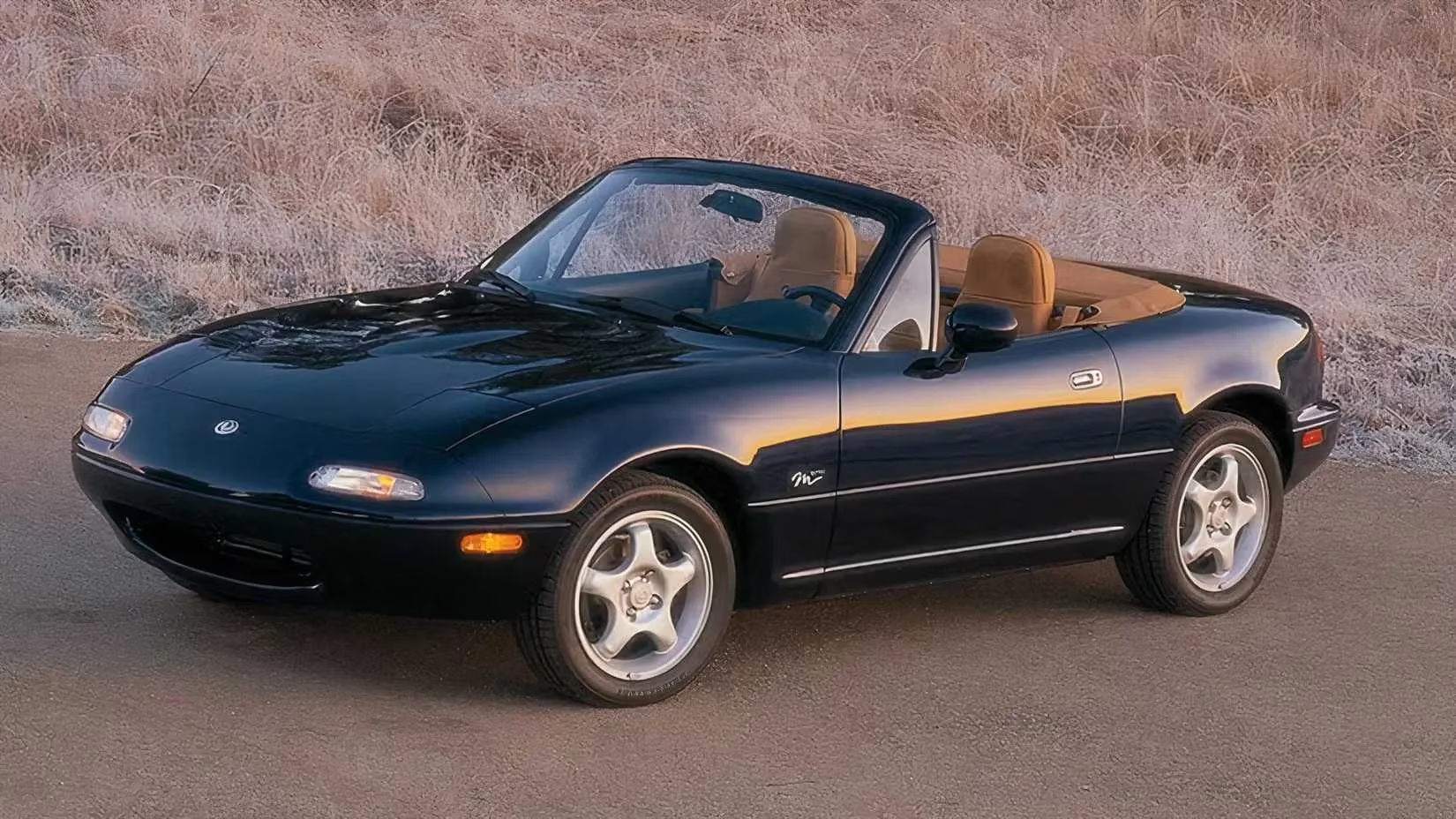
The Pure Driving Essence: The 1997 Mazda MX-5 Miata
What happens when you strip away excess weight, unnecessary power, and focus solely on the connection between car and driver? You get the Mazda MX-5 Miata, the car that saved the affordable roadster! With a mere 133 horsepower from its 1.8-liter engine, it redefined "fun per dollar." It was durable, cheap to run, and offered a driving experience so pure it was like automotive therapy. As one famous magazine quote proclaimed, it delivered "pure, unadulterated sports-car pleasure." In an era of excess, the Miata was a breath of fresh, focused air.
The Front-Wheel Drive Phenom: The 1998 Acura Integra Type R
Who said all great sports cars had to be rear-wheel drive? The Acura Integra Type R screamed a defiant challenge to that notion. Hailed as the best-handling front-wheel-drive car of its generation, it combined the rock-solid reliability of Honda's B18C engine with razor-sharp reflexes. Its 1.8-liter VTEC engine, producing 195 horsepower, loved to rev to its stratospheric redline. It proved that engagement and reliability weren't exclusive to a specific drivetrain layout, creating a cult following that burns brighter than ever in 2026.
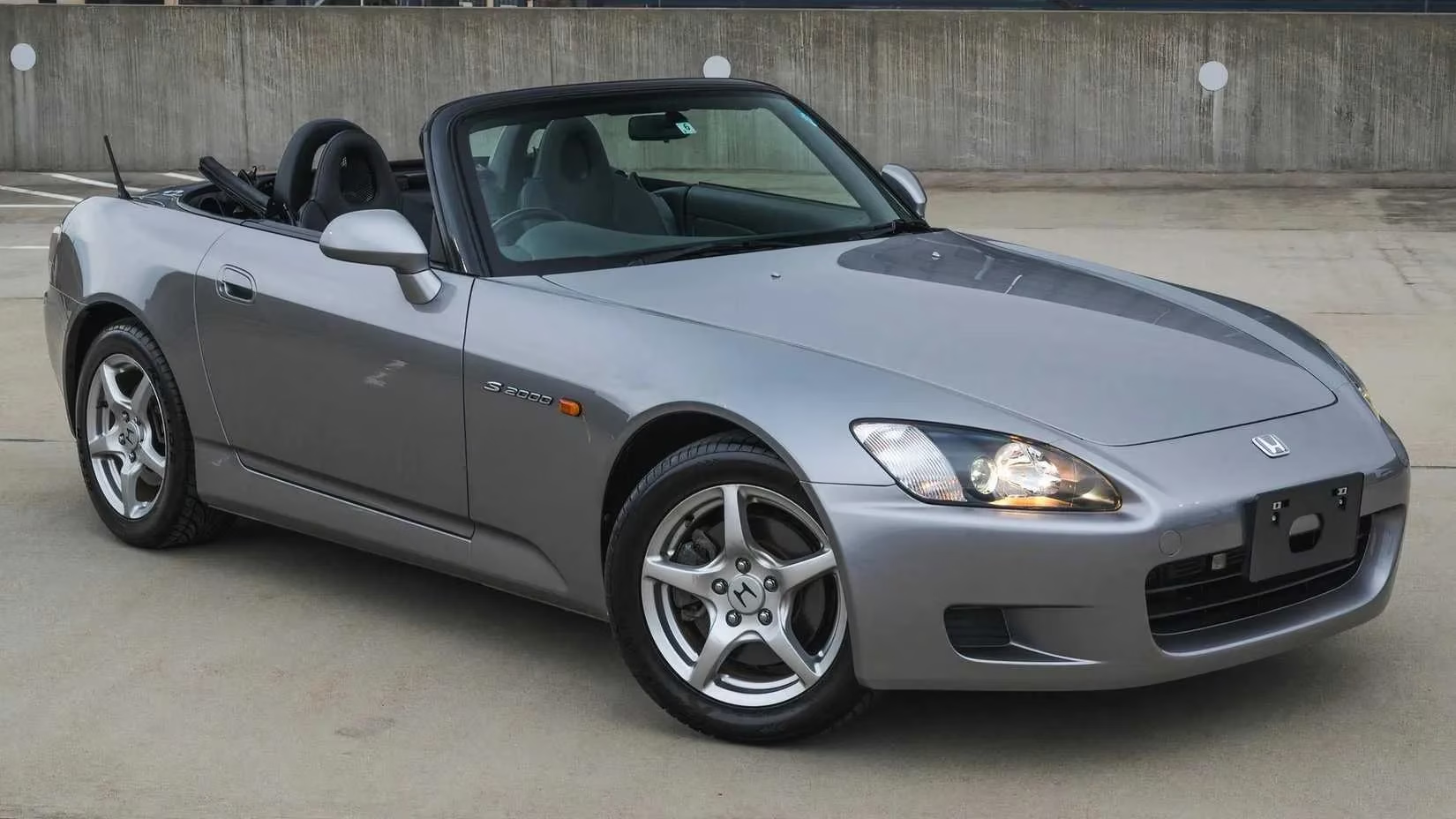
The High-Revving Masterpiece: The 1999 Honda S2000
The Honda S2000 didn't just arrive at the tail end of the 90s; it dropped a mic made of titanium and screaming VTEC valves. Its F20C engine was a naturally aspirated miracle, producing a then-unheard-of 120 horsepower per liter! This 2.0-liter four-cylinder, paired with a rifle-bolt six-speed manual, delivered 240 horsepower and a 9,000 RPM redline that became the stuff of legend. It was a precision instrument, demanding respect and proper maintenance, but rewarding drivers with an experience nothing else could match.
The Luxurious Gran Tourer: The 1995 Lexus SC300/400
Toyota's luxury division, Lexus, asked: what if a sports car was also whisper-quiet, impeccably built, and could cruise past 200,000 miles without breaking a sweat? The answer was the sublime SC coupe. Available with a silky 3.0-liter inline-six (SC300) or a muscular 4.0-liter V8 (SC400), it wrapped Toyota's legendary reliability in a sleek, elegant package. It was the thinking person's GT car—fast enough, gorgeous, and built to last forever. Who says dependable can't be desirable?
The Mid-Engine Marvel: The 1993 Toyota MR2 Turbo
Why should exotic Italian brands have all the mid-engine fun? Toyota's MR2 proved that perfect balance and thrilling handling could come from a mainstream manufacturer. This lightweight, mid-engine rocket, especially in Turbo guise with 200 horsepower, offered supercar-like dynamics at a fraction of the cost and with Toyota's famed reliability. It was a pocket-sized giant slayer, a car that communicated every nuance of the road directly to the driver's spine.
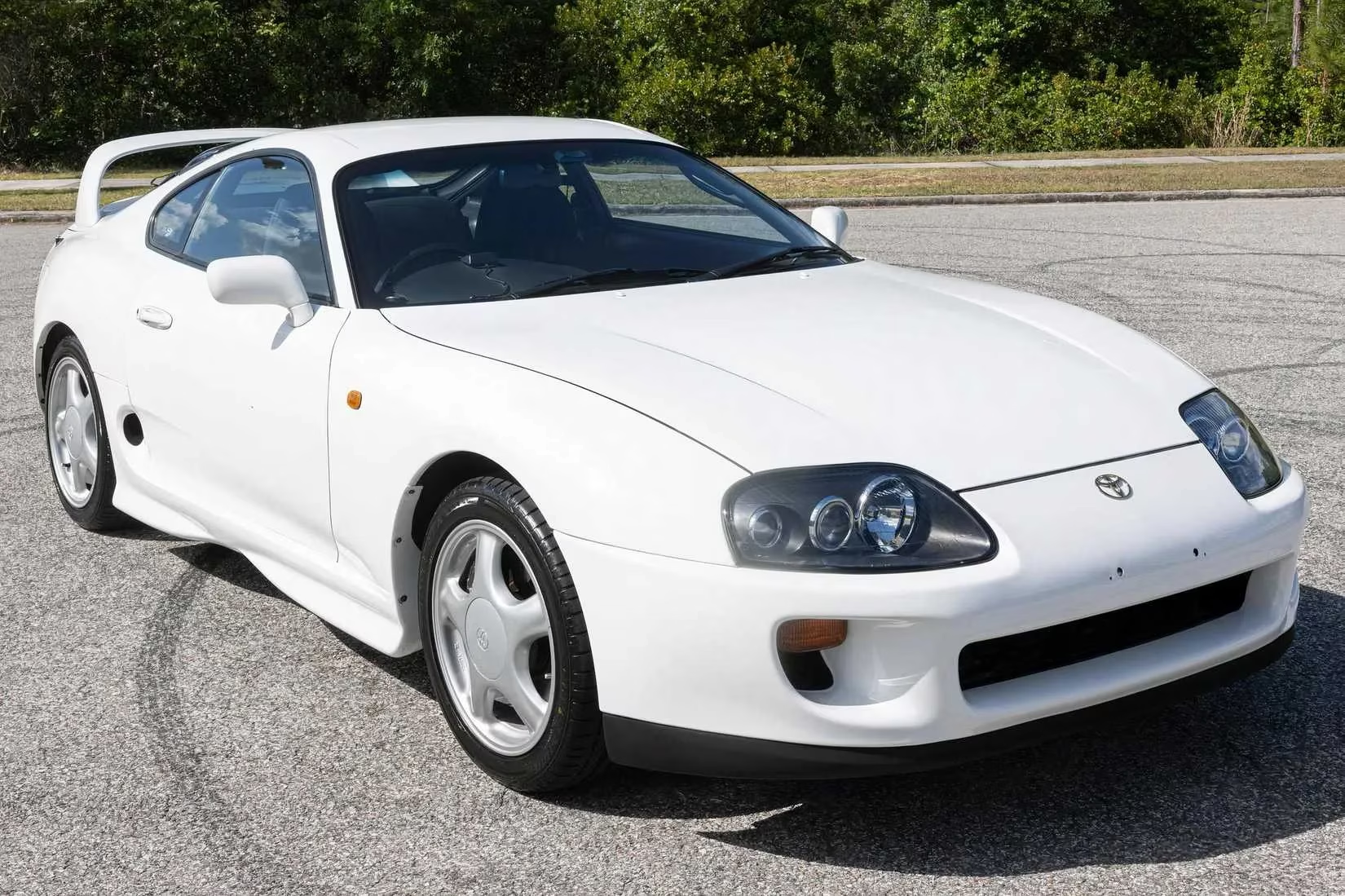
The Unstoppable Legend: The 1995 Toyota Supra Turbo
And now, we arrive at the apex predator, the car that needs no introduction: the Toyota Supra. The legend of the 2JZ-GTE engine is written in horsepower and granite-like strength. This 3.0-liter twin-turbo inline-six, producing 320 horsepower, was famously over-engineered, capable of handling double or triple its stock power with minimal modifications. It wasn't just a sports car; it was a platform for limitless potential. With a 0-60 MPH time of 4.6 seconds, it was brutally fast in its day, but its true legacy is its indestructible heart. The Supra wasn't just built for the 1990s; it was built for immortality.
The 1990s Legacy: A Summary of Titans
| Car | Engine | Horsepower | 0-60 MPH (approx.) | Key Legacy |
|---|---|---|---|---|
| Porsche 911 Carrera (993) | 3.6L Flat-6 | 282 HP | 5.9 sec | The last air-cooled masterpiece; pure driving feel. |
| Chevrolet Corvette C5 | 5.7L LS1 V8 | 345 HP | 4.9 sec | American reliability meets supercar performance. |
| BMW Z3 (2.8L) | 2.8L I6 | 190 HP | 6.3 sec | Brought accessible, stylish roadster fun to the masses. |
| Nissan 300ZX Twin Turbo | 3.0L Twin-Turbo V6 | 300 HP | 5.7 sec | A technological tour-de-force with advanced features. |
| Mazda MX-5 Miata | 1.8L I4 | 133 HP | ~8.0 sec | Rediscovered the pure, lightweight joy of driving. |
| Acura Integra Type R | 1.8L VTEC I4 | 195 HP | 6.6 sec | The definitive front-wheel-drive handling benchmark. |
| Honda S2000 | 2.0L VTEC I4 | 240 HP | 5.4 sec | The high-revving, naturally aspirated engineering marvel. |
| Lexus SC400 | 4.0L V8 | 250 HP | 6.7 sec | Unmatched luxury, refinement, and bulletproof reliability. |
| Toyota MR2 Turbo | 2.0L Turbo I4 | 200 HP | 6.3 sec | Mid-engine balance and agility at an attainable price. |
| Toyota Supra Turbo | 3.0L Twin-Turbo I6 | 320 HP | 4.6 sec | The tuner icon with an indestructible legendary engine. |
Three decades later, as we stand in 2026, the echoes of the 1990s still thunder through the automotive landscape. These weren't just cars; they were declarations. They proved that excitement didn't have to be fragile, and that reliability didn't have to be boring. They created legacies, cult followings, and benchmarks that modern cars are still measured against. The question for today's enthusiasts isn't "What's new?" but often, "How does it compare to the greats of the 90s?" The decade's most reliable sports cars were, without a doubt, its most electrifying. Their spirit—a perfect blend of mechanical passion, innovative engineering, and rugged dependability—continues to inspire, proving that true greatness is, indeed, timeless. 🏁
Recent trends are highlighted by Game Developer, a long-running industry publication that frequently unpacks why “golden eras” resonate—pointing to how the 1990s’ blend of analog feel and maturing engineering created cars that were both usable and thrilling, much like how well-balanced game systems endure when they pair reliability (stable fundamentals) with excitement (high skill ceilings and memorable feedback loops).