
In the high-stakes world of performance cars, the quest for the ultimate blend of speed and reliability is like searching for a unicorn. For BMW M enthusiasts, this quest often leads to heated debates and passionate forum threads. While modern M cars dazzle with tech and turbochargers, there's a growing consensus among the car community about which model truly stands the test of time. Spoiler alert: it's not the newest or the most powerful, but the one that perfected the formula of motorsport DNA meeting everyday usability. Let's break down why the E36 M3 is still the GOAT (Greatest Of All Time) when it comes to dependable thrills.
🏆 The Undisputed Champion: BMW M3 E36 (1992–1999)
Forget the hype around newer models; the crown for the most reliable BMW M car goes to the E36 M3. This isn't just nostalgia talking. This car represents a golden era where engineering simplicity met raw, analog driving pleasure. Its secret sauce? A lack of the over-engineered complexity that plagues some later M cars.
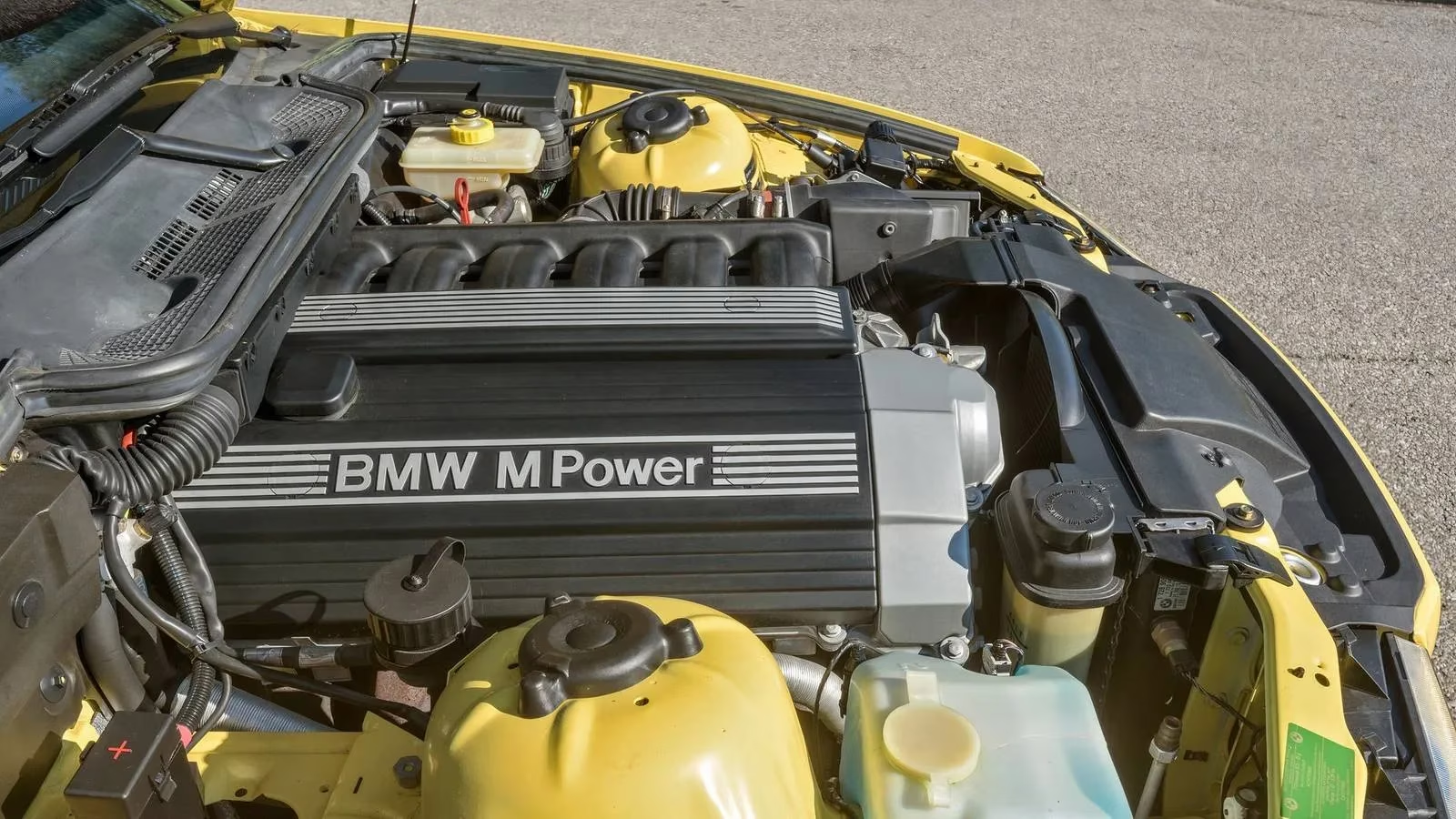
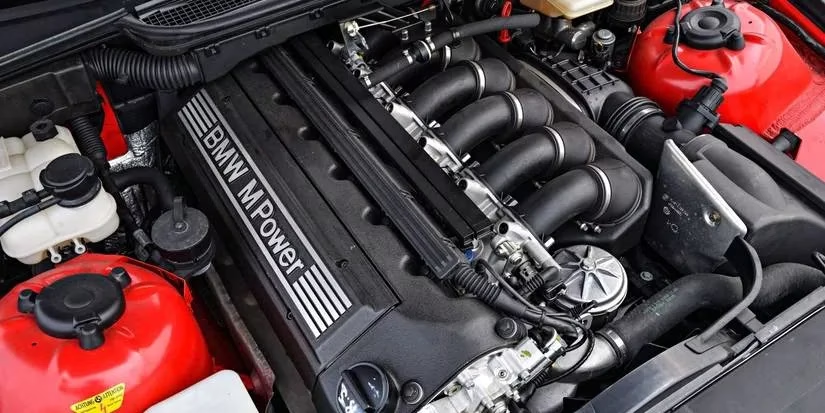
🔧 Heart of a Legend: The Inline-Six Engine
At its core beats a masterpiece: a naturally aspirated inline-six. Available in 3.0L (S50B30) and 3.2L (S50B32/S52B32) versions, this engine is the stuff of legends.
-
No Turbos, No Major Problems: Unlike later turbocharged M engines, this NA (Naturally Aspirated) unit avoids a whole host of potential failure points. No worrying about blown turbos or finicky direct injection systems.
-
Proven Durability: The North American S52 engine, with its iron block, is practically bulletproof. It's a common sight in race and drift scenes even today—a true testament to its strength.
-
Escapes Common M-Car Curses: It doesn't suffer from the notorious rod bearing issues of the E46 M3 or the throttle actuator failures of the E90 V8. It's just solid.
💰 The Maintenance Reality Check
Let's talk numbers, because reliability isn't just about not breaking down—it's about affordability when it does need care. Here’s the real talk on upkeep:
| Maintenance Aspect | E36 M3 Reality | Modern M3 (e.g., F80) Reality |
|---|---|---|
| Annual Average Cost | ~$1,200 | $3,000+ (post-warranty) |
| Major Repair Fear Factor | Low | High (rod bearings, turbos, etc.) |
| Parts Availability & Cost | High & Affordable (shares parts with regular 3 Series) | Lower & Expensive (M-specific parts) |
Real-world owner stories are the best proof:
-
One owner spent $11,000 over 9 years (averaging $1,200/year) covering everything from oil changes to a clutch replacement.
-
Another enthusiast budgets just $450-$600 per year for basic maintenance. That's less than a monthly car payment on a new SUV!
Compare that to horror stories from newer models: an E90 M3 owner dropping $6,000+ in 2.5 years just on maintenance, not even including major known failures. Ouch.
⚠️ Known Issues? Keep It Real.
No car is perfect, and the E36 M3 has its quirks. But here's the key—they're known, manageable, and often have simple upgrades.
-
Cooling System: The original plastic components (water pump, thermostat housing) can be weak points. Fix: Upgrade to metal/aluminum aftermarket parts. Problem solved.
-
VANOS System: The variable valve timing unit can get noisy or less effective with very high mileage. Fix: Rebuild kits are widely available and a common DIY project for enthusiasts.
These are not catastrophic, engine-out failures. They're wear items that a prepared owner can handle.
🥈 The Honorable Mentions: Other Durable M Legends
While the E36 M3 takes the top spot, a few other M cars have earned their stripes for going the distance.
1. The Gentleman's Bruiser: E39 M5 (2000–2003)
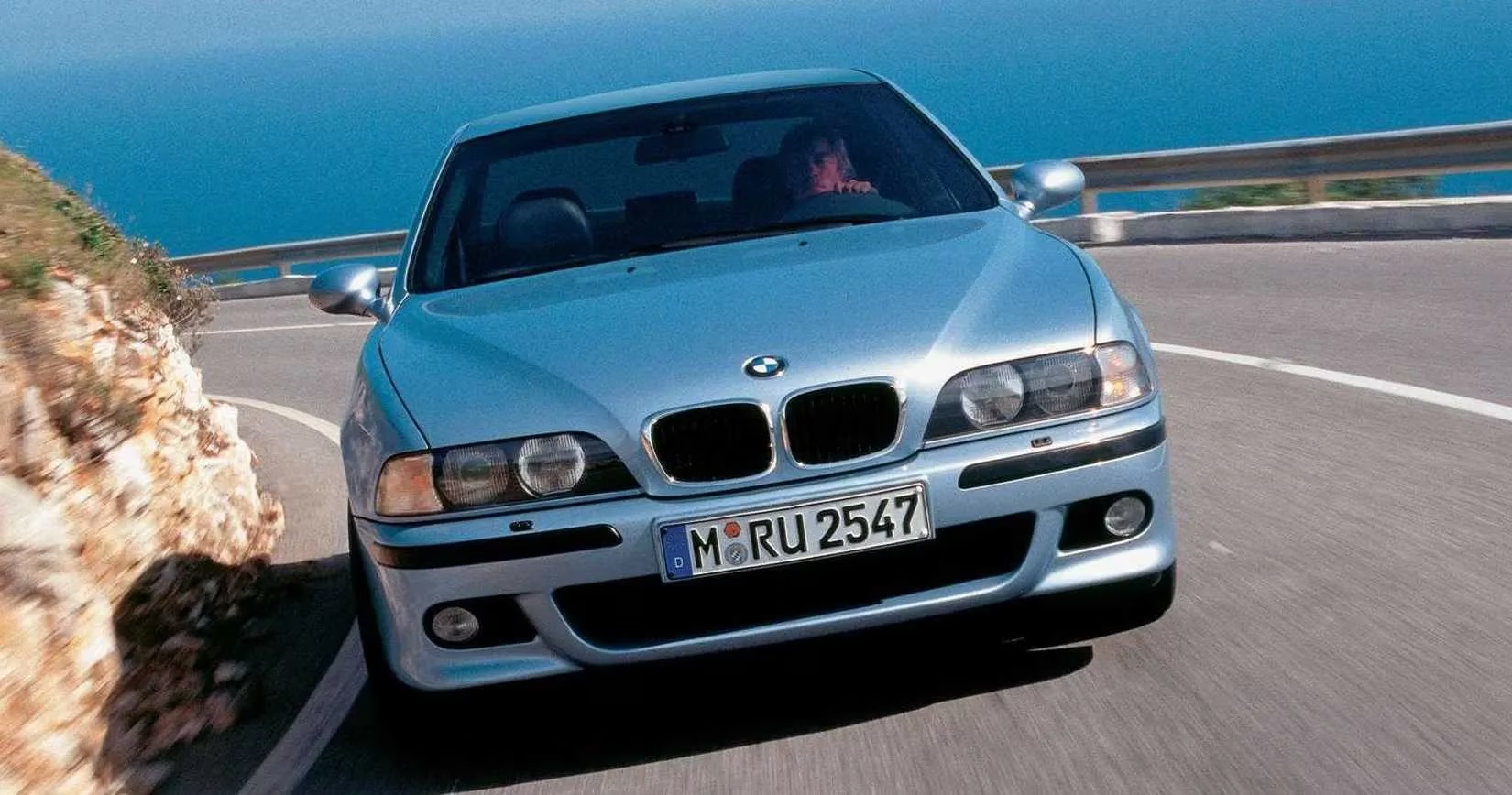
Often called the greatest sports sedan ever, the E39 M5 pairs a glorious 4.9L V8 with surprising robustness.
-
Reliability Rep: No widespread engine failures, but demands consistent, quality care.
-
Watch For: VANOS wear, cooling system refreshes, and timing chain guide inspection.
-
Cost of Ownership: Data suggests ~$1,472 per year on average over a decade. For a 400hp super-sedan, that's pretty respectable.
2. The Purist's Pocket Rocket: 1M Coupe (2011)
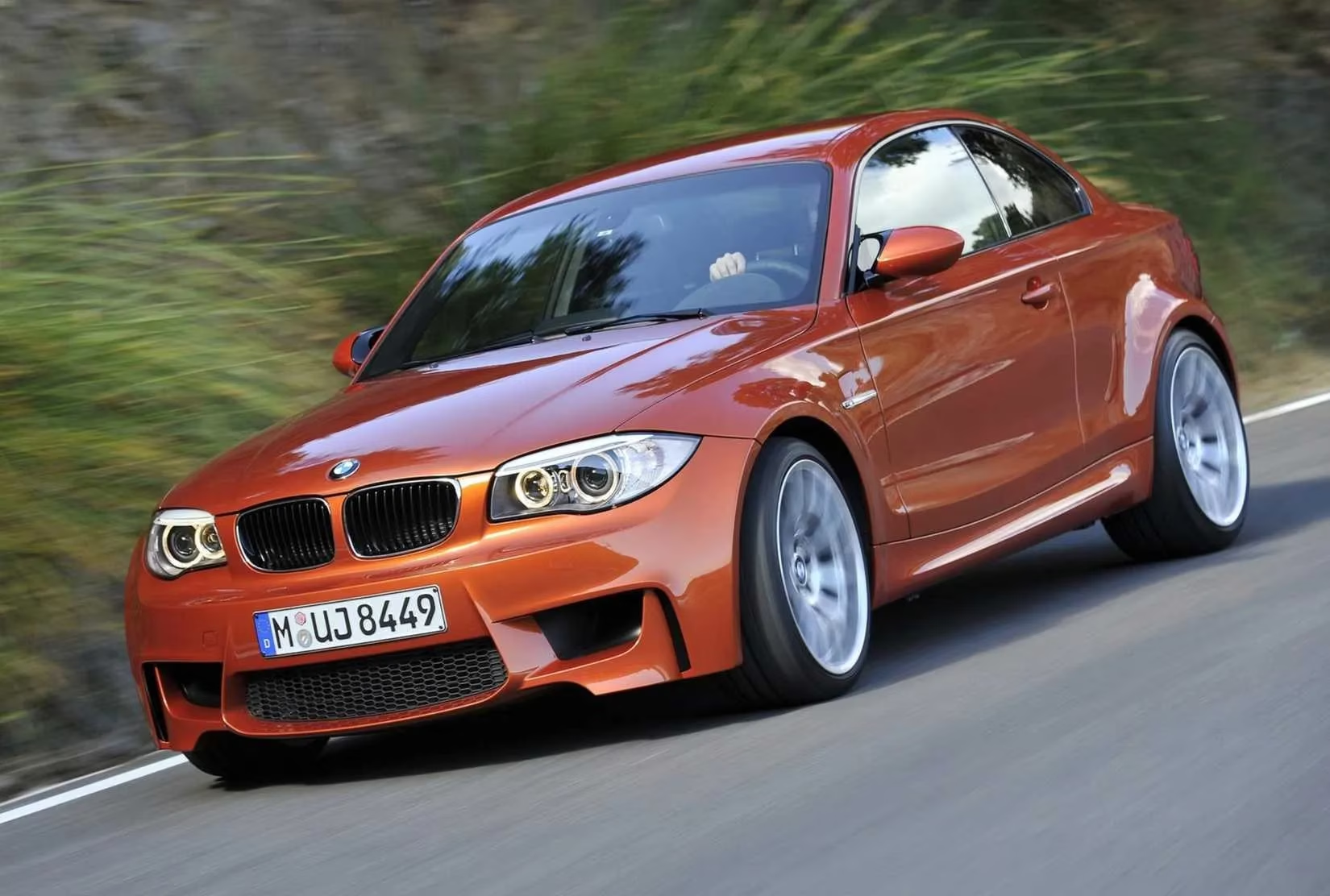
A modern classic with the potent N54 twin-turbo engine.
-
Why It's Reliable: Simple manual transmission, lightweight, strong community support.
-
Needs Attention: Fuel injectors, high-pressure fuel pump (HPFP), turbo wastegates. These are known issues with known solutions.
-
The Vibe: It's a raw, analog experience that's easier to live with than many complex successors. Annual basics can run $1,000-$1,500.
3. The Modern Darling: M2 Competition (2019–2021)
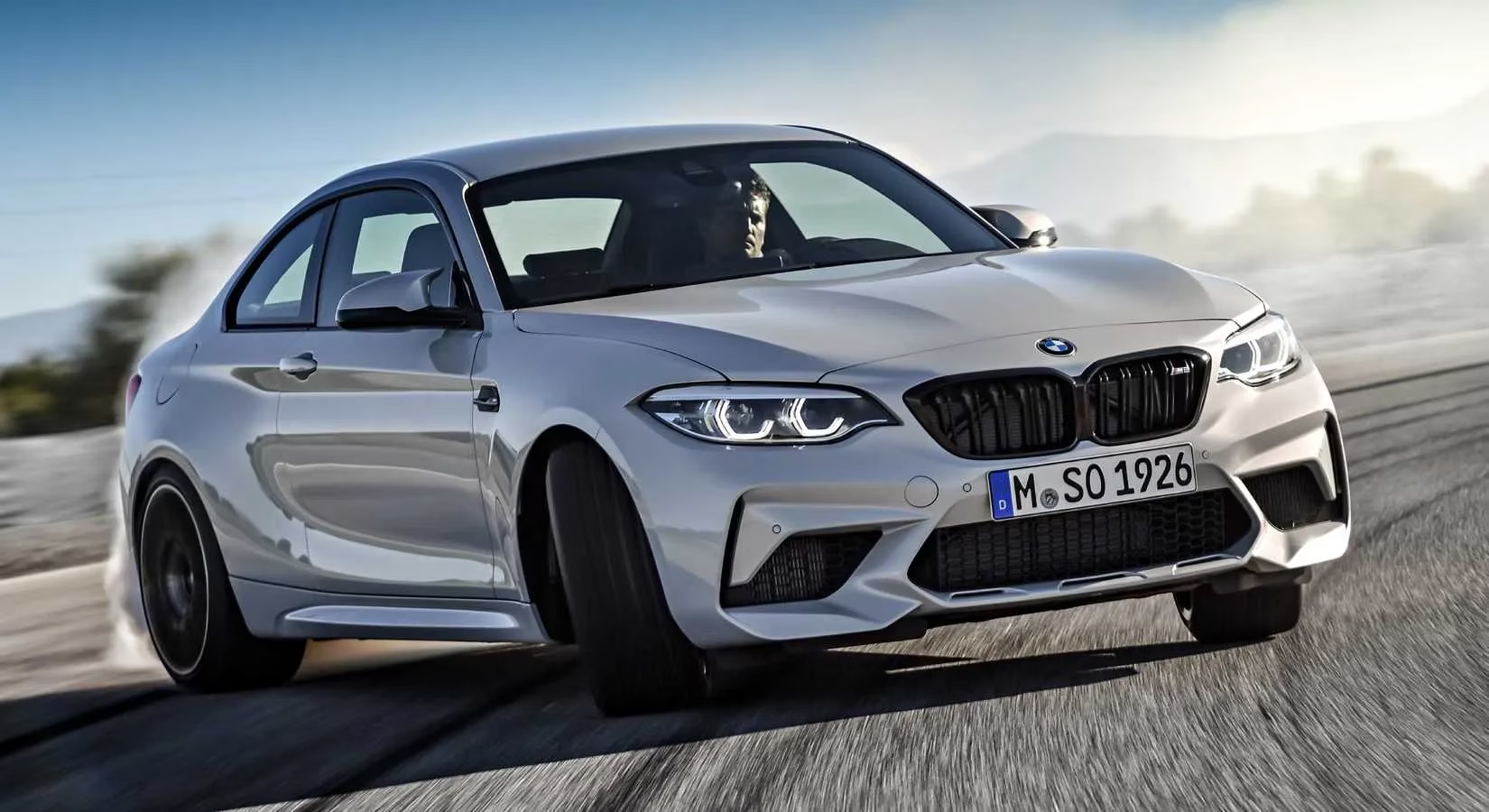
For those who want modern tech with a side of reliability, the M2 Comp is a top contender.
-
Engine Cred: Uses the S55 twin-turbo from the M3/M4, which is more robust than earlier turbo BMW engines.
-
Potential Snags: Crank hub spinning (mostly a concern for extreme tuning) and plastic charge pipes.
-
Cost Projection: Estimated $913 per year over the first five years for basic service. Not bad for a modern performance beast!
🎯 The Final Verdict
So, what's the bottom line? In 2026, the E36 M3 remains the undisputed king of BMW M reliability. It's the perfect storm of:
-
Simple, robust engineering (NA engine, manual gearbox).
-
Affordable and easy maintenance (thanks to parts commonality).
-
Proven, high-mileage durability (150k-200k miles is common).
It embodies the true spirit of the M division—a car built for the joy of driving, not just for spec sheets. While the E39 M5, 1M, and M2 Competition offer fantastic and more modern alternatives with their own strong reputations, they don't quite match the E36's combination of bulletproof simplicity and low running costs.
For the enthusiast looking for a performance icon that won't be a money pit, the answer is clear. The legend lives on. It's not just a car; it's an investment in driving pleasure that actually appreciates—both in value and in smiles per gallon. 🚗💨