
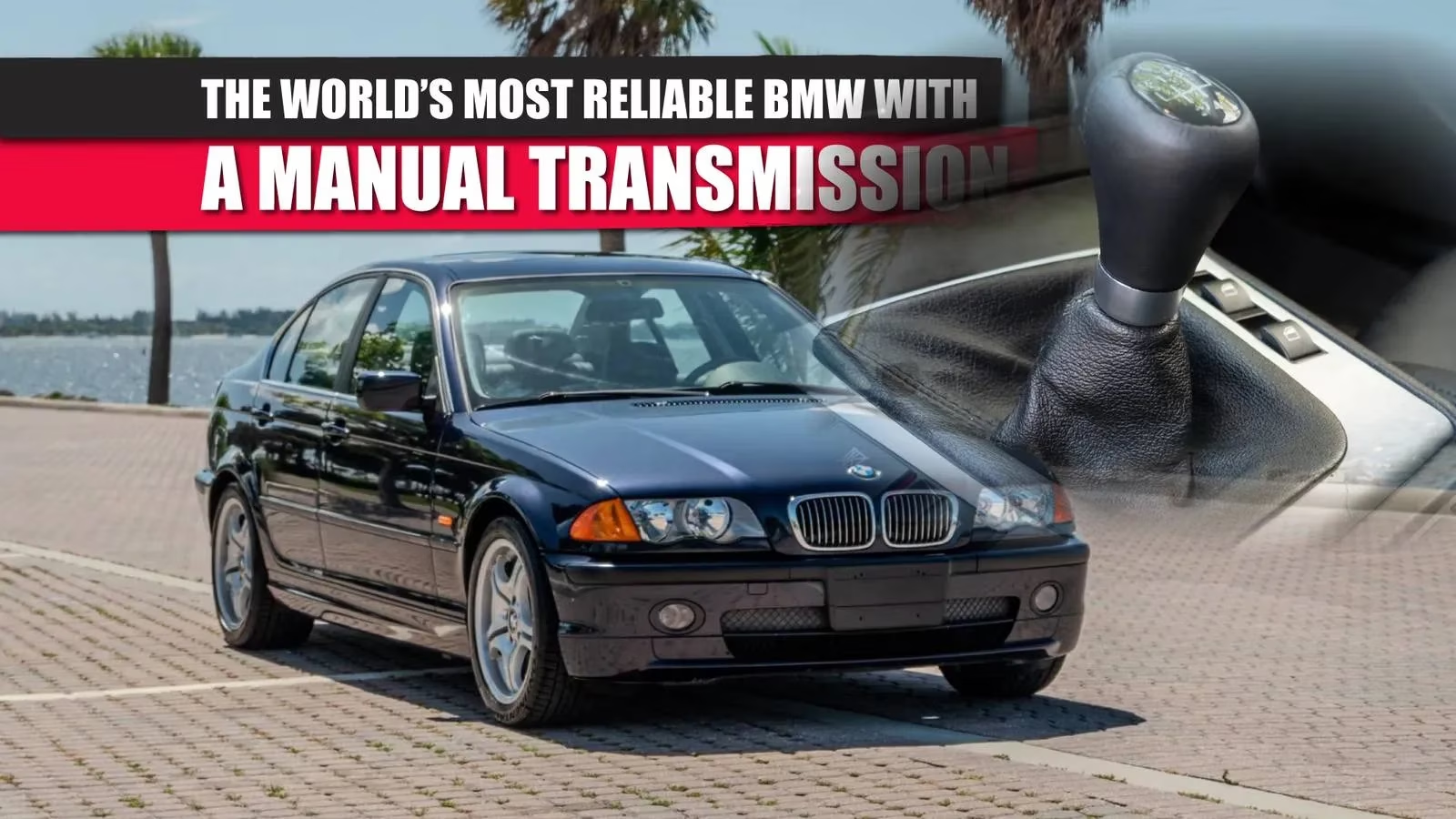
In the world of automotive legends, BMW's reputation for silky-smooth inline-six engines is as old as the brand's sport sedans themselves. Yet, not every motor has aged with grace. Ask any long-time owner or seasoned mechanic which BMW engines are most likely to deliver 200,000 miles with a manual gearbox still clicking happily into gear, and you'll hear the same answer echoing through enthusiast forums and repair shops: the M52 and M54. These engines, found in cars like the E39 530i and E46 330i, represent a sweet spot in automotive history where old-school mechanical durability met just enough modern refinement. They created vehicles that weren't just thrilling when new but remained dependable companions decades later. Even in 2026, these BMWs continue to be traded, sought after, and celebrated as some of the most reliable manual transmission cars ever to wear the blue-and-white roundel.
The Engineering Legacy of M52 and M54
The M52 engine debuted in the mid-1990s, bringing a smoother, more refined evolution of BMW's proven straight-six layout. What made these engines special was their balanced approach to performance and durability. With iron-sleeved aluminum blocks in European models and fully aluminum versions in North America, they struck a perfect chord between strength and efficiency. The follow-up M54 refined this recipe further, becoming one of BMW's most-produced engines ever and cementing its place in automotive history.
What truly sets these engines apart isn't just their engineering pedigree but their beautiful simplicity. 😊 They avoided the complex turbocharging systems and labyrinthine electronics that would come to define later BMW models. Instead, they relied on:
-
Robust timing chains that rarely needed replacement
-
Straightforward fuel injection systems
-
Cooling systems that, while sometimes fragile, were remarkably easy to repair
This mechanical straightforwardness has become something of a lost art in modern automotive design. Today's engines are essentially complicated computers on wheels, often breaking more frequently and requiring specialized knowledge for even basic repairs. The M52 and M54 represent the last generation of BMW engines that a dedicated enthusiast could truly understand and maintain with basic tools and knowledge.
The E39 530i: The Unkillable Executive
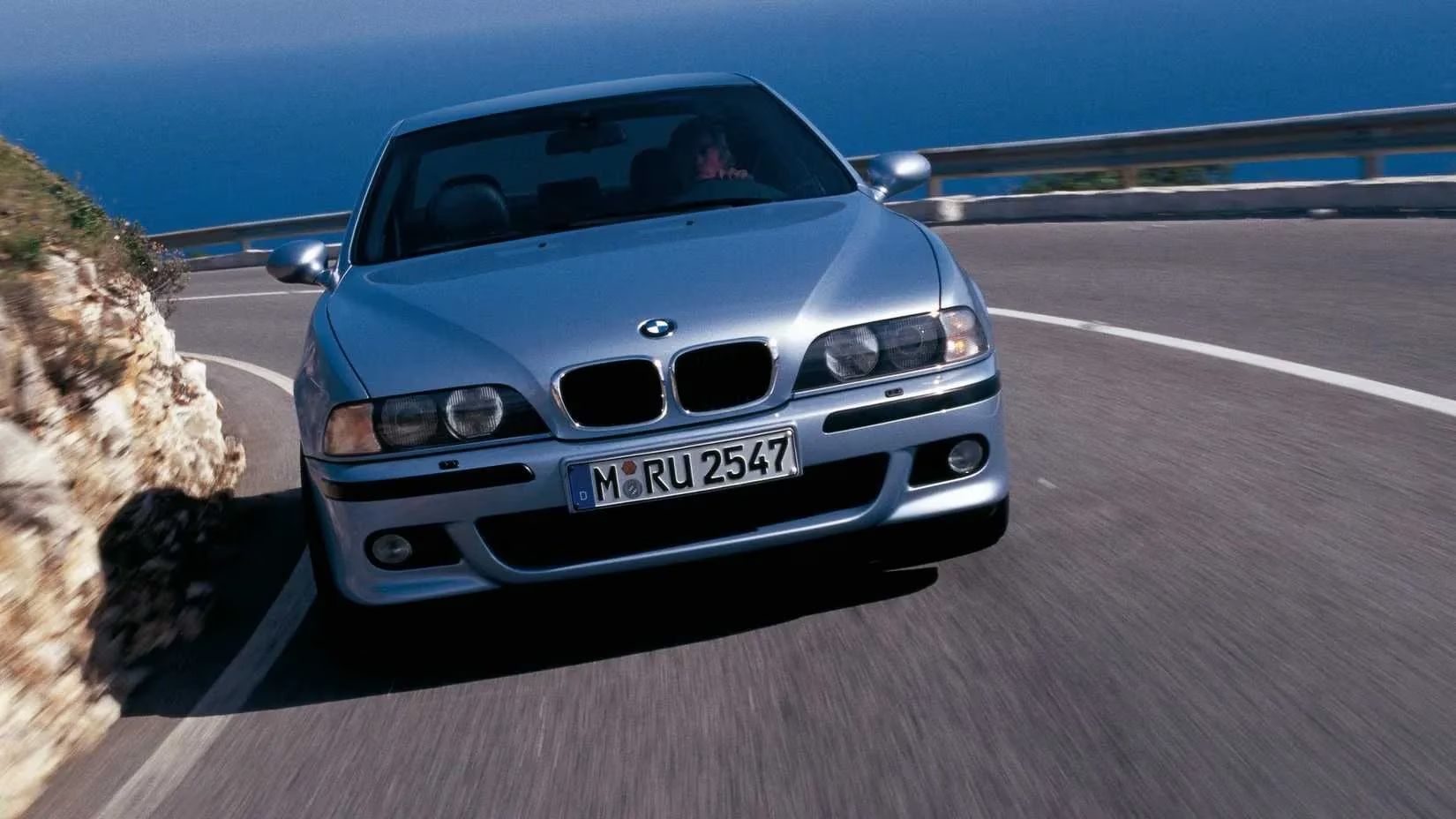
The E39-generation BMW 5 Series is widely considered one of the best sedans ever made, and the 530i with a manual transmission exemplifies why. Models produced after 2001 all featured the near-bulletproof 3.0-liter M54 inline-six, which delivered around 225 horsepower to the rear wheels. While these numbers might not seem impressive by today's standards, they provided plenty of power for a sedan designed to cruise German autobahns all day or serve as a comfortable daily commuter in 2026.
What truly sets the 2001-2003 E39 530i apart is how it balanced that power with long-term dependability. The M54's torque made it exceptionally easy to drive in everyday traffic, while the five- or six-speed manual gearboxes were engineered to handle far more stress than most owners would ever subject them to. When properly maintained, this drivetrain combination is virtually unkillable.
Long-time E39 owners often describe their cars as "the last true BMW"—vehicles that mixed analog steering feel and mechanical connection with a level of reliability that modern turbocharged models struggle to match. With proper upkeep, a 530i manual can serve as both a forever car and a practical daily driver, even in today's automotive landscape where complexity often trumps durability.
The E46 330i: The Sportier Sibling
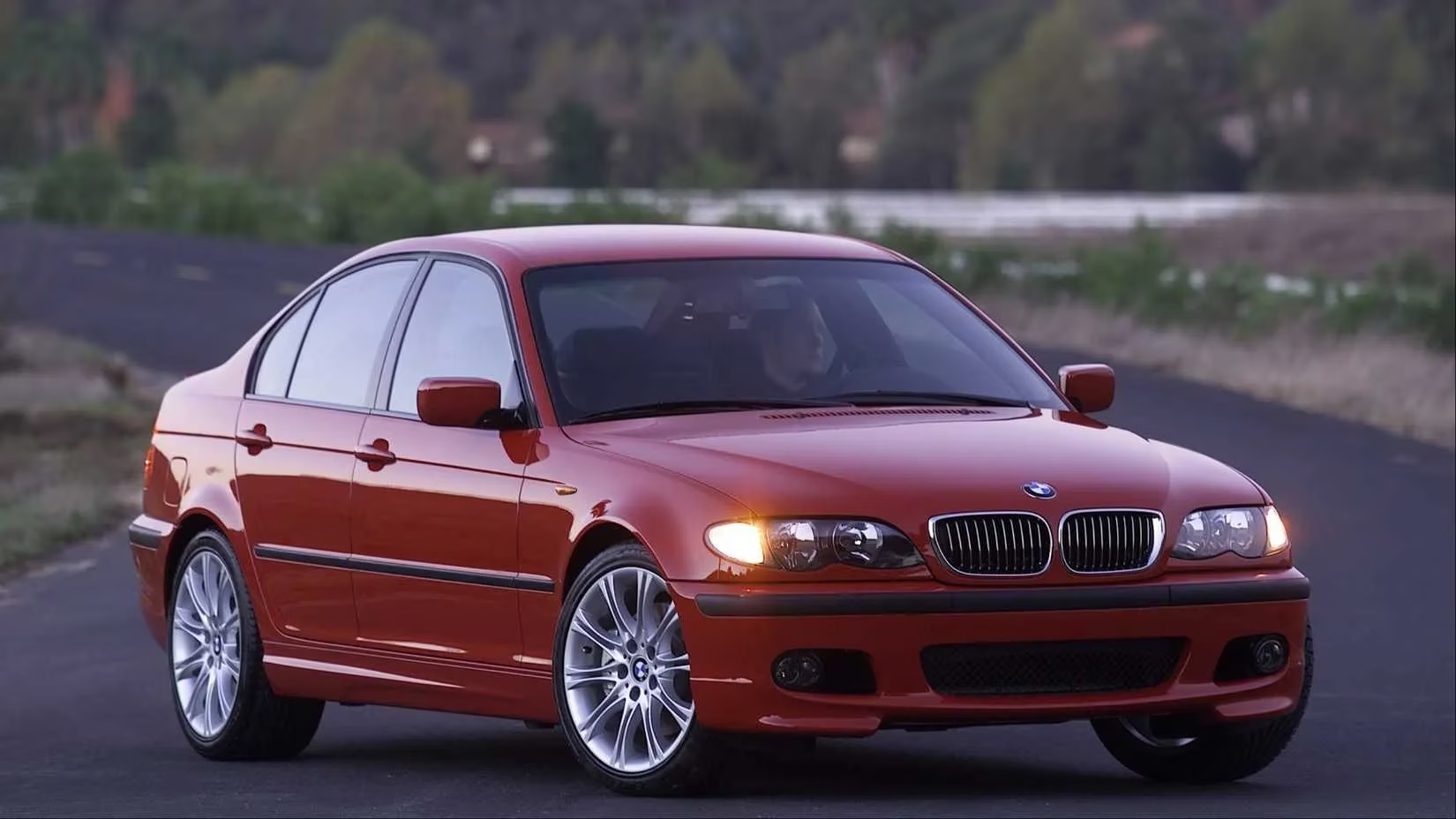
If the E39 530i was the reliable executive sedan, the E46 330i was its smaller, sportier sibling. Also powered by the M54 engine, it produced the same 225 horsepower but wrapped it in a lighter, tighter chassis that made every drive feel more engaging. With the optional ZHP (Zimmer High Performance) package, the 330i gained shorter gearing, sharper handling, and subtle styling tweaks that enthusiasts still chase on the used market today. Many collectors specifically seek out these ZHP models, recognizing them as the pinnacle of the E46 driving experience.
The reliability story here is just as impressive as with the E39. The 330i has earned a reputation for taking abuse without complaint, provided that two key systems receive proper attention: the cooling system and the crankcase ventilation system. Owners regularly report reaching 200,000-plus miles on original engines and gearboxes, with many pushing past the 300,000-mile mark with nothing more than routine maintenance.
For younger enthusiasts or anyone seeking a modern-classic daily driver in 2026, the E46 330i with a manual transmission remains the top recommendation. It delivers the same bulletproof character as the E39, but in a package that feels more playful and tossable on winding roads. The driving experience remains remarkably pure by today's standards, offering a direct connection between driver and machine that's increasingly rare in modern vehicles.
Maintenance Secrets: How to Make Them Last
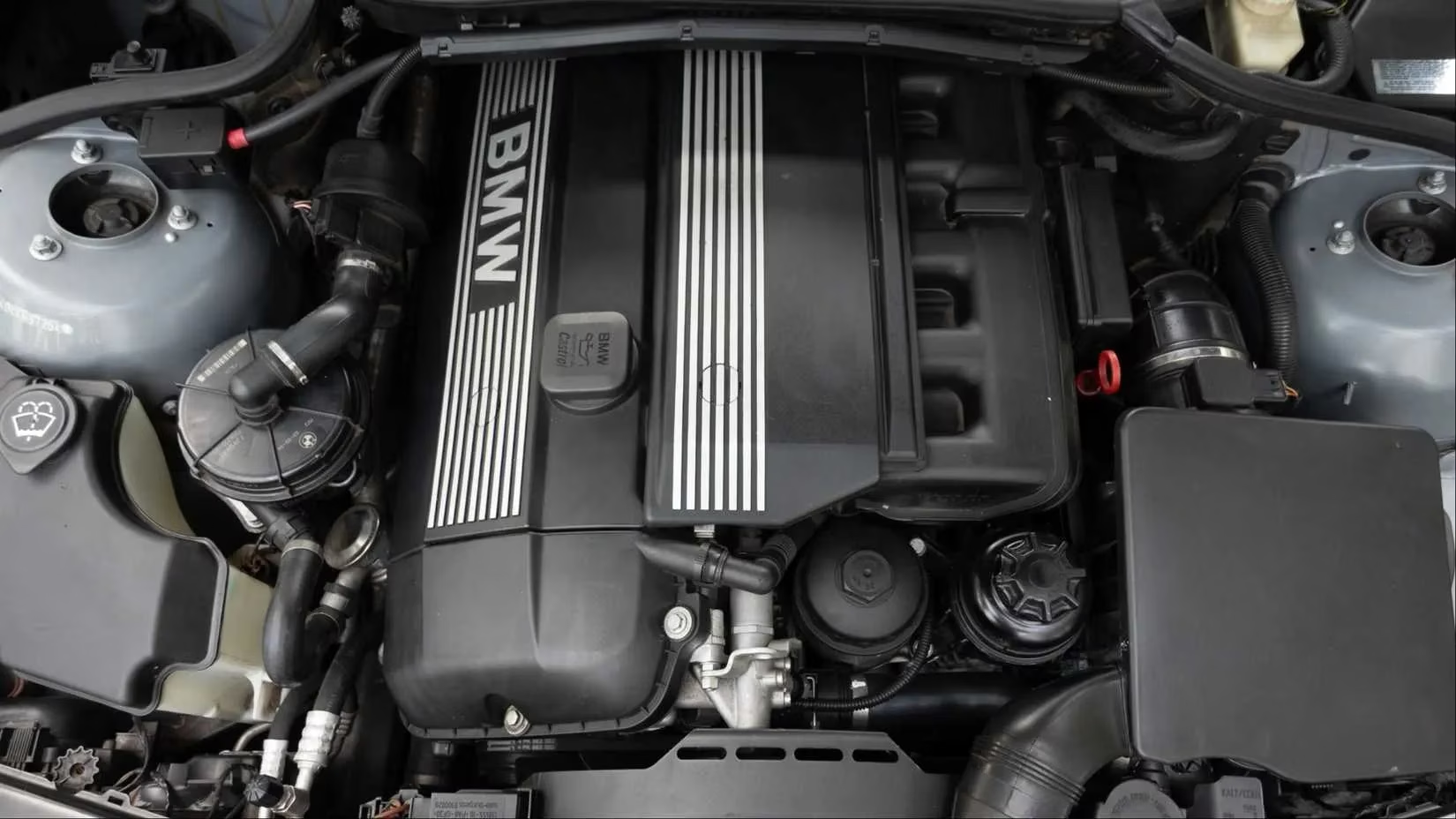
What's the secret to making one of these legendary engines last well into the 2020s and beyond? Owners and mechanics agree on one fundamental principle: preventive maintenance is everything. The approach isn't complicated, but it requires diligence and attention to detail.
The cooling system represents the biggest weak point in these otherwise robust engines. Components like radiators, expansion tanks, and water pumps tend to fail around 80,000–100,000 miles. The solution is simple but crucial: replace them proactively, and you eliminate the most common cause of catastrophic engine failure. Many experienced owners create a maintenance schedule that addresses these components before they become problems.
Other maintenance considerations include:
-
Vanos seals: These variable valve timing seals wear out over time, causing sluggish performance, but replacements are inexpensive and straightforward for most DIY mechanics
-
Regular oil changes: Consistency is key, with many owners sticking to 5,000-7,500 mile intervals
-
Rust prevention: Particularly important in northern climates where road salt can wreak havoc on underbody components
-
Suspension components: While not engine-related, keeping the suspension fresh ensures the driving experience remains as BMW intended
Remarkably, many of these engines are still running their original bottom ends with nothing more than regular care. Some enthusiasts have even joked that the M54 is essentially "a Toyota engine with a BMW badge"—high praise indeed when it comes to reliability. This durability has turned these cars into cult favorites on automotive forums and among DIY mechanics who appreciate their straightforward design and repairability.
Honorable Mention: The E36 M3
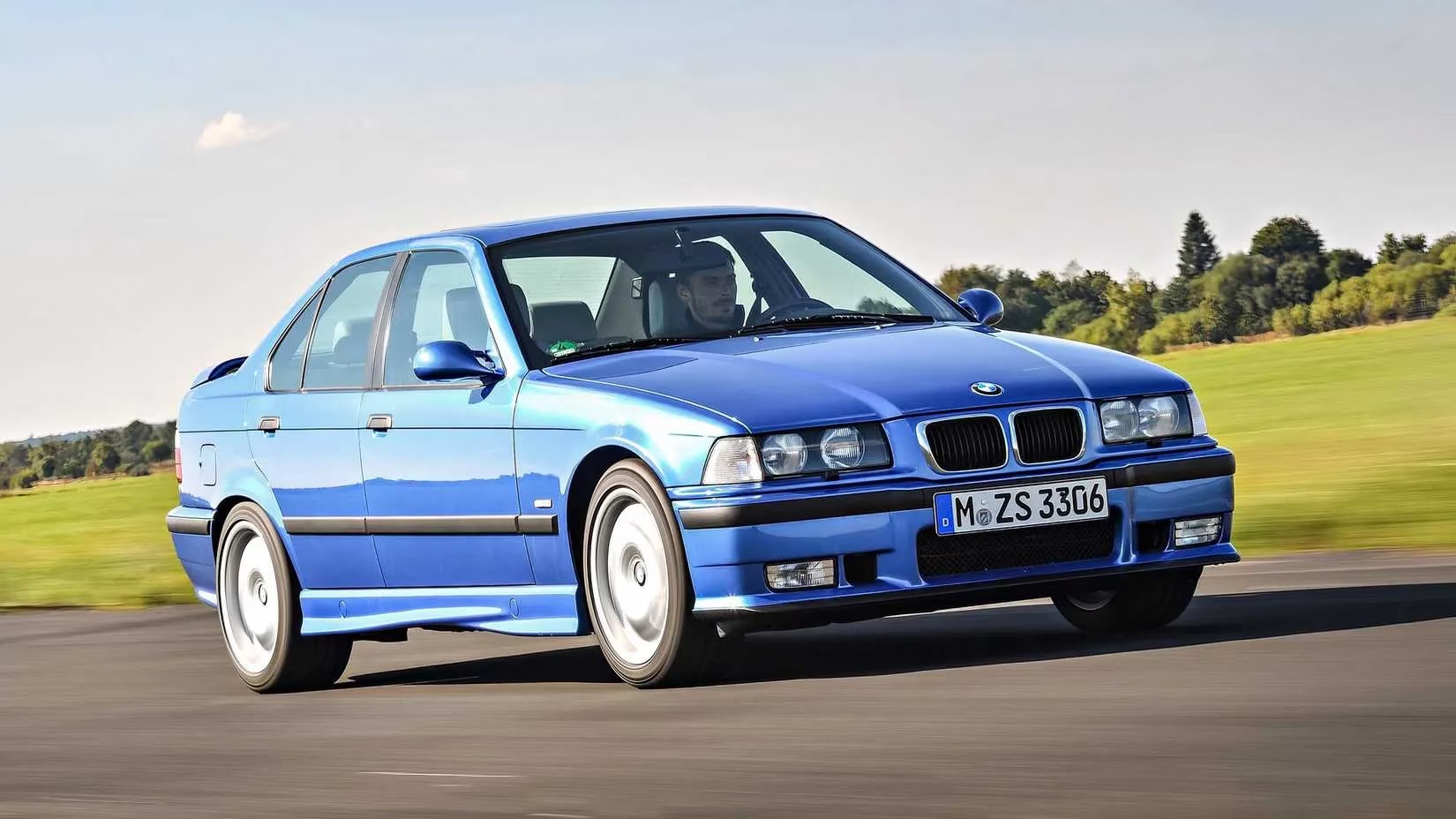
While the M52 and M54 power the most reliable manual BMWs overall, the E36 M3 deserves special recognition. Produced from 1992 to 1999, it was BMW's performance icon of the 1990s—a car that offered genuine motorsport pedigree without requiring constant shop visits. There's a reason these cars still command impressive prices on enthusiast auction sites; owners trust them and take exceptional care of them, recognizing their special place in automotive history.
The U.S. models used the S50 and S52 engines, both closely related to the M52, which explains why they share much of the same dependability. European versions featured higher-revving, more complex engines, but even those have proven remarkably robust compared to later M cars. When enthusiasts say, "they just don't make 'em like they used to," they're often thinking specifically about the E36 M3 and its contemporaries.
That's why the E36 M3 remains beloved in 2026. It may not rack up 300,000 miles quite as effortlessly as an E39 530i or E46 330i, but for an M car, it set the gold standard for longevity and owner satisfaction. In BMW's reliability hall of fame, it stands proudly beside the M52/M54-powered legends, representing a time when performance and durability weren't mutually exclusive concepts.
The Enduring Legacy
The title of the world's most reliable BMW with a manual transmission doesn't belong to modern turbocharged M cars or the complex V8 sedans of the 2000s. It belongs to the straightforward, naturally aspirated straight-sixes of the 1990s and early 2000s: the M52 and M54. These engines powered cars like the E39 530i and E46 330i, proving that a driver-focused BMW could be both exciting and dependable—a combination that feels increasingly rare in today's automotive landscape.
As we move further into the 2020s, these cars have taken on new significance. They represent a tangible connection to an era when automotive engineering prioritized mechanical purity and long-term durability. While the E36 M3 adds an extra dose of motorsport magic to the story, the real heroes are the everyday inline-sixes that just keep running, mile after mile, year after year. For enthusiasts seeking a reliable manual transmission BMW that offers both driving pleasure and peace of mind, the answer remains clear: look to the M52 and M54-powered classics. Their legacy continues to grow stronger with each passing year, proving that sometimes, the old ways really are the best ways.