
Ever popped the hood of a Toyota and thought, "This thing will outlive me, won't it?" Well, if you're staring at a 2GR-FSE, you're absolutely right. I've spent years tinkering with engines 🔧, and I can tell you: few things in life are as reassuring as the sight of that compact aluminum V6. It's the automotive equivalent of a golden retriever—friendly, dependable, and surprisingly energetic when you ask it to fetch. 🐕
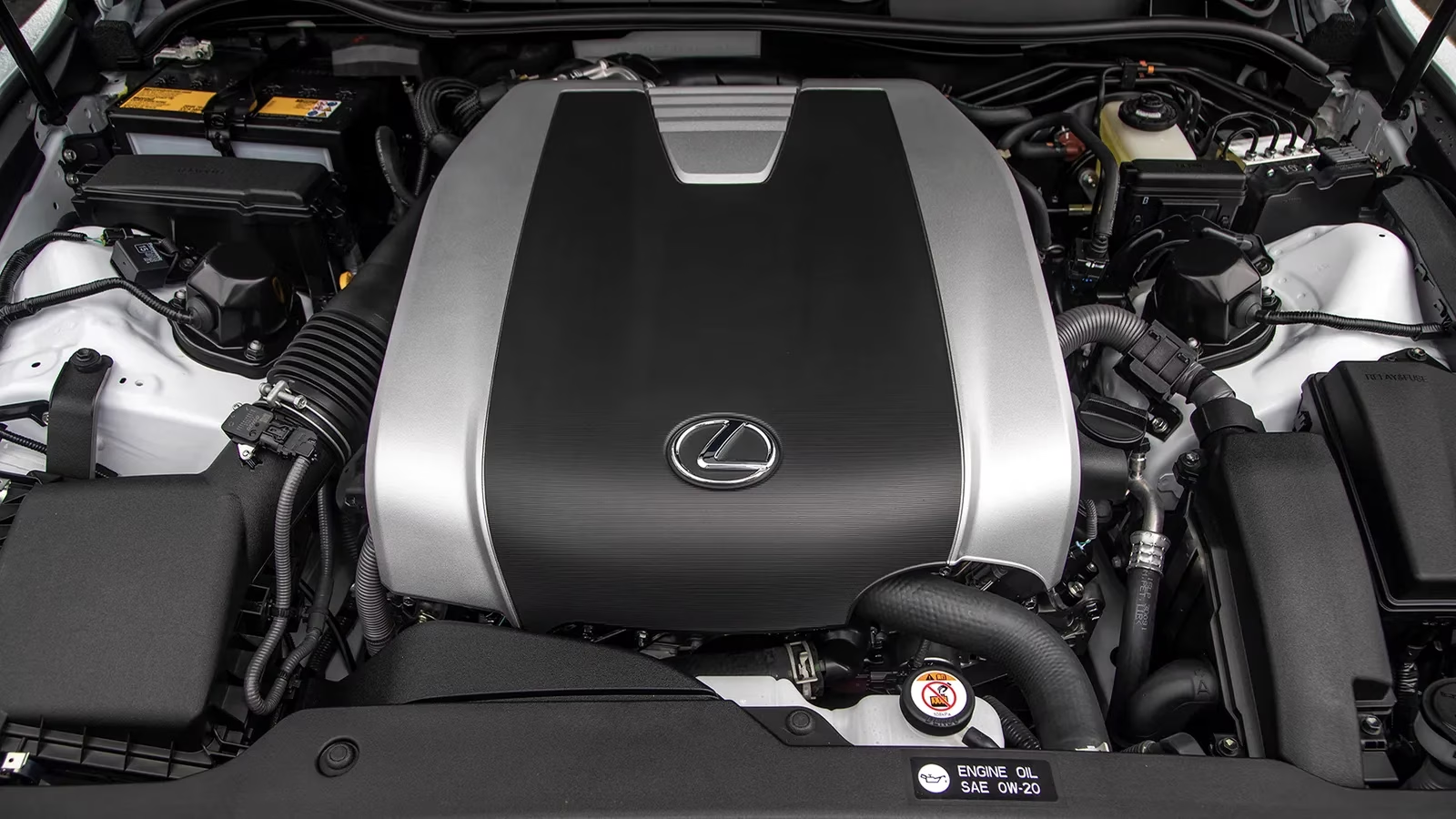
Now, I know what you're thinking: "Another Toyota reliability sermon?" But hear me out. The 2GR-FSE isn't just reliable; it's the most reliable engine in Toyota's entire back catalog 🏆, according to my own exhaustive research (and by research, I mean scrolling through forums while eating chips). Debuting in 2005, this engine has barely changed over two decades, and yet it still powers cars today. Why fix what isn't broken, right?
The Secret Sauce: D-4S Twin Injection
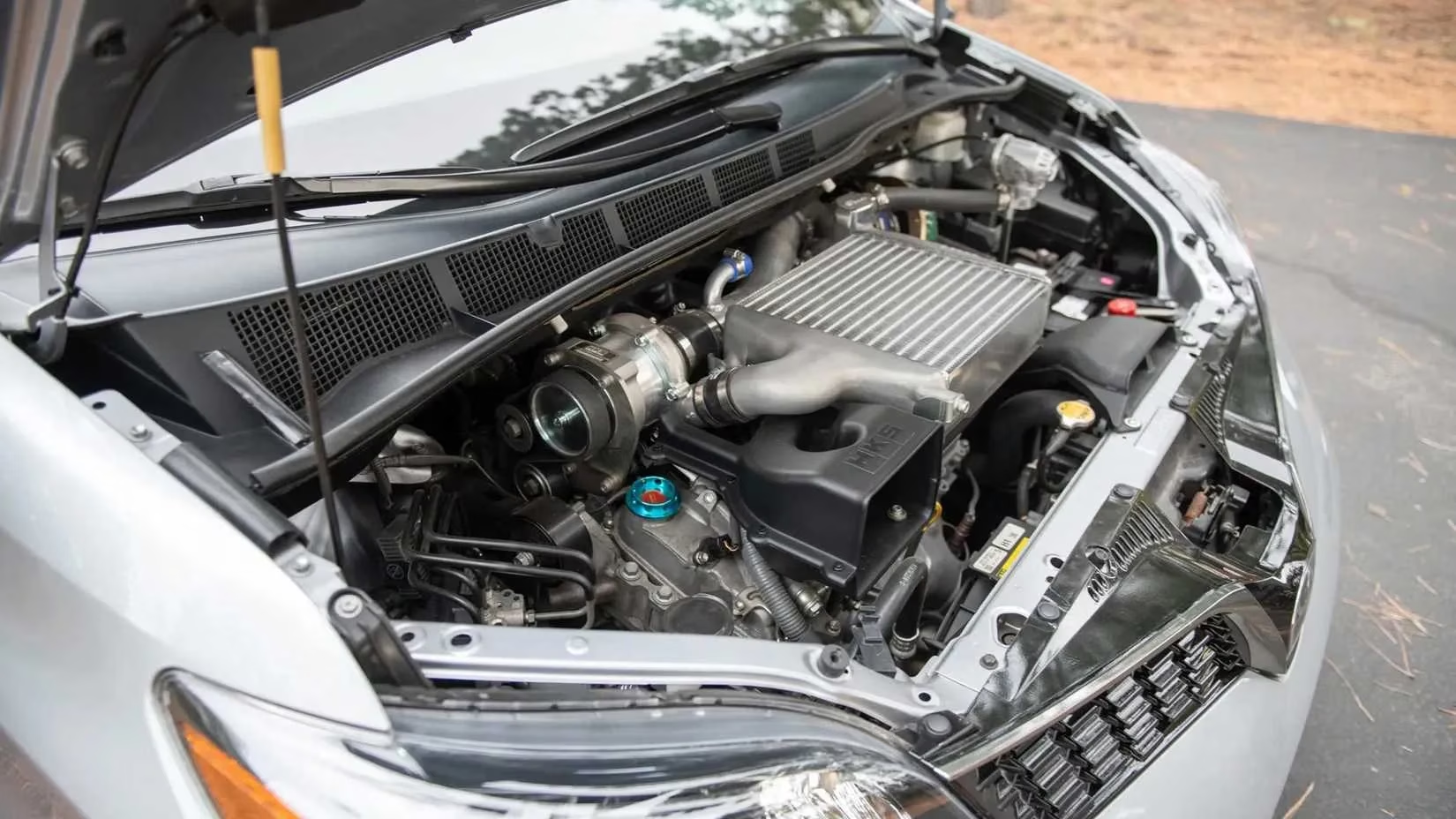
What sets the FSE apart from its siblings is Toyota's D-4S twin injection system. Imagine having two sets of injectors: one for port injection to keep your valves sparkling clean, and one for direct injection to cool the cylinders and allow a crazy-high compression ratio of 11.8:1. That's like having your cake and eating it too—except the cake is 306 horsepower and 277 lb-ft of torque. 🍰 In stock form, that is. Toyota even dropped a supercharged version in the Japan-only Mark X +M, pumping out 355 hp. Talk about a sleeper. 😴
Reliability That Makes Other Engines Weep
Let's talk numbers. The 2015 Lexus IS350 scored an 84 out of 100 on J.D. Power for reliability. That's higher than my credit score. 💳 And on CarSurvey, owners report mileages that make marathon runners jealous. One 2007 Lexus GS350 clocked 171,600 miles—and it was probably still on its original water pump.
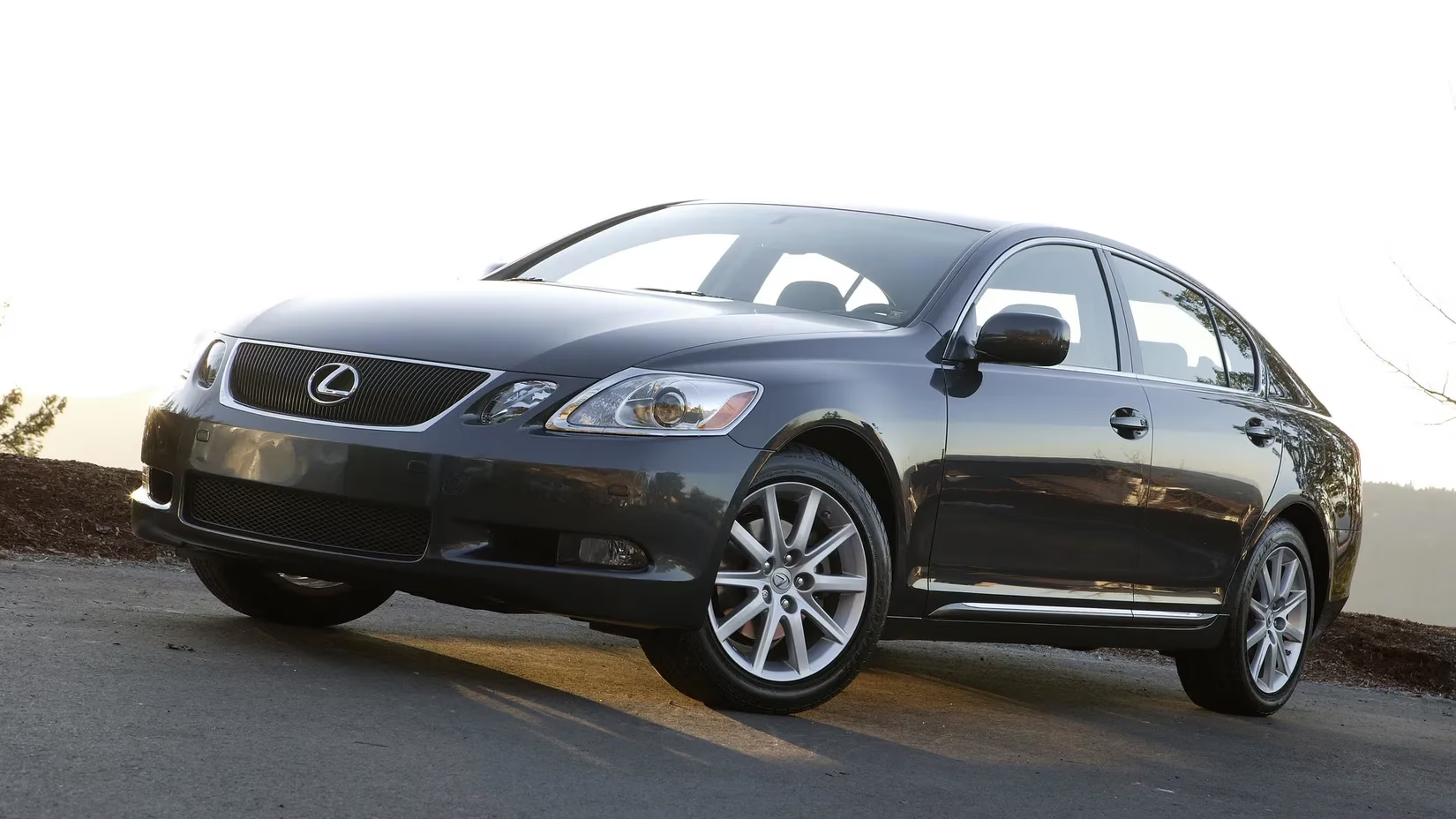
Of course, no engine is perfect. Common issues include oil leaks, squealing idler pulleys, and a grinding noise on startup that sounds like an angry robot. But Toyota addressed these with all-metal oil tubes and heavy-duty pulleys. Routine maintenance like cleaning the throttle body every 30,000 miles goes a long way. Upgrade your water pump and ignition coils, and you'll be cruising past 200k miles without breaking a sweat. Who doesn't want that? 🤷
Not Just Reliable—Actually Fun
Here's the thing: reliability is great, but 300 horsepower from a lightweight aluminum block is even better. The 2GR-FSE has found its way into the Lotus Evora GTE, proving it's not just a commuter engine. DIY enthusiasts love swapping it into MR2s, because why not? And if you want more power, TRD and HKS offer supercharger kits that push beyond 350 hp while keeping stock internals. That's impressive for an engine with an 11.8:1 compression ratio—try that with your average turbo build and watch it go boom. 💥
The 2GR Family Tree
The 2GR-FSE isn't the only star in the family. Let's break down the variants:
| Variant | Key Feature | Power | Compression Ratio |
|---|---|---|---|
| 2GR-FE | First iteration (2005) | 228 hp | 10.8:1 |
| 2GR-FSE | D-4S twin injection | 306 hp | 11.8:1 |
| 2GR-FXE | Atkinson cycle, cooled EGR | Improved efficiency | - |
| 2GR-FKS | VVTi-W, wider timing band | Refined VVTi | - |
Why the FSE Still Matters in 2026
It's 2026, and the 2GR-FSE is still relevant. The 2024 Camry used the D-4S system, and you can still find variants of the 2GR in production. That's a nearly 20-year run—longer than most Hollywood marriages. So next time you see a Lexus IS350 or a Toyota Avalon, give it a nod. 👋 That engine under the hood is a legend, and it's probably going to outlast us all.
So, would I recommend a 2GR-FSE? Absolutely. It's the automotive equivalent of a Swiss Army knife—reliable, versatile, and capable of surprising you when you least expect it. Just don't forget the throttle body cleaning. Your valves will thank you.