
As a car enthusiast, I often reflect on the engines that have truly shaped automotive history. In a world increasingly dominated by complex, electronically controlled powerplants, the enduring legend of the Chevrolet 350 cubic-inch small-block V8 stands as a monument to mechanical simplicity and brute-force reliability. For over five decades, this wasn't just an engine; it was the beating heart of American motoring, powering everything from iconic muscle cars to hardworking pickup trucks and dependable family sedans. Its story is one of endurance, proving that sometimes, the simplest solutions are the most profound. From my perspective, the Chevy 350's legacy is unmatched—a testament to an era when durability was engineered into every cast-iron component.
The Birth of an Icon
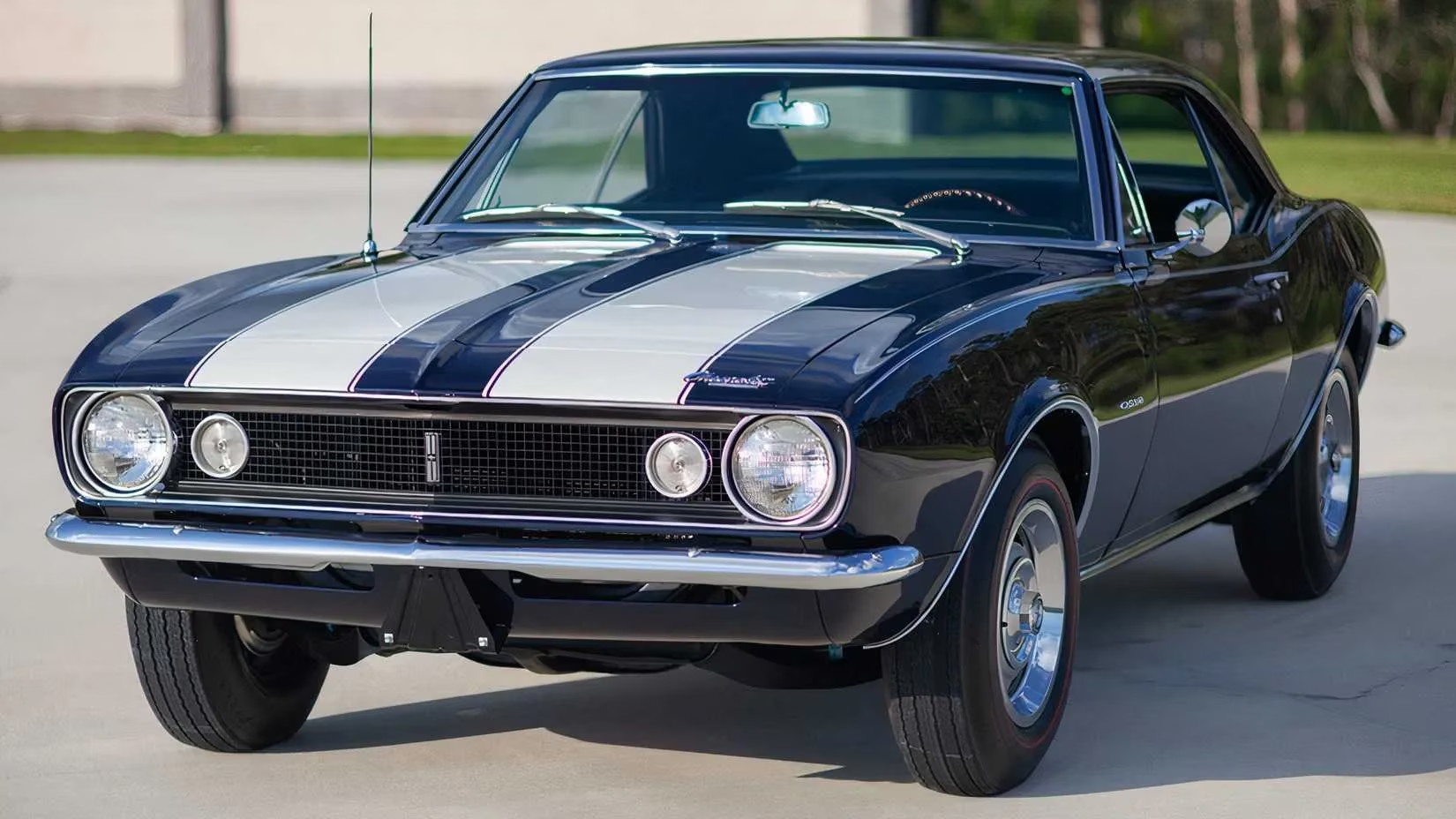
The journey began not with the 350, but with Chevrolet's pioneering small-block V8 family in 1955. However, it took twelve more years of refinement for the true star to emerge. In 1967, the high-performance Chevy 350 made its debut under the hood of the Chevrolet Camaro, instantly setting a new benchmark. This wasn't merely an incremental update; it was a revelation. The engine produced a robust 295 horsepower, offering a perfect balance of power and the rugged dependability that Chevy fans craved. Its success in the Camaro was immediate, proving that performance and longevity were not mutually exclusive. This launch pad propelled the 350 into a staggering array of vehicles, cementing its role as General Motors' versatile workhorse for generations.
Engineering Simplicity: The Secret to Longevity
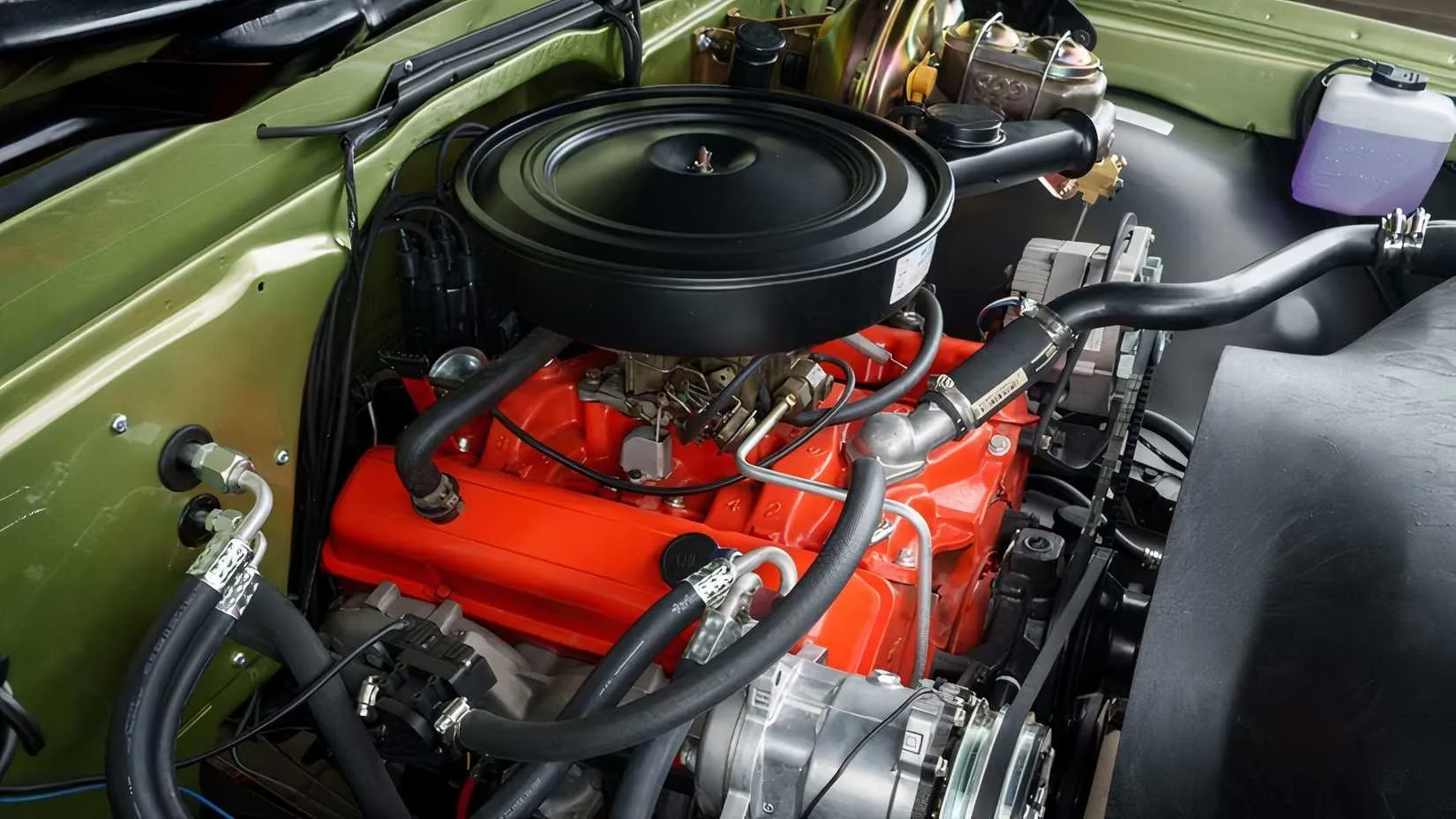
What made the Chevy 350 so remarkably reliable? The answer lies in its straightforward, overbuilt design philosophy. I've always admired its construction:
-
Bulletproof Foundation: A rugged cast-iron block and cylinder heads formed an incredibly durable core, resistant to wear and heat.
-
Timing Chain Durability: The use of a timing chain instead of a rubber belt meant one less critical maintenance item and far fewer catastrophic failures.
-
Pushrod Simplicity: Its overhead-valve (OHV) pushrod design kept moving parts to a minimum. Fewer parts meant fewer things could break.
-
Forgiving Nature: Conservative compression ratios ensured the engine was never overly stressed, contributing to its legendary tolerance for neglect and hard use.
This combination created an engine that was not only tough but also incredibly easy for owners and mechanics to work on. The aftermarket support exploded, making parts cheap and universally available. It became the people's engine—a powerplant you could fix in your driveway with basic tools.
Million-Mile Testimonials: Proof in the Pavement
Talk is cheap, but mileage doesn't lie. The most compelling evidence for the 350's reliability comes from the incredible feats of endurance achieved by ordinary vehicles. The most famous example is Frank Oresnik's 1991 Chevrolet C1500 Silverado. This wasn't a pampered show truck; it was a daily workhorse used for delivery runs across the Midwest, sometimes covering 700 miles in a single day. Through diligent but routine maintenance—primarily regular oil changes—this truck's 350 small-block V8 surpassed 1.3 million miles without a major overhaul. The transmission was replaced a couple of times, but the original engine kept on ticking.
This story is not an isolated miracle. On enthusiast forums and in countless driveways, owners of 1990s Chevrolet trucks and SUVs routinely report crossing the 300,000, 400,000, and even 500,000-mile marks on their original 350 engines. These aren't numbers from laboratory tests; they are real-world validations of an engine designed to last.
Evolution and Adaptation
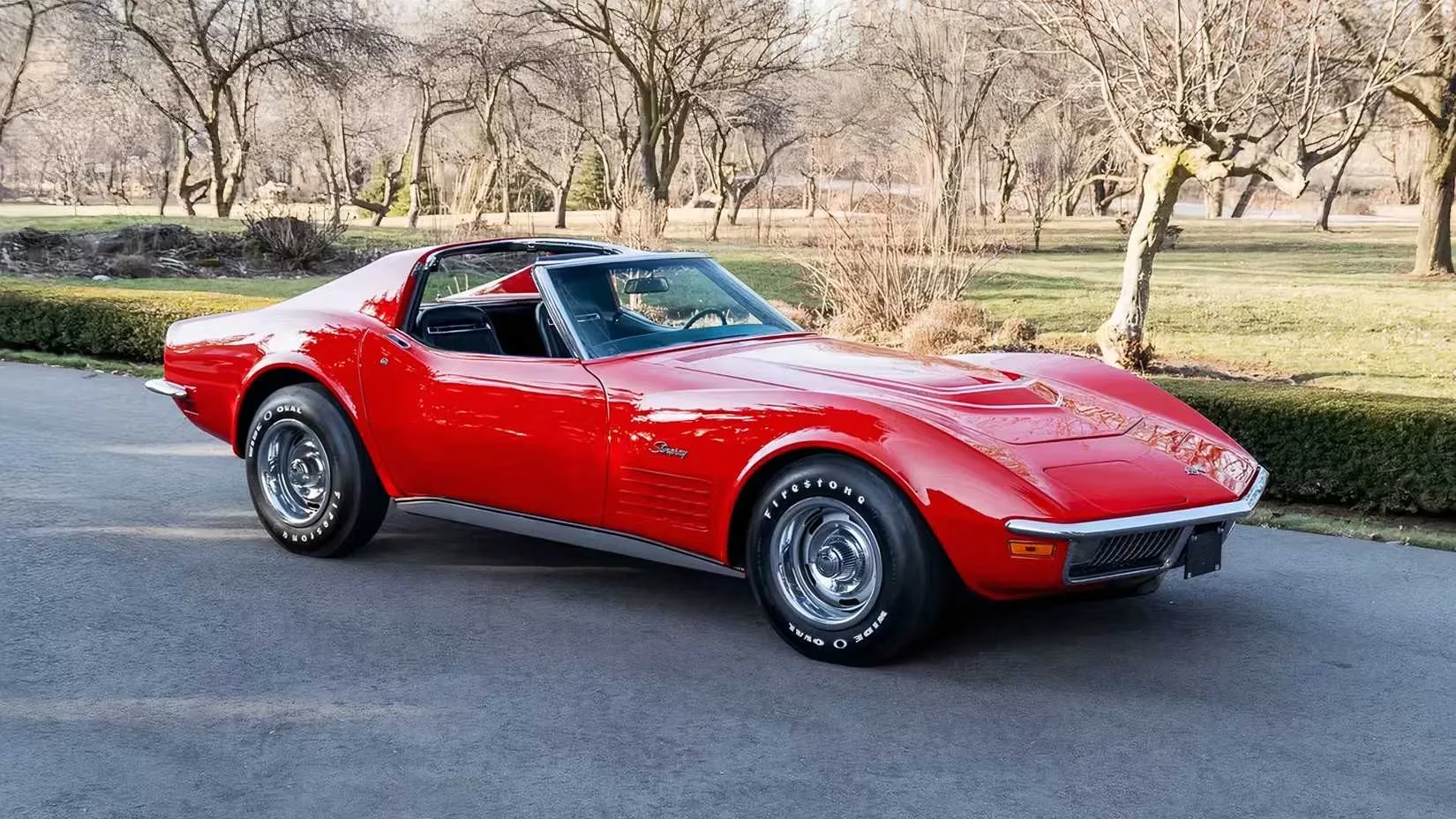
The Chevy 350 was not static. It evolved intelligently over its long production life to meet changing demands while retaining its core strengths. A major milestone came in 1985 when the Chevrolet Corvette introduced a fuel-injected version, moving beyond the classic four-barrel carburetor. By the late 1980s, throttle-body fuel injection became standard, improving driveability and efficiency. Throughout the 1980s, computer-controlled emissions systems were integrated, allowing the engine to meet new regulations without sacrificing its fundamental durability. The engine was offered in various states of tune, with horsepower ranging from 145 in sedans to a fiery 370 hp in high-performance variants like the legendary 1970 LT-1, which found its home in Corvettes and Camaros.
The 350's Iconic Vehicle Portfolio
The engine's versatility meant it powered some of the most beloved vehicles in American history. It was the default choice for a generation of enthusiasts.
| Vehicle | Role of the 350 |
|---|---|
| Chevrolet Camaro | The debut platform; defined the muscle car balance of power & reliability. |
| Chevrolet Corvette | Brought sports car performance with unwavering dependability. |
| Chevrolet Chevelle | The common, tunable heart of a classic muscle car icon. |
| Chevrolet El Camino | Turned a car-truck hybrid into a potent and durable muscle machine. |
| C/K Series Pickups & Suburbans | Provided the tireless torque and longevity needed for work and family duty. |
Legacy in 2026: The Crate Engine King
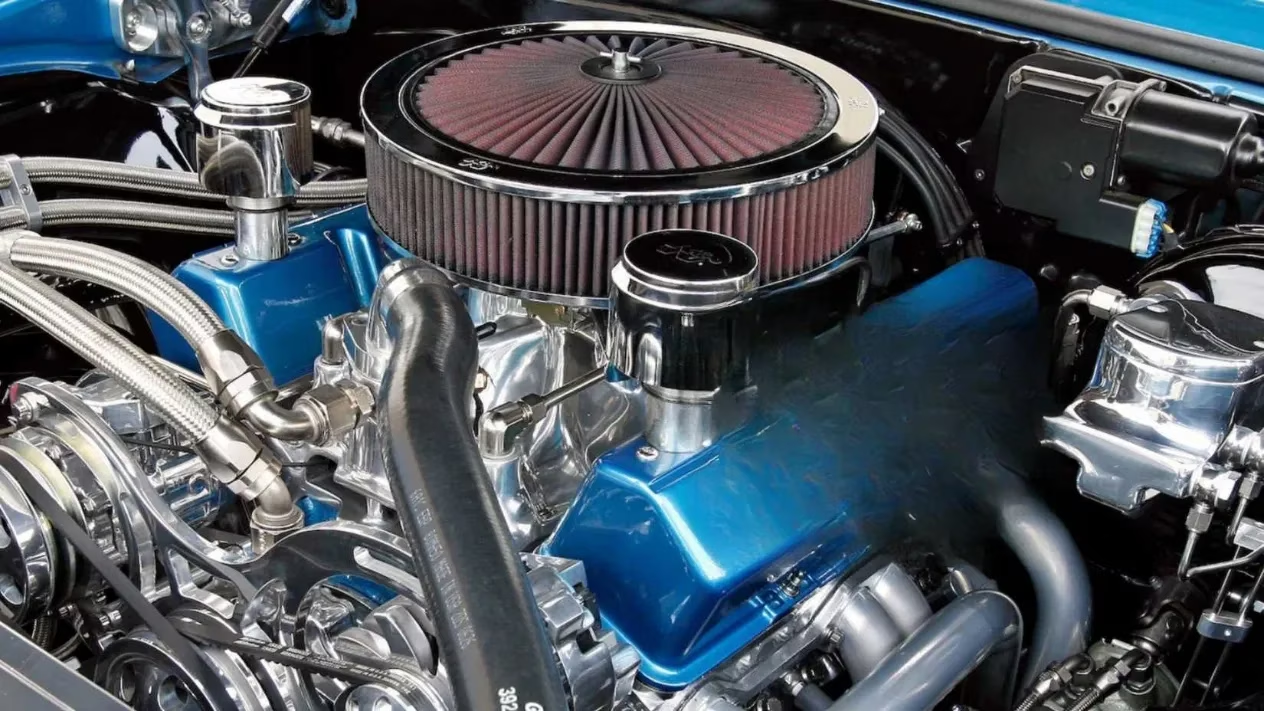
Even today, in 2026, the Chevy 350's story is far from over. While its modern successor, the GM LS series, dominates many engine bays, the original 350 remains a powerhouse in the crate engine market. For hot rod builders, restorers, and DIY mechanics, its appeal is stronger than ever. Why?
-
Simplicity: No complex direct injection or dense engine management systems to troubleshoot.
-
Affordability: Complete crate engines and a universe of parts are readily available at low cost.
-
Support: The aftermarket support is arguably the largest for any engine ever made.
-
Proven Potential: It is famously easy to rebuild and modify for increased performance.
Websites like Summit Racing and JEGS continue to offer the 350 in countless configurations, from mild stock replacements to wild, high-performance builds. It remains the go-to choice for a reliable, easy-to-live-with V8 swap, proving that true legend never dies—it just gets bolted into another project car.
Looking back, the Chevy 350 small-block V8 was more than just machinery. It was a reliable partner for millions of drivers, a teacher for a generation of mechanics, and an immutable symbol of American automotive ingenuity. In our current age of planned obsolescence and digital complexity, the 350's legacy of mechanical honesty and million-mile endurance feels more valuable than ever. It didn't just move vehicles; it built a culture of trust and capability that continues to resonate with enthusiasts around the world. That is the mark of a true icon.