
Alright, buckle up, car fam! 🚗💨 When we talk about reliable turbocharged cars in 2026, our minds instantly go to the usual legends, right? The Honda Civic Type R with its unbreakable K-series, the Toyota 2JZ that's basically automotive immortality, or even modern Ford EcoBoost engines. They're the turbocharged heroes we all know and love, the predictable answers in every "most reliable" list. But today, I'm taking you off-script. We're diving deep into a story that completely rewrites the rulebook on turbo longevity—a tale of a factory-built outlaw that wasn't just fast but was built to last decades, defying every single expectation thrown its way. This isn't just another car review; it's a testament to engineering madness that paid off in the most epic way possible.
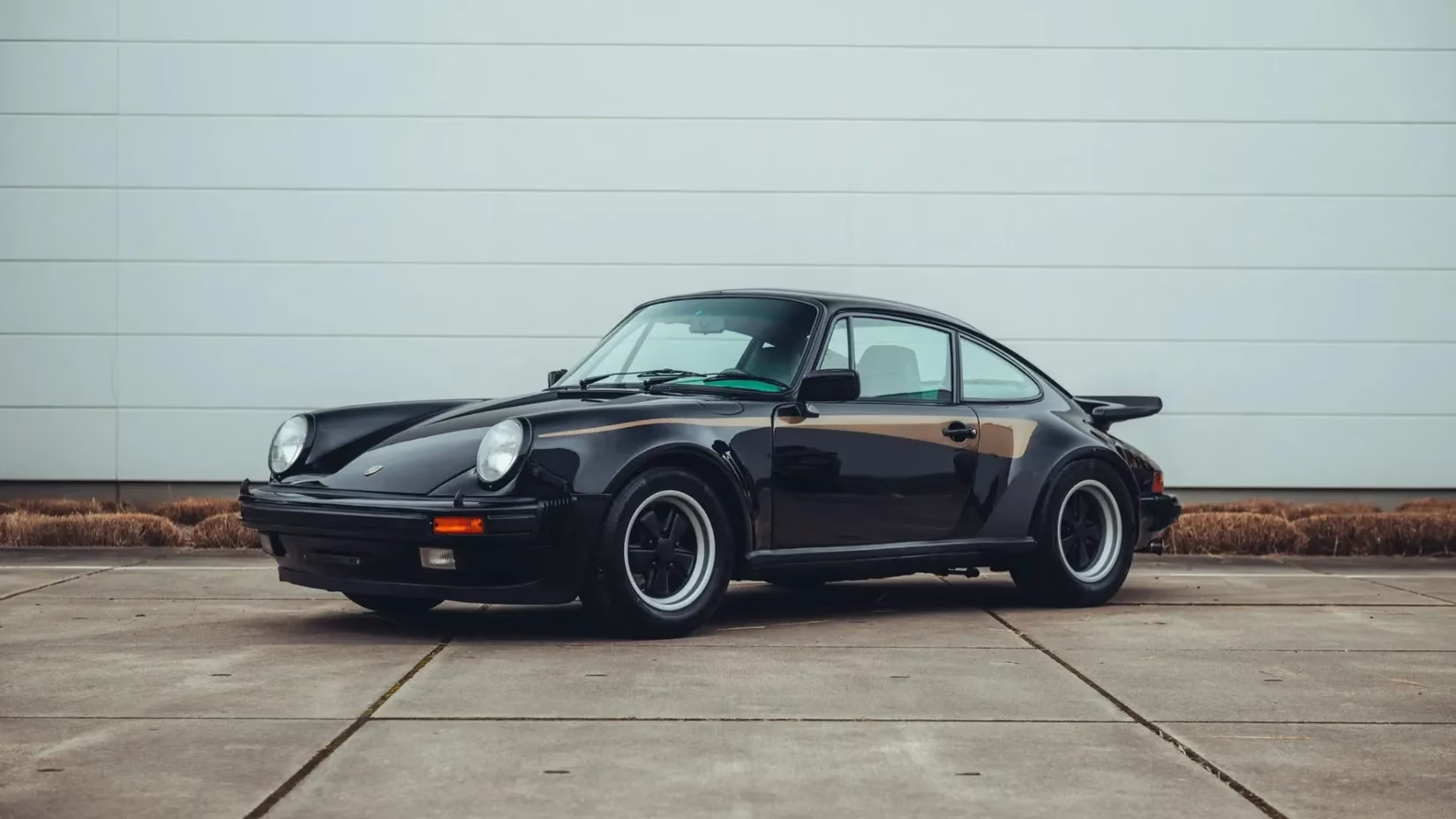
Let's rewind to the mid-70s. The automotive world was in chaos—emissions regulations were suffocating performance, insurance rates were murdering muscle cars, and the future of speed looked bleak. Then, Porsche dropped a bombshell: the 911 Turbo, codenamed 930. This wasn't just a new sports car; it was a declaration of war from Stuttgart. With its flared fenders, iconic whale-tail spoiler, and a turbocharged flat-six that promised to melt faces, the 930 arrived swinging. But here's the kicker: Porsche didn't just want it to be fast; they engineered it to survive. Under that gorgeous silhouette sat a 3.0-liter turbocharged flat-six, pushing out around 234 horsepower (260 hp in Europe!) and 243 lb-ft of torque. Paired with a rugged 4-speed manual, it could hit 0-60 mph in just over 5 seconds—supercar territory for its time. Yet, the real challenge wasn't speed; it was durability. In an era where turbos were seen as fragile add-ons, Porsche went all-in, overbuilding the engine with race-spec components: stronger pistons, sodium-filled valves, beefed-up connecting rods, and an oiling system that laughed at punishment. The gearbox was short, tough, and designed to handle the brutal torque spike when boost kicked in. This wasn't a weekend toy; it was a flagship built to endure.
Now, let's fast-forward to the present. We all know turbos can be finicky, right? They're the high-strung divas of the engine bay, demanding constant care and often failing spectacularly. But then, there's Bill MacEachern's 1976 Porsche 930 Turbo. Bill walked into a Toronto Porsche dealership in 1976, drove out with a brand-new 930, and nearly five decades later, that same car is still in his garage. Here's the mind-blowing part: it has logged over 800,000 miles. 😱 Yes, you read that right—800,000 miles on a turbocharged Porsche from the '70s! This isn't some trailer queen with a museum life; Bill racked up those miles through steady driving, obsessive maintenance, and the occasional tune-up (one of which bumped the horsepower to a insane 660 hp!). This car single-handedly shatters every stereotype about turbo reliability. It's not just a high-mileage hero; it's a rolling middle finger to anyone who thinks boosted engines can't go the distance. When Porsche gets it right, they really, really get it right.
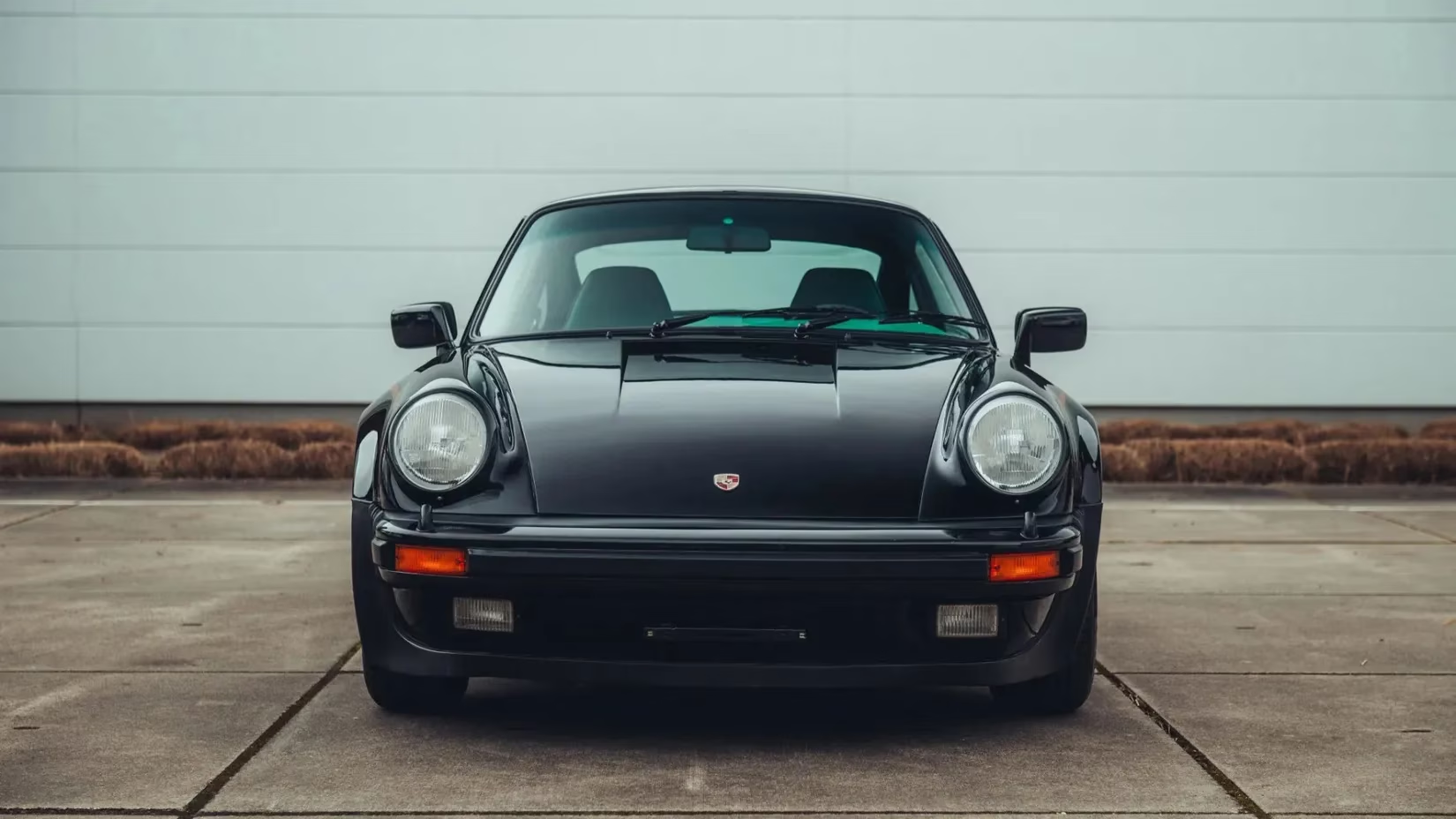
Of course, the 930 wasn't perfect. Early models earned the infamous nickname "the Widowmaker" for their turbo lag and snap oversteer—quirks that demanded respect from drivers. But beneath those flaws lay an engineering philosophy rooted in paranoia. Porsche knew enthusiasts would push these cars to the limit, so they built them to withstand punishment. Drawing from their 917/30 Can-Am and 911 Carrera RSR Turbo racing programs, they brought turbocharging to the street with surgical precision. The body got wider fenders, bigger brakes, and suspension tweaks to keep things stable when boost spooled. This wasn't a gamble; it was a calculated bet on longevity, and stories like Bill's prove it paid off in spades. The 930 wasn't just Porsche's first factory turbocharged production car; it was the machine that proved forced induction could be both thrilling and dependable, rewriting the playbook for every turbocharged car that followed.
But wait, there's more! The 930's legacy isn't just about miles; it's about value, too. Back in 1976, it hit U.S. showrooms with a sticker price of $26,700—around $145,000 today adjusted for inflation. Fast-forward to 2026, and the collector market has gone wild. According to recent data, the average sale price for a 1976 930 Turbo clocks in at a staggering $371,116, with examples ranging from $72,250 to an eye-watering $4.3 million depending on condition and originality. Owning a 930 today isn't just a smart investment; it's about holding a piece of automotive history—a turbocharged icon that helped define Porsche's identity. But the 930 isn't alone in this turbocharged longevity club. Let's spotlight two other legends that laugh in the face of high mileage:
-
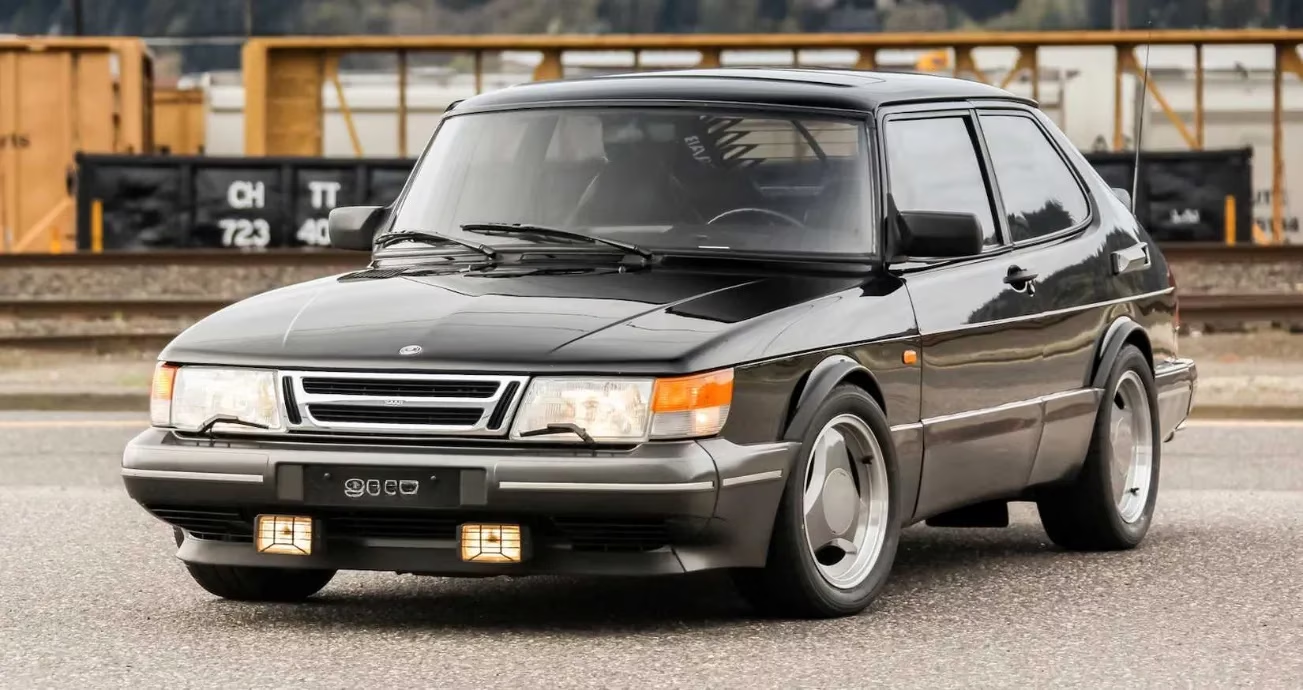
Saab 900 Turbo SPG: Don't let its quirky Swedish design fool you; this car is a turbocharged tank. With a 2.0L 16-valve turbo inline-four and an innovative APC system to prevent engine knock, it was built to last. The most famous example? Peter Gilbert's 1989 Saab 900 SPG, which clocked over 1,001,385 miles on its original engine before being donated to a museum. Saab even rewarded Gilbert with a new car for his dedication!
-
Mercedes-Benz W124 E-Class (Turbo Diesel): While not gas-powered, this beast deserves a shout-out. Powered by the bulletproof OM617 3.0L inline-five turbo diesel, it was engineered for the long haul. Norwegian taxi driver Magnus Sæle took this to extremes, racking up over 3.4 million kilometers (2.1 million miles) on his 1991 model—all on the original engine and transmission, with just basic maintenance.
So, what's the takeaway from all this? In 2026, we're surrounded by high-tech turbocharged engines in everything from econoboxes to hypercars, but the 930 reminds us that reliability isn't about playing it safe. It's about gutsy engineering, obsessive overbuilding, and a refusal to quit. The 1976 Porsche 930 Turbo proved that performance and durability can coexist—that you can have your boost and drive it too, for hundreds of thousands of miles. From the million-mile Saab to the diesel Mercedes that outlived expectations, these turbocharged titans show that with the right design and care, boosted machines can become immortal. As car enthusiasts, we often chase the latest tech or the biggest numbers, but sometimes, the real magic lies in the classics that were built to endure. The 930 isn't just a car; it's a statement—a turbocharged legend that's still rolling, still inspiring, and still proving that sometimes, the old ways are the best ways. 🏁