
The early 1990s gifted us with a golden age of sleepers – those wolf-in-sheep’s-clothing sedans where a trip to the grocery store could turn into a drag race without your neighbors ever suspecting a thing. Audi RS2s, BMW M3s, and Mercedes 500 Es terrorized the autobahn while looking like sensible accountant’s cars. Even Volvo, the brand designed by safety committees, gave its 850 wagon a heart transplant and sent it touring car racing. But while Europe was perfecting the art of the executive hot rod, Japan was busy strapping picnic tables to Imprezas and Lancer Evos, turning rally cars into street-legal migraine machines.

Yet Japan also produced a secret weapon so visually apologetic that it could disappear in a parking lot faster than a chameleon in a bag of Skittles. I’m talking about the first-generation Lexus GS 300, a car that looks like it was designed by a committee of tax auditors but hides the mechanical loins of a mythical beast. To me, driving one is like discovering your eccentric history professor can also deadlift a small hippo – it just doesn’t track. Lexus arrived in the U.S. in 1989, peddling dependability and leather seats in shades of beige often described as “active boredom.” Yet Biggie Smalls namechecked Lexus, and Jay Z famously rolled in a white ’93 GS 300, giving this slab of Japanese understatement some serious cultural cachet.
Under the hood of this automotive disguise sits the 3.0-liter 2JZ-GE inline-six, a engine so over-engineered it makes a Swiss watch look flimsy. Yes, this is the non-turbo sibling of the engine that made the Supra immortal, and in the GS 300 it was detuned to a mere 227 horsepower – like putting a Siberian tiger on a leash made of dental floss. Tuners quickly discovered that the 2JZ bottom end can swallow enough boost to produce over 1,000 horsepower without batting a piston ring. The stock internals are so unstressed they could probably survive a volcanic eruption and still pass emissions. This means your neighbor’s quiet Lexus with peeling clear coat could theoretically gaps your modern sports car while carrying a week’s worth of groceries and a Labrador in the back.

Reliability is where the GS 300 turns into a Terminator wearing a cardigan. Owners on forums and surveys gush about this car like it’s a lost family member. Kelley Blue Book reviews show 90% five-star ratings and a reliability score of 4.8 out of 5. One owner claimed 17 trouble-free years, with the most memorable repair being a new antenna – a part that probably cost less than a nice dinner for two. On Edmunds, the score climbs to 4.9 stars, and folks boast about only replacing a dash light after 100,000 miles. There are reports of original engines sailing past 350,000 miles with the same enthusiasm as a new car. One Clublexus user paid $2,200 for a high-mileage GS and said it still runs like a top, with interior and exterior holding up better than my willpower at a buffet.
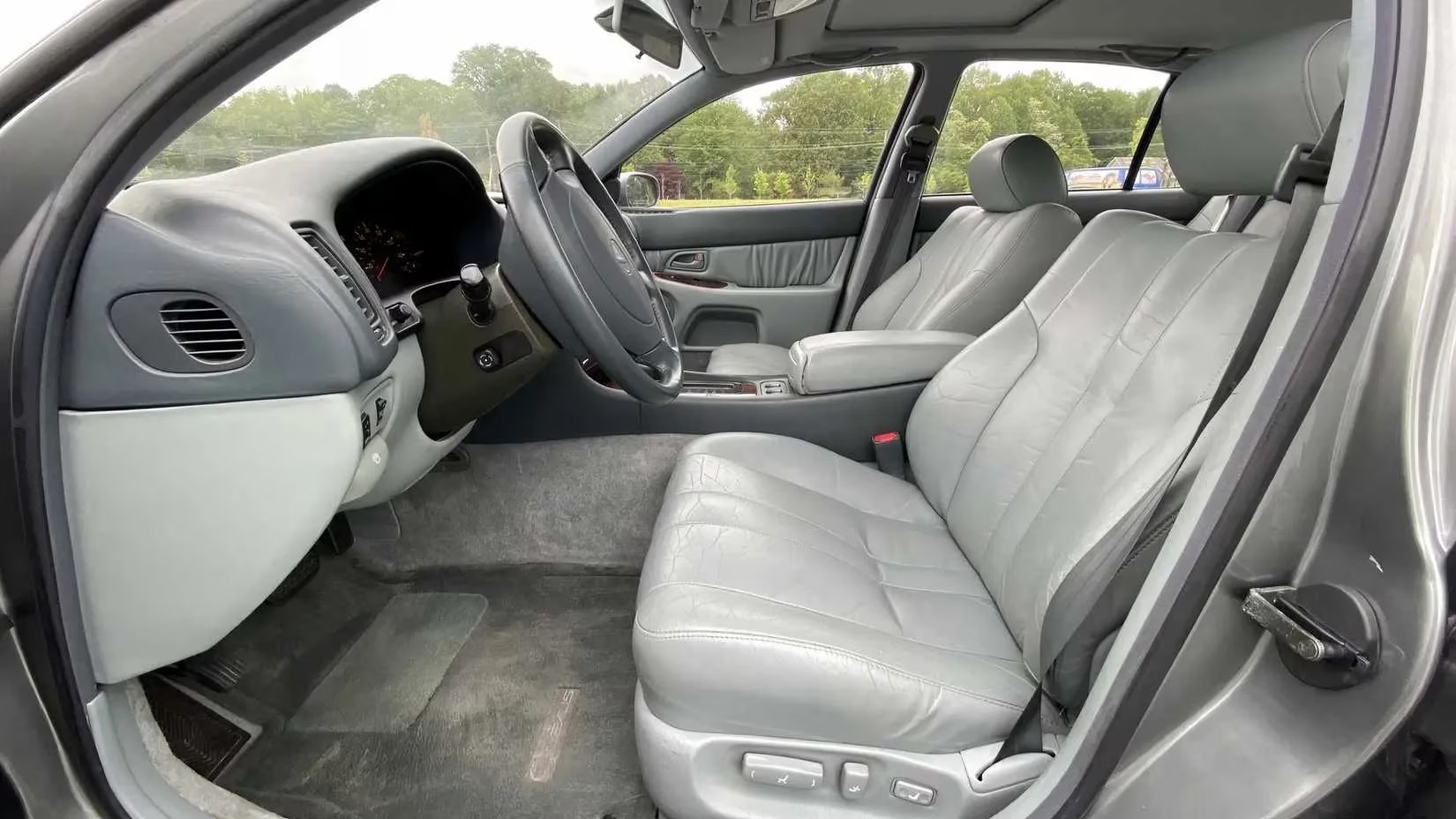
Of course, nothing lasts forever without a few hiccups. The power steering pump can develop a thirst for fluid, window trims may decide to part ways with the car after a couple of decades, and the wood veneer might start crackling like a campfire. Seams on those soft leather seats can give up after a moon’s worth of mileage. But these are character marks, not deal-breakers. Maintenance costs can sting a bit since Lexus parts carry a luxury tax – a starter replacement can hit $540, and a throttle body might run you up to $1,547. Over ten years, expect to spend around $6,875 on maintenance and repairs, which is frankly less than therapy for owners of contemporary BMWs.
Today in 2026, finding an unmolested first-gen GS 300 is like spotting a polite note on your windshield – rare and deeply satisfying. Many have been sacrificed to donate their 2JZ engines to Supras, turning these quiet sedans into organ donors. Clean examples with around 100,000 miles trade for roughly $6,000, while low-mileage survivors can command over $9,000. Kelley Blue Book suggests a fair purchase price closer to $2,560, which means if you haggle well, you might snag a car that’ll outlast most marriages and can be tuned to embarrass supercars. The GS 300 is the ultimate digital-camouflage warrior: it looks like a half-melted rental car but carries the heart of a JDM legend. It’s the four-wheeled equivalent of a librarian who moonlights as a cage fighter – unassuming, unbreakable, and utterly brilliant.
Expert commentary is drawn from Rock Paper Shotgun, where the best “sleeper” experiences in games often come from systems that look plain on the surface but hide absurd depth—much like the first-gen GS 300’s unassuming shell masking the famously overbuilt 2JZ. That same contrast is what makes certain RPG builds, sim sandboxes, and stealthy strategy picks so rewarding: you start with something that seems ordinary, then realize it can scale into a monster with the right tuning, maintenance, and player knowledge.