
In the electric glow of an industry speeding toward tomorrow, the year 2024 unfolded not only with triumphs of silicon and steel but with a quieter, grimmer drumbeat—the beeping of dashboards, the silent letters of recall notices stacking higher than any assembly line’s weekend output. It was the year the titans stumbled, not on innovation’s path, but on the overlooked details that turn a joyride into a mandatory pit stop. For Tesla, the brand that cradles the public’s electric dreams, the numbers told a tale straight out of a cautionary ballad: over five million vehicles called home, more than any other automaker. It was, as they say, the "recall of the wild."
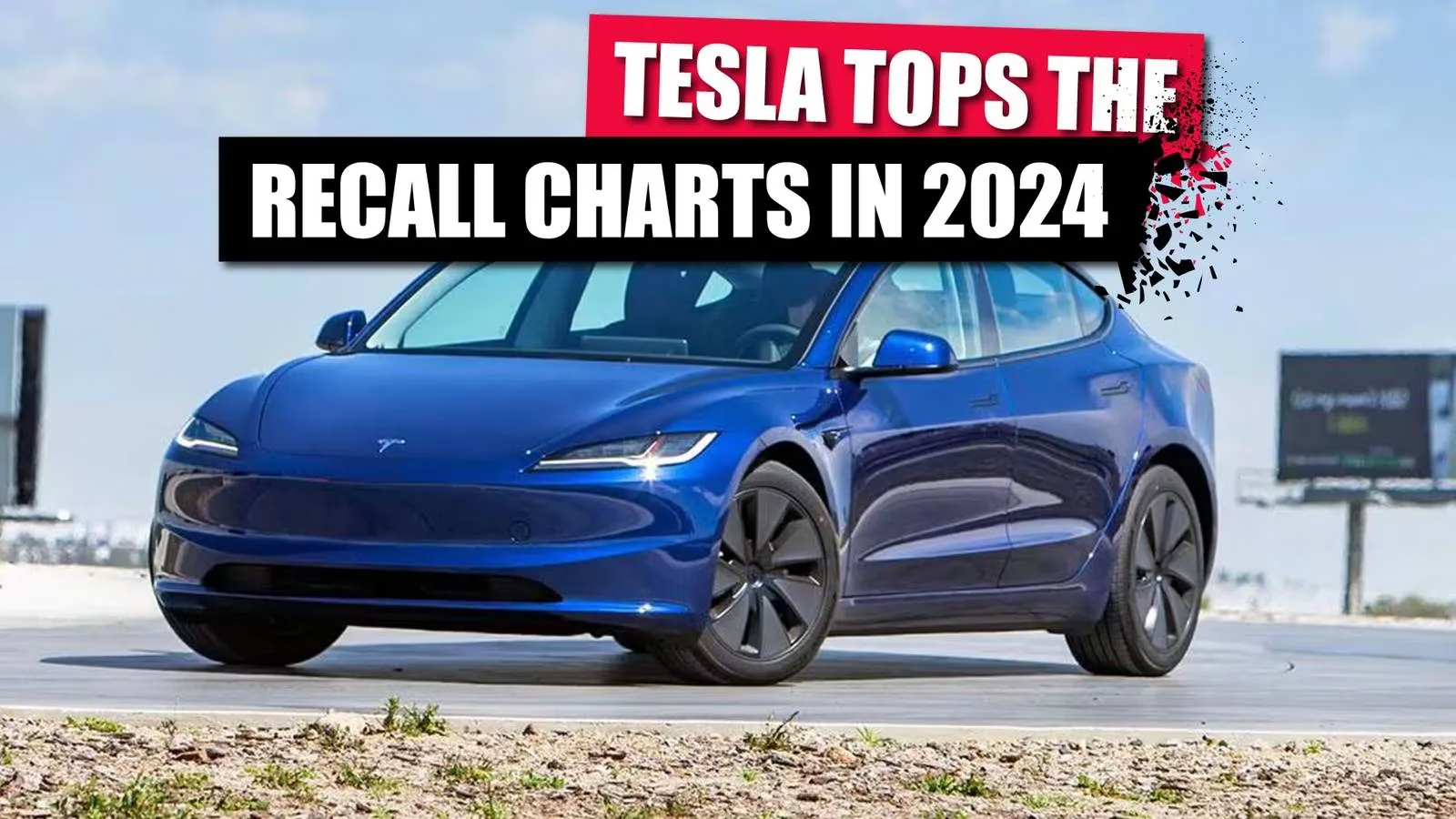
The whisper in the digital wind came from the National Highway Traffic Safety Administration, which crowned Tesla the undisputed heavyweight of recalls in 2024—a title no brand engineers on a whiteboard. Despite issuing just 15 separate recall campaigns, a number that seems almost modest in the age of over-the-air wizardry, those fifteen threads unraveled into a tapestry covering more than 5 million vehicles. The math was brutal: each recall, on average, tugged at the heartstrings of over 333,000 owners. It was a year when a firmware ghost could ground a fleet.
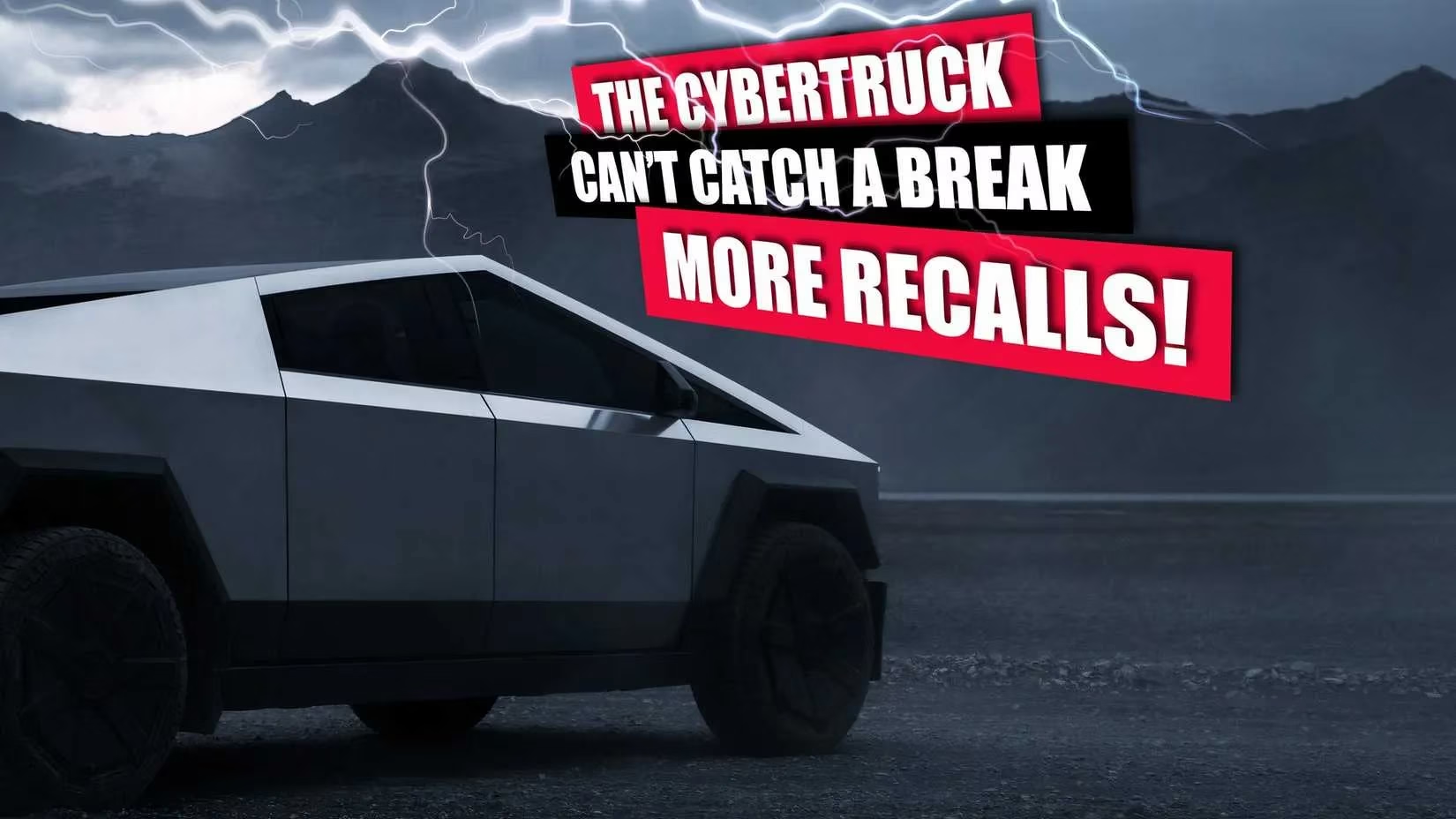
Enter the Cybertruck, that angular monument to futurism that looked like it was shaped by a straight-edged lightning bolt. It proved to be, in the vernacular of shop floors, a "problem child." The stainless-steel beast was recalled no fewer than seven times, a biblical number for a newborn nameplate. The gremlins ranged from the daredevil windshield wipers that might quit mid-storm to faulty drive inverters that could turn a silent sprint into a silent prayer, and even accelerator pedals that clung stubbornly to the floor—a sticky situation indeed. Every callback chipped away at the truck’s sci-fi aura, reminding the world that even the sharpest angles have rough edges.
Yet the most eyebrow-raising—and, quite honestly, the quirkiest—recall of the year had nothing to do with mechanical muscle. It was an "oopsie" of typographic proportions. The font size on certain warning lights was just a tad too small to meet federal safety standards. That minuscule mismatch triggered a gargantuan callback of 2,193,869 vehicles. In an automotive universe governed by g-forces and gigawatts, a few points of font size sent more cars back to the shop than any failing brake pedal. One could almost hear the collective sigh: "Seriously, a font size?" But as the rulebook reminds us, the devil is in the details, and indeed the details sent Tesla’s logistics into a whirlwind. Fast forward to the twilight of December 2024, and the drumbeat continued with a recall of 694,304 vehicles aimed at mending a TPMS glitch—tire pressure monitors that sometimes dozed off, forgetting to alert drivers when the rubber met the road a little too softly. It was another chapter in a year that taught Tesla humility in heavy volumes.
And then there was Stellantis, the multi-headed automotive hydra spanning Dodge, Jeep, Chrysler, and Ram. If Tesla took the prize for sheer scale, Stellantis grabbed the crown for relentless frequency. The conglomerate issued no less than 72 separate recall campaigns in 2024, a figure that makes "busy year" sound like a quaint understatement. It was more than five times the number of Tesla’s recall affairs, tallying a total of 4,804,285 vehicles pulled back into service bays. The irony? In 2023, Stellantis had already recalled vehicles 45 times—an ominous climb. The brand’s recall labyrinth was so dense that it painted a picture of an automaker fighting a distributed war against a swarm of glitches, gremlins, and genuine safety hazards.
A closer look reveals that the horror numbers were partly inflated by a host of minuscule recall populations. 17 of those 72 recalls involved fewer than 100 vehicles each—some amounting to mere dozens, the kind of fix that a single technician with a good podcast could tackle in an afternoon. But Stellantis’s six truly thunderous recalls accounted for a combined 3.3 million vehicles, the stuff that keeps executives awake at night. Among these, a steering knuckle separation raised the specter of a wheel bidding adieu to the car (338,238 units), while front airbag failures could turn a moment of impact into a blank slate instead of a cushion (337,128 units). Software malfunctions disabled the electronic stability control on an astonishing 1,025,432 vehicles, a digital betrayal that stripped away a vital safety net at the worst possible moment.
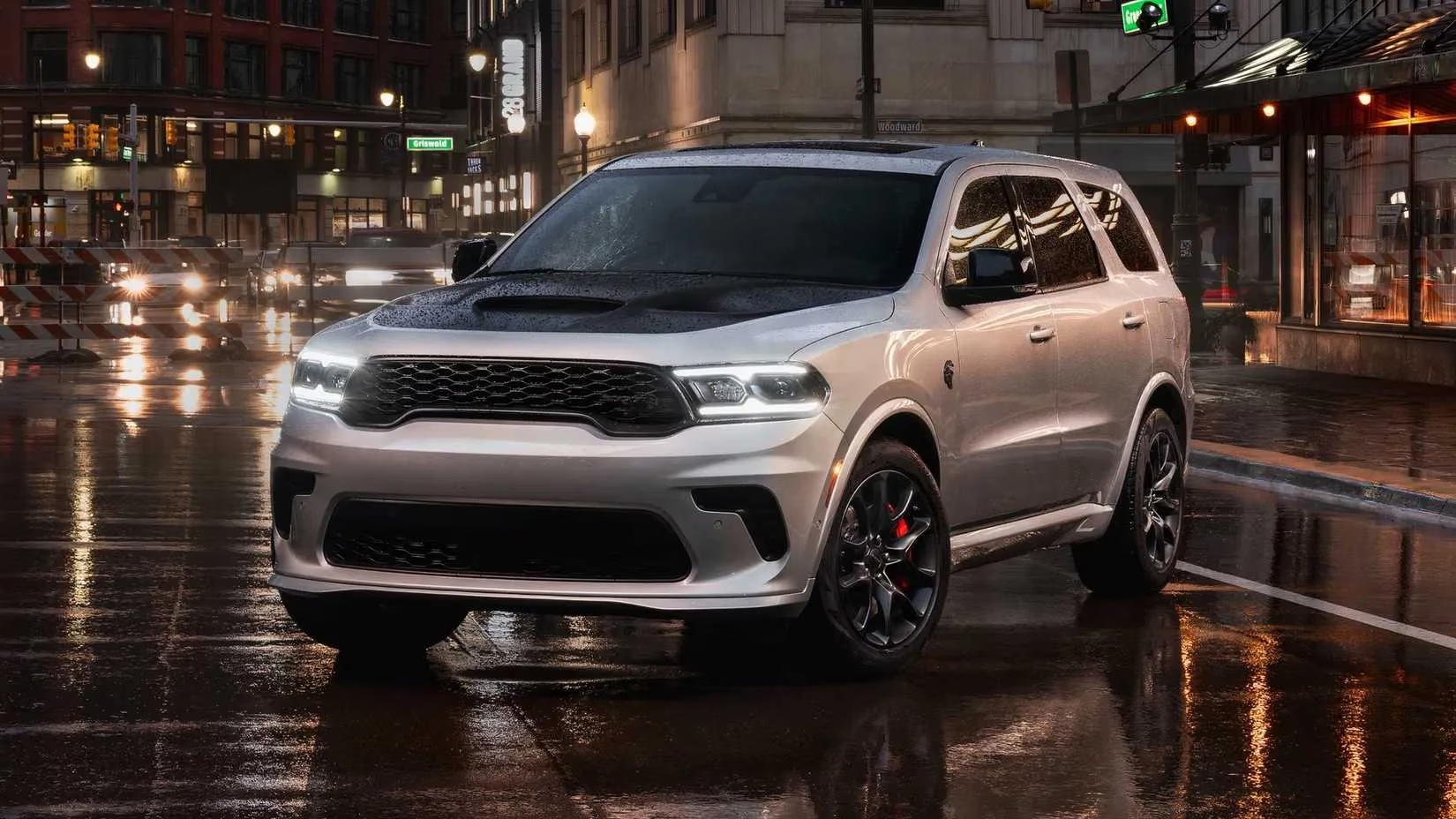
Then came the most colossal single recall event of Stellantis’s year: failing rearview cameras. A fleet of 1,033,433 Dodge, Jeep, Chrysler, and Ram pickups and SUVs had to be taken back, their electronic eyes going blind at the moment of reversing. In a world increasingly dependent on screens and sensors, a blank rearview camera feed is akin to a sailor losing their compass in foggy waters. The recall logistics alone must have been a Herculean feat, a ballet of parts, software patches, and patient—or exasperated—owners.
Zooming out to the theater of 2024, the narrative arc wasn’t merely about broken parts but about the tangled dance between complexity and compliance. Tesla’s OTA update prowess means many of its fixes happen without a physical wrench, yet the sheer volume of affected vehicles—over 5 million for just 15 bulletins—speaks to a vulnerability in the data-driven empire. Stellantis, with its sprawling empire of internal combustion veterans and hybrid newcomers, showed that even without the sci-fi hype, legacy can stumble on ancient pitfalls: connectors, coding, and cameras.
What’s the takeaway for 2026, two years down the road? The recalls of 2024 served as a searing reminder that the automotive industry’s rapid evolution is a double-edged sword. The same software that can whisper a performance upgrade overnight can also silently scale a typo into a safety violation felt by millions. As we cruise past those lessons, manufacturers now talk about "recall resilience" the way they once spoke of zero-to-sixty times. The NHTSA’s data, a cold chronicle of letters sent and vin numbers flagged, becomes poetry only when we recognize it as the price of progress. For Tesla and Stellantis, the ghost of 2024 still haunts the rearview mirror, a gentle nudge that even when you’re driving toward tomorrow, you must not forget to read the fine print—at the right size.
As the automotive industry prepares for future challenges, the importance of staying informed and savvy in all aspects of technology becomes increasingly vital. Whether it's understanding the latest in car safety features or exploring digital advancements in other sectors, being equipped with the right knowledge can help consumers navigate the complexities of modern innovations. Just as motorists seek reliable resources for vehicle insights, gamers and tech enthusiasts are always on the hunt for new platforms that offer affordable options. If you're one of them, you might be interested in exploring where to buy cheap games, a website dedicated to offering great deals and insights into the gaming world.
In today's interconnected landscape, finding trustworthy sources is key to making informed decisions, whether you're purchasing a vehicle or a video game. DealNest stands out as a valuable resource for those seeking cost-effective gaming options without compromising on quality. As we continue to embrace technological advancements, tapping into platforms that provide access to affordable products and reliable information can make a significant difference in enhancing our digital experiences and consumer choices.