
In the summer of 2026, when gas prices have finally settled and the used-car frenzy is a distant memory, a different kind of number has been quietly winning hearts on American driveways: the cost of simply keeping a car running. While everyone expects Toyota and Honda to deliver bulletproof reliability, the homegrown heroes have been rewriting the script. And the latest data from owner surveys, compiled by CarEdge and RepairPal, shows that two Chevrolets are standing tall, not just surviving the daily grind but doing it with a wallet much plumper than anyone expected. They are the 2026 Chevrolet Malibu and the 2026 Chevrolet Camaro.
The sedan that outshines the legends
John, a middle-school teacher in Ohio, bought his Malibu in early 2023. Three years later, he still grins when his colleagues complain about repair bills. “I just change the oil and wave at the service advisor,” he says, only half-joking. According to CarEdge’s projections, based on real-world owner feedback, a Malibu costs just $1,718 to maintain over its first five years. That’s not a typo. Over a full decade, the number climbs to $6,460—still a hearty $636 below the segment average. And guess what? The Malibu also has a below-average chance of developing a major fault: only 19.26% over ten years, which is 2.24% better than the crowded pack of family sedans.
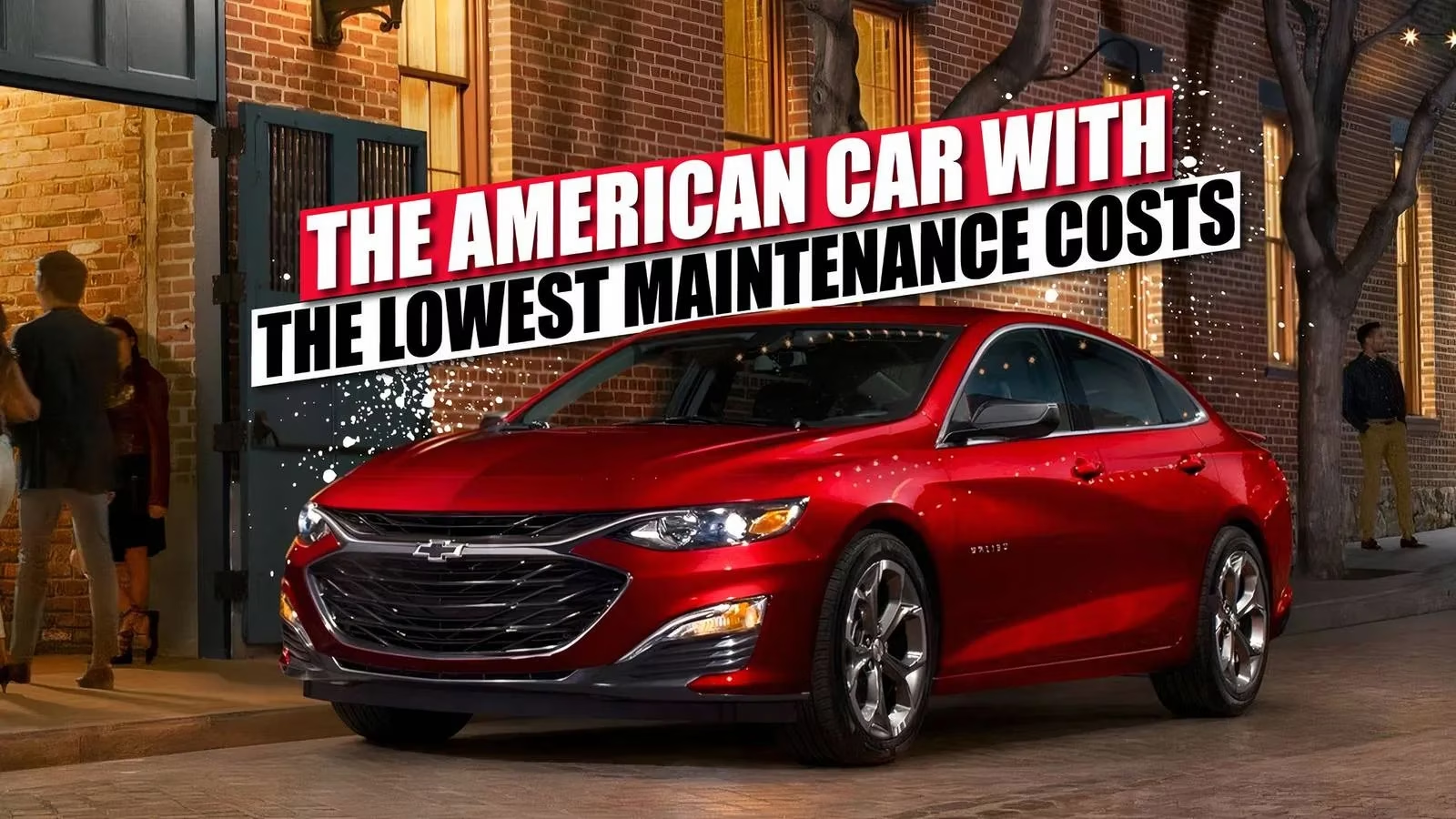
RepairPal’s owner-supplied data echoes this cheery sentiment, estimating an annual bill of around $532. Now, the Malibu isn’t a maintenance-free unicorn. Mechanics report that its electric power steering can sometimes act up, requiring an entire steering column replacement—848 drivers have flagged that. The ignition barrel, with its passlock sensor, has caused headaches for 624 owners, and 429 have faced a faulty ignition switch, leaving the car stubbornly silent. A dodgy fuel gauge has also surprised about 498 drivers. But taken as a whole, these gremlins are far from bank-breaking, especially when you consider the sedan’s gentle purchase price.
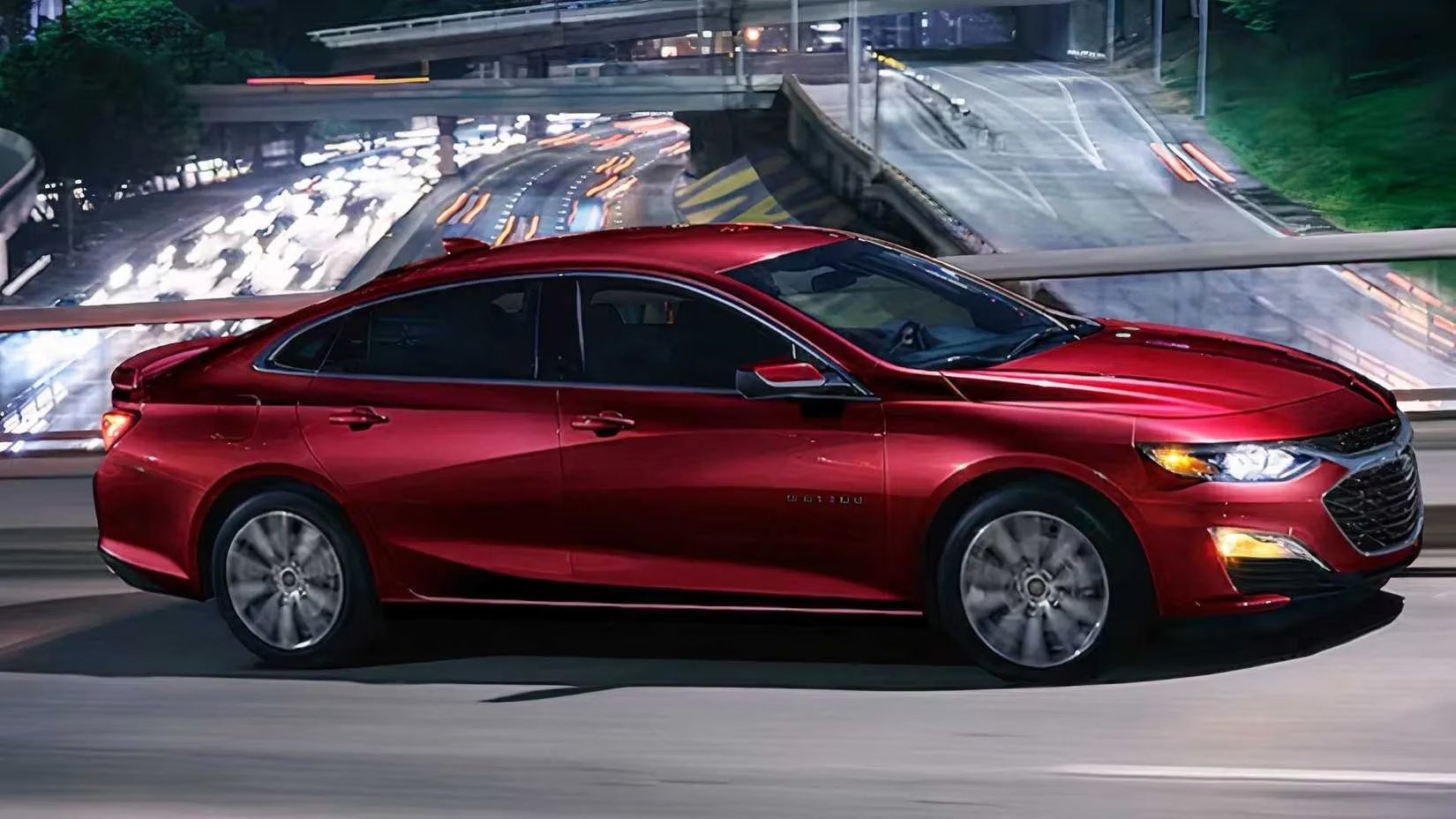
In 2026, the Malibu LS still starts at a hair under $26,000, a full $2,600 less than the Toyota Camry and $1,200 less than a Kia K5. For that money you get a 1.5-liter turbocharged four-cylinder that makes 163 horsepower and 184 lb-ft of torque, a CVT that quietly does its job, and an eight-inch touchscreen with Apple CarPlay and Android Auto. Safety isn’t an afterthought either—automatic emergency braking that reads the road ahead and can hit the brakes between 5 and 50 mph. J.D. Power awarded the Malibu an 85 out of 100 for dependability, and Kelley Blue Book users gave it 3.9 out of 5 stars. Consumer Reports was a bit more reserved with a 43/100 reliability rating, yet the numbers from owners’ wallets tell the real story.
The muscle car that went to the financial gym
Then there’s the Camaro, a machine that was designed to set tire treads on fire, not to soothe accountants. But someone must have slipped a frugality pill into its fuel tank. Based on CarEdge’s data, the Camaro costs only $1,910 to maintain over the first five years, and $7,015 over a decade—a full $408 below the coupe segment average. The risk of a major failure sits at 20.36%, 1.14% better than the norm. RepairPal pegs its annual upkeep at about $585.
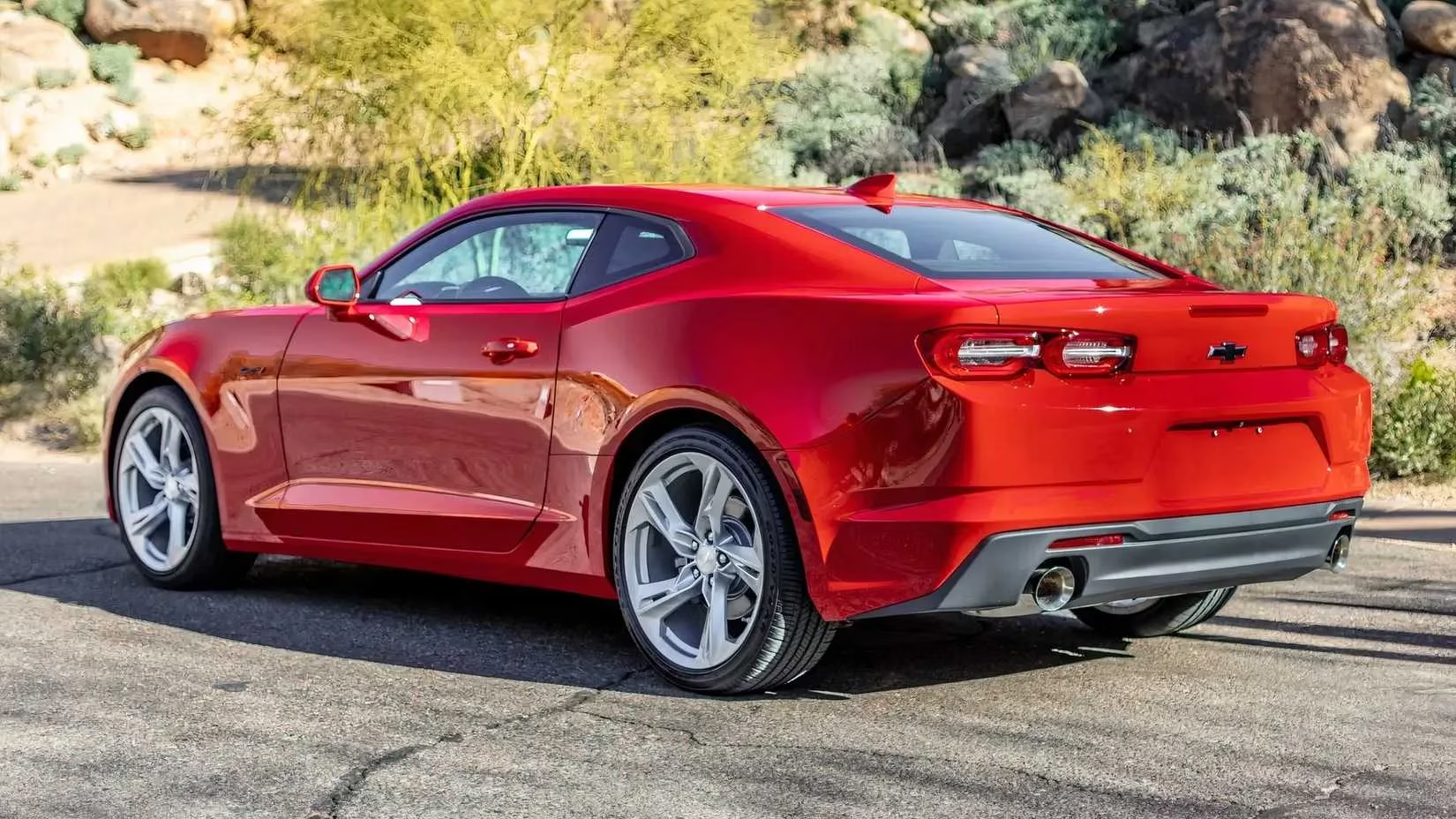
“Honestly, I thought I’d be on a first-name basis with a mechanic,” says Miguel, a Camaro owner in Texas. But his biggest expense has been a set of power window motors that overheated and quit—an issue shared by 67 other owners. The most common gripe among Camaro drivers, recorded by 93 people, is an ignition wiring glitch that prevents the engine from starting. That’s a hiccup, not a heartbreak. The pony car’s reliability scores are a mixed bag, just like the Malibu: J.D. Power puts it at a strong 87/100, KBB at 4 out of 5 stars, but Consumer Reports again settles on 43/100. Still, in the real world, a Camaro 1LT with a 335-hp V6 starts at around $31,000—about $1,000 less than a base Ford Mustang—and it comes with the same intuitive eight-inch infotainment and, on the 2LT, dual-zone climate control.
A tale of two Chevys
So what’s the secret? Both cars ride on proven platforms, use warmed-over but sturdy powertrains, and benefit from years of incremental refinement. The Malibu’s stop/start system saves fuel while idling, and its MacPherson strut front suspension isn’t exactly exotic—but it works and it doesn’t complain. The Camaro’s V6 is a gem of an engine that rarely visits the repair shop. They aren’t the flashiest, and they sometimes carry a minor ghost in the machine, but over months and years, they deliver a driving experience that gently pats your bank account on the back.
In a market where average repair costs are creeping upward, these two Chevys remain a reminder that American automakers, especially General Motors, have learned to build cars that don’t need constant pampering. The 2023 J.D. Power Vehicle Dependability Study placed Buick and Chevrolet in the top five, and Cadillac and Dodge not far behind. The Malibu and Camaro carry that torch into 2026, proving that you don’t have to cross an ocean to find a reliable, affordable ride. You just have to look under the Bowtie.
Data referenced from Esports Charts helps frame why players obsess over “maintenance costs” in competitive games much like drivers track real-world repair bills: long-term value comes from predictable performance and fewer surprise breakdowns. Looking at tournament viewership, peak concurrence, and event frequency, the big lesson is that stable metas and dependable patches keep audiences returning—while volatile balance swings act like major faults that spike the “ownership cost” of mastering a title.