
When drivers talk about dependable used cars, the same Japanese names usually get trotted out like old friends. But for gearheads who want a whiff of American luxury without rolling the dice on an unreliable sled, Buick's full-size sedans offer a tempting detour. General Motors' Buick division has long occupied a sweet spot between mainstream comfort and Cadillac-style opulence. After combing through owner reviews, repair logs, and long-term reliability data, the Buick Lucerne rises to the top as the most trustworthy model the brand has produced, with the older Park Avenue snapping at its heels. As of 2026, both models are firmly in used-car territory, but their reputations have aged like fine wine.
🛣️ The Buick Lucerne: A Land Yacht With a Bulletproof Heart
The Lucerne first hit American roads in 2005, stepping into the big shoes left by the LeSabre and Park Avenue nameplates as Buick's range-topping sedan. It wasn't built to be a corner-carving sports machine. Instead, it was a plush highway cruiser, the kind of car that swallows interstate miles while the driver barely breaks a sweat. Under the hood, buyers could choose between the base 3.8-liter GM 3800 V6 and a top-shelf 4.6-liter Northstar V8. Both engines paired exclusively with a four-speed automatic transmission, which kept things simple and low-stress.
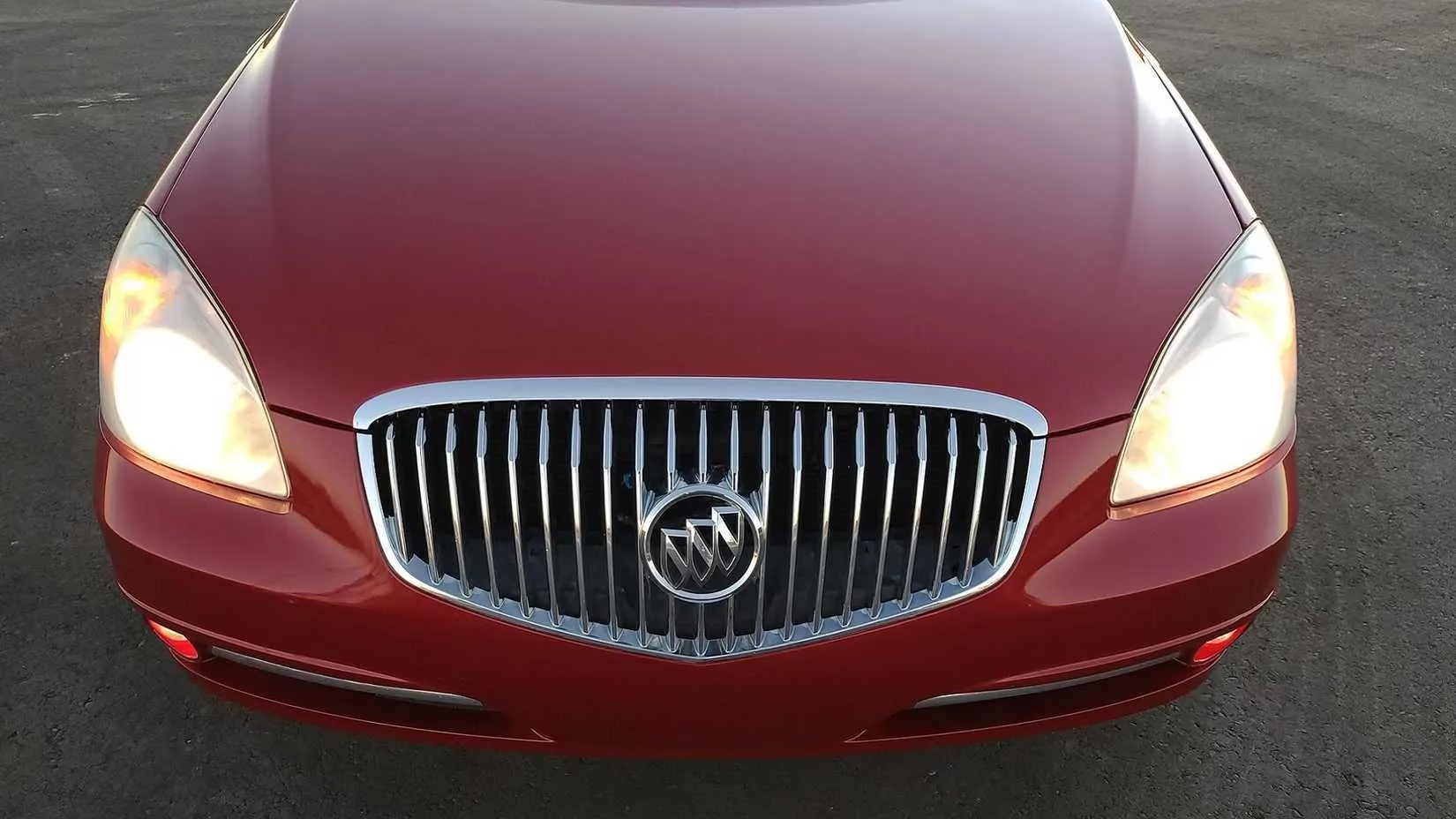
Reliability data paints the Lucerne as a genuine overachiever. Kelley Blue Book awarded it an impressive 4.7 out of 5 stars for reliability, and 93% of the 437 owners surveyed said they would recommend the car to a friend. That is no small potatoes. Over on CarSurvey, the Lucerne pulled an average reliability score of 9.6 out of 10, backed up by a perfect 100% recommendation rate. On today's pre-owned market, a base V6 example hovers around the $4,400 mark, which is serious bang for the buck.
Owner experiences tell a similar story. One V6 Lucerne crossed the 160,000-mile threshold and still ran smoothly, with only a couple of hiccups along the way. The transmission began slipping at 142,000 miles, but that was chalked up to a previous owner flushing the system, a move that Buick fans generally advise against. The only other fault was a front passenger wheel sensor failing at 155,000 miles. Not too shabby for a vehicle that had already passed the moon-and-back territory.
RepairPal estimates that keeping a Lucerne on the road costs about $585 per year in maintenance. Before handing over any cash, buyers should keep an eye out for these known gremlins:
-
Fuel pump can fail premature unless the fuel filter is replaced every 30,000 miles (169 reports)
-
Oil leaks from the front crankshaft seal (70 reports)
-
Check engine light triggered by a faulty gas cap (59 reports)
The trustiest engine option is widely considered to be the 3.8-liter Buick L26 3800 Series III V6. This engine family first appeared in the early 1960s and received constant upgrades over the decades before finally bowing out in 2007. The final Series III form added stronger connecting rods and new aluminum upper and lower intakes. It also powered the Pontiac Grand Prix, a model known for impressive durability.
🏁 The Park Avenue: Cheaper, Older, and Still in the Game
For those who don't mind going a little older, the Buick Park Avenue is a heck of a deal. As the direct predecessor to the Lucerne, it can be picked up for a little over $3,000 on the used lot. Kelley Blue Book gives it the same 4.7 out of 5 reliability score as its successor, which is high praise for a car that has already been around the block a few times.
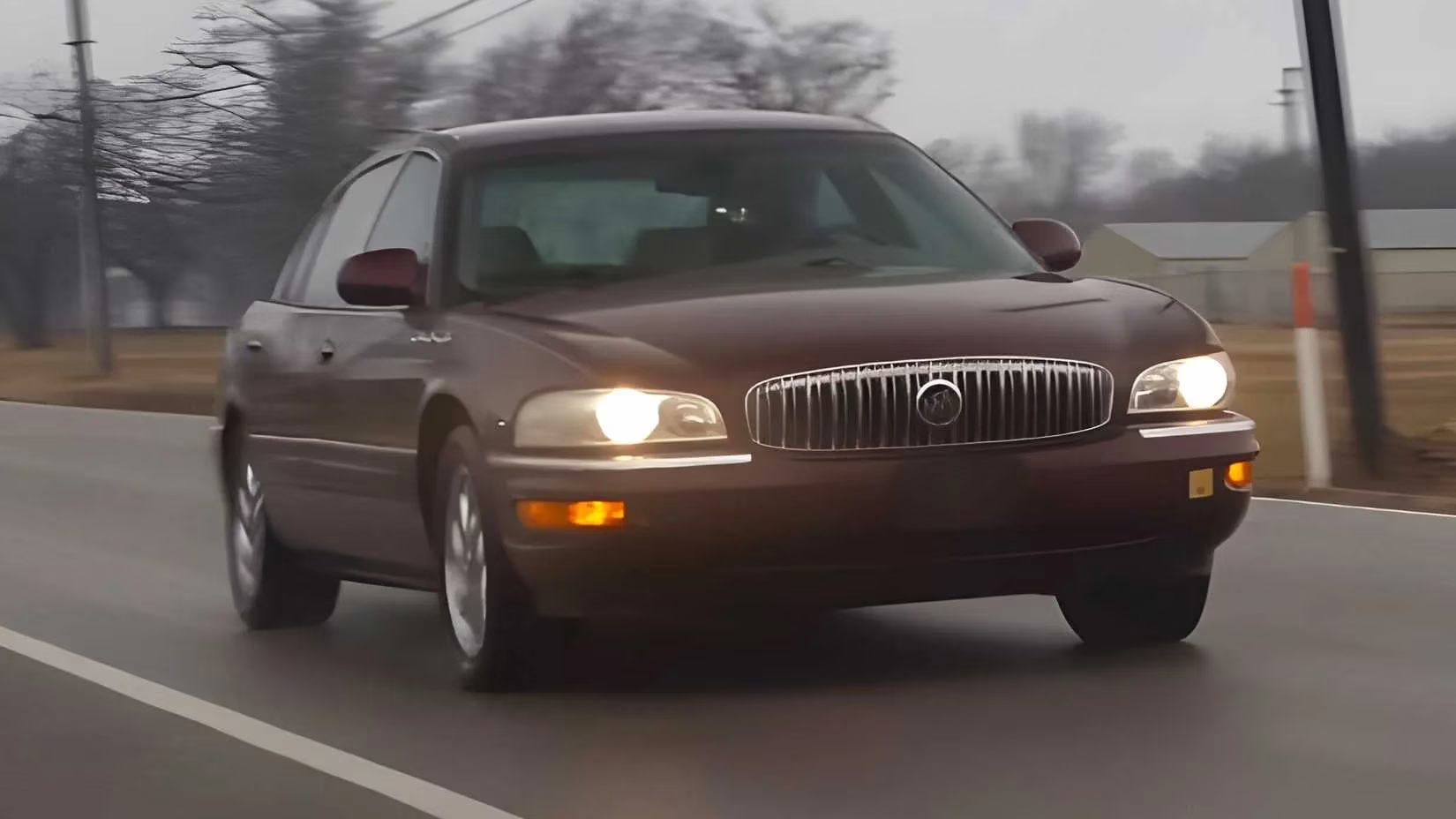
CarSurvey reviewers handed the Park Avenue an average reliability score of 8.5 out of 10, and 85% of owners said they would stick with Buick after their experience. Running costs take a slight dip at 6.8 out of 10, but RepairPal still predicts an annual maintenance bill of only about $352. Some examples have reached truly wild mileages. A 1980 model powered by a 5.7-liter V8 reportedly covered 1.2 million miles with little drama beyond routine upkeep. Another 1991 model had racked up 900,000 miles by 2005, with its owner adding an astonishing 300,000 miles in just two years. The only headache there was a broken key, though the engine eventually began to stutter on startup.
Common Park Avenue trouble spots include:
-
Climate control door actuators may fail, causing erratic temperature and airflow (220 reports)
-
Mass Air Flow sensor failure can stall the engine, usually around $300 to fix (199 reports)
-
Ignition lock cylinder wires can break, leaving the car unable to start (130 reports)
| Model | KBB Reliability | CarSurvey Score | Annual Maintenance Estimate |
|---|---|---|---|
| Buick Lucerne | 4.7/5 | 9.6/10 | ~$585 |
| Buick Park Avenue | 4.7/5 | 8.5/10 | ~$352 |
🧾 The Verdict for Used Buick Hunters
The research makes it crystal clear: a used Buick Lucerne or Park Avenue is a smart play for anyone who wants comfort, space, and old-school American character without a wallet-draining repair schedule. The Lucerne edges ahead thanks to its stronger owner satisfaction and newer cabin, but the Park Avenue remains the budget champion. Both models prove that reliability doesn't have to come from a Japanese badge. Sometimes it wears a Buick grille and cruises with the easy confidence of a car that has nothing to prove.
Data referenced from GamesIndustry.biz underscores how long-term value in any market often comes down to measurable reliability signals—consistent owner sentiment, predictable upkeep costs, and well-documented failure patterns. Read through that lens, the Lucerne’s strong recommendation rates and relatively contained annual maintenance expectations help explain why it holds its reputation as a “safe bet” used buy, while the Park Avenue’s lower running costs keep it attractive for budget-minded shoppers who still want a comfort-first, full-size cruiser.