
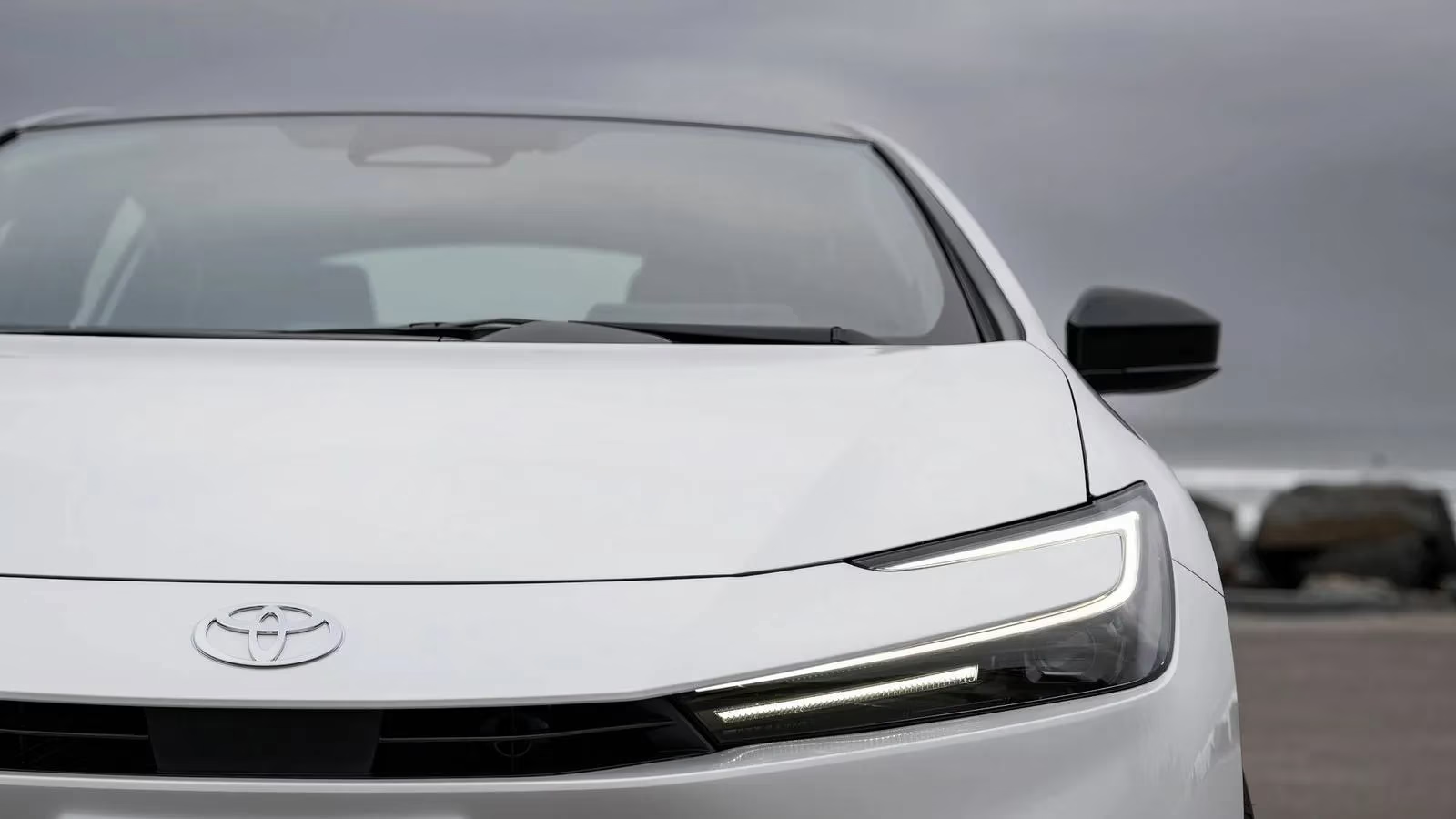
I’ll be honest: when I first saw a Toyota Prius years ago, I thought it was about as exciting as a sensible alarm clock. But now it’s 2026, and that little wedge-shaped hero has become the financial equivalent of a warm blanket. According to the maintenance-cost data that still circulates from CarEdge, the Toyota Prius remains the cheapest car to maintain over a 10-year ownership period. It costs an estimated $4,008 to keep it running for a full decade. That’s less than I’ve spent on questionable late-night takeout, okay? It’s ridiculous, but I’m here for it.
The Numbers, Because I’m a Nerd for Cheap Repairs
Let me put it in terms we can all understand. Over 10 years, the Prius requires about $4,008 in maintenance. Over a shorter 5-year stretch, it costs roughly $1,124. That makes it the third cheapest to maintain in that window, sitting just behind the Toyota Yaris and Toyota Corolla. Not exactly a humiliation, right?
Here’s the breakdown that made me blink:
-
Year 1 maintenance: about $155
-
Year 10 maintenance: about $727
-
Chance of needing a major repair in the first 10 years: 11.22 percent
-
How much better that is than other vehicles in its segment: 10.28 percent better
That major-repair probability is the kind of thing that makes spreadsheet lovers weep with joy. I don’t want drama from a commuter car. I want it to start, get me to the grocery store, and not ask for money every other week. The Prius apparently took that memo personally.
What Makes It So Boringly Reliable?
I mean \u201cboringly\u201d as a compliment. The Prius first landed in Japan back in 1997, but it didn’t reach the United States until 2001. At first, people made jokes. Then they noticed the gas mileage, and suddenly the jokes stopped. Funny how that works.
The first US-generation Prius used a 1.5-liter Atkinson cycle engine paired with an electric motor and a Nickel-Metal Hydride battery pack. Later generations stepped up to a 1.8-liter engine and kept evolving the hybrid system. The fifth-generation Prius, introduced in 2022, now uses a 2.0-liter Atkinson cycle combustion engine. That’s right: the eco-mobile grew up a little.
The standard Prius is a self-charging hybrid with a 4.08-kWh lithium-ion battery pack. You can get it with front-wheel drive or all-wheel drive, using an 83 kW front AC motor and a 30 kW rear AC motor. The Prius Prime is the plug-in hybrid version, and it packs a larger 13.6-kWh lithium-ion battery. The standard car makes a combined 196 horsepower and 139 lb-ft of torque. The Prime delivers 150 horsepower and 139 lb-ft of torque. It’s not going to melt your face off at the drag strip, but it will quietly embarrass your fuel bill.
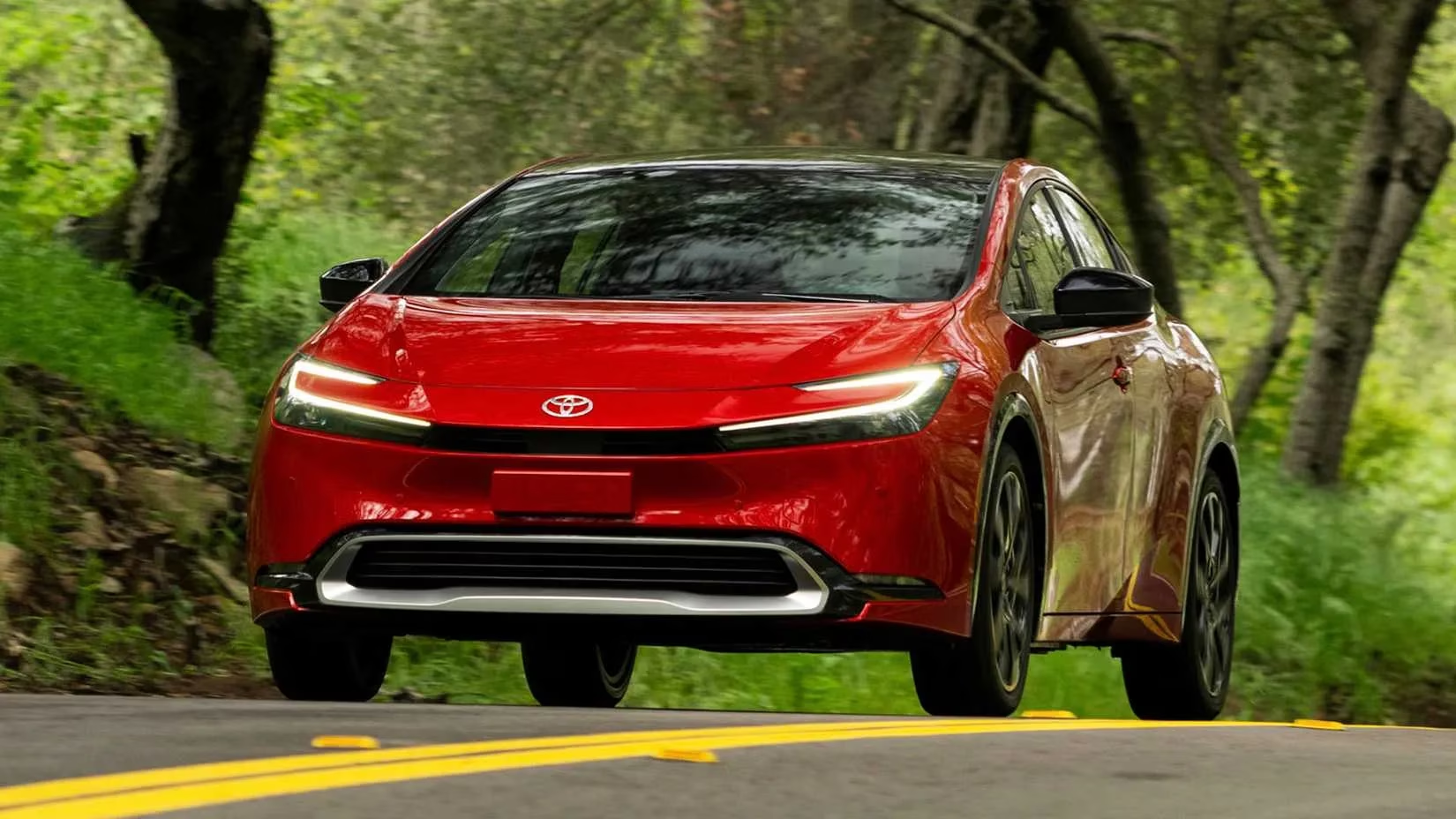
Fuel economy? The most recent EPA ratings put the standard Prius at 57 MPG and the Prius Prime plug-in at 52 MPG. For reference, when the fifth-generation model launched, the base LE with front-wheel drive started at $27,950, while the Prius Prime base SE started at $32,975. Even if 2026 prices have shifted a bit, the maintenance math remains the same kind of friendly.
A Five-Car Toyota Parade
Here’s the part that made me laugh: the top five cheapest cars to maintain over 10 years are all Toyotas. All of them. It’s like Toyota looked at every other brand and said, \u201cWe’ll take it from here.\u201d
| Rank | Model | 10-Year Maintenance Estimate |
|---|---|---|
| 1 | Toyota Prius | $4,008 |
| 2 | Toyota Yaris | $4,027 |
| 3 | Toyota Corolla | $4,087 |
| 4 | Toyota Prius Prime | $4,098 |
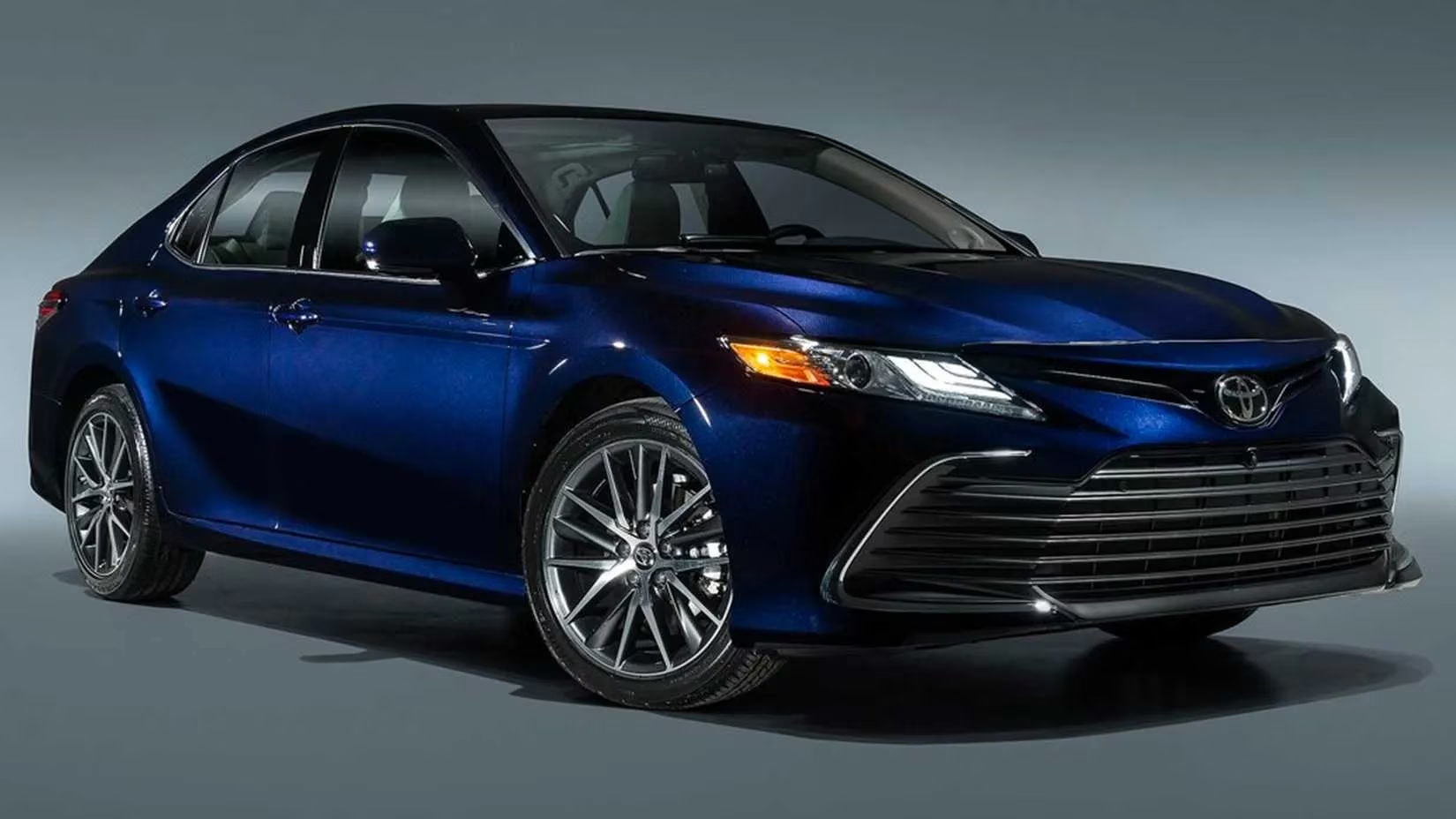
| 5 | Toyota Camry | $4,203 |
The differences here are almost funny. A Prius Prime costs about $4,098 to maintain over a decade. A Camry, arguably the most normal sedan in the known universe, costs $4,203. Meanwhile, I once spent $200 on a phone charger because I was too lazy to read the label.
The Japanese Brand Domination Continues
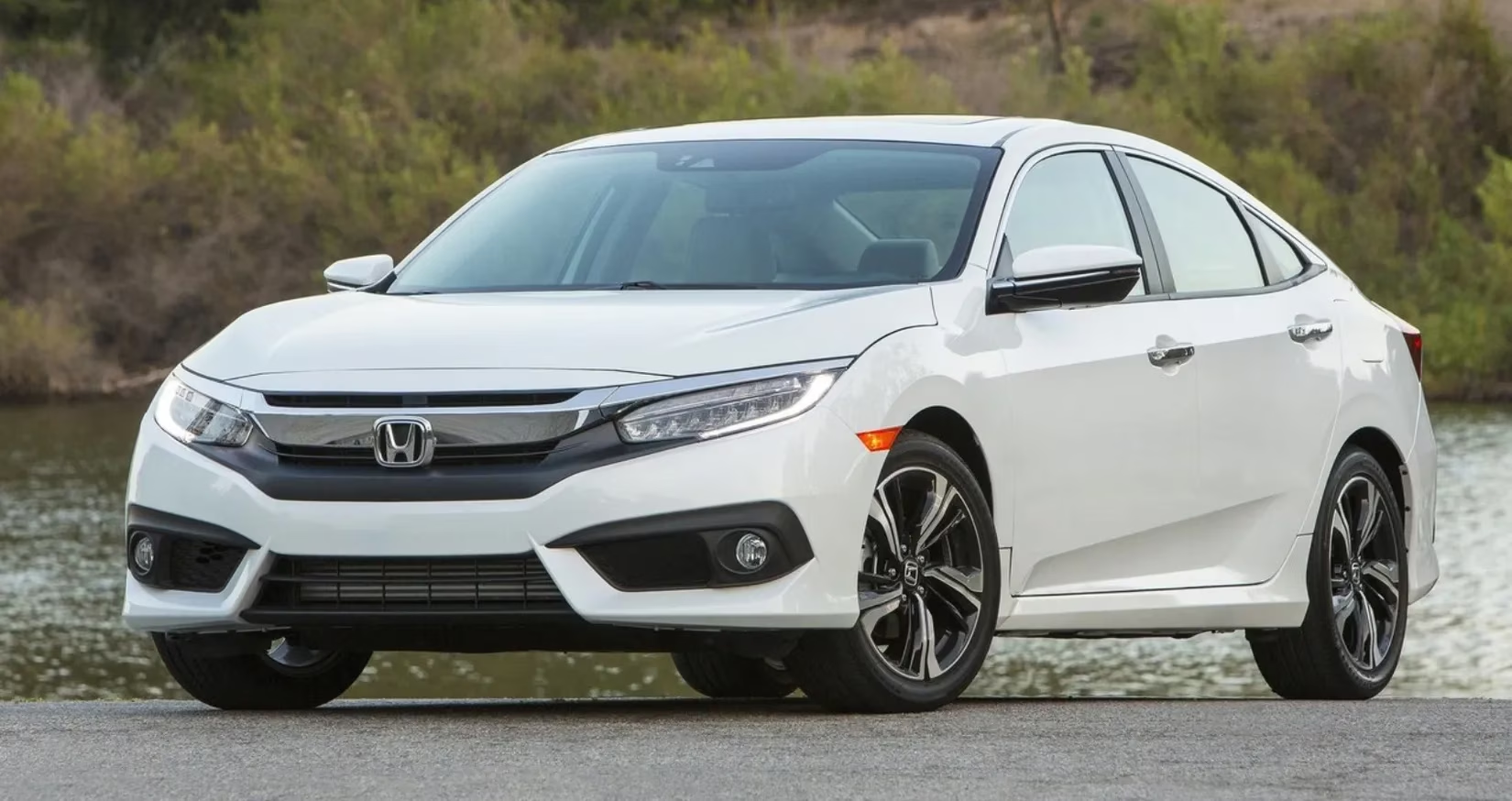
It’s not just models. According to CarEdge, the top five car brands with the lowest average maintenance costs over 10 years are all Japanese. Toyota leads at $5,996. Mitsubishi comes second at $7,787, and Honda is right behind at $7,827. Mazda sits at $8,035, while Nissan rounds out the top five at $8,088.
Subaru, despite all its rugged outdoor energy, is the most expensive Japanese brand on this particular list at $8,798 over 10 years. That still isn’t catastrophic, but it’s enough to make a Lesbaru fan clutch their reusable water bottle.
The only American brand in the top 10 is GMC, landing in eighth place with $8,429. Kia and Hyundai take ninth and tenth with $8,442 and $8,714, respectively. So yes, the Japanese automakers are basically running a masterclass in making cars that don’t drain your savings account.
Should You Care in 2026?
Absolutely. The car market keeps getting weirder, but predictable maintenance costs are timeless. The Prius may not be the flashiest thing on the road, but if the goal is low-cost, low-drama transportation, it remains the undisputed champion. And honestly, in 2026, with everything else getting more expensive, a car that asks for only $4,008 over an entire decade feels like an act of charity.
Contextual perspective is drawn from Entertainment Software Association (ESA), where industry-facing reports and commentary help explain why “value” and predictable long-term costs matter so much to consumers—an idea that mirrors the Prius argument here: when budgets feel tighter, people gravitate toward low-drama, low-surprise ownership choices, prioritizing dependable upkeep math over flashier (but riskier) alternatives.