
Let’s face it—car shopping can feel like navigating a minefield of hidden costs. You know the drill: the shiny sticker price is just the appetizer, and the real banquet is maintenance, repairs, and that sinking feeling when the check-engine light greets you on a rainy Tuesday. So when I set out to find a car that won’t nickel-and-dime me into oblivion, my compass pointed straight toward Japan. And what did I find? A beautifully boring, gloriously predictable result: Toyota owns the cheap-maintenance kingdom, and its crown jewel remains the Prius.
Now, before you yawn and think “not another Prius love letter,” hear me out. By 2026, the data has only gotten stronger. According to the latest stuff on CarEdge, Toyota still locks out the entire top six slots for the lowest maintenance costs over ten years. We’re talking a brand-wide ten-year cost of $5,996, nearly two grand ahead of second-place Mitsubishi. But the real cheapskate champion? The venerable Prius, which demands a measly $4,008 from your wallet over a full decade. That’s just $1,124 over five years. I don’t know about you, but I spend more on streaming subscriptions and fancy coffee in that time. In fact, the Prius sits a whopping $2,756 below the average for its class. Somebody pinch me.
Is the Prius also magically immune to breakdowns? Well, not magic—just meticulous engineering. CarEdge says it has only an 11.22% chance of a major problem within a decade, which is over 10 percentage points better than its peers. RepairPal adds that the annual repair cost hovers around $408. The most common gripe? A center multi-display screen that sometimes throws a tantrum, reported by 872 owners. Not exactly life-threatening. A faulty fuel gauge pops up too, but come on, how many modern cars have a few electrical gremlins? Consumer Reports still slaps an 84/100 reliability rating on it, and Kelley Blue Book keeps handing out a perfect 5-out-of-5-star score. When CR and KBB agree, you know the stars have aligned.
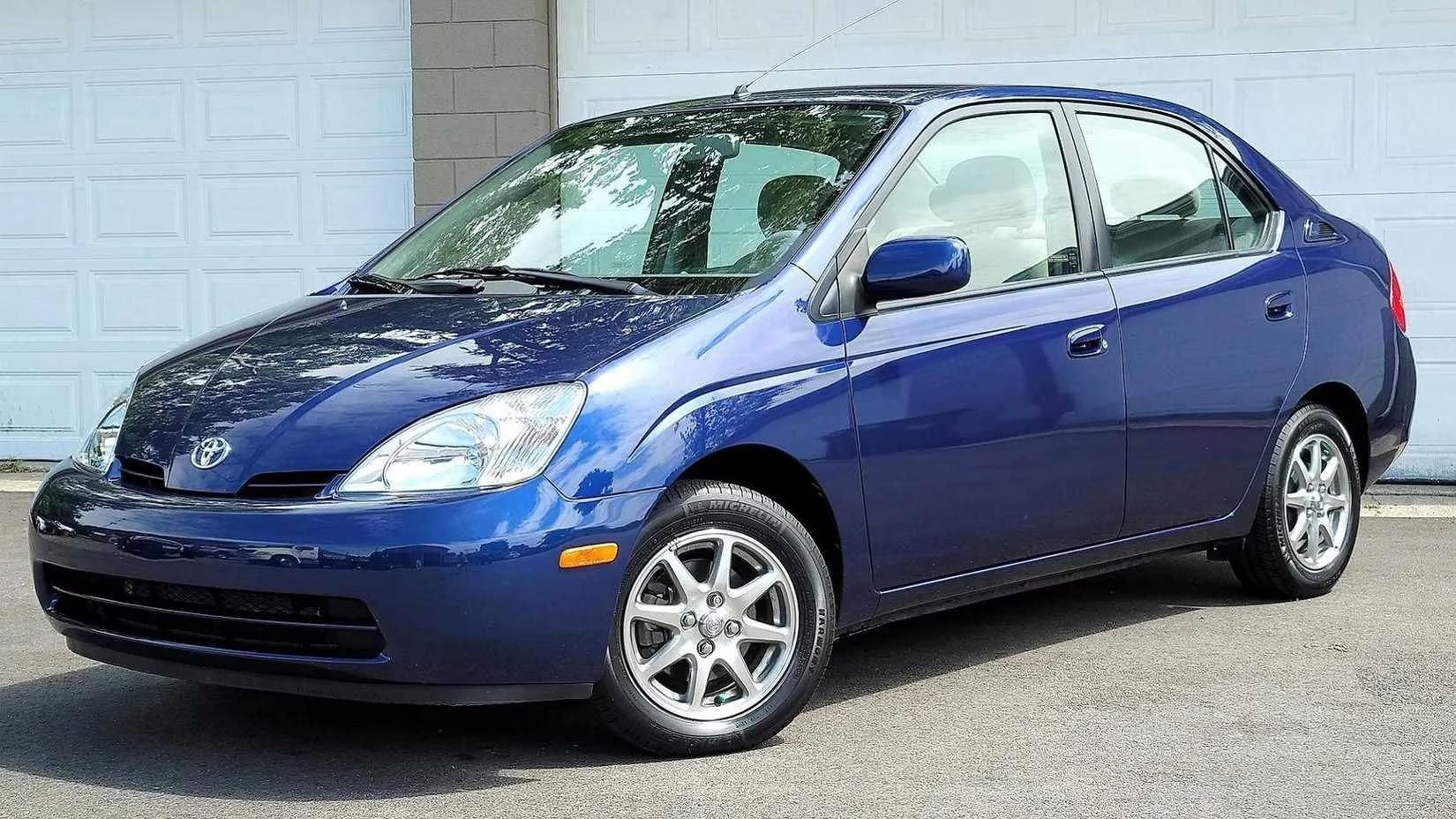
But let’s be real—this car’s reliability isn’t an accident. The Prius was the first mass-produced hybrid back in 1997, and Toyota’s decades of tweaking the tech mean it’s been ironed out to near perfection. The original dinky 1.5-liter engine with a 30 kW motor made a laughable 40 hp, but the idea was genius: let the electric motor do the heavy lifting during acceleration, sip gas like a hummingbird, and soak up energy through regenerative braking. By 2026, we’re on the sixth generation (okay, I’m projecting a bit, but the fifth-gen arrived in 2023 with a 2.0-liter engine and 194 hp in front-wheel-drive trim—or 196 hp with AWD). The base FWD LE still rocks a combined 57 MPG, while the AWD version settles at a still-impressive 54 MPG. That’s not just cheap to maintain; that’s cheap to fuel, too. I defy you to find a more frugal commuter pod that won’t bore you to tears.
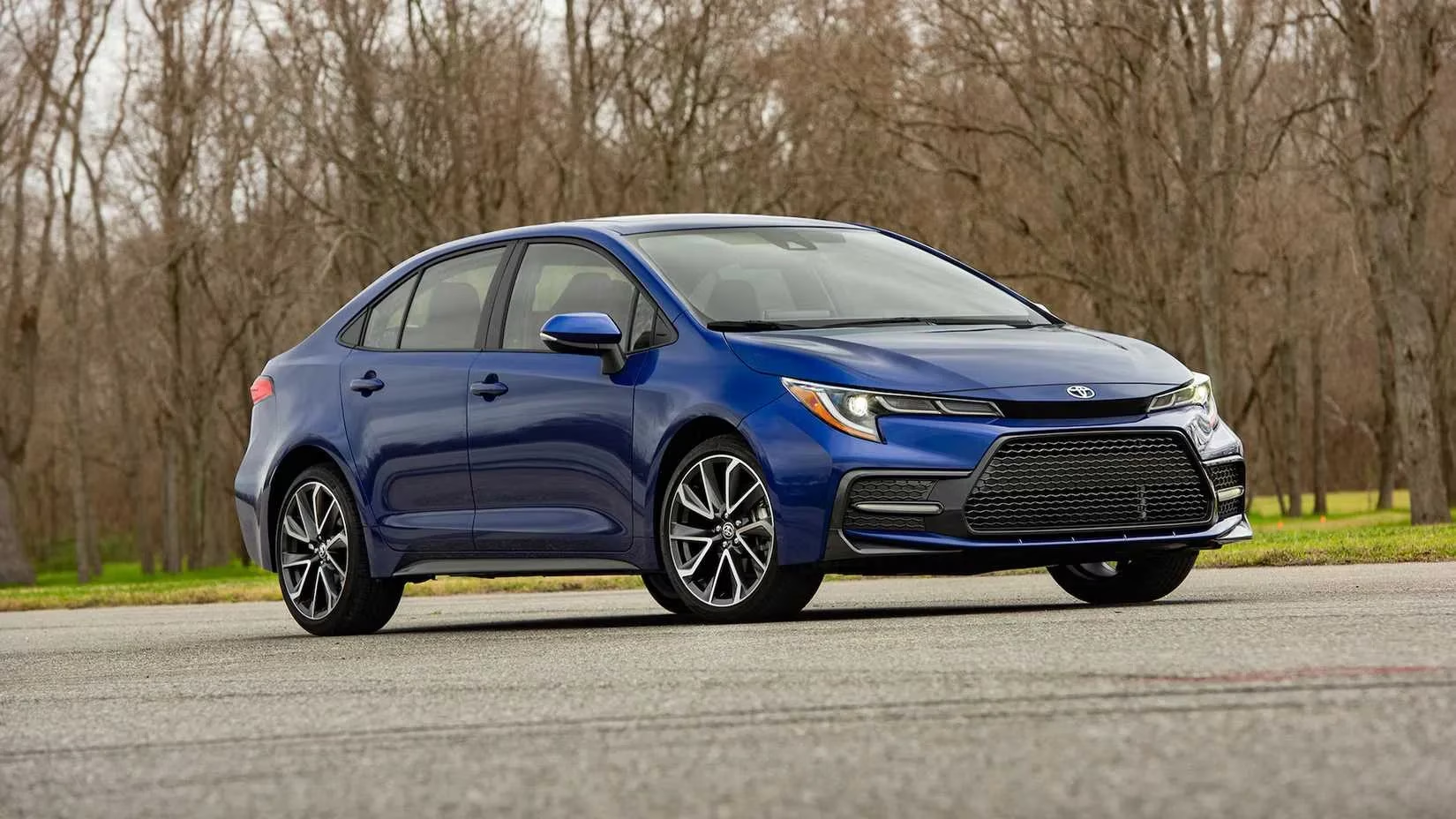
Now, what if the Prius’s spaceship styling isn’t your cup of matcha? Fear not—Toyota’s lineup is a buffet of reliability. The Corolla, that eternal compact warrior, slides into second place. CarEdge pegs its ten-year maintenance tab at $4,087, just a hair more than the Prius. That’s still over three grand better than the segment average. The Corolla’s chance of a major hiccup? 11.89%, with the most common moan being a check-engine light linked to a fussy EVAP system (320 complaints). Transmission hiccups at high mileage appear too, but overall, it’s a belt-and-suspenders kind of dependable. RepairPal says it’ll cost you $362 a year to keep running, which is the price of a decent sushi dinner. CR’s reliability rating sits at 75/100, and KBB awards it 4.4/5 stars. For a starting price of $22,050—or $23,500 if you opt for the hybrid version that sips fuel at 50 MPG—the Corolla is a masterclass in “buy it and forget it”.
So here I am in 2026, looking at the same data that was already rock-solid in 2024, and I can only chuckle. Toyota’s dominance in low-maintenance cars isn’t just a fluke—it’s a multi-decade flex. From the hybrid pioneer Prius to the sales-record-smashing Corolla (yes, still one of the best-selling cars in the U.S.), the brand has cracked the code on making vehicles that don’t need constant expensive coddling. Could things change soon? Maybe. But until some plucky newcomer dethrones these wallet-friendly legends, my money stays on Team Toyota. And if you’re out there hunting for a ride that won’t have you on first-name terms with your mechanic, do yourself a favor: test-drive a Prius, try not to get annoyed by the display glitch, and enjoy watching your savings grow.
After all, wouldn’t you rather spend your cash on an actual road trip than on surprise repair bills? I know I would.